

The retirement gap in America has never been subtle. If your employer offers a 401(k), you probably have something set aside. If they don’t, you probably don’t. Roughly 56 million Americans lack access to an employer-sponsored retirement plan at work, a number that has sat largely unaddressed for a generation. What’s changed in 2026 is that the Trump administration has decided to do something about it, several things in fact, and the results are proving more radical than most people expected.
The plan that started as a State of the Union soundbite has grown into a layered set of policies: a new federal savings account for workers, child investment accounts seeded with government money, and now a serious conversation about borrowing Australia’s entire mandatory pension architecture. Senator Ted Cruz, who helped write key pieces of the legislation, has been calling the whole project something that would have seemed politically impossible even five years ago.
Critics argue it’s a dressed-up privatization play that could hurt the very people it claims to help. Whether you see it as long-overdue structural reform or a risky experiment with working Americans’ financial futures, these accounts are real, already open, and going to matter for a very long time.
What Trump Actually Proposed
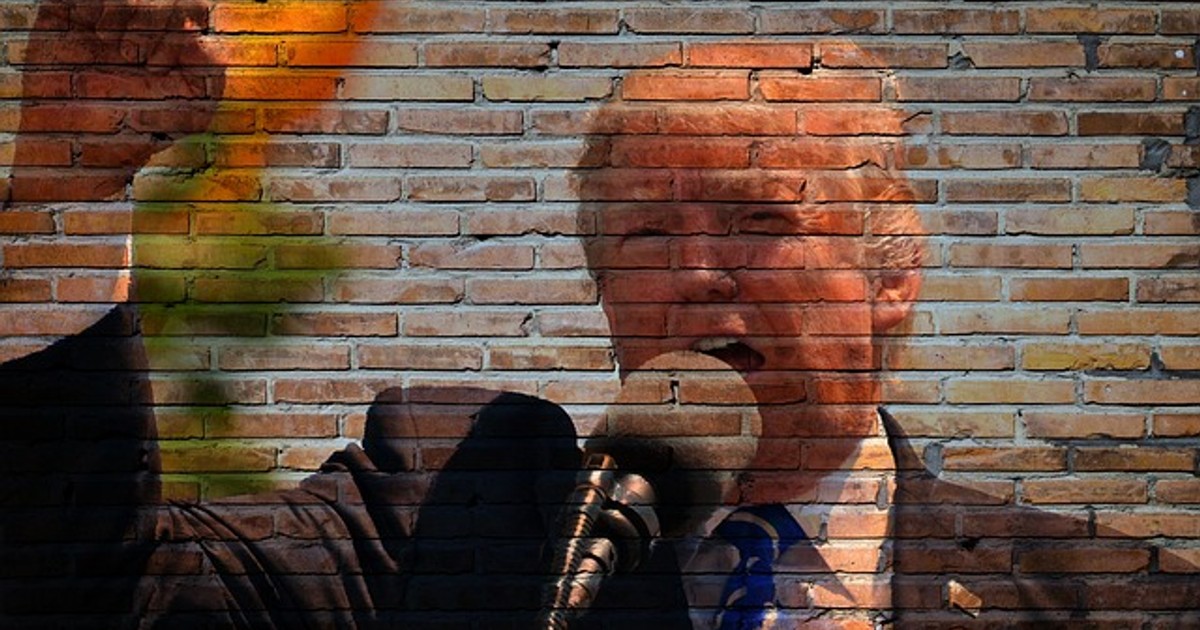
In his State of the Union address on February 24, President Trump proposed a new federally backed retirement account with up to a $1,000 government match for workers who do not have access to an employer-provided plan, one he said would be similar to those “offered to every federal worker.” The administration had yet to release a detailed legislative proposal but signaled that an executive order was coming.
That order arrived on April 30, directing the Secretary of the Treasury to establish TrumpIRA.gov, a new federal platform designed to connect American workers without employer-sponsored retirement plans to high-quality, low-cost IRAs offered by private-sector financial institutions. The accounts are designed to be portable, meaning workers keep them if they switch jobs, change industries, or go freelance.
Trump’s accounts will integrate with the Saver’s Match, worth up to $1,000 per year for eligible taxpayers. The matching contribution may involve pairing the new accounts with a provision in Secure 2.0 that takes effect in 2027, under which workers under certain income thresholds can earn a 50% government match on up to $2,000 in annual retirement savings.
The intended audience is the worker who gets left out of the current system entirely: the restaurant server, the freelance contractor, the part-time retail employee whose employer doesn’t offer a plan and who may never get around to opening an IRA on their own. Whether the new accounts will reach those workers in practice, or sit unused because their financial margins are too tight to contribute anything, is one of the central open questions.
The Trump Accounts: A $1,000 Seed for Every Newborn

Alongside the worker savings push, a second prong of the Trump retirement plan targets children directly. Under the Trump Accounts provision of last year’s tax and spending megabill, every child born between 2025 and 2028 will receive a $1,000 federal seed contribution, with no income limits for additional contributors.
Families, employers, and others can add to the account, and the money is invested in low-cost U.S. stock market index funds. Funds are locked until the child reaches adulthood. The administration has pitched Trump Accounts as a way to expand wealth-building and financial literacy, particularly for families that may not otherwise have access to these types of investments.
The idea is direct enough: give every American child a stake in the stock market from birth, and let compounding do the rest over 18 to 20 years. A $1,000 seed investment in a broad index fund, left untouched for two decades, can grow substantially, though how substantial depends on market performance nobody can guarantee.
Cruz Calls It What It Is

Senator Ted Cruz, one of the architects of the Trump Accounts program, predicted at the Investment Company Institute’s Leadership Summit in Washington that the accounts will become a “ubiquitous employee benefit, just like 401(k) matches.” But he went further than a polished endorsement. At the Milken Institute’s Global Conference in Los Angeles, Cruz said something out loud that most politicians leave unsaid.
Newsweek reports that Cruz told the crowd: “Conservatives in America, for 50 years have been trying to do Social Security personal accounts,” describing himself as the “chief architect” behind the legislation that created Trump Accounts, and noting that former President George W. Bush “tried this fight, and sadly, Congress ran for the hills in a display of extraordinary cowardice.”
“Here’s the dirty little secret: Trump Accounts are Social Security personal accounts,” Cruz said, arguing that establishing Trump Accounts represents an important conservative victory toward the privatization of Social Security, something Bush attempted and failed to do during his second term.
Cruz said the accounts for newborns could pave the way for retirement reforms within the next five to ten years. The theory runs something like this: once parents watch their children’s Trump Accounts grow in value over the years, they’ll want their own version tied to their payroll contributions, and the political will to restructure Social Security will follow. It’s a long game, and Cruz appears to be playing it openly.
“I’m authoring legislation to ensure every American, from bartenders to gig workers, has the opportunity to build wealth, own a piece of the American Dream, and share in our nation’s prosperity,” Cruz said.
The Social Security Problem Nobody Wants to Solve

The urgency behind all of this isn’t just political ambition. Social Security is facing a genuine financing crisis. The program’s main trust fund is projected to become unable to pay full benefits in the early 2030s if Congress does not act, triggering an automatic reduction in payments.
Cruz has cited a $230 billion cash shortfall for Social Security in 2026 alone. The 2026 Social Security and Medicare Trustees’ annual report projects the retirement trust fund’s reserves could run out in the fourth quarter of 2032, one quarter earlier than the year before. If no adjustments are made by then, the program’s Old-Age and Survivors Insurance Trust Fund would be able to pay out roughly 78% of benefits to seniors.
A 78-cents-on-the-dollar payout hits hardest for people who depend on Social Security most: those without significant private savings, which is most of the people the Trump Accounts are meant to help in the first place. Republicans who back structural reform argue that investment-based accounts could produce higher long-term returns than the current pay-as-you-go system. The counterargument, which economists have made for decades, is that stock markets fall as well as rise, and the safety of a guaranteed benefit is worth something that a return projection can’t capture.
Six things to do when your savings reach $250,000 covers some of the practical considerations that come into play once any savings system starts generating real wealth, which gets to the heart of what any of these accounts are ultimately trying to accomplish.
Enter Australia

In early July 2026, Trump added another layer to his retirement agenda. The Trump administration, according to Fortune, said it is working on a savings plan modeled after Australia’s superannuation system, promising to make it “sharper” and “even better” for American workers. “I made reference today that Australia has a thing going that’s very good,” Trump said during a Rose Garden event.
Australia’s superannuation is a mandatory pension plan in which employers pay 12% of an individual’s wages into a tax-advantaged retirement savings account. Established in 1992, it applies to all workers between the ages of 18 and 70. Employees can also contribute via “salary sacrifice,” with a current contribution limit of $30,000. There are strict limits on withdrawals, and professional asset managers oversee the accounts, which can be invested across money market funds and private equity.
According to the Australian Prudential Regulation Authority, $3.1 trillion of Australia’s total $4.4 trillion pension pool was held in regulated funds as of March 2026. For context, Australia has a population roughly equivalent to Texas. The per-capita retirement accumulation is extraordinary.
Ted Cruz applauded Trump’s comments on the Australian model in a July 8 post on X, calling them “exactly right,” and has often praised the plan and urged U.S. lawmakers to do more.
Why Experts Are Skeptical

The support from Cruz and the White House hasn’t convinced retirement economists. Alicia Munnell, a senior advisor at the Center for Retirement Research at Boston College, wrote that while “the Australians clearly have an admirable retirement system, and the U.S. system needs lots of fixing,” it “does not necessarily follow that a fundamental restructuring is necessary or even desirable.”
The Cato Institute has argued that the economic cost of compulsory contributions tends to fall on employees themselves, either through fewer job opportunities or lower take-home pay. When employers are required to set aside 12% of wages for retirement, the money has to come from somewhere. For many lower-wage workers, it tends to come out of wage growth.
Compulsory savings “would be an improvement over the current pay-as-you-go model by empowering workers with ownership over their forced contributions,” experts wrote in a December 2025 analysis, “but the catch is that doing so now would entail massive transition costs.” Compelling American workers to save on top of existing payroll taxes “would displace voluntary savings and disproportionally harm low-income workers.”
Australia’s superannuation program earned a B+ rating from the 2025 Mercer CFA Institute Global Pension Index. The U.S. system received a C+. That’s a meaningful gap, but critics argue the lower American grade reflects Social Security’s financing problems and coverage gaps, both of which have more targeted fixes available than rebuilding the whole system from the ground up. Critics contend the Trump administration should focus on addressing Social Security’s financial shortfall directly before layering on new architecture that could compete with or complicate the existing program.
The Question Nobody’s Answering Yet

The Trump retirement plan, in all its forms, is genuinely ambitious and genuinely unfinished. The TrumpIRA.gov accounts are live. The Trump Accounts for children are up and running. The Australian-style superannuation proposal is still in the conversation stage, with no legislative text, no confirmed employer contribution rate, and no timeline for Congress to vote on anything.
What’s real right now is the framework: a federal platform connecting workers without employer plans to private IRAs, a government match of up to $1,000 annually for eligible savers, and investment accounts seeded with federal money for a cohort of American newborns. Whether that framework becomes the scaffolding for something larger, the Social Security overhaul Cruz is clearly angling toward, depends on political will that hasn’t been tested yet.
The people who stand to benefit most from coverage expansion are the same people who historically get left out of major financial policy debates: gig workers, part-time employees, hourly workers without benefits. Whether these accounts reach them at the scale promised, or end up mostly used by workers who already had savings options and just needed a better vehicle, will be the real measure of whether the Trump retirement plan does what it claims to do.
What to Do With All of This

The honest takeaway here is that the retirement system is in active flux, and not in a way that resolves neatly. The Trump Accounts for children are real and already open. If you have a child born between 2025 and 2028, that $1,000 federal seed contribution is sitting in an account in their name, invested in index funds, waiting for two decades of compounding. That part is settled. What you do on top of it, whether you contribute additional funds and how much, is a calculation worth making now rather than later.
The TrumpIRA.gov platform is live and designed specifically for workers without employer-sponsored plans. If that’s your situation, whether you freelance, work part-time, or work for an employer who doesn’t offer a 401(k), the government match of up to $1,000 annually is free money that most people in your position have never had access to before. The Australian-style overhaul is a different matter entirely. It’s still a proposal, it will face enormous political resistance, and it could look very different if and when it becomes law. The direction, though, is unmistakable: the administration, and Cruz in particular, are trying to rewire how retirement wealth gets built in America. Some of these structural changes go back to debates that predate Social Security itself. Naming that isn’t a solution, but it’s where the real reckoning starts.
Disclaimer: This information is not intended to be a substitute for professional medical advice, diagnosis, or treatment and is for information only. Always seek the advice of your physician or another qualified health provider with any questions about your medical condition and/or current medication. Do not disregard professional medical advice or delay seeking advice or treatment because of something you have read here.
AI Disclaimer: This article was created with the assistance of AI tools and reviewed by a human editor.