

A Washington Post-Ipsos poll this month asked more than 2,600 U.S. adults whether they feel “enthusiastic,” “satisfied,” “dissatisfied” or “upset” about three projects in Washington: a massive new White House ballroom, a 250-foot triumphal arch, and the redesign of the Lincoln Memorial Reflecting Pool. About 1 in 3 Americans, 32 percent, say they feel enthusiastic or satisfied with Trump’s ballroom, Reflecting Pool and triumphal arch projects, while nearly 2 in 3, 65 percent, feel dissatisfied or upset.
The partisan lines in the data are sharp, but they don’t fully explain the numbers. Independent voters came in at 73 percent disapproval. The poll also asked respondents to name what they thought Trump’s actual goal was. The results put the Trump monument projects dissatisfaction beyond partisan reflexes.
The three projects are different in character, different in their current stage of development, and different in their specific controversies. What runs through all of them, in the poll data and in the public record, is the same central question: whether the person ordering the construction is trying to improve a city, or trying to leave his name on it.
What the Poll Actually Found
Trump’s dedication to building a large White House ballroom and a 250-foot triumphal arch and remodeling the Lincoln Memorial Reflecting Pool has sparked fierce criticism, lawsuits, and federal charges over peeling paint. More than 35,000 people submitted comments about the White House ballroom alone, with 97 percent of them critical of the effort. The Washington Post-Ipsos poll surveyed more than 2,600 U.S. adults from July 8-13 with a margin of error of approximately 1.9 percentage points. The survey used a nationally representative sample, though as with any poll, subgroup margins of error are larger than the overall figure.
Nearly 2 in 3 respondents, or 65 percent of those surveyed, reacted negatively, with 27 percent indicating dissatisfaction and 38 percent saying they were “upset.” Among those with positive reactions, 12 percent said they were “enthusiastic” and 19 percent said they were “satisfied.” Nearly four in ten respondents chose “upset,” the poll’s strongest negative option, more than triple the number who chose “enthusiastic.”
The partisan split is sharp but not symmetrical. Nearly 7 in 10 Republican respondents expressed a positive view of these renovations, while about 9 in 10 of the survey’s Democratic respondents expressed a negative view. Democrats are not just more negative; they are more intensely negative. A 67 percent majority of Democrats say they are “upset” by the projects, compared with 31 percent of Republicans who say they are “enthusiastic.” Even within each party’s ideological wings, 79 percent of liberal Democrats say they are upset about Trump’s projects, versus 43 percent of self-identified MAGA Republicans who say they are enthusiastic.
Among independent voters, disapproval of the three projects reaches 73 percent. Independent voters rarely determine the emotional temperature of partisan fights, but they are typically the group whose views separate a base-energizing issue from a political liability. At 73 percent disapproval among independents, these projects are well into liability range.
The Motivation Question
The poll asked respondents about Trump’s motivations for these projects. Twenty-six percent said they believed he was committed to making the capital city “more beautiful,” while 51 percent said they thought the president had a “different goal.” When that latter group was asked to describe what this alternate objective was, 42 percent said to “glorify himself” and 22 percent said to “leave his mark” on Washington.
The Post-Ipsos survey asked the 51 percent who cited a different goal to put it in their own words. About 4 in 10 of that group said Trump is trying to glorify himself or serve his vanity or ego, by far the most common answer. A 37-year-old independent from Ohio put it plainly: “I think he’s got an ego, and must see his name on everything,” while a 70-year-old Republican man from Minnesota wrote, “Trump wants to build monuments to himself just like Napoleon did in France.”
The Post-Ipsos poll asked respondents how they feel about these three projects as a group, although opinions may differ somewhat for each. Surveys asking separately about each effort have found greater opposition to the White House ballroom than the proposed arch or Reflecting Pool renovation. The aggregated figure, then, likely understates hostility to the ballroom specifically, the project with the longest paper trail of opposition and the most visible construction footprint.
The White House Ballroom: Scale, Cost, and the Demolished East Wing
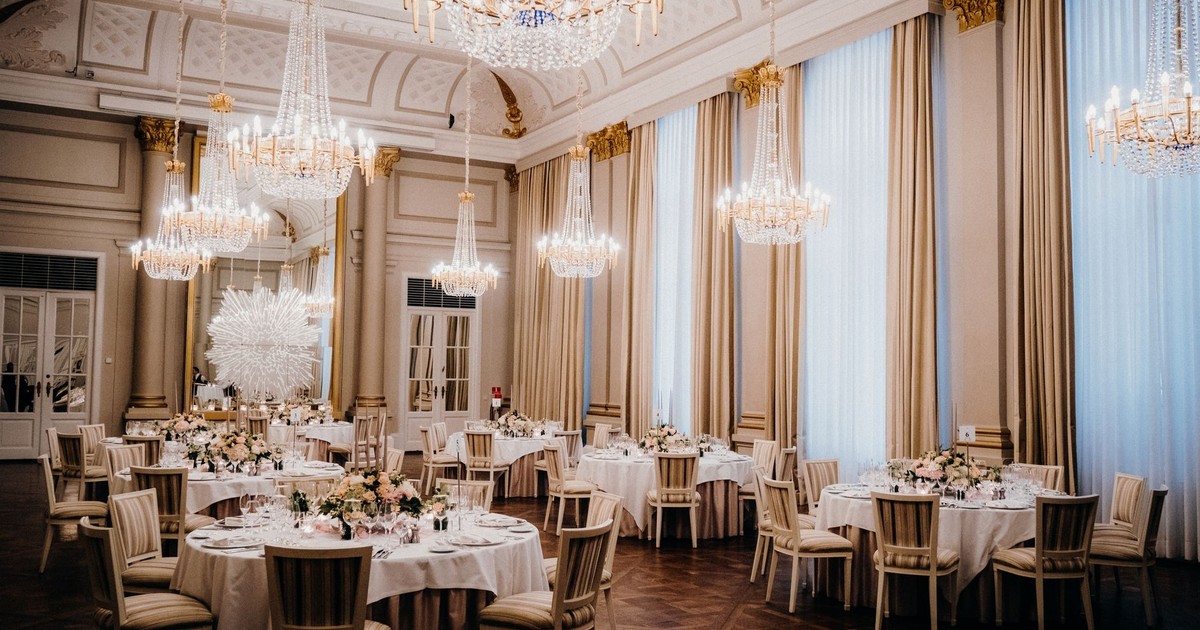
The White House unveiled its plans for Trump’s expansive ballroom inside a newly constructed East Wing in January 2026. Architect Shalom Baranes told the National Capital Planning Commission at a public hearing that the privately funded ballroom has a “1,000-seat requirement” with ceilings about 40 feet high. Overall, the new East Wing will be 89,000 square feet, with two levels, and will be the same height as the White House building itself.
Trump has been heavily involved in the planning of the ballroom project, which has grown in size and cost since he first announced it in 2025. He said it is expected to cost $400 million, double his initial estimate. The administration has described it as privately funded, with the White House framing the project as a long-overdue diplomatic facility. Demolition of the East Wing began in October 2025, with the goal of finishing before President Trump’s second term ends in 2029.
The demolition itself became a flashpoint. Pictures from the site set off a wave of criticism, including from former first lady Hillary Clinton. The National Trust for Historic Preservation urged the administration and the National Park Service to pause demolition until plans for the proposed ballroom “go through the legally required public review processes.” Trust president Carol Quillen said the 90,000 square feet of new construction “will overwhelm the White House itself,” which is 55,000 square feet.
Earlier polling on the ballroom captured similarly stark divisions. An April Washington Post-ABC News-Ipsos poll found that more than half of Americans, 56 percent, oppose tearing down the East Wing to make way for a 90,000-square-foot ballroom, with 28 percent in support and 15 percent unsure. Nearly 9 in 10 Democrats oppose the ballroom project, along with about 6 in 10 independents. Among Republicans, 65 percent support tearing down the East Wing to make room for a ballroom.
The Reflecting Pool: A Renovation That Became Its Own Problem
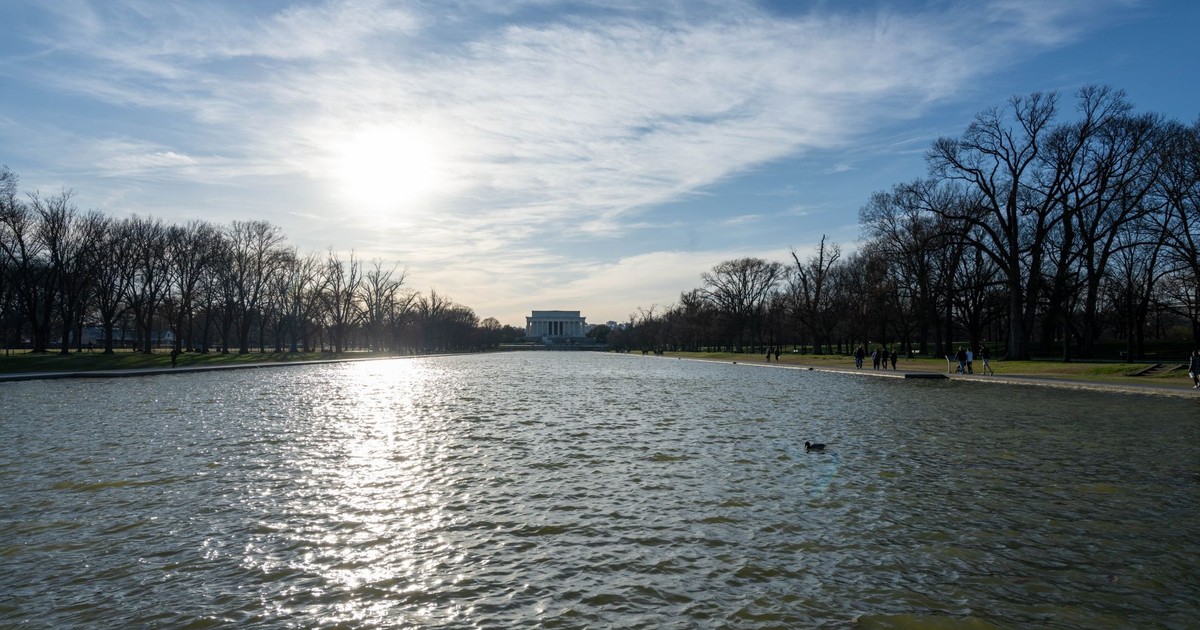
Trump announced a renovation of the Lincoln Memorial Reflecting Pool in April as a beautification effort that included painting the bottom of the pool “American flag blue.” The project was positioned as preparation for the nation’s 250th birthday celebrations this summer. What followed was a case study in what happens when speed and symbolism override technical planning.
The project was initially estimated to cost $1.8 million, but the price tag rose to $14.7 million, according to a contract summary from the Interior Department’s award to Virginia-based Atlantic Industrial Coatings. That contract was awarded on a no-bid basis. The National Park Service also paid $1.74 million to Green Water Solutions, an Ohio-based company, to install a “nano bubble” system to kill algae, also using a no-bid contract, bringing the total to more than $16 million.
The results, as of late June 2026, were difficult for the administration to defend. More than a day after the Interior Department said the water was “crystal clear,” it appeared to be anything but. Despite sustained efforts from National Park Service workers, the pool was still marred by algae as the “American flag blue” paint covering the floor continued to peel. Crews drained the pool again after Independence Day to address these issues.
Trump attributed the damage to “radical left lunatics” on Truth Social, alleging that someone had poured corrosive chemicals into the pool, though he provided no evidence for this claim. He stated publicly that “the algae is 75% gone, and the condition will soon be completely remedied,” though these claims remain unverified. A company that worked on the pool’s previous major renovation, a two-year project completed in 2012 at a cost of $34 million, had reportedly declined to participate in the 2026 resurfacing after assessing it as unfeasible within the proposed timeline.
The Triumphal Arch: Scale, Symbolism, and Sightlines
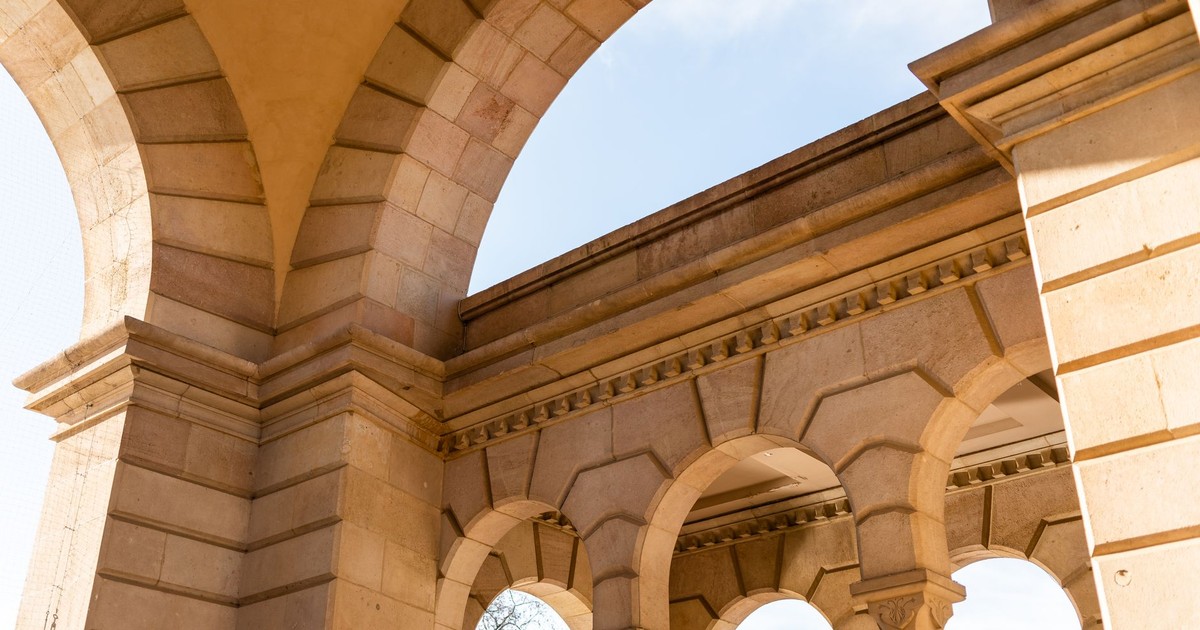
Trump unveiled official architectural renderings for the triumphal arch he plans to build across the Potomac River from the National Mall. The proposed monument would stand at one end of the Arlington Memorial Bridge, next to Arlington National Cemetery. The location places it on the Virginia side of the river, technically outside the District of Columbia’s boundaries, which has complicated the regulatory approval process.
At 250 feet tall, the arch would stand nearly 90 feet higher than the Arc de Triomphe in Paris, at about 164 feet, and more than double the height of the Lincoln Memorial, at 99 feet. The design was produced by Harrison Design and is topped with two golden eagles and a winged crowned figure. An inscription reading “One nation under God” runs across the structure.
The proposed arch bears a resemblance to the Arc de Triomphe, and some media outlets have taken to calling it the “Arc de Trump.” The design has attracted scrutiny from preservationists who argue that a 250-foot structure at Memorial Circle would permanently obstruct the historic sightline between the Lincoln Memorial and Arlington National Cemetery.
The project’s regulatory path has been incremental. The U.S. Commission of Fine Arts approved the concept in April 2026, allowing the project to advance for design adjustments. A federal commission then moved the arch forward in July 2026 after hearing nearly three hours of public opposition. The National Capital Planning Commission has requested additional information on potential impacts to air travel navigation in the area, given the structure’s height, and is still reviewing the proposal.
The Broader Pattern: Public Comment, Legal Challenges, and Partisan Framing
The poll numbers sit inside a larger record of institutional resistance to all three projects. Each has generated its own legal or regulatory challenge: the Reflecting Pool renovation faced a nonprofit lawsuit over the blue paint color; the ballroom demolition drew calls from preservation groups for mandatory public review processes; and the arch has faced sustained opposition at every federal agency hearing.
The administration’s response to dissent has been consistent across all three cases: frame opposition as politically motivated obstruction, assert that the projects represent aesthetic improvement and national pride, and proceed with construction where legal clearances allow. When voters were asked to name the biggest issues driving their midterm decisions, none listed the ballroom, arch, or Reflecting Pool among their top concerns, a finding that may explain why the administration has continued despite the polling, calculating that disapproval of monuments doesn’t translate directly into electoral consequences.
What the Numbers Actually Tell Us

About 1 in 3 Americans say they feel enthusiastic or satisfied with Trump’s ballroom, Reflecting Pool and triumphal arch projects, while nearly 2 in 3 feel dissatisfied or upset. Nearly 4 in 10 Americans say they feel upset about the projects, more than three times the percentage who feel enthusiastic about them. Those proportions hold across a nationally representative sample. At 73 percent disapproval among independents, the numbers go beyond partisan base opposition.
The motivation question is probably the most consequential data in the entire survey. When a majority of the public, 51 percent, believes a president’s construction agenda is primarily about self-glorification rather than public benefit, every visible setback compounds the perception. Peeling paint at the Reflecting Pool doesn’t read as a contractor problem; it reads as confirmation. A cost that doubles from $200 million to $400 million doesn’t read as the natural complexity of large-scale construction; it reads as evidence of priorities. The 97 percent opposition rate in formal public comments on the ballroom isn’t a number that gets reframed away, no matter how many times the administration calls it organized.
All three projects are either under construction or advancing through regulatory approval. The White House aims to finish the ballroom before 2029. Surveying work for the arch started in mid-May 2026. The Reflecting Pool, drained a second time after Independence Day, will eventually be refilled. Historical precedent for large-scale civic architecture does suggest the public can come around once a project is complete and usable. Whether that applies to a 250-foot arch modeled on one in Paris, or a $400 million ballroom replacing the White House’s original East Wing, depends entirely on whether the finished structures look like additions to the country or additions to a personal legacy. Right now, more than 6 in 10 Americans think they know which one it is.
Disclaimer: This information is not intended to be a substitute for professional medical advice, diagnosis, or treatment and is for information only. Always seek the advice of your physician or another qualified health provider with any questions about your medical condition and/or current medication. Do not disregard professional medical advice or delay seeking advice or treatment because of something you have read here.
AI Disclaimer: This article was created with the assistance of AI tools and reviewed by a human editor.