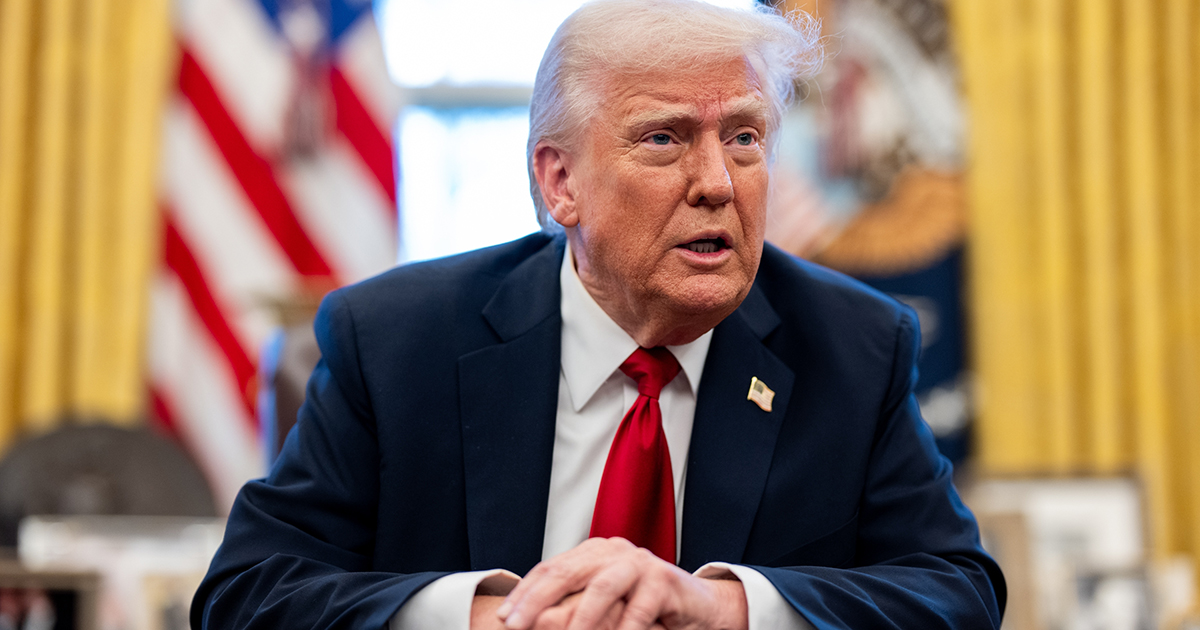

Graham had been scheduled to appear on NBC’s Meet the Press that Sunday morning for what would have been his 64th appearance on the program. Instead, Trump called in to talk about a man he’d spoken to just hours earlier. The Senator was booked on Sunday television, fresh off a transatlantic warzone trip, with a legislative push still burning on his to-do list. The door to his Capitol Hill home, meanwhile, was about to become the scene of a frantic emergency response.
Trump was among the last people to speak with Graham before his unexpected death. Graham, 71, died on Saturday, July 11, 2026, after what his office described as a “brief and sudden illness.” The South Carolina senator had experienced cardiac arrest, and first responders were summoned to his Washington, D.C., residence. The president learned of his death at 1 a.m.
The Trump Lindsey Graham call happened around 7 p.m. that same Saturday evening. Less than 48 hours before that, Graham had been in Kyiv meeting with Ukrainian President Volodymyr Zelensky, pushing for tougher sanctions against Russia. He flew home, phoned the president to talk legislation, and emergency services were at his door before Sunday arrived.
The Final Phone Call: What Trump Said
Trump called into NBC News’s Meet the Press Sunday morning and told anchor Kristen Welker that he had spoken with the senator early Saturday evening “in the sevens.” The content of the call was entirely legislative. Graham was pushing for the SAVE America Act, a bill that would require proof of citizenship to register to vote and photo identification at the polls. Graham had just made a 20-plus-hour round trip to a war zone, and his first instinct on landing back on American soil was to call the president about a stalled Senate bill.
Trump recalled that Graham said “We’re all set for the SAVE America Act,” and described him as “pushing the SAVE America Act like crazy.” Graham also told Trump he had just landed from Ukraine, and Trump replied that it was “a long trip to make.” The pair discussed potentially meeting the following day. Trump said Graham “wanted to pass the SAVE America Act, and I said, ‘We’re gonna get it done Lindsey, I’ll see you soon.'”
Trump described Graham as someone who was “like a member of the family to me,” adding he believed Graham’s death was “a quick end, and maybe that’s not the worst way to go.” Trump also appeared on CNN’s State of the Union with Jake Tapper, describing Graham as his “North Star” and saying he was “full of vim and vigor” and only tired from the long journey. “He said, ‘I’m tired because it’s a long trip.’ But other than that, he was fine.” Trump told Welker he got a message around 1 a.m. from the senator’s office informing him of his death and said the conversation “could’ve been his last call.”
The 911 Dispatch: What Emergency Audio Revealed
Dispatch audio obtained and reviewed by CNN reveals emergency crews were initially dispatched to Sen. Lindsey Graham’s residence Saturday evening for a report of chest pains. They responded to a call around 8:30 p.m. at a Capitol Hill home owned by Graham. About 25 minutes later, emergency personnel said that CPR was in progress and that a man at the house was suffering from cardiac arrest.
The caller told dispatchers they were traveling from Baltimore toward Graham’s home and believed the front door was unlocked. First responders found the door bolted shut but managed to gain entry and began CPR on the patient. The call contains no confirmation of the cause of the senator’s death. Authorities were heard in additional radio traffic saying the incident would be handled as a “Capitol Police matter only.”
NBC News obtained photographs showing paramedics transporting a person on a stretcher from Graham’s home to an ambulance. Police cars and fire trucks were also at the scene. Officials said Graham, 71, was pronounced dead at George Washington University Hospital at 10:23 p.m. Saturday.
On Sunday, his office released preliminary findings from the District of Columbia’s chief medical examiner: aortic dissection due to arteriosclerotic cardiovascular disease. An aortic dissection is a sudden, catastrophic tear in the inner layer of the aorta, the body’s main artery, which can cause death within minutes or hours of onset. The death certificate will remain pending until toxicological and microscopic testing are finalized.
A staffer in the senator’s office told NBC that there was no indication the lawmaker was feeling unwell leading up to his death. Graham had just celebrated his 71st birthday the previous Thursday.
Graham’s Final Days: Ukraine, Zelensky, and a Bipartisan Push

Less than 48 hours before his death, Graham was in Kyiv. He had visited Ukraine 10 times since Russia’s full-scale invasion in 2022, and on July 10, 2026, he met with Ukrainian President Volodymyr Zelensky to urge stronger sanctions against Russia and reaffirm his support for Ukraine’s defense. The Republican from South Carolina had co-sponsored tough sanctions legislation against Russia and used the Kyiv trip to push for additional anti-ballistic missiles and technology support to counter Russian strikes on Ukrainian cities.
Zelensky wrote on social media that the pair had a “good meeting,” adding: “I’m grateful to Lindsey for recognizing our warriors.” Graham also spoke to the media on Friday, standing in front of tanks, to discuss an agreement to punish Russia, in what is now his final public appearance. He and a bipartisan group of senators announced a deal with the White House on a Russia-sanctions bill that Graham had long championed. That press conference, with Ukrainian tanks as backdrop, was the last time the public would see him.
The SAVE America Act: The Legislation at the Center of Graham’s Last Call

The bill Graham was still pushing as he landed back in Washington had been one of the most contested pieces of legislation in the current congressional session. Graham cosponsored the Safeguard American Voter Eligibility (SAVE) America Act, an expanded version of the earlier SAVE Act. The updated legislation would require voter ID in federal elections, along with the original bill’s requirement to demonstrate proof of citizenship in order to register to vote.
The bill, introduced by Sen. Mike Lee of Utah, expands on the original SAVE Act by adding a nationwide photo ID mandate for federal elections. The earlier version already required states to obtain in-person proof of citizenship for new voter registrations and to remove non-citizens from existing voter rolls. The House passed the bill in February 2026, but the Senate was a far steeper climb.
The SAVE America Act faced steep odds of becoming law even before Graham’s death. It was far short of the 60 votes needed to overcome the Senate filibuster, given strong Democratic opposition. At least four GOP senators, Susan Collins of Maine, Mitch McConnell of Kentucky, Lisa Murkowski of Alaska, and Thom Tillis of North Carolina, remained steadfast in their opposition.
Graham’s death compounds that challenge considerably. He chaired the Senate Budget Committee, also served on the Appropriations, Judiciary, and Environment and Public Works Committees, and was known for working across the aisle. His absence leaves the Budget Committee without a chairman and disrupts the coalition-building work that had been his trademark. Utah Sen. Mike Lee said Sunday on Fox News: “One of the best ways we can honor Lindsey Graham’s legacy would be to take this up and pass it this month.” Trump echoed the sentiment across his Sunday interviews, though he acknowledged the path forward had narrowed.
The Trump-Graham Relationship: From Open Enemies to Inner Circle
Over the past decade, Graham went from being one of Trump’s sharpest Republican critics to one of his closest allies. He briefly broke with Trump after the January 6, 2021, Capitol attack, and then rebuilt the alliance before Trump’s return to the White House. Trump once told a South Carolina crowd that Graham was a “disgrace” and “one of the dumbest human beings I’ve ever seen.” During the 2016 campaign, Graham called Trump “a kook,” “crazy,” and “unfit for office.” The two men competed directly for the Republican nomination before Graham withdrew.
What changed them was golf, legislation, and a mutual recognition of political utility. Trump and Graham began hitting the links together frequently enough that Graham leaned heavily into flattery as a career strategy. In 2017, Graham joked that Trump had beaten him “like a drum” on the course — even worse than in the presidential primary. Sen. Tim Scott told ABC’s “This Week” that Graham “was irreplaceable” and recalled that he was one of the first senators to welcome Scott with open arms when he arrived in the chamber. Scott, who served with Graham for 13 years, said Graham had become so close that he was among only three or four senators invited to Scott’s wedding.
After January 6, Graham went to the Senate floor and publicly broke with Trump. In his floor speech after the Capitol attack, Graham said “he’d never been so humiliated and embarrassed for the country.” Within four months, he was back. In May 2021, just four months after the attack, Graham said: “Can we move forward without President Trump? The answer is no. I’ve determined we can’t grow without him.” From that point, the alliance deepened rather than unravelled.
Graham had been a foreign policy hawk throughout his career, supporting Trump on Iran, making repeated visits to Israel, and maintaining a close and at-times contentious relationship with Zelensky. He pushed consistently for military aid to Ukraine, including weapons and financial assistance, and often advised Trump on foreign affairs pertaining to Israel, Ukraine, and Iran.
International Reaction and Graham’s Legacy

The tributes that poured in on Sunday spanned three continents. Israeli Prime Minister Benjamin Netanyahu said he was “in a state of shock” after Graham’s death. “I think America has lost a great patriot. Israel has lost one of the great champions of the American-Israeli alliance, and frankly, I’ve lost a beloved friend who I’ve had for many decades,” Netanyahu said on NBC’s Meet the Press.
Ukraine lost one of its most vocal Washington supporters with Graham’s death, which came just hours after he returned from Kyiv. Ukrainian Prime Minister Yulia Svyrydenko said that “throughout Russia’s full-scale invasion, Senator Graham stood with Ukraine and in defense of democratic values.” Zelensky shared an emotional tribute noting that “Lindsey was a true defender of freedom and the values that make our world safer.” The Ukrainian president noted that Graham had visited Ukraine 10 times since Russia’s full-scale invasion and wrote: “We met twice in just the past week.”
Graham’s communications adviser Kevin Bishop confirmed the death on X. “Incredibly sad day,” he wrote. “As his Communications Director for 27 years he was truly one of a kind and will be greatly missed. South Carolina and America have lost a great public servant.”
With Graham’s passing, South Carolina will hold a special election to nominate a replacement for the November ballot. Graham, a Republican who was first elected to the Senate in 2002 after serving four terms in the House of Representatives, became one of the chamber’s most influential voices on national security, foreign policy and the judiciary. He won reelection three times, most recently in 2020, and had been up for reelection this year. The political scramble to fill his seat began within hours of his death being confirmed, even as tributes were still being written.
Graham was scheduled to sit in that Meet the Press chair himself on Sunday morning. He never made it. In his place came the president, calling in before dawn, recounting a conversation neither man had treated as a goodbye. The words Trump used to close it, “We’re going to get it done, Lindsey. I’ll see you soon,” have a different weight now.
Graham had just returned from his tenth wartime trip to Ukraine, and his staff reported no indication that he was feeling unwell. He was animated enough on that final call to push legislation, flag his Ukraine trip, and float the idea of meeting the president the next day. The preliminary medical finding of aortic dissection, a tear in the inner wall of the aorta that can kill within minutes of onset, explains why there was no warning on the other end of that phone line. He sounded tired from the journey. That was it.
His death arrives at a fraught moment for Republican governance. Graham chaired the Senate Budget Committee, was one of the administration’s most reliable coalition builders, and had spent his final days threading the needle between a White House pushing sweeping voting legislation and a Senate too fractured to deliver it. The SAVE America Act was already stalled. The reconciliation agenda was already fragile. Graham’s absence doesn’t resolve any of those problems. It adds a vacancy to all of them simultaneously. Some of the legislative groundwork he laid over 23 years in the Senate will now have to be rebuilt by someone who wasn’t in the room when the deals were made.
Disclaimer: This information is not intended to be a substitute for professional medical advice, diagnosis, or treatment and is for information only. Always seek the advice of your physician or another qualified health provider with any questions about your medical condition and/or current medication. Do not disregard professional medical advice or delay seeking advice or treatment because of something you have read here.
AI Disclaimer: This article was created with the assistance of AI tools and reviewed by a human editor.