

Conservative political commentator Dave Rubin told Sean Hannity’s podcast audience that Trump “may only have three months left” to complete his agenda before Democrats retake the House and impeach him. Rubin appeared on “Hang Out With Sean Hannity” alongside the Fox News host, one of Trump’s most prominent public allies. Hannity agreed. Both argued that a Democratic sweep in the November midterm elections would guarantee a third Trump impeachment.
Impeachment is not removal from office. It is a political process that can derail a presidency even if the Senate never convicts. Rubin said he didn’t think Democrats would succeed in removing Trump, but both he and Hannity treated the House vote itself as a near certainty if Republicans lose control. The question is not whether a Democratic House would impeach. The question is what that process would do to Trump’s ability to govern in the final years of his term.
With November approaching and the polling environment darkening for Republicans, the conversation has moved from political speculation to operational planning. Voices across the spectrum, from Trump himself to senior Democrats to members of his own former Cabinet, are treating a Democratic House takeover as a live probability that both parties need to reckon with right now.
Trump’s Own Impeachment Prediction
At a House Republican policy retreat in Washington in January, President Donald Trump issued a blunt warning to his own party: if they don’t keep control of Congress in the midterm elections, Democrats will impeach him again. “You got to win the midterms, because if we don’t win the midterms, it’s just going to be, I mean, they’ll find a reason to impeach me,” Trump told the assembled lawmakers. “I’ll get impeached.”
It was a rare moment of unsolicited candor about his own political vulnerability. Trump reiterated the warning in an interview on “The Will Cain Show,” saying Democrats would “find something” to impeach him over if they take back the House. “They’ll find something,” he said. “There’ll be something.” He mentioned his two previous impeachments, saying “they impeached me for nothing twice.”
House Speaker Mike Johnson echoed that message publicly, warning at Turning Point USA’s AmericaFest conference that a Democratic House majority would mean impeachment for Trump. “If we lose the House majority, the radical left, as you’ve already heard, is going to impeach President Trump. They’re going to create absolute chaos. We cannot let that happen,” Johnson said.
All members of the House and a third of senators are up for re-election in November, a result that could determine whether Republicans are able to continue carrying out their agenda in the final two years of Trump’s second term. The math governing that outcome, and the history that shapes it, does not favor the party in power.
The Polling Environment Republicans Fear

Trump logged a 39% approval rating and 57% disapproval rating in an Emerson College poll of 1,100 likely voters taken July 19-20, with Democrats holding an 11 percentage point advantage on the generic congressional ballot. That single data point captures the severity of the political environment Republicans are trying to survive.
The same survey found Democrats with a six-point edge on the congressional midterm ballot overall, with 42% of voters saying their midterm vote will be a vote against Trump and just 22% saying it will be a vote for him. When nearly twice as many voters frame their House ballot as an anti-Trump vote rather than a pro-Trump one, the structural headwinds are plain.
Trump’s approval has now fallen to its lowest point of his second term, down from approximately 47% at inauguration, and independent voter approval has dropped 14 points over the same period. For context, exit polls from the 2018 midterms showed Trump’s approval markedly higher, yet Democrats still gained 40 seats. The historical precedent is not subtle.
With Trump’s approval stuck in the upper 30s to low 40s and the generic ballot at D+11, every major historical forecasting model points to a Democratic gain of 20 to 35 or more House seats. Republicans currently hold the House by just five seats. Democrats need only five net House seats to flip the majority.
A June 2026 Fox News poll found 73% of voters rate the economy negatively, with only 26% rating it positively. The same poll showed low public approval of Trump’s policies and significant dissatisfaction with the economy. The conflict in Iran has emerged as a particularly damaging issue for the administration, weighing on the president’s standing with independents and the broader economic mood.
Democrats’ Internal Debate: Impeach or Don’t Say the Word?

A growing number of Democrats believe Trump has committed impeachable offenses in his first year back in office. But with their focus on the midterms, fewer elected Democrats are willing to commit to impeaching Trump if they win back control of the House, given likely Republican control of the Senate and the potential for backlash from voters.
Democratic Party strategists suggest the party’s strategy for 2026 midterm races, particularly in hotly contested swing districts, will be to focus on economic concerns rather than on holding Trump accountable. Those strategists seem to imply that candidates will also avoid candidly discussing the idea of impeaching Trump, a move that polling data suggests has the potential to hurt their chances more than help them.
Thirty-nine seats are viewed as competitive by Democrats this year, 28 of which are in districts Trump won by at least five points. In those kinds of seats, making the midterm a referendum on impeachment rather than affordability is a risk most candidates are not willing to take voluntarily.
Yet the grassroots pressure is moving in the opposite direction. According to reporting from Axios, Rep. Shri Thanedar of Michigan, who was the first Democrat to introduce articles of impeachment against Trump, noted that when Rep. Al Green of Texas forced a vote on impeaching Trump in June 2025, 128 Democrats voted with Republicans to quash the effort while just 79 voted to advance it. When Green forced another vote in December 2025, support jumped from 79 Democrats to 140. Another 47 Democrats voted “present,” including House Minority Leader Hakeem Jeffries, while just 23 sided with Republicans. The shift in caucus sentiment over those six months is hard to ignore.
Impeachment calls have picked up in 2026 amid the U.S. attack on Venezuela and the Justice Department’s investigations into Trump’s perceived opponents. More than 80 Democrats co-sponsored Illinois Representative Robin Kelly’s articles of impeachment against Homeland Security Secretary Kristi Noem following the deployment of federal agents to Minnesota and the killing of a Minneapolis woman by a federal agent.
A Former Cabinet Secretary Speaks Out

The voices warning about a Democratic sweep and its consequences for Trump aren’t limited to media figures and podcast hosts. Wilbur Ross, who served as commerce secretary for the duration of Trump’s first term, told Newsweek he has “no doubt” that Democrats will move to impeach the president should they win the House in November, and that securing the Senate would likely pave the way for a successful conviction.
Ross said: “For the president, the stakes are extremely high not just in terms of his legislative agenda. If the Democrats gain enough control over the House I have no doubt that they will vote to impeach him.”
A sitting former commerce secretary issuing that warning publicly is not the same thing as a progressive activist making the same argument. Ross served loyally through Trump’s first term. His assessment carries different weight, not as political theater but as a sober reading of what happens when the House changes hands. Impeachment, even absent removal from office, can consume the president’s agenda, dominate the news cycle, and reshape the national political conversation regardless of the Senate outcome. That disruption is precisely what Republicans are trying to prevent, and what Democrats increasingly frame as a legitimate exercise of oversight.
Conviction Is a Different Question Entirely
Hannity’s own read, articulated on the podcast, was blunt: “He’ll be impeached, but he probably won’t be removed from office. If the Republicans lose the House and lose the Senate, well, first, if they lose the House, he’s going to get hung up in impeachment.”
Even if Democrats win the House majority and vote to impeach Trump, removal from office is a far higher bar. Removal requires a two-thirds majority vote in the Senate. Trump was impeached in 2019 for alleged abuse of power and obstruction of Congress after pressing Ukraine to conduct investigations into Joe Biden and his son Hunter, and again in 2021 for inciting violence against the government ahead of the January 6 Capitol riot. Both efforts passed the Democratic-controlled House but the Republican-controlled Senate voted against conviction.
What a Democratic House Would Actually Do
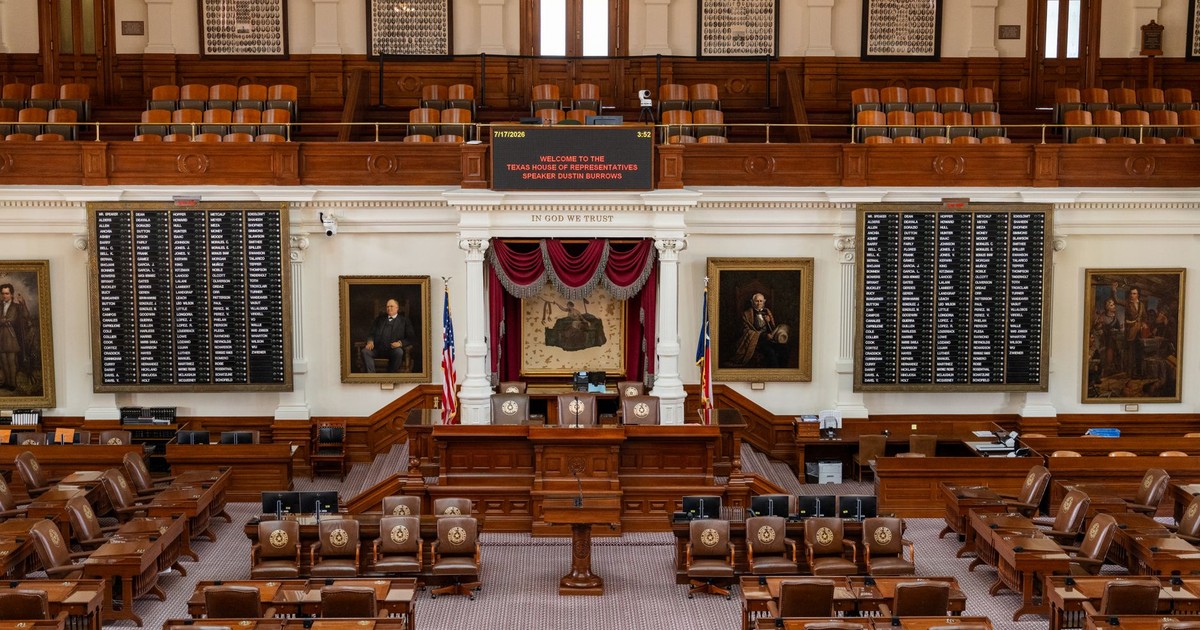
Democrats flip the House in November, likely by a margin of 20 or more seats given current models. The new majority is seated in January 2027. Progressive members who have already been filing articles of impeachment for the better part of two years move immediately to formalize proceedings. Leadership, which has been holding the line against impeachment talk in swing districts all cycle long, faces enormous pressure to either lead the effort or get out of the way.
Until April of this year, most Democrats in Congress deflected when asked if Trump should be removed from office over his latest actions. But Rep. Al Green, the Texas Democrat who has introduced multiple articles of impeachment against Trump dating back to 2017, says the outcome matters less than the signal it sends.
A spate of articles and resolutions seeking to impeach Trump have already been filed in 2026, driven by lawmakers alarmed by his conduct, but successful impeachment and removal remains unlikely while Republicans control at least one chamber of Congress. Several distinct resolutions have been introduced in the 119th Congress, including H.Res.353, H.Res.537, and H.Res.939, with individual members formally filing articles alleging high crimes and misdemeanors tied to threats, abuse of power, and other conduct.
Trump himself has predicted that Democrats will impeach him if they retake the House, and Republicans plan to make that threat a key piece of their midterm messaging. The more Republicans warn voters that Democrats will impeach, the more they remind those same voters of Trump’s presidency as an ongoing subject of legal and constitutional controversy, rather than as a settled, stable chapter.
What November Actually Decides

A Trump loyalist like Hannity, a conservative commentator like Rubin, a former Cabinet secretary like Ross, and the president himself all share a sober assessment. A Democratic House majority in 2027 would almost certainly mean impeachment proceedings. That is not a threat being invented by Trump’s opponents for fundraising purposes. It is what people close to the president and familiar with how Congress works believe would happen.
Views about the incumbent president’s performance have become arguably the most powerful factor shaping modern midterm elections. Democrats are currently struggling to convert pervasive disapproval of Trump’s second term into sufficient support for their House and Senate candidates. That gap, between deep Trump disapproval and still-uncertain Democratic leads in key races, is the central variable between now and November. It explains why Democratic strategists are pushing candidates in competitive districts to talk about Medicaid cuts and grocery prices rather than articles of impeachment, even as the impeachment drumbeat gets louder within the caucus.
Removal from office remains a separate, much higher bar. Even if Democrats win the House majority and vote to impeach, Senate removal requires a two-thirds majority vote, a threshold that has never been reached in any Trump impeachment proceeding and would require a wholesale defection of Republican senators that nobody is seriously projecting. But as Trump’s first two impeachments demonstrated, the process itself carries weight. It consumes political oxygen, dominates the news cycle, and reshapes the terms of the national conversation regardless of the Senate outcome.
Hannity, Rubin, and a growing chorus of voices are warning about two years of investigative hearings, subpoenas, witness depositions, and constitutional arguments running parallel to whatever remains of the administration’s policy agenda. Whether that prospect motivates Republican voters to turn out in sufficient numbers to preserve the House majority, or whether it further energizes an already-enthusiastic Democratic electorate, is the question that November will answer.
AI Disclaimer: This article was created with the assistance of AI tools and reviewed by a human editor.