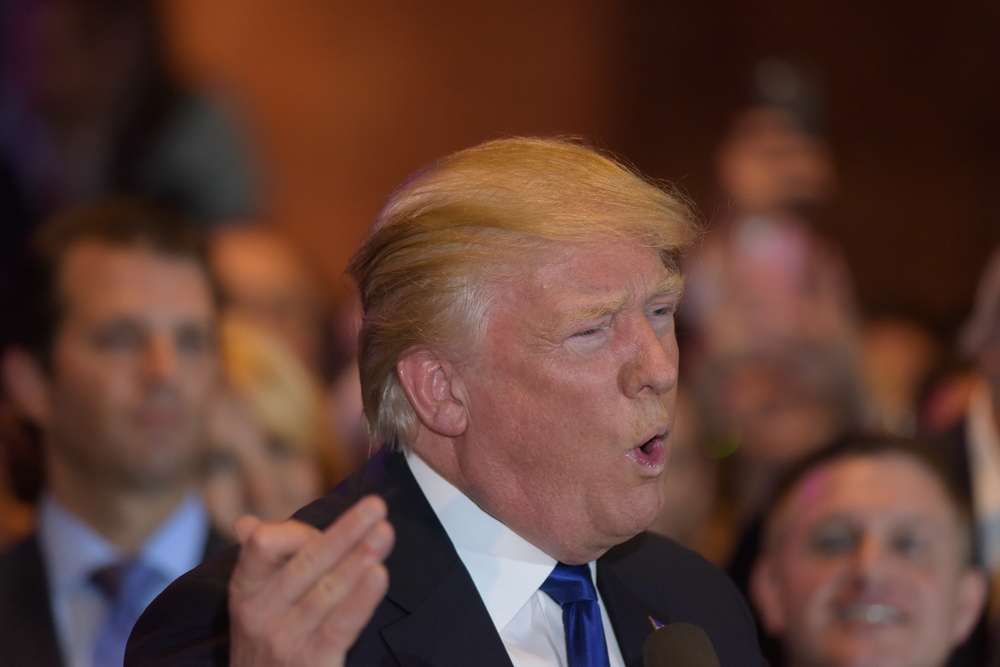

The handshake that went around the world lasted about three seconds. European Commission President Ursula von der Leyen reached Trump, exchanged a few words, and moved on. Then she turned to French President Emmanuel Macron, opened her arms, and kissed him on both cheeks. Photos from the same session showed her warmly embracing Ukrainian President Volodymyr Zelensky and Canadian Prime Minister Mark Carney. The contrast was not subtle. It didn’t need to be.
World leaders had gathered in Evian-les-Bains on Tuesday, June 16, for the first full day of the 52nd G7 summit, a three-day meeting centered on some of the most pressing geopolitical crises of the moment. The formal agenda was heavy: the ongoing conflict in Ukraine, the fragile US-Iran agreement, global trade tensions, energy security. But the images that cut through first weren’t from a press conference or a policy session. They were from the hallways and photo stages, where the choreography of who greets whom, and how, told its own story.
What happened at Évian-les-Bains over those three days amounts to something more than a diplomatic awkwardness caught on camera. It was a snapshot of a relationship between the United States and its closest allies that has been shifting, visibly and persistently, since the start of Trump’s second term.
The Moment Everyone Noticed
As leaders made their way into one of the working sessions, video showed Trump walking ahead of Macron and Zelensky. After arriving at a large table in the center of the room, the US president briefly stood by himself and looked around before the others joined him.
The moment that drew the most attention came when von der Leyen approached the group. She first greeted Trump with a handshake and exchanged a few words before moving on. Moments later, she greeted Macron with a smile, opened her arms, and exchanged kisses on both cheeks. Photos also showed her warmly embracing both Zelensky and Canadian Prime Minister Mark Carney.
It spread fast online. The read, for most observers, was straightforward: the leader of the European Union’s executive arm greeting the US president with the formal reserve you’d offer a difficult colleague, then greeting America’s allies with the warmth of old friends. Whether or not that was the intent is almost beside the point. At events like this, perception is policy – or at least, perception shapes it.
Context matters here. Trump did not fly directly to France – he first arrived in Geneva, Switzerland, where he was greeted by the president of the Swiss Confederation, Guy Parmelin, in line with standard diplomatic protocol. Trump was then transported to Évian-les-Bains via helicopter and armoured car, where he was met by Macron’s head of protocol, Frédéric Billet. According to Politico, Macron had planned to personally welcome Trump on the G7 red carpet, but was tied up in bilateral talks with Brazilian President Luiz Inácio Lula da Silva. The Trump G7 snub narrative, in other words, is real in its optics even when the specifics require some unpicking.
The Family Photo That Said More Than the Communiqué
The working session footage was just one of several images from Évian that circulated widely. At the official summit gathering, Trump posed alone while other leaders exchanged handshakes and engaged in conversation. At another point, he appeared disoriented in front of cameras, walking in the wrong direction before aides gently redirected him.
One image stood out above others: after the official family photo had ended, world leaders began moving from their positions, forming small clusters and chatting. Trump remained motionless at the center. While others mingled, no one approached him. With his right hand raised in his signature thumbs-up gesture, he stared directly into the lens.
As photos emerged from the G7 gathering in France, one shot in particular caught the world’s attention not only because of Trump’s awkward position, but because it struck many as symbolic of the geopolitical situation during his administration. Social media did the rest. One poster on X described the photo as showing Trump “scowling and separate from a dozen other happily chatting heads of state,” while others suggested the image “encapsulates the current state of America pretty well.”
Then came a moment that Raw Story reported with some astonishment: President Trump needed a helping hand from Indian Prime Minister Narendra Modi to climb a single step at the G7 family photo. The moment unfolded at the 52nd G7 Summit in Évian-les-Bains. The White House’s own Rapid Response account posted the clip, describing Trump gathering “with world leaders prior to the start of a cultural showcase and concert.”
What the Summit Was Actually About
Strip away the viral footage and the Évian summit had a substantive agenda, one where Trump’s presence – and his policies – were central to almost every conversation.
Trump arrived in France to meet with top global leaders at the annual G7, held in Évian-les-Bains from June 15 to 17. It marked his fifth time attending the conference in person and came amid heightened global turmoil. It was also the first time the G7 leaders had met in person since the start of the US-Iran war, which had reached its 15th week and continued to impact the global economy, driving up fossil fuel and oil prices.
Trump sought to make clear he arrived at Évian-les-Bains with momentum, pointing to his agreement aimed at ending the US conflict with Iran as a potential breakthrough for global security and a chance to turn the page on a long-adversarial relationship. At his bilateral meeting with Macron on the summit’s opening day, the French president acknowledged the moment. Macron congratulated Trump for finding a path to agreement, calling it “a very important step for peace of the whole world.”
Ukraine was the other dominant thread. US allies at the Group of Seven worked to push the war in Ukraine back up the agenda of President Trump after more than four years of fighting sparked by Russia’s full-scale invasion. Trump said Russia should make a peace deal with Ukraine and he would do what he could to end the war, telling reporters at the summit that too many young men were dying on the battlefield on both sides. G7 leaders ultimately declared “unwavering support for Ukraine,” including agreeing to increase air defense assistance to Kyiv and to step up economic pressure on Russia – commitments Trump signed off on.
The Broader Shift Playing Out in Real Time
During Trump’s first term, world leaders often attempted to manage him by showing flattering or deferential treatment. During his second term, he has proven sharply antagonistic toward the rest of the world, and the international community has become increasingly inclined to give him the cold shoulder over issues including tariffs, the US-Iran war, threats regarding Greenland and Canada, and his stance on Russia-Ukraine.
That shift in how allies treat Trump didn’t happen overnight. A January 2026 Time magazine analysis of Trump’s foreign policy approach found that world leaders increasingly see a president whose personal irritation is a geopolitical variable. “He likes to approach the world stage as a punitive actor,” said Javier Corrales, a political-science professor at Amherst College. “He’s going to treat you badly until you show up with a remarkable offering.”
Some leaders are still working within that framework. World leaders at Évian were taking pains to keep the US president happy and onside, giving him a personalized soccer jersey and a trip to the Palace of Versailles, even as some tested whether there’s an alternative to flattering him to get what they want.
Others are recalibrating entirely. Jeremy Shapiro, research director at the European Council on Foreign Relations, noted that “many leaders still seem intimidated by Trump, but increasingly they are catching on to his pattern of bullying.” He added: “In places as diverse as Canada, Iran, China and the EU, we are seeing increasing signs that leaders now recognize that Trump is afraid of anything resembling a fair fight. And so they are increasingly willing to stand up to him.”
The Newsweek report on how the G7 is positioning itself put it succinctly: in 2018, the allies tried to bend Trump toward the G7. In 2026, the G7 is bending itself around Trump. That’s not capitulation so much as pragmatism. The summit was originally scheduled to begin on June 14 – Trump’s 80th birthday, and a date he’d planned a UFC event at the White House. Politico first reported that France officially rescheduled the summit to avoid the conflict, while Macron said only that the final dates followed consultation with partners.
Trump’s Own Read on All of It
Trump left the summit before it concluded. During the G7 summit the previous year in Canada, he had also left one day early because of the growing conflict between Israel and Iran, that weekend launching military strikes on Iran’s nuclear facilities. The pattern of early departures has become a feature of his summitry.
Asked why he was leaving, Trump told reporters he was committed to doing whatever he could to end the war in Ukraine, and had come away from “a very good” meeting between G7 leaders and Zelensky. His own summary of the gathering was upbeat. Pressed on the optics, he didn’t bite.
The bilateral he held with Macron on June 15 covered Ukraine and the Iran deal. During that meeting, Trump said he had recently spoken with both Zelensky and Russian President Vladimir Putin, and told Macron that, now that the Iran situation was resolved, he would be turning attention to the conflict in Ukraine.
Read More:Trump Revealed Who He Really Is with Frivolous ‘America 250’ Cage Fight
What to Make of All This
The handshake that went around the world – von der Leyen’s warm embrace for everyone except the US president – may say more about the current state of transatlantic relations than any official communiqué from Évian. Not because it was definitively a snub, but because it was immediately read as one by millions of people, and that reading didn’t feel like a stretch.
Diplomatic optics operate at the level of cumulative impression. One cool greeting is nothing. But set it against a family photo where a US president stands alone while everyone else huddles, a viral moment where he needed assistance stepping up to a riser, and a series of early departures from multilateral meetings over two summits – and a picture forms. That picture is of a leader who has, through a consistent set of choices, made himself harder to stand with in public.
Trump’s remarks at the summit highlighted persistent divisions with G7 allies even after the Iran deal eased some tension heading into Évian. European leaders had hoped to rekindle his interest in engaging with Russia on a Ukrainian settlement, and his comments were a reminder that Europe has increasingly had to fend for itself more than four years after the full-scale invasion.
What the images from Évian capture is that relationship made visible: not a single snub, but a genuine strain documented in the body language of a Tuesday afternoon in the French Alps. The communiqué may have been signed. The photo may have been taken. But the way people moved around each other in those halls told a different story, and the cameras didn’t miss a frame of it.
AI Disclaimer: This article was created with the assistance of AI tools and reviewed by a human editor.