
There’s a specific kind of satisfaction that has nothing to do with finishing a project or crossing something off a list. It’s smaller and sharper than that. It’s the moment you learn that the thing you’ve been doing the hard way your whole life has a completely simple, obvious solution that you just somehow never heard about. That split-second of “wait… that’s it?” where you feel equal parts delighted and mildly annoyed.
The hacks in this list are exactly that. None of them require a trip to a specialty store, a subscription to anything, or watching a twenty-two-minute tutorial. Most of them use items you already own – a rubber band, a kitchen spoon, a staple remover. And every single one of them solves a problem that you’ve probably just quietly accepted as an unavoidable part of daily life.
Eleven of them, to be exact. Small annoyances, stubborn problems, and the moments where you mutter under your breath – sorted.
1. Use a Staple Remover to Open a Key Ring
If you’ve ever broken a nail trying to pry open a stubborn key ring, you’re not alone. What should be a simple task – adding or removing keys from a keychain – often turns into a frustrating battle. Most people use their thumbnail as a lever, which works until it doesn’t, usually when you’re already running late and also possibly wearing nice clothes.
The fix is sitting in your desk drawer right now. Grab a staple remover. Hold your keyring in one hand and slide the pointed tips of the remover between the two layers of the ring, right where they overlap. Then press the remover closed, like you’d do to pull out a staple. The ring opens cleanly, the key slides on, and the whole thing takes about two seconds.
The thin prongs gently separate the metal coils, letting you slide the key on or off without even touching the ring itself. If you have acrylic nails or a fresh manicure, this is essentially non-negotiable. Keep a small staple remover in the junk drawer, and this problem is gone permanently.
2. Add a Splash of Vinegar When Boiling Eggs
The fridge mystery of “which eggs are cooked and which ones will explode in a hot pan” is a real and recurring domestic hazard. You can label them with a marker – and many people do – but there’s a tidier way.
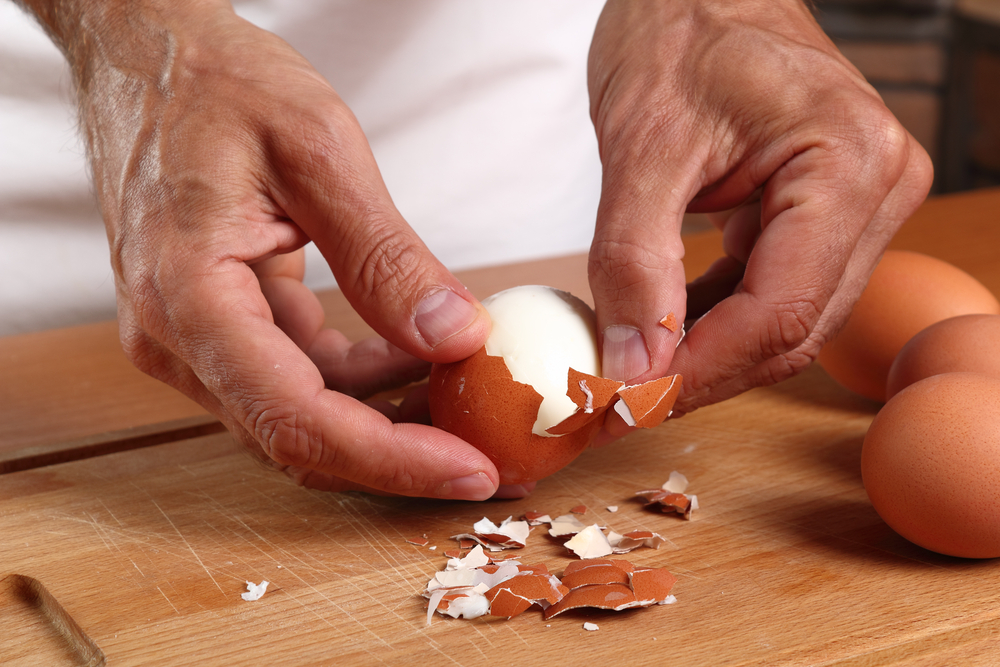
According to household hack experts, adding vinegar to the boiling water will prevent cracked eggs from seeping egg whites, and the vinegar also tints the eggshell slightly so you can distinguish your hard-boiled eggs from the raw ones. A splash of balsamic works particularly well since the deeper color makes the difference easy to spot. You’re not soaking the eggs, just adding enough to the cooking water to leave a subtle tint on the shell.
A small pour of vinegar in the water also makes the shell softer and easier to peel – so you’re solving two problems at once for the price of a capful. Marked eggs that peel more cleanly. That’s a satisfying outcome from something that costs nothing.
3. Stretch a Rubber Band Across a Paint Can
Anyone who has done even a small painting project knows the specific frustration of a rim caked with dried paint. You wipe the brush on the edge out of habit, the paint fills the groove, and then you spend five minutes trying to close the lid with a screwdriver and a sigh. The can is never quite right again.
Stretch a rubber band tightly across the open top of the paint can, running it from one side to the other directly over the center of the opening. When you lift the brush out of the can, wipe both sides of the bristles against the band instead of the rim. The excess paint drops back into the tin rather than pooling in the groove.
A taut rubber band forms a central wiping edge that returns excess paint to the tin, cuts drips, and keeps the rim clean enough to preserve a tight lid seal. When the job is done, the lid closes properly, and the leftover paint stays usable for touch-ups months later. For best results, you still need to close the can carefully, store it upright, and keep it away from extreme temperatures – the rubber band handles the rim problem, nothing more.
4. Lay a Wooden Spoon Across a Boiling Pot
Pasta night has a way of generating two simultaneous crises: the sauce needs stirring and the pot is about to overflow. You turn your back for thirty seconds and there it is – foam cascading down the side of the stove, the burner hissing, and a mess that takes longer to clean than it did to make.
Place a wooden spoon across the top of the pot, resting it flat across the diameter of the rim. The spoon breaks the surface tension of the rising foam, forcing it to collapse before it can escape over the edge. It doesn’t stop the water from boiling – it just interrupts the foam at the critical moment.
It works best on pasta water and other starchy liquids, which are the main offenders anyway. Keep the spoon resting across the pot, not submerged in it, and you can walk away without the constant hovering. One wooden spoon, zero stovetop drama.
5. Throw Ice Cubes in the Dryer to Dewrinkle Clothes
The shirt you needed is buried at the bottom of the laundry pile and you need to leave in twenty minutes. Setting up the ironing board takes time you don’t have. Running a full wash cycle is out of the question. And steaming in the shower feels uncertain, like you’re hoping for a miracle.
According to Family Handyman, throwing a few ice cubes or a wet washcloth in the dryer with your wrinkled clothes works because as the ice melts and the water turns to steam, it removes the wrinkles – though the trick isn’t as effective with heavier clothing and works best on lighter fabrics. If your dryer doesn’t have a steam cycle, a couple of ice cubes do the job, and a quick ten-minute dry should be enough.
The principle is straightforward: the heat of the dryer converts the ice melt into steam, which relaxes the fabric fibers just enough to smooth out creases. For a dress shirt or a linen blouse, this is the difference between leaving the house looking pulled-together and spending another seven minutes with an iron.
6. Use a Hair Straightener on Collar and Cuff Creases
Related to the wrinkle problem, but more surgical: the iron does a fine job on shirt panels, but it’s useless for the narrow spaces between buttons and around the collar without a lot of fiddling. That crinkled strip between the third and fourth button? Almost impossible to reach cleanly.
If you find yourself without a traditional iron or need a quick fix on the go, a hair straightener handles collars and cuffs quickly and effectively. The narrow plates fit exactly where a full iron can’t go. A hair straightener focuses exactly where the problem lives – you don’t need space for an ironing board when all you’re saving is a two-centimeter strip of cotton. Slip the collar between the plates, glide slowly, and the whole shirt looks deliberate.
This is one of those hacks that seems obvious once you hear it and somehow isn’t. The tool is already designed to apply precise, controllable heat to narrow areas. Your hair isn’t the only thing that benefits. Set the temperature lower than you’d use for thick hair – around 150 to 170°C is usually sufficient for most cotton or cotton-blend shirts, while synthetic fabrics like polyester need even less heat. Make sure the plates are clean before you start; any old product residue can leave marks on light fabric.
7. Light Deep Candles with a Strand of Spaghetti
The candle burns down to that awkward middle phase where the wax is too deep to reach with a lighter without singeing your fingers. Most people give up and let the candle sit unlit, or perform that uncomfortable yoga pose where you tilt the lighter sideways and burn your thumb anyway.
If you don’t have a long lighter or just don’t want to spend the money, a piece of uncooked spaghetti works perfectly – use a match or lighter to light the end of the spaghetti, then use it like a long match to reach the wick, and toss the pasta when you’re done. Your candle is lit, your fingers are in good shape, and you still have almost a whole box of pasta left.
It’s essentially a makeshift long match, made from something you almost certainly have in the kitchen. Works for candelabras with multiple candles, too, since the spaghetti burns long enough to travel between several wicks before going out. Keep a strand near your candles the same way you’d keep matches, and this problem disappears entirely.
8. Fade Highlighter Marks with Lemon Juice
You highlighted too enthusiastically in a book you later want to sell, pass on, or use for someone else. Or you highlighted the wrong line in a document that needs to look clean. The highlighter itself is designed to be permanent – that’s the whole point – but lemon juice has a quiet opinion about that.
Lemon juice fades highlighter enough to make it virtually undetectable: cut a lemon in half, get some juice on a cotton swab, and run the swab over the highlighted text to watch the color fade. The citric acid in lemon juice reacts with the fluorescent dyes in the highlighter, breaking down the color without destroying the paper underneath.
It won’t leave the page completely pristine, but it fades the mark to the point where it’s barely visible – which is usually enough. The same technique works on pale surfaces like light-colored fabric or paper bags where a marker has bled through. A lemon and a cotton swab is a surprisingly useful combination.
9. Line Plant Pots with a Coffee Filter
You fill the pot with soil, put the plant in, water it, and then watch the soil drain straight out of the hole in the bottom. The drainage hole is supposed to be a feature, not an invitation for the soil to slowly migrate onto your shelf. Most people use gravel or broken pottery shards to cover it, which works but adds cost, weight, and a trip to find something suitable.
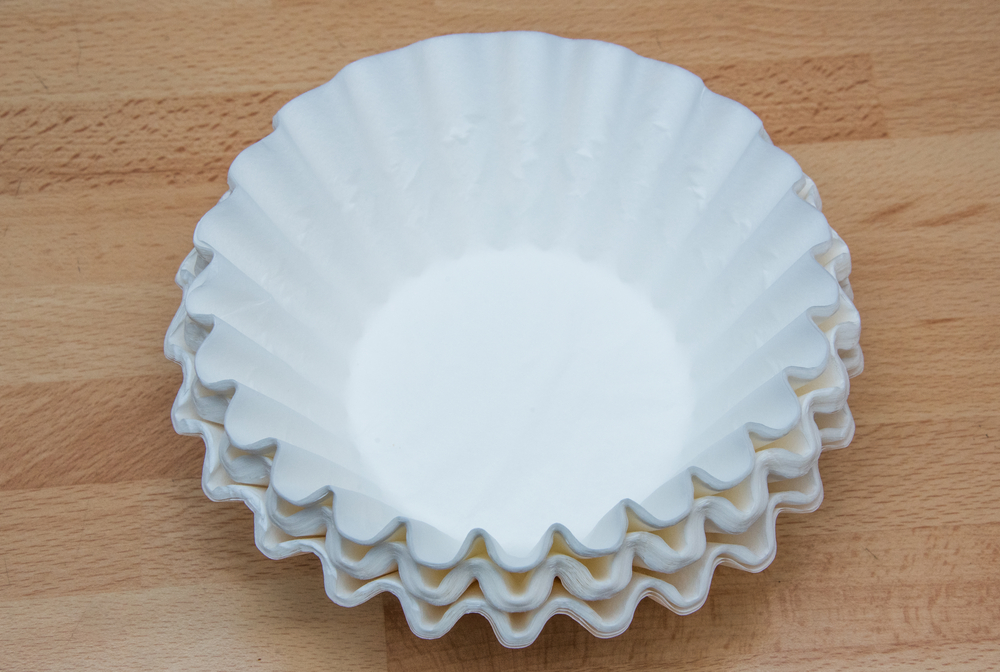
A coffee filter at the bottom of a plant pot reduces potting mix loss – and according to Brad Cross, Greenhouse Coordinator at Eastern Michigan University, cited by Homes & Gardens, “placing a coffee filter at the base prevents potting mix from escaping through the drainage holes when watering, keeping your space tidy and ensuring the soil remains in place to support healthy plant growth.” The filter lets water through while keeping dirt in, and when dirt flows out of the hole with water, the hole can eventually become clogged, making drainage less effective over time.
Coffee filters biodegrade and break down over time at the bottom of the pot, so there’s nothing to retrieve later. They cost almost nothing, fit any size pot (fold larger filters to fit smaller pots), and if you own a coffee machine and any houseplants, putting the two together is an obvious move you probably haven’t made yet.
10. Use Tongs Wrapped in Microfiber to Clean Blinds
Cleaning window blinds is one of those chores that mostly gets avoided because the method – wiping each individual slat with a damp cloth – is deeply tedious. There are dozens of slats, they spin around when you touch them, and the process takes long enough to discourage anyone from starting it.
One of the easiest ways to get into every nook of the blinds is to use a pair of kitchen tongs to grab and then dust the surface – you can use a microfiber cloth over the tongs, or even a pair of old socks. Secure the cloth with a rubber band, spritz with household cleaner, and clamp the tong over each slat in a single swipe.
The tongs grip both sides of the slat at once, cleaning the top and bottom surface in one pass instead of two. As cleaning expert Becky Rapinchuk, owner of CleanMama.net, advises: clean blinds when you’re already cleaning windows – batch the tasks, and a job that usually gets postponed for months takes about eight minutes total.
11. Drop a Copper Penny in a Flower Vase
Cut flowers from the garden or a weekend market rarely last as long as they should. By day four, the water clouds up and the stems start to soften, and what began as a lovely bouquet starts to look apologetic. You can buy flower food sachets, but most of the time those are long gone by the time you need them.
The penny-in-the-vase trick is an old idea that’s been linked to preserving floral arrangements for generations. The logic behind it is real: copper acts as a natural fungicide, and it came about because copper is a natural fungicide, which can help blooms stay fresher for longer. The copper ions released into the water create a mildly hostile environment for the microorganisms that cause stems to decay and water to cloud up.
The key detail is the date on the coin: pennies minted after 1982 have a core made of zinc with only a thin copper coating, which means they contain significantly less copper and could be far less effective in the vase. Check a handful of coins, find one or two pre-1982, and keep them specifically for this purpose. It’s a small thing, but the difference between flowers that last four days and flowers that last eight is noticeable.
The Part That Gets You
None of these take more than ten seconds to learn and most of them are genuinely hard to forget once you’ve seen them. That’s what makes them different from the overly complicated “life organization systems” that require a Sunday afternoon and a label maker to set up. These are things you do once and keep doing without thinking about it.
There’s also something worth noticing about where these hacks live: entirely in objects you already have. The staple remover, the wooden spoon, the rubber band, the coffee filter. Most of them aren’t even repurposed in an unusual way – they’re just being matched with a problem nobody thought to pair them with before. Which raises the quiet suspicion that most of life’s small irritants already have a solution somewhere nearby, if you know to look for it.
The next time something in your day feels needlessly difficult, it might be worth asking the question before accepting the frustration: is there a rubber band for this?
AI Disclaimer: This article was created with the assistance of AI tools and reviewed by a human editor.