
You’ve confused what’s powerful about you with what protects you. Those two things can feel identical for years. The woman who has genuinely done the work to trust herself and the one who has quietly decided she can’t trust anyone else can walk into the same room with the same posture, the same contained confidence, the same ability to handle anything thrown at them. From the outside, they’re indistinguishable. But the cost of living inside each of those versions is completely different.
“Toxic independence” or “hyper-independence” isn’t a character flaw, and it doesn’t start as one. It usually begins as a survival strategy, developed in response to early experiences where depending on others felt unsafe or pointless. The problem is that strategies built for difficult chapters don’t automatically retire when circumstances improve. When your whole identity is organized around not needing anyone, even real personal power can start to look like the enemy. Here’s how to tell the difference.
1. You wear exhaustion like a badge of honor
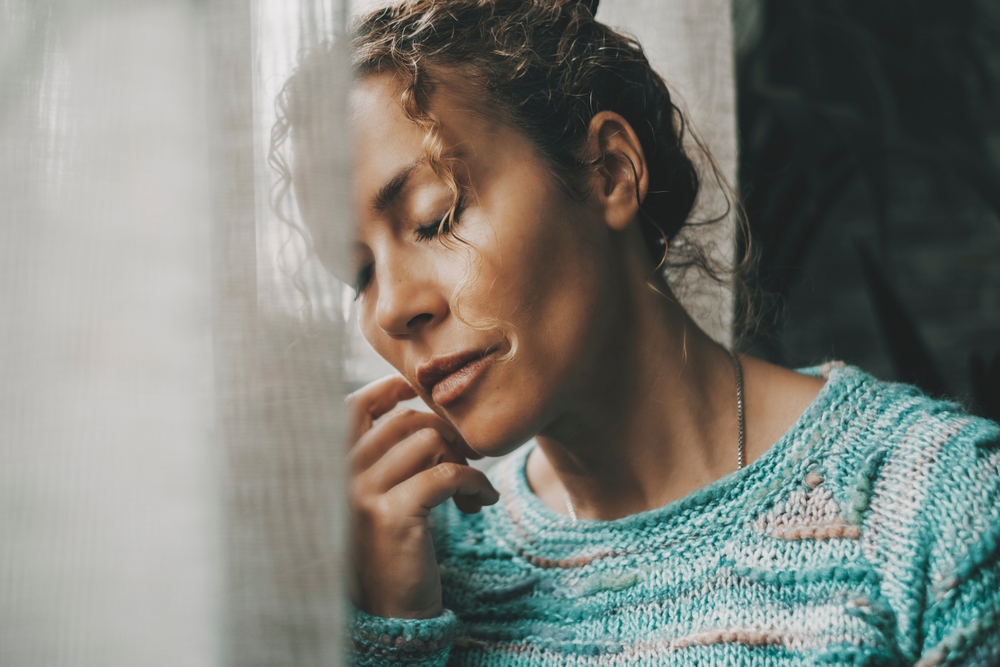
In a culture that glorifies hustle, resilience, and self-sufficiency, independence is often celebrated as a badge of honor. But exhaustion isn’t strength, and the inability to rest isn’t resilience. It’s usually a sign that asking for help has been reclassified as failure.
Genuine feminine power has a quality of steadiness to it. It’s not frantic. It doesn’t require you to be the last one standing or to carry every bag yourself to prove you can. Toxic independence is the belief that asking for help is a weakness, that vulnerability is dangerous, and that you must handle everything alone to prove your worth. Unlike healthy independence, which allows you to be both capable and connected, toxic independence isolates you from the very relationships that make life meaningful.
The tell: you can’t remember the last time you accepted help without immediately figuring out how to repay it.
2. Vulnerability feels like a liability, not a choice
A 2025 qualitative study published in the Psychology of Woman Journal, which used in-depth interviews with 18 high-achieving women who self-identified as having attachment insecurity, identified “fear of emotional exposure” as a core psychological driver of intimacy avoidance, with subthemes including shame linked to emotional needs and hyper-independence. In other words, the discomfort with opening up isn’t random. It’s often connected to an old story about what being seen costs you.
True feminine power isn’t armored. It doesn’t perform strength by keeping feelings locked down. What the world calls softness is often a form of emotional intelligence. What gets dismissed as sensitivity is heightened awareness. And what many assume is fragility is often a refined form of psychological strength. The woman who can be moved without being destroyed is demonstrating something much harder than the woman who never lets anything land.
3. You’re running on overdrive, and it’s starting to show
Studies on chronic stress show that prolonged self-reliance without support activates our stress response systems repeatedly, leading to elevated cortisol levels, which over time contributes to burnout, anxiety, depression, and physical health problems. This isn’t metaphorical. The body keeps the score on every “I’m fine” you said when you weren’t.
People who carry burdens are more closely linked than most people realize, partly because the most burned-out people are often the ones who refuse to acknowledge they’re burning out until something forces the issue. A true sense of personal power doesn’t require you to wreck yourself to demonstrate it. It allows you to pace yourself, delegate, and rest without guilt.
4. You over-function in relationships and then resent the imbalance
Toxic independence can produce a pattern of over-functioning in relationships, always being the helper but never the one receiving help. If you’re the one who organizes, manages, fixes, shows up, and follows through while privately keeping score, that’s not strength. That’s a control strategy dressed up as generosity.
Genuine power in a relationship looks like mutuality. It can give and receive. A 2024 cross-sectional study published in Frontiers in Psychology, which surveyed 426 adults using validated measures of social support, affect, anxiety, and depression, found that social support is positively associated with positive affect and negatively associated with both anxiety and depression symptoms. Put plainly: being supported isn’t a weakness. It’s one of the things that actually keeps you well.
5. You mistake control for competence
The same 2025 qualitative research into high-achieving women with attachment insecurity identified “performance-based self-worth” as another core driver, where participants equated emotional detachment with professional control and consistently prioritized efficiency over emotional connection. The idea that staying in control means staying safe is deeply seductive. It’s also the mechanism that keeps emotional distance firmly in place.
Competence and control aren’t the same thing. A woman operating from real personal power can handle uncertainty. She doesn’t need to manage every outcome or pre-empt every disappointment to feel okay. The compulsive need to control everything is usually working hard to cover up the fear that if you don’t, something will fall apart. That’s not a power position. It’s an anxious one.
6. Closeness triggers an exit impulse
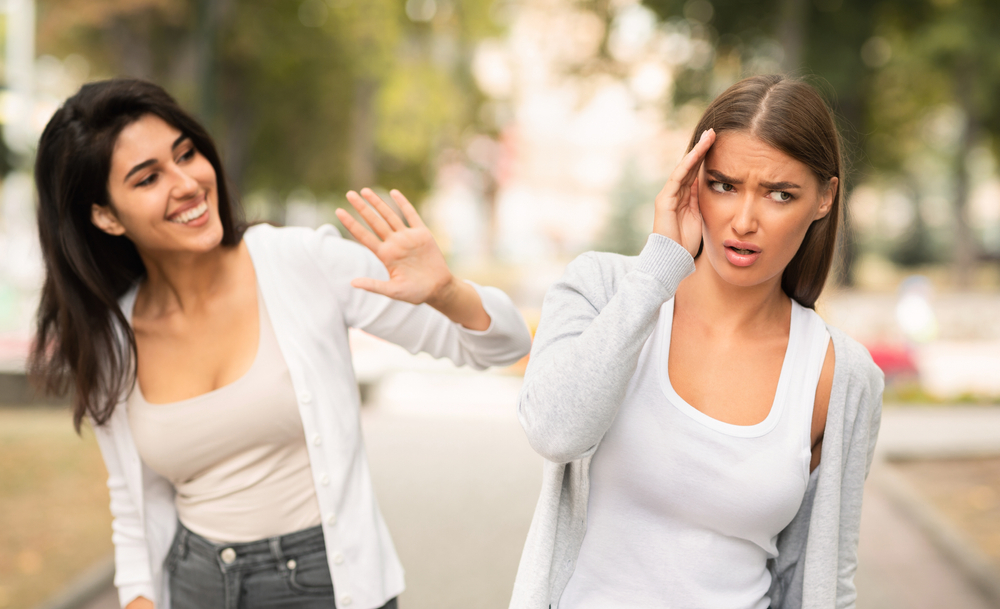
According to the Attachment Project, for someone with a dismissive-avoidant attachment style, their early years didn’t equip them to handle emotional closeness comfortably. As a result of caregivers’ lack of sensitive responses to their needs, people with this attachment style typically attempt to avoid intimacy as much as possible and tend to hide their feelings when confronted by an emotional situation.
The pattern emerges in relationships as a kind of push-pull dynamic. Things are fine until they get real, and then the distance appears. Attachment avoidance involves a discomfort with emotional intimacy, a preference for self-reliance, and relational distrust based on a negative view of others. When closeness feels like a threat, the instinct is to pull back, deny attachment needs, and avoid depending on anyone. This isn’t independence. It’s a trained response to anticipated hurt.
7. You’ve redefined not needing people as a personality trait
Sometimes the “I don’t get attached” stance gets called strength. The woman who doesn’t need validation, who has made peace with being alone. And sometimes that’s true, and genuinely hard-won. But sometimes it’s a story about self-protection that got promoted to an identity.
Toxic independence is the belief that asking for help is a weakness, that vulnerability is dangerous, and that you must handle everything alone to prove your worth. When that belief becomes the story you tell about yourself, it stops being an adaptive coping skill and starts being the thing that closes doors. Real feminine power doesn’t require you to transcend the need for connection. The inclination to seek and provide support is thought to have adaptive evolutionary significance, because interdependency may enhance the likelihood of survival, especially under threat. We are wired for each other. Opting out of that isn’t ascension. It’s isolation with good PR.
8. You can’t receive compliments, help, or care without deflecting
Watch what happens when someone offers to help you carry something, literally or otherwise. If your immediate impulse is to say “no, I’m good” before they’ve finished the sentence, that reflex is worth examining. People who struggle with toxic independence often overextend themselves, refusing support even when it is offered freely.
The inability to receive isn’t modesty. It’s often a deep discomfort with owing anyone anything, with being seen as needing anything, with the implied vulnerability of accepting care. As women grow older, particularly after 40, the cost of performance becomes clearer. It drains energy, distorts ambition, and demands an inefficient use of intelligence and skill. What once felt strategic begins to feel hollow. Receiving graciously, allowing yourself to be helped, isn’t weakness. It’s one of the things power actually permits.
9. Your strength is performed more than felt
If you’re running a constant calculation about how you look, whether you seem capable enough, strong enough, unbothered enough, that’s performance, not power. The goal isn’t to project a version of yourself that reads as unshakeable. That ongoing effort, calibrating how you come across at every moment, is its own kind of exhaustion. And it produces the opposite of poise.
Real grace doesn’t come from rigid perfection. It comes from ease, and ease only comes when you’re not at war with yourself. The women who actually carry themselves with power aren’t usually the ones working hardest to look like they do. They’re not asking “how will this be perceived?” They’re just doing the thing.
10. You’ve stopped asking for things because you’ve preemptively decided the answer is no
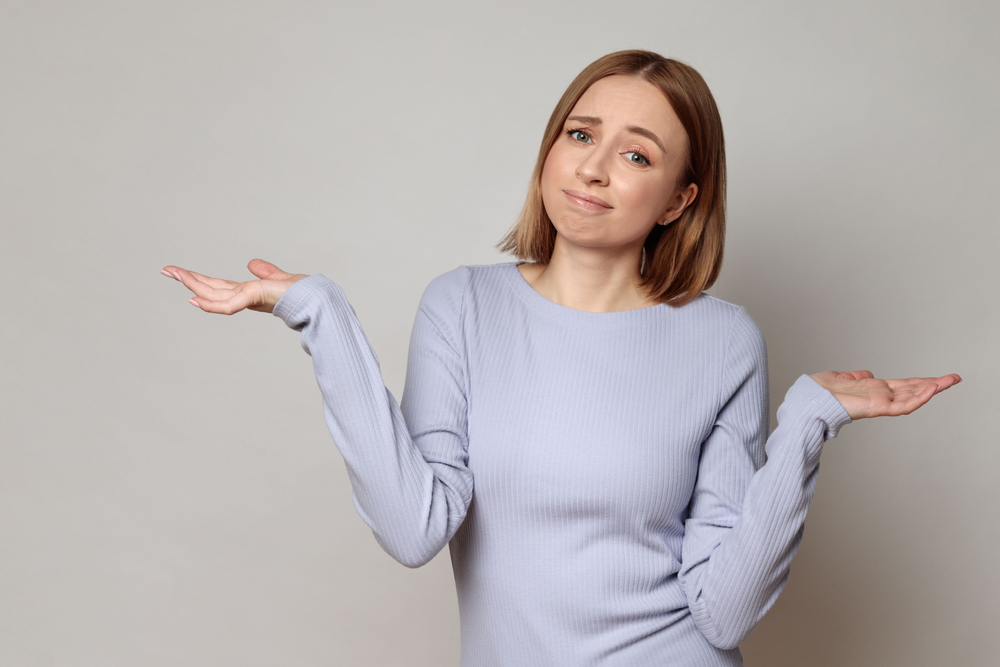
Toxic independence can look like ghosting people when you’re struggling instead of reaching out, or creating quiet tests for others to prove they’re trustworthy, then using their inevitable failures as evidence you should stay closed off. It’s a closed loop. You don’t ask. They don’t come through. You feel confirmed in your belief that no one will show up. But they were never given the chance.
The anticipatory disappointment, the pre-empting, the “it’s fine, I’ll sort it myself” before anyone has had the chance to say otherwise. These aren’t intuition about the world. They’re the shape of old experience wearing intuition’s clothes. A 2025 correlational study published in the International Journal of Interdisciplinary Approaches in Psychology, which surveyed 140 young adults using validated scales, found a significant correlation between hyper-independence and elevated levels of both attachment avoidance and internalized shame. That shame is usually doing the real work. The independence is just what’s on the surface.
11. Your sense of identity collapses when you’re not productive or useful
True feminine power doesn’t live exclusively in the doing. Feminine power is not about power over others; it’s about power within. It’s the ability to express yourself authentically, own your desires, and trust yourself deeply. It’s the courage to live in alignment with your truth, even when the world tells you otherwise.
If you can only feel settled, worthy, or safe when you’re producing results, managing problems, or being useful to someone else, your sense of self is operating on a very thin foundation. Rest, desire, stillness, receiving – these are also expressions of a full self. When the capacity to simply be without performing has quietly disappeared, that’s not feminine power. That’s a treadmill.
Read More: Why More And More Intelligent Women Are Choosing Hypogamy
The most painful sign: You confuse not needing rescue with not needing anyone
This is the most quietly painful one. Independence can become excessive for some who grew up experiencing a role reversal between their caregiver and themselves, which is commonly seen in narcissistic or enmeshed families. In these situations, independence can veer into unhealthy hyper-independence, often as a response to past trauma.
Not needing to be rescued is completely valid. The woman who has built her own life, handled her own crises, and knows she can survive on her own terms has earned every bit of that confidence. But that’s different from deciding that needing anyone at all is the thing you’re protecting yourself against. Healthy independence allows a person to be capable and connected. Toxic independence causes them to isolate themselves and become reluctant to ask for help or rely on anyone else. One is freedom. The other is a prison that looks like freedom.
The Real Thing Doesn’t Need to Prove Itself
Here’s what tends to be true of women operating from genuine feminine power: they’re not running from something. They’re not maintaining a posture. They have the capacity to need people without losing themselves in that need, to ask for help without it meaning they’ve failed, to let someone in without it feeling like a threat to who they are. There is another side to power, a softer, more intuitive, collaborative, and more holistic side. Call it feminine power, authentic power, personal power, or aligned power, the words matter less than the intent: to be true, caring more about the whole than the self, using power for the greater good, not just as power over others.
Toxic independence is exhausting precisely because it never stops. There’s always another thing to handle alone, another offer to deflect, another need to suppress so that the narrative of self-sufficiency stays intact. Genuine power doesn’t ask that of you. It’s steady enough to let things in. If anything on this list landed harder than you expected, that might be the most useful piece of information you’ve had in a while. Not to diagnose yourself or start a project of self-improvement, but just to sit with the question of what you might be protecting, and whether it still needs protecting quite so fiercely.
AI Disclaimer: This article was created with the assistance of AI tools and reviewed by a human editor.