

The argument that beauty is mostly genetics tends to collapse the moment you spend time around someone whose skin glows at 55, whose posture makes them seem ten years younger, and whose eyes are clear in a way that no filter quite replicates. The interesting question isn’t whether those people won the DNA lottery. It’s what they do every single day without thinking twice about it.
The answer, consistently, is small things. Not elaborate 14-step routines or expensive treatments – small, repeatable habits that compound over years in ways that the mirror eventually makes undeniable. These are the tiny habits beauty professionals and researchers keep circling back to: behaviors that cost almost nothing, take almost no time, and make a visible difference that creams and serums cannot fully substitute.
What follows is a list of ten of them. Some you’ll recognize. A few might surprise you. Most are simpler than anything you’ve been sold.
1. Getting to Bed Before the Repair Window Closes

Sleep disruption can compromise the skin barrier and impair collagen production, cellular repair, and wound healing – and those effects land on your face in the morning. The skin does most of its rebuilding between roughly 11pm and 3am, running repair cycles tied to the body’s circadian rhythm. Going to bed at midnight versus going to bed at 10:30pm isn’t simply a difference in total hours. It’s a difference in which part of that window you actually catch.
According to Sleep Education, researchers found statistically significant differences between good and poor quality sleepers. Using a standard skin aging scoring system, poor quality sleepers showed increased signs of intrinsic skin aging including fine lines, uneven pigmentation, and reduced elasticity. The average aging score in good quality sleepers was 2.2 versus 4.4 in poor quality sleepers – meaning chronic bad sleepers scored twice as high on visible skin aging.
Good quality sleepers also recovered more efficiently from stressors to the skin. Recovery from sunburn was more sluggish in poor quality sleepers, with redness remaining elevated over 72 hours, indicating that inflammation resolved less efficiently. A consistent bedtime, earlier rather than later, protects the skin in ways that a serum applied at midnight simply cannot match.
2. Wearing SPF Every Day, Including in Winter
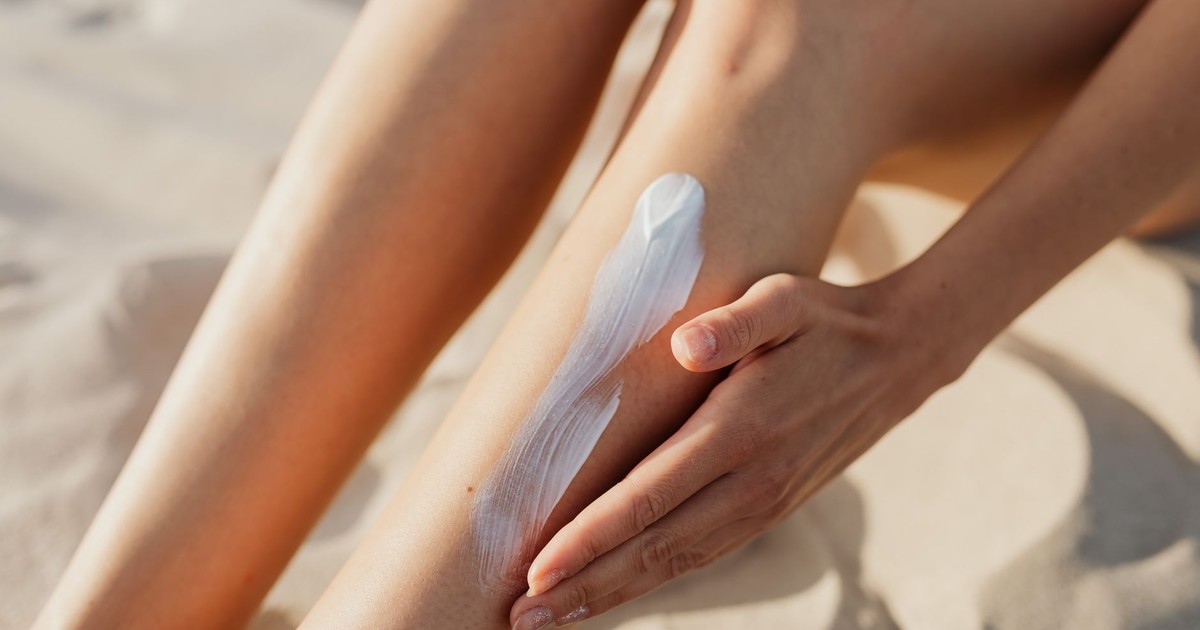
The habit that dermatologists have been recommending for decades turns out to be the one with the most rigorous evidence behind it. In a randomized controlled trial published in the Annals of Internal Medicine, the daily sunscreen group showed no detectable increase in skin aging after 4.5 years. Skin aging was 24% less in the daily sunscreen group than in the discretionary sunscreen group – and “discretionary” in this context meant people who used it when they felt like it, which is exactly what most people do.
The skin-saving effect of sunscreen was observed in all daily-use participants, regardless of age. The instinct is to think sun protection is for the young – that the damage is already done past a certain point. The data says otherwise. Starting at 35, 45, or 55 and applying broad-spectrum SPF 30 or higher every single morning still slows the clock measurably.
Daily use is the whole variable. Cloudy days, winter days, days spent mostly indoors near windows – UV radiation penetrates all of those. Making sunscreen the last step of a morning skincare routine, applied the same way one reaches for a toothbrush, is the habit. Everything else is detail.
3. Drinking Water Before You’re Thirsty
Adequate water consumption and physical activity were linked with better skin hydration in a 2024 study published in MDPI Cosmetics, which examined lifestyle factors and skin moisture levels across different body areas. Skin hydration isn’t just about what you apply topically – it depends on whether your body has enough water to maintain fluid balance in the dermis, the deeper layer where collagen and elastin live.
Inadequate hydration leads to skin that appears parched and flaky, increasing the visibility of fine lines. Consuming fruits and vegetables with high water content – cucumbers, oranges, watermelons – can further support internal water reserves alongside regular drinking.
Most people drink water reactively, when they’re already thirsty – which, in terms of cellular hydration, is already behind. Drinking a large glass of water first thing in the morning before coffee or food, and keeping a water bottle visible throughout the day so drinking becomes a reflex rather than an intention, is the shift that compounds across months.
4. Cleaning Your Phone Screen (and Your Pillowcase)
This one sits in an unglamorous category of beauty habits nobody talks about at length – but the surfaces your face touches daily are doing more to your skin than most people realize. A phone screen accumulates oils, bacteria, and environmental grime that get pressed directly against your cheek and jaw during every call. The breakout pattern that seems to cluster on one side of the face, always the same side, is often a phone problem rather than a product problem.
Pillowcases are the other culprit. Eight hours of contact with a fabric that’s collected dead skin cells, hair product residue, and sweat creates sustained, low-grade irritation. Changing pillowcases every two to three days – or flipping the pillow to use the clean side on alternate nights – makes a noticeable difference for anyone who breaks out around the cheeks and hairline.
Neither habit requires anything new. Wiping down your phone screen with an antibacterial wipe takes about four seconds. The barrier is awareness, not effort.
5. Moving Your Body (for the Circulation, Not the Calories)

Exercise boosts blood circulation, ensuring that oxygen and essential nutrients are delivered to skin cells, which promotes their repair and regeneration. That improved circulation is part of why people who exercise regularly tend to have what dermatologists describe as a “glow” that has nothing to do with highlighter – it’s vascularization. More blood moving closer to the skin’s surface, more consistently.
The specific activity matters less than the regularity. A brisk 30-minute walk five days a week produces meaningful circulation benefits. So does cycling, swimming, or dancing. Sweat itself has some benefit too – it temporarily dilates pores and helps clear debris – though it’s important to rinse the face shortly afterward so that salt and bacteria don’t sit on the skin.
The beauty case for exercise is often framed in terms of stress reduction and cortisol management, and that’s real too. Chronically elevated cortisol breaks down collagen, drives inflammation, and contributes to under-eye puffiness and uneven skin tone. Regular physical movement is one of the most efficient tools for keeping cortisol in check – more effective, for most people, than most supplements marketed for the same effect.
6. Cutting Back on Refined Sugar
A 2025 review published in Food Science & Nutrition found that foods high in trans-fatty acids and refined sugars are related to accelerated skin aging, as they are associated with the production of advanced glycation end products. Glycation – the binding of sugar molecules to proteins like collagen and elastin – makes those fibers rigid and less functional. The clinical result is skin that looks duller, more creased, and less resilient. It’s one of the reasons two people of the same age can look substantially different based on how they’ve eaten for the past decade.
The habit isn’t abstinence. It’s reducing the daily baseline. Swapping a mid-afternoon sugary snack for something with protein and healthy fat, cutting back on sweetened drinks, and reading labels on foods marketed as “healthy” that are often loaded with added sugar – these are the changes that compound over months and years into visible results.
What replaces the sugar also matters. Açai berries, moringa, and spirulina are among the emerging nutrients studied for their ability to counteract skin aging due to their potent antioxidant properties – but you don’t need any of those specifically. Any diet that emphasizes colorful vegetables, berries, olive oil, and fish over processed food is moving in the right direction.
7. Applying Moisturizer to Damp Skin
This is a tiny technique adjustment that dramatically changes how much a moisturizer actually does. The skin’s ability to absorb topical hydration is highest immediately after washing, when the outer layer is slightly damp. Applying moisturizer to completely dry skin means it sits more on top of the surface. Applying it within sixty seconds of patting your face lightly – not fully dry, just not dripping – means the ingredients are drawn deeper into the skin rather than forming a film on top of it.
Hyaluronic acid, one of the most common active ingredients in modern moisturizers and serums, works on this principle. It’s a humectant that draws moisture into the skin – but it draws that moisture from somewhere, and if there’s no surface water available, it can actually pull moisture from the deeper dermis in very dry environments, leaving skin feeling tighter than before. Damp skin, or using hyaluronic acid under a heavier moisturizer that seals it in, solves this.
The sixty-second rule after cleansing is the whole habit. Timer optional.
8. Wearing Sunglasses (to Protect More Than Your Eyes)

Squinting is one of the most underappreciated drivers of expression lines around the eyes. When you’re outside without sunglasses, you squint – even on moderately bright days, even in winter. Over years, the repeated contraction of the orbicularis oculi muscle (the ring of muscle that surrounds the eye socket) creates fine lines that deepen gradually into something more permanent. Sunglasses interrupt that pattern.
There’s a secondary benefit that gets overlooked: the skin around the eyes is the thinnest on the body, roughly 0.5mm compared to around 2mm on the cheeks. That thinness makes it the most vulnerable to UV-related breakdown of collagen and elastin. A pair of sunglasses with UV400 protection – meaning they block 99 – 100% of UV rays – protects that fragile skin along with the eyes themselves.
The habit is simply leaving a pair of sunglasses by the door alongside your keys. The kind you’ll actually put on because they’re there, not the good pair kept carefully in a case somewhere in a drawer.
9. Standing Up Straight

Posture’s impact on how a person looks tends to get discussed in terms of confidence and body language, but there’s a more literal component. When the head drops forward – the position most people hold when looking at a phone or laptop – the skin on the neck is repeatedly folded in the same way, accelerating the appearance of horizontal lines across the throat and chin. The same forward head position also compresses and reduces the apparent definition of the jawline.
Over time, consistently poor posture also subtly affects how the face is perceived. The angle at which you hold your head changes the fall of light across your features and the perceived symmetry of your face. It’s not vanity to notice this – it’s physics. People who stand with shoulders back and chin level look more awake, more assured, and visually younger in photographs than their posture-compromised counterparts, regardless of age.
The simplest correction is a single check: every time you sit down to work or eat, roll your shoulders back once and let your chin come level. That’s it. Not a yoga practice, not a posture corrector. Just the reset, repeated.
10. Keeping a Consistent Skincare Routine (However Short)
The most effective skincare habit isn’t any particular ingredient – it’s consistency. A three-step routine done every single morning and night produces better results than an eight-step routine done sporadically, because the skin responds to regularity. Cell turnover, which governs how fresh and even-toned the surface looks, runs on roughly a 28-to-30-day cycle. Consistent application of even basic products – a gentle cleanser, a moisturizer, and SPF in the morning – compounds across those cycles in ways that weekend-only skincare efforts never can.
The other element of routine that’s often missed is gentleness. Over-cleansing, using products that are too harsh, or changing the routine too frequently disrupts the skin’s barrier function and often causes the irritation and dullness people are trying to fix. Fewer products, applied consistently and in the right order, outperform complexity almost every time.
Read More: 5 Foods That Help Your Skin Glow & 5 That Cause Break-Outs
The Part No One Tells You
The research consistently circles back to work not because any one of them is extraordinary, but because good-looking skin is mostly the accumulated result of showing up for the ordinary ones every day. Sleep. Water. Sun protection. Movement. Routine. These are genuinely unglamorous and genuinely effective in ways that most products sold to you are not.
What makes them harder to stick with than they should be is that nothing happens overnight. The person who starts wearing SPF daily at 42 won’t see a difference next Tuesday. They’ll see it in how their skin ages over the next five years relative to how it would have aged without it. That delayed feedback loop is exactly why so many people abandon the habits that work in favor of the product that promises a result by Friday.
The skin keeps score, though. Every day of adequate sleep, every SPF-wearing winter morning, every glass of water drunk before dehydration sets in – the biology adds it up even when you can’t see it yet. Some of these patterns take months to register in the mirror. The ones that do tend to stick.
AI Disclaimer: This article was created with the assistance of AI tools and reviewed by a human editor.