
The idea of the “worst” state to live and work in always starts arguments, and that is fair. People want different things from a place. Some people care about job growth first. Others care about healthcare, schools, roads, housing costs, public safety, or whether a state makes everyday life feel manageable. Still, broad rankings do have value when they measure more than one thing. The World Population Review resource you shared uses the U.S. News Best States framework, then reverses it to identify the lowest overall performers. That method looks at healthcare, education, economy, infrastructure, opportunity, fiscal stability, crime and corrections, and natural environment.
For a topic like this, “live and work” has to mean more than whether there are jobs in a state. It has to include whether the roads function, whether healthcare is within reach, whether schools prepare kids properly, whether public safety is stable, and whether a state gives workers and families a fair shot at building a decent life. A state can have an okay economy on paper and still be hard to live in when the schools lag, crime rises, or public systems keep falling behind. That is why this ranking is more useful than a single-metric list built only around taxes, wages, or home prices.
It is also worth saying that none of these states are empty of value. Every one of them has strong communities, decent employers, and people who genuinely love living there. But statewide rankings are not judging the best block, the nicest suburb, or the one metro area that bucks the trend. They are asking a wider question. When all the major systems are taken together, which states make daily life feel harder than it should? These ten land at the bottom because too many weak points keep piling up at once.
How This Ranking Was Built
The ranking comes from World Population Review’s 2026 page on the worst states to live in, which draws from the U.S. News Best States model. That model uses 71 metrics across eight broad categories. The key point is that it is not just scoring business conditions or cost of living. It is trying to capture how well a state works for the people living in it. That includes practical issues like healthcare access, school performance, economic momentum, road quality, affordability, budget health, crime, incarceration, air quality, and water conditions.
That wider lens matters because state quality is rarely about one issue. A lower tax burden does not mean much if roads are failing and public health is weak. A cheap house is less appealing when wages are low and crime is high. Strong hospitals alone cannot rescue a state where the schools underperform and infrastructure keeps breaking down. The states at the bottom of this list tend to have multiple weak categories moving together, and that is what makes them difficult places to recommend for the average worker or family.
Pennsylvania
Pennsylvania comes in tenth on this list, and that may catch some people off guard. It is not usually talked about the same way as states in the Deep South or states with more visible poverty challenges. It also has real strengths. Healthcare ranks relatively well at 11th, and crime and corrections sit at 17th, which is better than many states ranked around it. Those strengths keep Pennsylvania from sinking lower. But once you move past those categories, the picture gets rougher. Education ranks 39th, economy 38th, infrastructure 43rd, fiscal stability 39th, and natural environment 40th. That is too much drag for a state that wants to market itself as a reliable all-around place to build a life.
The bigger issue is that Pennsylvania’s problems feel baked in rather than temporary. World Population Review points to significant pension liabilities and slow progress on long-term obligations, which weighs on fiscal stability. Infrastructure remains another ongoing headache. The state has one of the highest shares of structurally deficient bridges in the country, especially outside the biggest metro areas. On top of that, pollution remains a problem in places like Pittsburgh and Philadelphia, which hurts the natural environment score. So while Pennsylvania still has excellent hospitals, well-known universities, and large job markets, it also asks residents to deal with aging systems and long-standing financial strain. That combination makes it less attractive than its reputation sometimes suggests.
Oklahoma
Oklahoma ranks ninth worst, and the numbers explain why quickly. Healthcare ranks 48th and education also ranks 48th, which is a brutal pair of scores for any state trying to support workers and families. A state can have some economic momentum and still struggle badly when two of the most important quality-of-life pillars rank near the bottom. Oklahoma’s economy comes in stronger at 19th, which helps keep it from dropping lower, but that is not enough to cancel out what weak schools and poor health outcomes do to everyday life. Crime and corrections also rank a weak 36th.
The state’s underlying social picture makes the ranking more understandable. The source notes a high premature death rate, weak physical activity levels, and a 27% increase in suicide deaths since 2010. It also points to a rising housing cost burden and a steep gap in physical distress between lower-income and higher-income adults. In other words, even where Oklahoma does some things right, the strain is not being felt equally. Crime adds more weight. The state has the nation’s fourth-highest incarceration rate, and the murder rate ranks in the upper tier nationally. For someone trying to build a career and a stable home life, that means Oklahoma can feel like a place where you are always working around deeper system failures. Jobs may exist, but the state does not make the broader experience of living there easy.
Michigan
Michigan ranks eighth worst, and it is one of the more uneven states on this list. It is not weak in every category. Healthcare ranks a decent 22nd, and opportunity is better than average for this bottom ten group at 23rd. But the trouble is that too many other categories still sag badly. Education ranks 45th, infrastructure 44th, crime and corrections 39th, economy 33rd, and fiscal stability 38th. That is enough to leave the state near the bottom overall, even with a few areas of progress.
Michigan’s challenge is that many of its issues affect the daily rhythm of life. Poor infrastructure changes commutes and reliability. Weak education changes long-term household prospects. Crime pressure changes how safe and investable communities feel. The source highlights a 17% increase in homicide rates over the past decade. It also notes that frequent mental distress is up 33% since 2014. These are not abstract numbers. They shape what life feels like for workers, parents, and employers. There are brighter points, including a lower uninsured rate, growth in primary care providers, and improvement in severe housing problems. But those wins are not yet large enough to pull Michigan out of the lower tier. It remains a state with strong industrial history and real local strengths, yet too many statewide weaknesses still get in the way of a stronger quality-of-life ranking.
Arkansas
Arkansas lands seventh worst, and its position comes down to a familiar pattern, weak healthcare and weak public safety. Healthcare ranks 47th, crime and corrections 48th, and infrastructure 41st. Education is only somewhat better at 36th. The brighter spots are economy at 26th and fiscal stability at 15th, but solid state bookkeeping can only do so much when the lived experience on health and safety remains difficult. For a person thinking about both work and everyday life, Arkansas can look affordable on the surface while still carrying major tradeoffs.
The source points to several reasons the state struggles. Provider access remains limited, especially in dental care. About 8.9% of residents are still uninsured. Frequent mental distress has risen 35% since 2014. The homicide rate has jumped 47% over the past decade, and Arkansas has the third-highest incarceration rate in the country. Those issues tend to overlap rather than stand alone. Poor health outcomes can reduce workforce participation. High incarceration and violent crime can weaken communities and make business growth harder. Lower educational attainment and economic hardship often feed into the same cycle. Arkansas is not a place without opportunity, and many residents make a good life there. But as a statewide package, it still asks people to accept a lot of strain in exchange for a lower-cost lifestyle. That keeps it firmly in the bottom ten.
Alabama
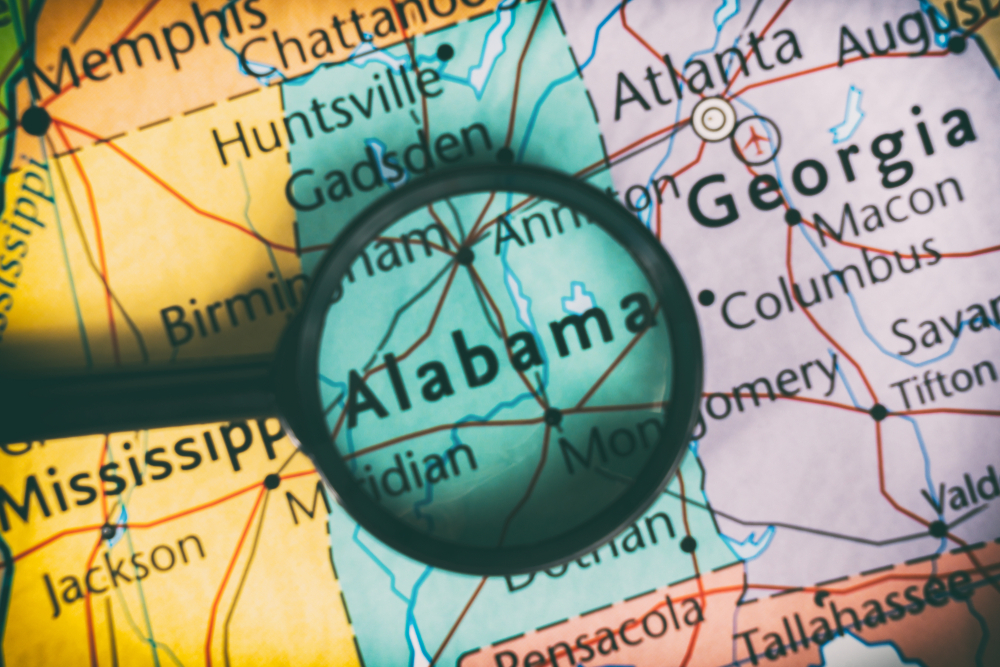
Alabama ranks sixth worst, and this is another state where the ranking is driven less by one huge collapse and more by too many underperforming basics. Education ranks 44th, healthcare 40th, economy 36th, infrastructure 33rd, and fiscal stability 31st. None of those scores alone would force a state into the bottom tier, but together they create a place that never seems able to break free of mediocrity. Alabama has made some progress in recent years, but the pace remains slower than what is needed to compete with stronger states.
Education remains a big reason Alabama struggles in live-and-work discussions. The source notes that the state has improved since ranking 50th in education back in 2019, but its student performance and adult outcomes still lag. Healthcare tells a similar story. America’s Health Rankings places Alabama low on overall outcomes, with a high prevalence of chronic conditions. Diabetes in adults rose 33% between 2011 and 2023, which says a lot about the broader public health burden. That matters for workers, employers, and families alike. A state with weak health outcomes ends up carrying lower productivity, higher personal strain, and more pressure on local systems. Alabama is not impossible to live in or build a career in. But it remains one of those states where progress exists in pieces while the overall structure still falls short.
West Virginia
West Virginia ranks fifth worst, and the state’s profile is one of the clearest on the list. Healthcare ranks 49th, education 47th, economy 47th, and infrastructure dead last at 50th. Opportunity is oddly strong at 8th, which may reflect some affordability measures, but that one bright result cannot rescue the state from the wider pattern. When the roads, schools, healthcare system, and economy all rank near the bottom at once, the state becomes difficult to recommend as a place to build long-term security.
Infrastructure is the most damaging category here because it spills into almost everything else. According to the source, nearly a third of West Virginia’s roads are in poor condition. The state earned a C in the 2022 infrastructure report card, up from a D in 2020, which shows some improvement but still signals systems that are aging and at risk. That has obvious effects on transportation, business costs, emergency access, commuting, and daily convenience. Even if a resident likes the mountains, the slower pace, or the lower housing costs, they are still living in a state where too many fundamental systems feel stretched. That is the story with West Virginia. It is not that there is nothing good there. It is that the friction around ordinary life remains too high. For workers, families, and employers, that makes the state a harder place to choose.
New Mexico
New Mexico ranks fourth worst, and it is one of the states where the contrast between beauty and hardship is especially sharp. The scenery is striking. The culture is rich and distinct. The climate appeals to many people. But the ranking is not about landscapes or identity. It is about how well a state works for residents in practical terms, and New Mexico performs badly in several key categories. Education ranks 50th, crime and corrections 49th, economy 43rd, infrastructure 42nd, healthcare 38th, and opportunity 37th. That is an extremely hard profile to overcome.
Education is the state’s biggest drag. World Population Review says New Mexico’s public schools rank worst in the country, with the nation’s lowest fourth-grade reading levels and a high school graduation rate of just 78%, well below the national average. Public safety adds more weight. The homicide rate has risen 110% over the past decade, and drug deaths more than doubled between 2010 and 2022. Those numbers make it hard to paint the state as an easy place for families or workers trying to plant roots. There has been progress in healthcare access. The uninsured rate has been cut in half, and smoking has fallen. Those gains matter. Still, they are not enough to offset the fact that New Mexico remains weak in the systems that shape long-term mobility, public safety, and quality of life. It is a state with strong character, but it still struggles to deliver a solid day-to-day experience for too many residents.
Mississippi
Mississippi ranks third worst, and its place near the bottom has become almost routine. The state has stayed in this range for years, which suggests these are not temporary setbacks. Healthcare ranks last in the nation at 50th. Economy ranks 49th. Infrastructure ranks 47th. Fiscal stability ranks 47th. Education at 34th is not as weak as in some other states here, and crime and corrections at 20th looks better than expected, but the rest of the profile is so poor that Mississippi still lands near the very bottom overall.
From a live-and-work perspective, Mississippi’s problem is that health and economic weakness reinforce each other. The source notes serious healthcare struggles, a 113% increase in homicide rates over the past decade, and a 36% rise in diabetes since 2012. It also says nearly 19% of residents live at or below the poverty line and the state has the lowest per capita income in the country, at $30,529. That kind of economic base limits what families can save, what communities can fund, and how much flexibility workers have when something goes wrong. There has been progress in some areas. The uninsured rate has dropped and food insecurity has improved. But those gains have not changed the broader fact that Mississippi remains a very difficult place to pair decent work with strong public systems and healthier outcomes. It is one of the most persistent examples in the country of a state where the wider environment keeps making life harder than it needs to be.
Alaska
Alaska ranks second worst, and that is likely the placement that surprises people most. It does not fit the usual mental image of a struggling state. Alaska has dramatic natural beauty, a distinct culture, and in some industries, strong pay. But this list is about the broader quality of living and working across the full state, and that is where Alaska falls hard. Education ranks 49th, economy 45th, infrastructure 46th, crime and corrections 46th, fiscal stability 44th, and opportunity 36th. Healthcare is only middling at 29th. Those numbers leave Alaska near the very bottom overall.
Geography is a big part of the challenge. Alaska’s remoteness makes roads, communications, public services, and supply chains harder to maintain than in the lower 48. The source points to infrastructure gaps in remote areas that make transportation and essential services more difficult to deliver. Crime rates remain high, and the economy is slowed by heavy dependence on volatile resource revenues. Even the health picture is mixed. Alaska has seen more pediatricians per capita and better early childhood education enrollment, but frequent mental distress among women ages 18 to 44 has surged 46%, and injury deaths among women ages 20 to 44 have risen 25%. Alaska is one of those states where a person can still love the place deeply while admitting that the broader systems are uneven and often expensive to live with. That is what pulls it so far down the ranking.
Louisiana
Louisiana ranks worst overall, and the breadth of the weakness makes the result hard to dispute. Healthcare ranks 44th, education 46th, economy 50th, infrastructure 48th, opportunity 46th, fiscal stability 46th, crime and corrections 50th, and natural environment 49th. When a state ranks that low in nearly every category, it is not about one bad statistic or one rough year. It points to a broad systems problem. According to World Population Review, Louisiana has been stuck in this bottom position rather consistently since 2017.
The state’s biggest issue is that there is no clear category strong enough to balance the rest. If the economy were healthy, some residents might overlook the other problems. If schools were improving fast, people might bet on the future. If crime were lower, the state would feel more stable for families and businesses. But Louisiana ranks at or near the bottom in too many places at once. It has the lowest-ranked economy in the country and the lowest-ranked crime and corrections score, while environmental vulnerabilities tied to air quality and water systems drag the natural environment category down as well. Health outcomes add another layer of strain. There has been progress in access to care, including a 44% rise in primary care providers since 2018 and a 58% increase in adolescent HPV vaccination coverage. But adult depression is up 49% over the past decade, and asthma rates climbed 43%, affecting more than one in ten adults. That combination leaves Louisiana looking like the clearest example of a state where too many systems are moving in the wrong direction at once.
What These States Have In Common
The common thread across these ten states is not one shared flaw. It is an accumulation. Weak healthcare often overlaps with weak education. Weak infrastructure often overlaps with slow economic growth. Public safety pressures often sit beside poverty, higher chronic illness, or weak fiscal health. Once those problems start feeding each other, they become much harder to fix. A state does not just lose ranking points in one box. It becomes a place where daily life has more friction, where workers face more barriers, and where employers have a tougher time recruiting and keeping talent.
Another pattern is that affordability alone does not save a state. Many lower-ranked states try to compete on lower home prices or lower taxes, and those things do matter. But cheap living is not the same as good living. If lower costs come with weak schools, limited healthcare access, aging roads, or low wages, the bargain is not as strong as it first appears. That is one reason these rankings remain useful. They remind people that quality of life is built from systems, not slogans.
Why Rankings Like This Still Have Limits
Even a broad ranking has limits. States are big, and they contain very different local realities. A person can do well in a state that ranks poorly, especially if they live in one of its stronger cities, work in a resilient industry, or have family support nearby. Another person can struggle in a top-ranked state because housing is too expensive or job opportunities do not match their skills. A statewide ranking cannot fully capture any individual life.
Still, rankings like this are useful for one main reason. They show where the odds are harder. They point to the places where residents are more likely to face weak public systems, slower growth, or heavier structural strain. They do not tell you where happiness is impossible. They tell you where the baseline is tougher. For anyone comparing relocation options, career moves, or long-term family plans, that kind of information is worth taking seriously.
Final Thoughts
The ten worst states to live and work in, based on the World Population Review page and the U.S. News framework it uses, are Pennsylvania, Oklahoma, Michigan, Arkansas, Alabama, West Virginia, New Mexico, Mississippi, Alaska, and Louisiana. Louisiana ranks worst overall, while Pennsylvania comes in as the least bad of this bottom group. The exact order matters less than the larger message. These states keep landing near the bottom because too many core systems, healthcare, education, economy, infrastructure, safety, and environmental quality, remain weaker than the national standard.
The real lesson is that people do not live inside one metric. They live inside roads, hospitals, schools, budgets, neighborhoods, and paychecks. When too many of those systems weaken at the same time, life becomes heavier than it needs to be. That is what this ranking is really measuring. Not whether a state has charm, scenery, or pockets of success, but whether it gives ordinary people a fair shot at building a stable life. On that test, these ten states still have the most ground to make up
This article was created with the assistance of AI tools and reviewed by a human editor.