

Economists call it the “teacher pay penalty,” and it has been climbing since the mid-1990s. In 1996, teachers earned about 6% less per week than other comparably educated professionals. By 2023, that figure had ballooned to nearly 27%. The number wasn’t smaller before because teachers were poorly paid then either. It’s larger now because every other profession kept moving while teaching largely didn’t.
A 35-year-old with a master’s degree who chose to teach instead of going into business or finance is looking at a salary that falls about $30,000 a year short of what her peers are earning. That’s not a rounding error. That’s a mortgage payment. That’s the choice between a second job on Sunday or a lesson plan.
What the Numbers Actually Show

The NEA’s April 2026 Rankings and Estimates Report found that the average public school teacher salary rose from $71,985 in 2023 – 24 to $74,495 in 2024 – 25, a nominal gain of 3.5%. On paper, that reads like progress. In practice, it barely covers inflation, and it still leaves teachers earning substantially less in real terms than they did at the start of the previous decade. After adjusting for inflation, teachers nationwide earned 5% less than they did 10 years ago.
The state-by-state picture is even starker. State average teacher salaries ranged from California ($103,552), New York ($98,655), and Washington ($96,589) at the high end to Mississippi ($54,975), Florida ($56,663), and Louisiana ($56,785) at the low end. That’s a nearly $50,000 swing between the best- and worst-paying states, and in most of the lower-paying states, the cost of living has risen sharply enough that the nominal salary offers teachers a worse standard of living than those same figures would have provided five years ago.
Starting salaries are where the teacher salary crisis bites hardest. The average starting teacher salary was $46,526 in 2023 – 24, still $3,728 below 2008 – 2009 levels. A brand-new teacher walking into a classroom in 2024 earned, in inflation-adjusted terms, less than a teacher stepping into their first classroom during the financial crisis of 2008. Only 35% of school districts now offer a starting salary of at least $50,000.
Too many potential educators never enter the classroom in part because of low starting salaries and a widening wage gap between teaching and other professions requiring similar education. The pipeline into the profession is narrowing at exactly the moment the profession needs it to widen.
The Second Job That Shouldn’t Have to Exist

One of the clearest signs of how unsustainable this has become is what teachers are doing on evenings and weekends. A March 2026 Walton Family Foundation-Gallup study conducted in partnership with the Bipartisan Policy Center found that 71% of U.S. teachers hold at least one second job.
The breakdown matters. Nearly one in three teachers (31%) report holding a second job unrelated to teaching, while 62% say they have held a second job related to education, such as coaching, tutoring, or mentoring. And these roles are not limited to school breaks: among teachers with side jobs, 85% say the work takes place at least partially during the school year.
These aren’t teachers picking up summer landscaping work to save for a vacation. Most are working second jobs while also planning lessons, grading papers, and managing classrooms of 25 or 30 kids. The time that goes into a DoorDash shift or a weekend tutoring session is time that used to go into professional development, into reading, into being a better teacher the next morning.
Teachers experiencing the greatest financial strain are more likely to report burnout. Among teachers who find it difficult to get by, 52% say they feel burned out very often or always, compared with 41% of those getting by and 34% of those living comfortably. Financial pressure and professional exhaustion track each other closely in the data. They’re a picture of people being slowly worn down by a system that asks a great deal and compensates them like it doesn’t notice.
A majority of teachers (52%) say they are getting by on their present household income, while 28% report living comfortably, and 21% say they find it difficult to get by. For a profession that requires a college degree and, in most states, a master’s degree within the first few years of employment, those numbers reflect a contract that has quietly broken down.
Who Pays the Price Inside the Classroom

The consequences of the teacher salary crisis don’t stay with teachers. They walk into the classroom every morning and sit in the front rows.
According to the Learning Policy Institute’s 2025 teacher shortages factsheet, enrollment in teacher preparation programs nationally dropped sharply after the Great Recession, declining by about 100,000 candidates between 2012 – 13 and 2014 – 15. Since then, the national numbers have stabilized, but with diverging trends across states. Between 2016 – 17 and 2020 – 21, 27 states saw ongoing enrollment declines of 5% or more. The profession isn’t just struggling to hold onto the teachers it has. It’s struggling to attract the next generation.
Attrition comprises about 90% of annual teacher demand, meaning the vast majority of open positions each year exist not because schools are growing, but because teachers are leaving. Districts spend most of their energy replacing people they’ve already trained, already invested in, and already lost.
When districts face shortages, they often hire underprepared teachers or those not fully certified for their assignments, staff classrooms with substitute teachers, and increase class sizes. All of that undermines student achievement. Nationally, a 2025 analysis found that about 1 in 8 of all teaching positions, over 410,000, were left vacant or filled by teachers not fully certified for their assignments. Schools with the highest concentrations of students of color are 4 times as likely to employ an uncertified teacher as schools with the lowest concentrations.
The students most affected are not the ones in well-funded suburban districts. The teacher salary crisis hits hardest in high-poverty schools and in districts that can least afford to compete on compensation. Those are the classrooms most likely to have an undertrained or exhausted adult at the front.
The Union Difference – and Why It’s Growing
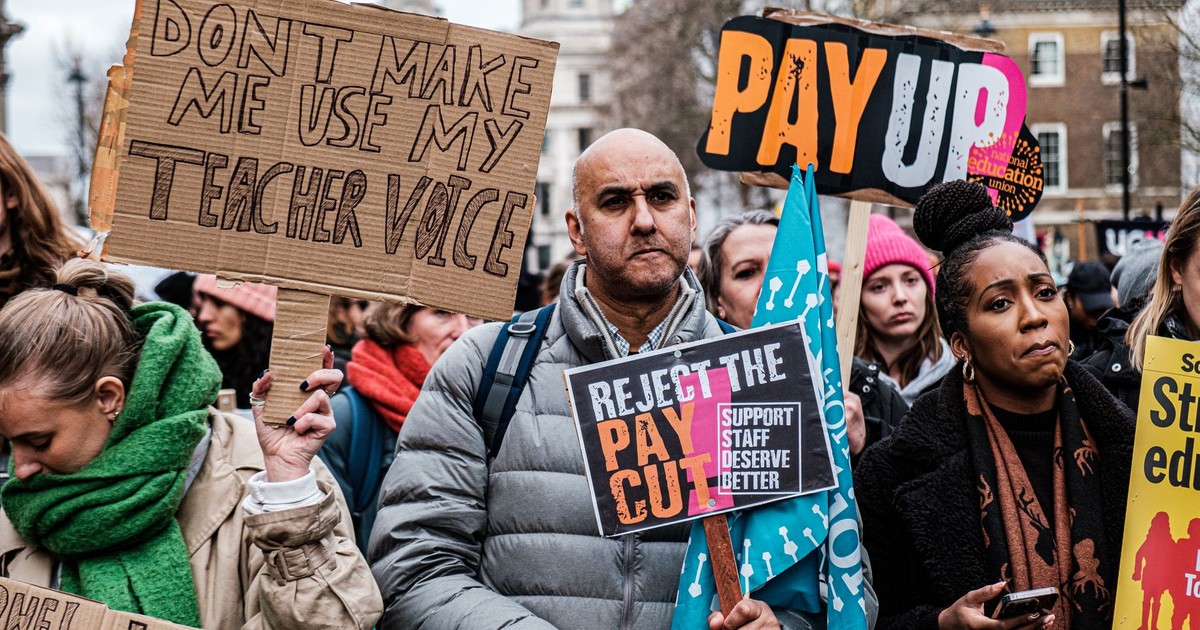
One of the clearest levers on teacher pay is collective bargaining, and the gap between states that have it and those that don’t has become impossible to ignore. Teachers earn 24% more in states where they have collective bargaining rights. Over 96% of school districts with teacher salaries that top $100,000 are in states with a collective bargaining law.
The racial dimension compounds the problem. Black teachers are more likely to live in states that prohibit collective bargaining, with salaries nearly 30% lower than teachers in states that require it. While Black teachers make up 6% of public school teachers nationwide, they account for up to 20% of teachers in some Southern states that prohibit collective bargaining. On average, Black teachers earned $4,400 less than white teachers, and female teachers earned $7,000 less than male teachers, even after controlling for years of experience and education level.
The Burnout That Numbers Can’t Fully Capture

RAND’s 2025 State of the American Teacher survey found that teachers reported working a total of 49 hours per week on average, which is 10 hours more than their contracted hours. Those hours are uncompensated. The grading, the lesson planning, the parent emails at 9pm: none of it shows up in the salary figure.
The share of teachers reporting burnout fell from 60% in 2024 to 53% in 2025, but stress and depression symptoms remained largely unchanged, and more teachers reported frequent job-related stress. A burnout rate dropping slightly is not necessarily good news. Some of those teachers who no longer report burnout aren’t recovering. They’ve left.
87% of teachers have expressed concern over low pay, and the share intending to leave their jobs fell to 16% in 2025 from 22% in 2024. That remaining 16% is not a small number. In a workforce of over 3 million public school teachers, it represents hundreds of thousands of people planning their exit.
What Actually Changes Things
The states that have made the most progress tend to have a few things in common: strong collective bargaining protections, sustained investment in salary schedules across entire careers rather than just starting pay, and the political will to treat teacher compensation as infrastructure rather than a line item to trim.
The largest one-year increases in 2024 – 25 were in Nevada (11.8%), the District of Columbia (9.7%), and Delaware (7.6%). Those gains were not accidental. Nevada’s increase came off the back of sustained union advocacy and legislative action. The District of Columbia has spent years investing in teacher salaries as part of a broader effort to attract and retain talent in a high cost-of-living city.
The counterexample is instructive. North Carolina, which prohibits collective bargaining for teachers, is projected to drop to 46th in the nation for teacher pay for the 2025 – 26 school year and is estimated to be the only state where teacher salaries actually dropped. North Carolina teachers are earning around $16,500 less than the projected national average this school year.
Housing costs add another layer that salary figures alone don’t capture. In high-cost metro areas, even six-figure teacher salaries often prove insufficient for homeownership near schools. Some data points to average commutes exceeding 60 to 90 minutes each way. A teacher earning $103,000 in the San Francisco Bay Area and driving 75 minutes each way to reach a classroom she can’t afford to live near is not a well-compensated professional. She’s someone running a deficit in time and money simultaneously.
The Part Nobody Wants to Say Out Loud
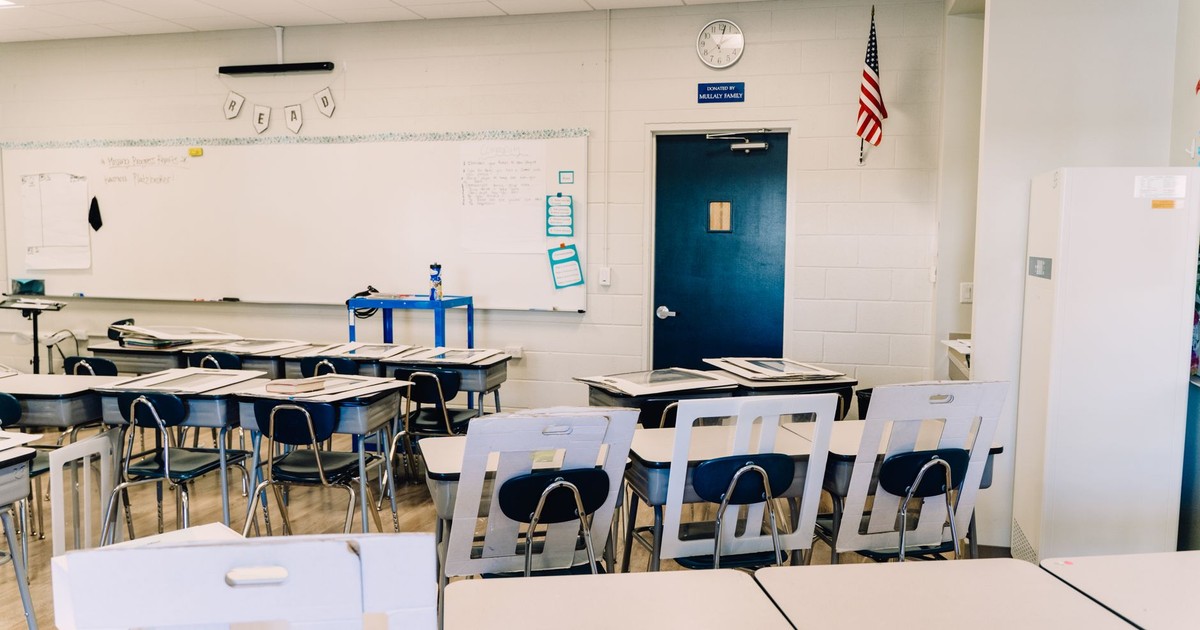
The teacher salary crisis is not a mystery. The data isn’t hard to find. The connection between low pay, burnout, second jobs, shrinking enrollment in teacher preparation programs, and classrooms filled by uncertified substitutes is not a chain of circumstance. It’s a policy outcome. Every state that chose not to fund collective bargaining, every legislature that held teacher salaries flat while inflation moved, every budget cycle where per-student spending got trimmed made a choice. The results are sitting in the data.
Salary alone won’t fix everything. Low pay remains a main stressor for teachers, alongside student behavior, administrative work, supporting students’ mental health, and working beyond contract hours. Teachers in states with the highest salaries still burn out. The workload, the emotional labor of managing classrooms in the middle of a mental health crisis among young people, the paperwork that multiplies every year – those don’t disappear when the paycheck improves. But underpaying people while also overworking them, and then asking them to care enough to do it anyway, is an arrangement that has a predictable shelf life.
The teachers who stayed this long mostly stayed because they believe the job matters. That belief is not infinite. Seventy-one percent working a second job, 53% reporting burnout, a starting salary still below where it was in 2008 – at some point the math becomes something a person can no longer argue themselves past.
Read More: After Years of Living in Homeless Shelters and His Car, Hawaiian Teenager Graduates High School
What to Do With All of This
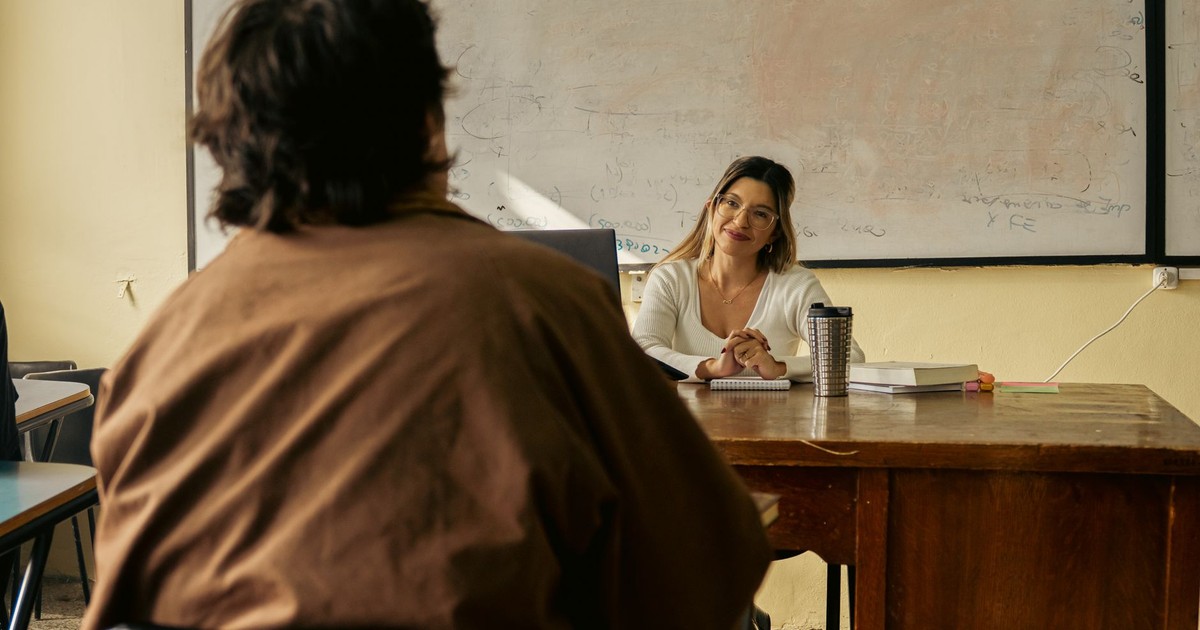
The question of whether America values the people it asks to educate its children has always been answered not with words, but with budgets. The current answer is in the data above, and it is not a complicated one to read.
For anyone trying to understand why classrooms are increasingly staffed by uncertified teachers, why half the profession reports burnout, and why a first-year teacher in 2024 earns less in real terms than their predecessor did during the 2008 financial crisis, the explanation is not a shortage of caring or commitment. It is a shortage of pay, compounded by a surplus of uncompensated hours and a policy environment in too many states that treats teacher salaries as optional.
The states that reversed course did it by making deliberate choices, not by waiting for things to stabilize on their own. Nevada, the District of Columbia, and Delaware didn’t accidentally post the biggest salary increases in 2024 – 25. They passed legislation. They funded union agreements. They treated teacher compensation as something a functioning public school system cannot operate without. That’s a replicable model. It just requires deciding that the people responsible for educating the next generation are worth paying accordingly.
AI Disclaimer: This article was created with the assistance of AI tools and reviewed by a human editor.