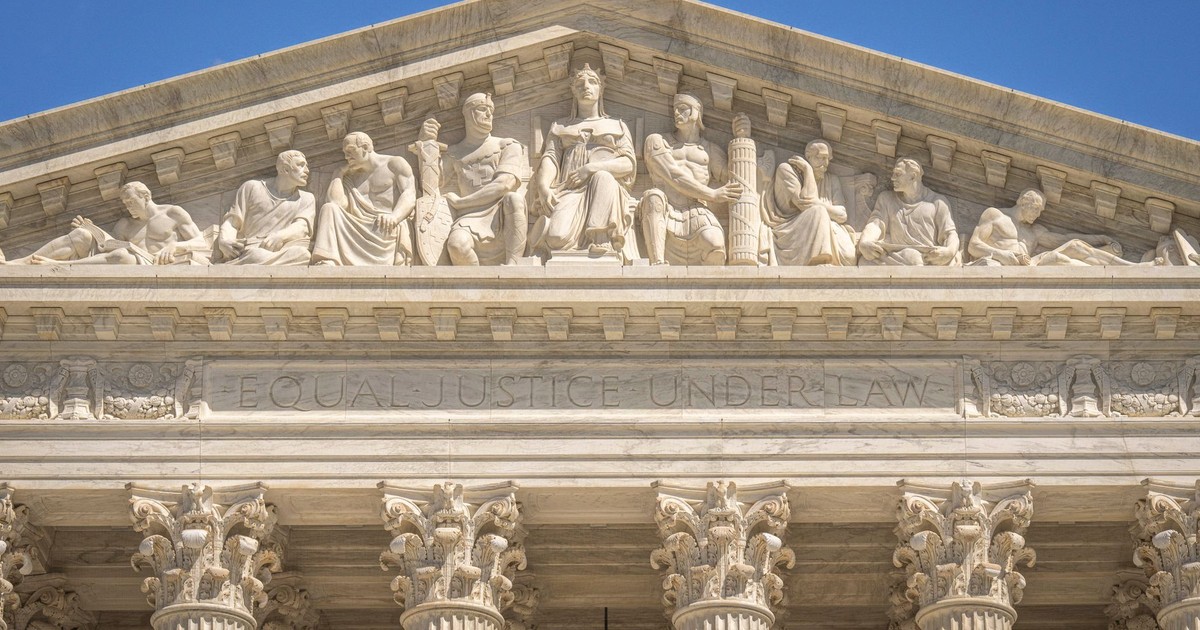

Two Supreme Court justices sat before a House appropriations subcommittee on Capitol Hill on July 14, 2026, for the first time since 2019. Justice Amy Coney Barrett told the panel that “the threat level” against her and other federal judges “is really high.” She and Justice Elena Kagan brought with them a ledger of a crisis that has been building for years and is now accelerating.
The hearing unfolded against the backdrop of a Supreme Court term that had already reshaped multiple areas of law, generated fierce public criticism, and produced at least one high-profile swatting attempt targeting Barrett’s own home. Barrett and Kagan represent opposite ends of the court’s ideological spectrum, but threats to the judiciary do not discriminate by judicial philosophy.
The Budget Request: $225 Million and a Security-Driven Increase

The Supreme Court is asking Congress to appropriate $225.1 million for fiscal year 2027, according to the Congressional Research Service. The request is divided across two accounts: $207.0 million for salaries and expenses and $18.1 million for care of the building and grounds. The increase reflects higher spending on security-related measures. Although the Supreme Court sits at the top of the federal judiciary, it is funded separately, and the Administrative Office of the U.S. Courts, which has oversight over lower courts, is also seeking additional money for security in a separate budget request.
The proposed budget includes $14.6 million in additional funding for its own police department and for security at its building. Beyond protection at the justices’ homes, the court is also seeking $6.5 million for a facility to screen visitors outside the building itself, modeled on the Visitor Center at the U.S. Capitol. Roughly $2.3 million would go to cybersecurity.
Barrett noted that “the cybersecurity attacks have been up by magnitudes year after year,” adding that “the rapid advancement of AI is making that more and more possible.” She said the court has not suffered the kind of paralyzing attacks that some lower courts have experienced, but witnessing those incidents pushed the justices to accelerate their own cybersecurity preparations.
The Threat Statistics: Supreme Court Threats and Congress Under Pressure
“The Supreme Court Police expect a smaller but still very substantial 38% annual increase in threats this year, which follows a 25% increase last year,” Kagan told the subcommittee. She also noted that the chief of the U.S. Capitol Police had recently testified that threats against Congress are up 50% this year compared to 2025. Supreme Court threats and Congress-directed hostility are tracking upward together, pressure on all three branches of the federal government from an increasingly charged political environment.
According to data from the U.S. Marshals Service, there were 807 threats and inappropriate communications against protected persons in fiscal 2025. As of the time of the hearing in FY 2026, 243 different judges out of approximately 2,600 active judges had been named as threatened on a protective investigation.
Security incidents involving judges that the Marshals Service classified as of “significant concern” jumped 57% in 2025. In the past five years alone, the U.S. Marshals Service has investigated more than 1,000 serious threats against federal judges and justices.
Barrett’s Personal Account: Vests and Swatting
Barrett addressed for the first time in public the personal threats that have been directed against her and her family. She said that when threats intensified after the leak in 2022 of a draft of the court’s ruling overturning Roe v. Wade, her security detail sent her home with a bulletproof vest, prompting her then-12-year-old son to ask questions she hadn’t expected to answer. “I didn’t expect that performing this service would put me in the position of explaining to my children what a bulletproof vest was, why I had to wear one,” she said.
Police in Washington’s Virginia suburbs said in May that they had been called to the home of a Supreme Court justice for what they determined was a “fictitious” report of gunfire. CNN later reported it was Barrett’s home that was targeted. The home of Barrett’s sister in South Carolina was the target of a bomb threat a year earlier.
Swatting is a calculated form of intimidation in which a false emergency call is placed to trigger a heavily armed police response at a target’s home address. Barrett described one of her teenage sons opening the door to leave the house and being confronted by a large police presence outside. She said she was grateful that Supreme Court police were stationed at her residence, because they were able to intercept the responding local officers and explain that the emergency report was fraudulent.
Barrett also addressed a practice that has spread across the federal judiciary and carries a specific, chilling message. Several judges, including Barrett, have been the victims of “pizza doxxing,” in which anonymous pizza deliveries are sent to their homes in the name of Daniel Anderl, the son of a New Jersey federal judge who was murdered by a disgruntled attorney posing as a delivery driver. “The message on these deliveries being sent in his name is clear,” Barrett told lawmakers, describing them as “designed to intimidate and harass us.”
The 2022 Kavanaugh Plot and Its Aftermath

The hearing took place nine months after a sentencing that underscored how close the court has already come to a fatal attack. Nicholas John Roske, 29, of Simi Valley, California, was sentenced to 97 months in federal prison to be followed by a lifetime of supervised release for attempting to kill a United States Supreme Court Justice.
As part of a guilty plea, Roske admitted that on June 7, 2022, he flew from Los Angeles International Airport to Dulles International Airport with a firearm and ammunition in a checked suitcase, then took a taxi to Montgomery County, Maryland, with the intent to kill the justice. A search of Roske’s suitcase and backpack revealed a firearm, black tactical chest rig, tactical knife, two magazines each containing ten rounds of ammunition, 17 additional rounds, pepper spray, zip ties, a hammer, screwdrivers, a nail punch, a crowbar, a pistol light, duct tape, and lock-pick tools.
The Department of Justice advocated for a sentence of at least 30 years to life. Attorney General Pamela Bondi called the attempted assassination “a disgusting attack against our entire judicial system by a profoundly disturbed individual,” and the DOJ announced it would appeal the sentence, calling it “woefully insufficient.”
After being taken into custody, Roske stated that he was upset about a recently leaked Supreme Court draft decision on abortion as well as the school shooting in Uvalde, Texas. Threats to the Supreme Court increased markedly after that 2022 leak and have continued to grow, Kagan told the subcommittee.
Roberts’ Warning and the Broader Judicial Context

Chief Justice John Roberts warned in March 2026 that personal criticism of federal judges is dangerous and “it’s got to stop,” speaking at Rice University’s Baker Institute for Public Policy in Houston just two days after President Donald Trump called a federal judge who ruled against the administration “wacky, nasty, crooked and totally out of control.” Roberts was careful to say that criticism of a ruling is different when it moves away from legal analysis. “Personally directed hostility is dangerous and it’s got to stop,” he said.
Roberts’ March remarks came just days after Trump issued a social media broadside against judges who had ruled against him and his administration, and followed his 2024 end-of-year report highlighting “a significant uptick in identified threats at all levels of the judiciary” over recent years.
The nine members of the Supreme Court rarely appear on Capitol Hill, with the last justice testimony before Congress coming in 2019. Most of their off-the-bench appearances tend to be heavily scripted before reverential audiences. But the Supreme Court, like every other part of the federal government, relies on Congress for most of its budget.
Kagan noted in her testimony that the majority of last year’s funding increase went to shifting responsibility for the residential security of justices from the Marshals Service to the Supreme Court Police. She noted that when she first joined the court in 2010, “I did not have a security team of my own, and was accompanied by security personnel only when I participated in work-related public events.” Security expansion began in earnest in 2017, initially at the behest of members of Congress.
The Political Backdrop: A Divisive Term
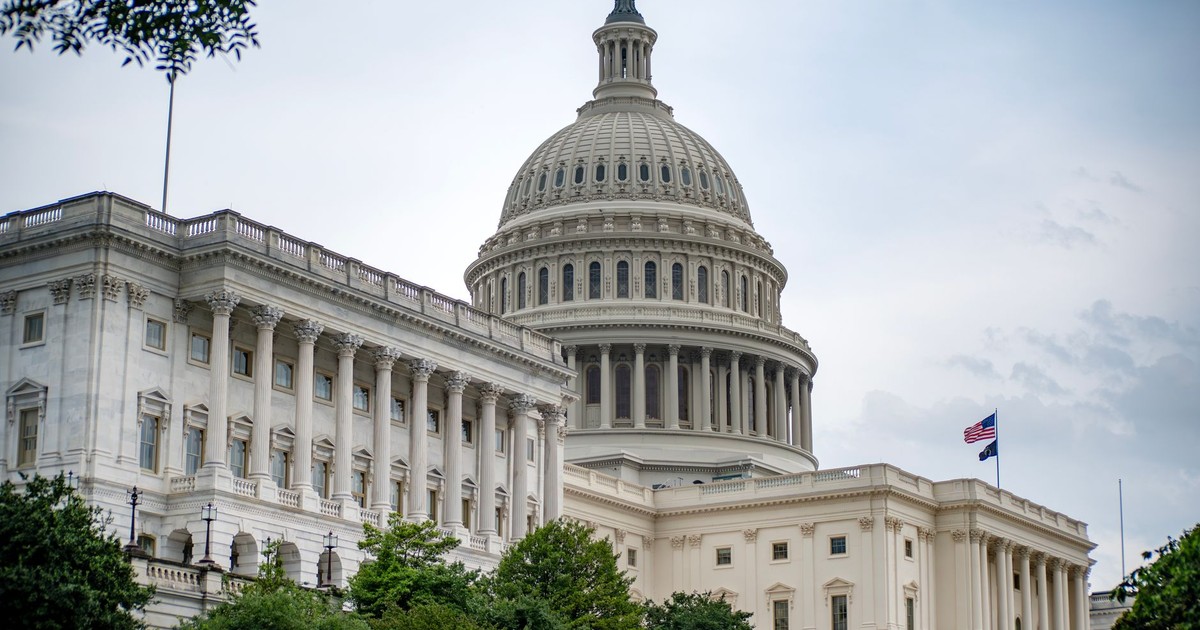
Barrett appeared before Congress just days after the Supreme Court wrapped a divisive term that invalidated Trump’s efforts to end birthright citizenship and impose global tariffs. Despite being closely aligned with the court’s conservatives, she had drawn a storm of criticism on the right for supporting those decisions.
While Kagan and Barrett came to the hearing focused on keeping the discussion centered on security funding, they were also asked about the Supreme Court’s code of conduct, which it adopted in 2023, as well as the court’s caseload and requests for temporary relief made through its emergency or “shadow” docket.
Liberal justice Kagan and Barrett, who was placed on the high court by President Donald Trump, appeared before House and Senate appropriations subcommittees to make a pitch for additional security funding. Representative Steny Hoyer of Maryland, the top Democrat on the panel, stated that with a deeply divided country and increasingly violent rhetoric directed at judges, Congress must provide sufficient funding to ensure the safety of all judicial personnel.
What the Budget Vote Actually Decides
The July 14 hearing was not a routine budget exercise. The federal judiciary considers the current threat environment to be qualitatively different from anything it has faced in recent memory. A 38% projected increase in threats to the Supreme Court alone in 2026, following a 25% increase in 2025, combined with 807 Marshals Service threat investigations in all of fiscal 2025 against a pace in 2026 that is already tracking higher through the first half of the year, documents a crisis with a rising trajectory.
The $225.1 million budget request for fiscal year 2027 is a structural response to the reality that nine people sitting atop the American legal system now require residential security details, swatting response protocols, cybersecurity infrastructure scaled to withstand AI-enhanced attacks, and a screening facility to protect visitors to their own building. Barrett had to explain a bulletproof vest to a 12-year-old.
Kagan’s observation that congressional threats are up 50% this year is a reminder that the pressure is not unique to the judiciary. What is distinctive about the judiciary’s situation is that its members are appointed for life precisely to insulate them from political pressure, which means threatening them is a direct attempt to undermine that insulation. Roberts named it plainly in March at Rice University. The question Congress must now answer, with a budget vote and whatever legislative measures follow, is whether naming the problem is enough, or whether the institution will move with the urgency the numbers actually demand.
Disclaimer: This information is not intended to be a substitute for professional medical advice, diagnosis, or treatment and is for information only. Always seek the advice of your physician or another qualified health provider with any questions about your medical condition and/or current medication. Do not disregard professional medical advice or delay seeking advice or treatment because of something you have read here.
AI Disclaimer: This article was created with the assistance of AI tools and reviewed by a human editor.