
Somewhere deep in a geology lab’s reference archive, there’s a photograph of what life leaves behind in rock – the same swirl of minerals and spotted patterns that a Mars rover photographed inside Jezero Crater last year. Scientists have been studying that kind of texture on Earth for decades. When they finally saw it on Mars, the room went quiet.
That’s the state of space exploration right now. The tools have gotten sharper, the surveys wider, and the results stranger. Within a single two-year window, a comet arrived from another star system carrying chemistry that doesn’t match anything born in our solar neighborhood, Neptune finally revealed auroras that scientists had been hunting for decades, and astronomers mapped the skeleton of the universe back to when it was one billion years old. Each of these space discoveries arrived on its own timetable, from its own direction, and none of them landed the way anyone expected. Here are seven of the most striking findings from the past two years – and what they actually mean.
1. Mars May Have Once Hosted Life
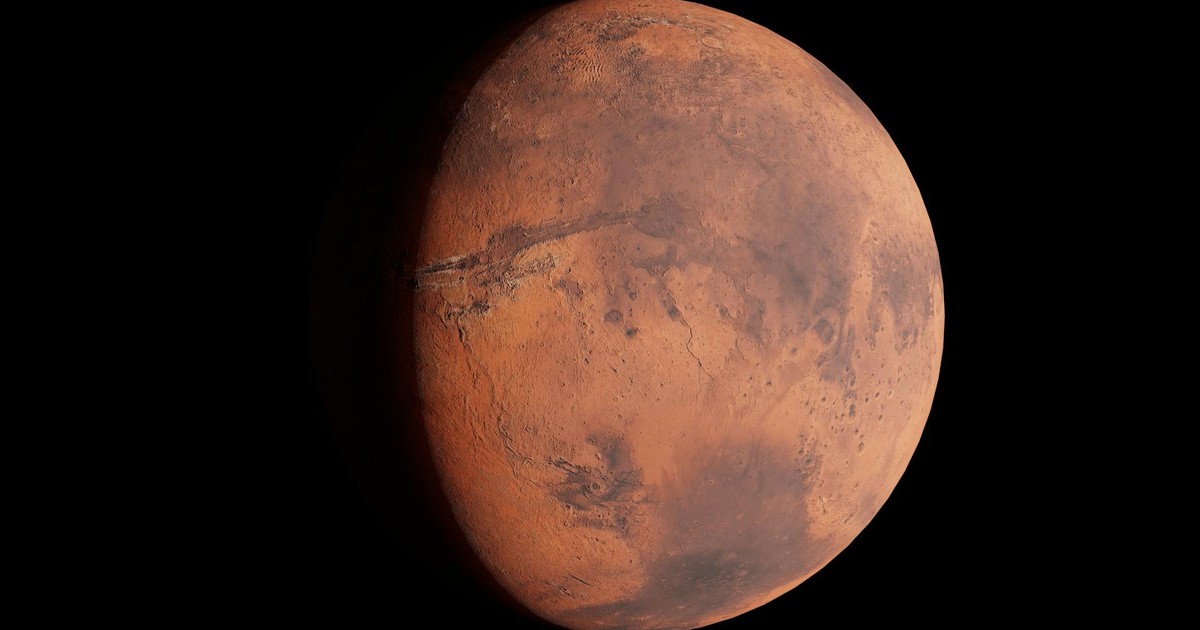
The rock is called Cheyava Falls, named after a waterfall in the Grand Canyon. It was found in July 2024 by the Perseverance rover while the rover was exploring an ancient river valley called Neretva Vallis inside Jezero Crater – a site chosen precisely because it was once a lake. The rock is unremarkable-looking at first, arrowhead-shaped, about three feet wide. But under closer analysis it was covered in small black spots scientists called “poppy seeds” and larger, lighter spots with dark rims they called “leopard spots.”
After a year of peer review, NASA announced in September 2025 that the sample drilled from Cheyava Falls contains potential biosignatures – a substance or structure that might have a biological origin but requires more data before any conclusion about life can be reached. The spots carry signatures of two iron-rich minerals, vivianite and greigite, that on Earth form most commonly through microbial activity. The rover’s instruments also found organic carbon in the rock. Taken together, the combination is the kind of chemistry that, on our own planet, tends to mean something was alive there.
The non-biological explanations haven’t been ruled out, and the scientific community is careful to say so. NASA’s own astrobiological scale puts the finding at Step One of seven: a possible signal, not a confirmed one. But the sedimentary rocks in the Bright Angel formation are clay and silt – some of the best preservers of ancient microbial traces known to science. And abiotic explanations for what the rover found are, per the peer-reviewed paper published in Nature, less likely than the alternative. Acting NASA Administrator Sean Duffy called it “the closest we have ever come to discovering life on Mars.” The rocks that would settle the question definitively are still sitting on Mars, waiting for a sample-return mission that is currently without a confirmed plan.
2. An Interstellar Comet Unlike Anything We’ve Seen
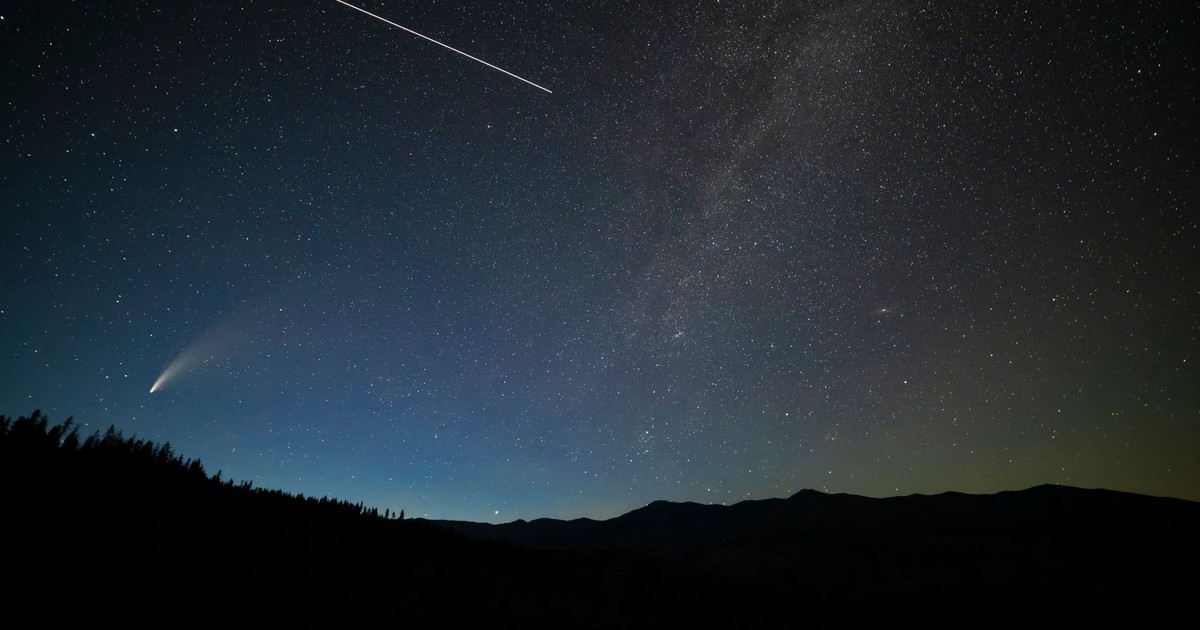
On July 1, 2025, the ATLAS survey telescope in Chile picked up a faint object moving on a trajectory that had no business being in our solar system. Within days it was confirmed as only the third known interstellar object ever detected passing through our neighborhood, and the second to show a comet-like coma of gas and dust. According to NASA’s science page, comet 3I/ATLAS was traveling at around 137,000 miles per hour when first spotted, and it originated from outside our solar system, around a different star entirely. The letter “I” in the name stands for interstellar. The “3” means it’s the third such visitor on record.
Hubble captured images of 3I/ATLAS on July 21, 2025, revealing a teardrop-shaped cocoon of dust around its icy nucleus when it was 277 million miles from Earth. The James Webb Space Telescope then turned its infrared instruments on it and found something genuinely unexpected: the first direct detection of methane on a visitor from another star system, along with exceptionally high levels of carbon dioxide. Methane, scientists believe, had been locked beneath the comet’s surface and only emerged once solar heating reached deeper icy layers. Together, those readings point to a chemical history that doesn’t match any comet born in our solar system.
Some estimates put 3I/ATLAS at nearly 12 billion years old, which would make it older than our Sun. It reached its closest point to the Sun on October 30, 2025, passing within 1.4 astronomical units – just inside the orbit of Mars – before continuing out of the solar system forever. For a few months, Earth had a visitor from deep galactic history, and it carried nothing that felt like home.
3. Neptune’s Hidden Auroras, Finally Visible
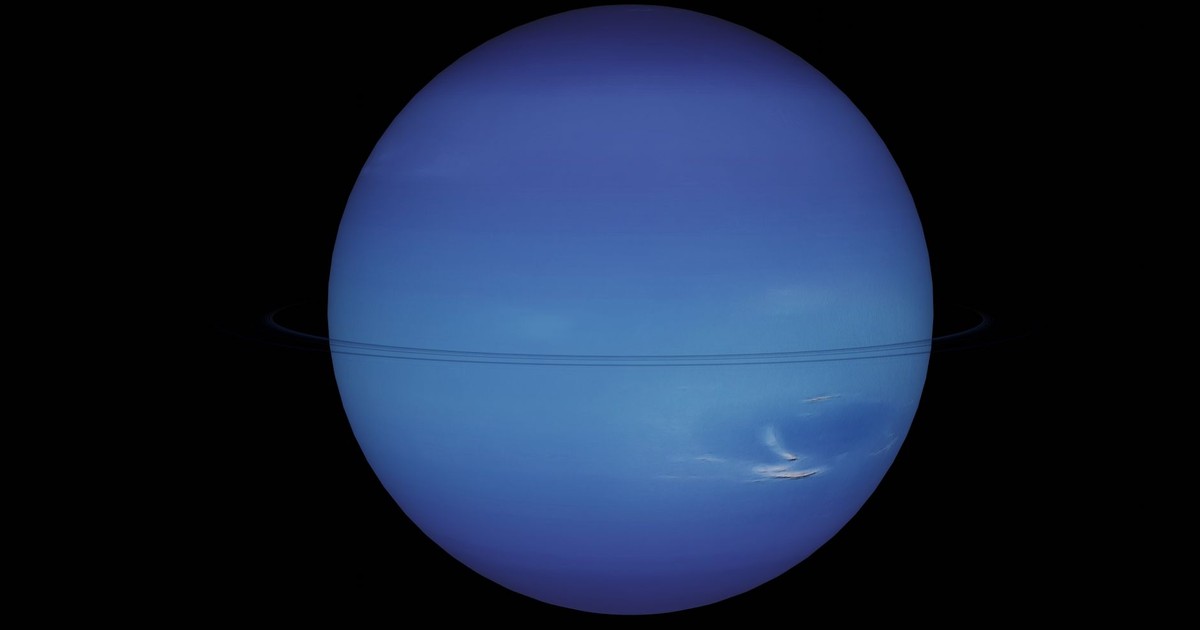
Every planet with a substantial magnetic field in our solar system had confirmed auroras except one. Jupiter has them. Saturn has them. Even Uranus has them. Neptune, despite Voyager 2 hinting at their existence during its 1989 flyby, managed to keep its light show hidden for another 36 years. In March 2025, the James Webb Space Telescope finally changed that.
A team led by researchers at the University of Leicester published the discovery in Nature Astronomy, confirming the first direct imaging of Neptune’s auroras using JWST’s near-infrared instruments. The auroras turned out to be fainter than expected, partly because Neptune’s upper atmosphere has cooled by hundreds of degrees over the past few decades – a fact that nobody predicted and that nobody has a clean explanation for yet. “We needed the power of JWST to finally make the detection,” said Henrik Melin of Northumbria University, who led the research while at the University of Leicester.
One detail makes Neptune’s auroras genuinely different from ours. On Earth, you have to travel toward the poles to see the northern or southern lights. Neptune’s magnetic field is tilted about 47 degrees away from its rotation axis, which means its auroras appear roughly over the region where South America would sit if you mapped it onto Earth. A planet with auroras over its mid-latitudes, a cooling atmosphere that defies existing models, and a magnetic field unlike anything else in our solar system. Neptune is, it turns out, still surprising people.
4. The Clearest Map of the Universe’s Skeleton
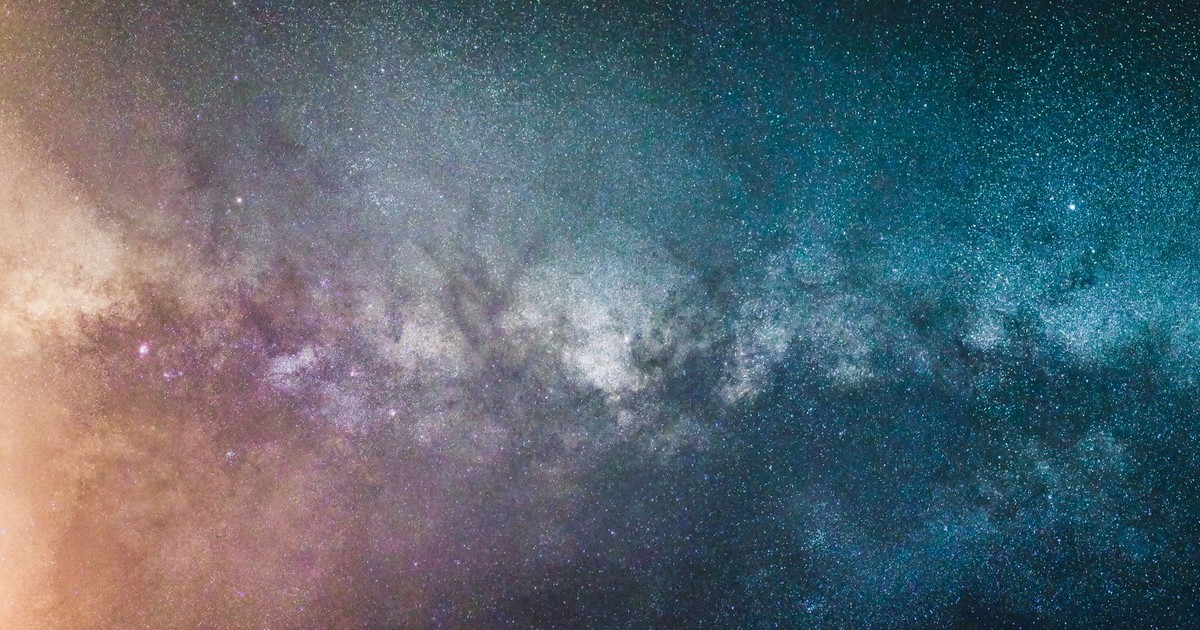
The universe isn’t a random scatter of galaxies. It’s organized into what astronomers call the cosmic web: a vast network of filaments (long threads connecting clusters of matter) and voids (enormous near-empty regions) that determines where galaxies form and how they grow over billions of years. Most of the filaments are made partly of dark matter, which doesn’t interact with light at all, which made the web extraordinarily difficult to observe directly for most of astronomy’s history. It was more prediction than confirmed fact.
In May 2026, that changed. Researchers at the University of California, Riverside published the most detailed map of the cosmic web ever made, using JWST’s COSMOS-Web survey – the largest JWST observing program conducted so far. By placing 164,000 galaxies in their positions across nearly 14 billion years of cosmic history, the team traced the web’s filaments and clusters all the way back to when the universe was one billion years old. The universe is currently around 13.8 billion years old, so this is a picture of its structure when it was less than a tenth of its current age – like finding a photograph of a skyscraper while the foundation was still being poured.
The map is already pressuring existing models. Galaxies appear to have clustered into complex structures earlier and faster than simulations predicted. That matters because the structure of the cosmic web is a direct test of our understanding of dark matter: if the web doesn’t grow the way the models say it should, the models need fixing. So far, the map is doing what the best space discoveries always do – confirming some things while quietly raising harder questions.
Read More: NASA Spacecraft Snaps Unsolved Mystery on Mars
5. Betelgeuse’s Secret Companion
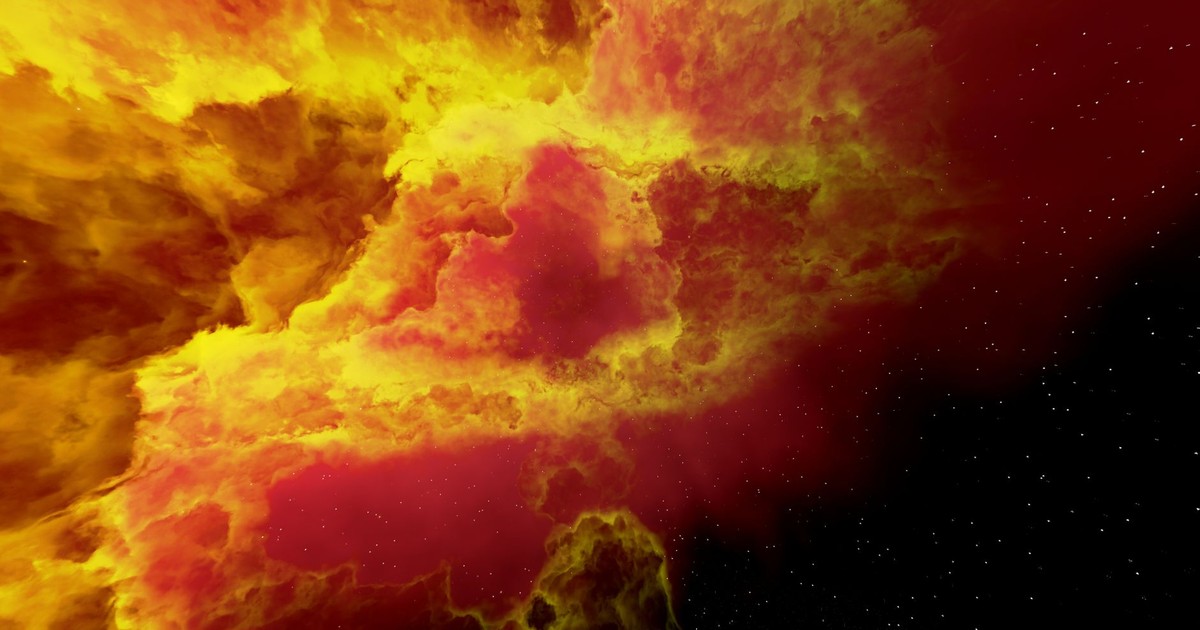
Betelgeuse is the bright red star marking one of Orion’s shoulders, known to stargazers for thousands of years. It’s one of the largest and most luminous stars visible from Earth, burning hundreds of thousands of times brighter than our Sun, and for the last decade it has been behaving strangely. In 2019 and 2020 it dimmed dramatically, so much so that astronomers named the event the “Great Dimming” and briefly raised the possibility that it might be about to explode as a supernova. It didn’t. The dimming eventually reversed, and the cause remained debated.
In July 2025, scientists confirmed what many had suspected for years: Betelgeuse has a companion star. The companion’s mass is about 1.5 times that of our Sun, and it orbits so close to Betelgeuse that in roughly 10,000 years, the two stars may merge into one. The companion had been hiding in plain sight, lost in the enormous glare of Betelgeuse itself. It took new long-exposure imaging techniques and years of accumulated data analysis to pull its signal out separately. Once identified, the companion’s gravitational influence explained the long-term brightness variations that had puzzled astronomers – a star that massive at that distance would regularly disturb Betelgeuse’s outer layers, producing exactly the kind of erratic dimming pattern the records show.
The relationship between these two stars is now one of the most closely watched in the galaxy. One is a red supergiant nearing the end of its life. The other is massive enough to eventually drag it toward a merger. When they finally meet, the collision will release energy on a scale that local astronomical history hasn’t seen. Nobody alive will witness it. But knowing it’s coming, and why, is a different kind of discovery.
6. The Vera C. Rubin Observatory Opens Its Eyes
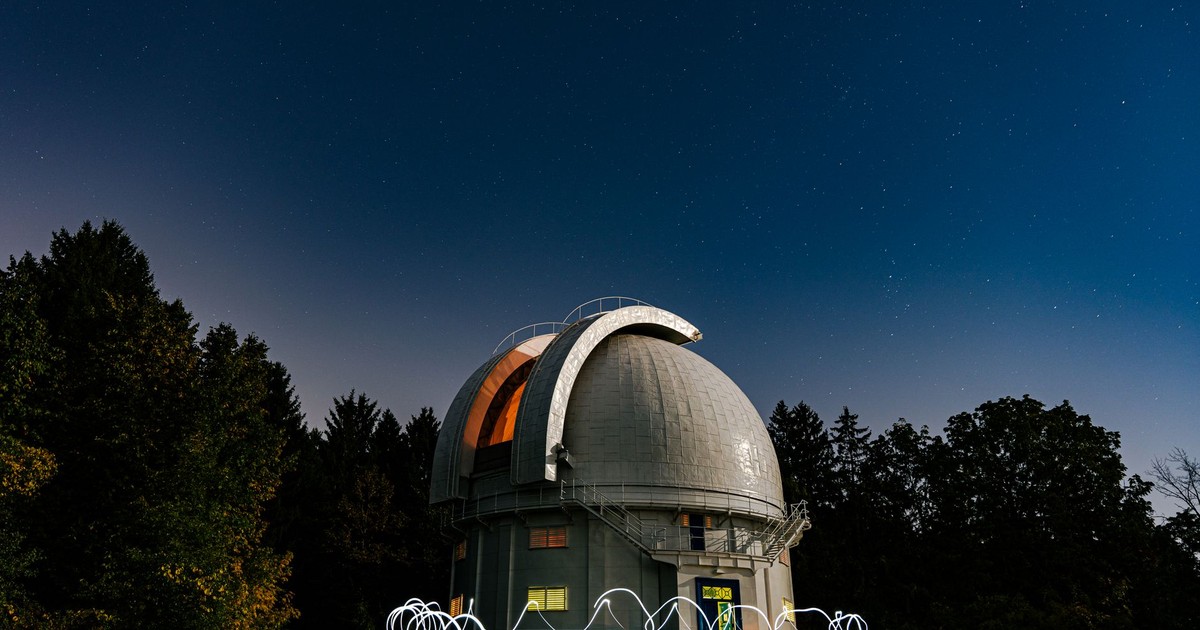
On June 23, 2025, the Vera C. Rubin Observatory released its first images, and the press conference was streamed from schools, museums, and planetariums around the world. The images showed expansive nebulae and dense galaxy fields in remarkable detail. The observatory also released short films of asteroids moving against the background sky and stars visibly changing brightness, which gave viewers a taste of what the facility was actually built to do.
The significance isn’t in the opening images. It’s in what Rubin will do over the next decade. The observatory will survey nearly the entire southern sky every three to four days, continuously, for ten years. That cadence – a complete sky scan every few days, repeated thousands of times – is something no observatory has ever managed before. Anything that moves, flickers, brightens, dims, or appears somewhere it wasn’t before will be caught. Supernovae in their first hours. Near-Earth asteroids on unexpected paths. Gravitational lenses, where a massive object bends the light of something behind it. Possibly objects that don’t yet have names.
The centerpiece of its decade-long program is the Legacy Survey of Space and Time, which will track billions of galaxies to measure how the universe’s expansion is accelerating. That data will give scientists the most precise measurements ever collected of what dark energy actually does – which is still, fundamentally, something no one fully understands. Rubin isn’t a telescope designed to provide answers so much as one designed to catch the universe doing things we didn’t know to look for.
7. The ISS Turns 25 and Hits 4,000 Experiments
On November 2, 2025, humans reached 25 consecutive years of living and working in orbit. The first crew arrived at the International Space Station in November 2000, and someone has been aboard ever since. In the quarter century since, NASA and its international partners have conducted more than 4,000 research investigations and technology demonstrations, with more than 290 people from 26 countries making the journey up.
In 2025 alone, more than 750 experiments ran aboard the station. A lot of that work is slow, unglamorous, and will never make a headline. But the cumulative output has reshaped medicine, materials science, and our understanding of how the human body responds to long-duration spaceflight, and that knowledge is essential before any serious attempt to send people to Mars.
One recent line of research captures what the station is doing now that it wasn’t doing ten years ago. Astronaut Butch Wilmore collected microbiological samples from the exterior of the station during a spacewalk, taken near the life support system vents, to study whether the station releases microorganisms into the surrounding space environment. The experiment examines how those organisms survive and reproduce, and how they might behave at the Moon or Mars. It’s a practical question with enormous implications: if future crewed missions accidentally seed the surfaces they’re trying to study for signs of ancient life, the search becomes permanently compromised. The station is as much a preparation tool for what comes next as it is a destination in its own right. Twenty-five years of continuous occupation is, among other things, 25 years of learning how not to ruin what we’re trying to find.
What This All Points To
The honest description of this moment in space science is structural, not promotional. Several major observatories came fully online within the same short window. The James Webb Space Telescope hit its stride. Rubin opened. Perseverance has been drilling for years and is now producing results that stop rooms cold. These instruments aren’t just incrementally better than what came before. They see differently – longer wavelengths, wider fields, fainter objects, deeper time.
What that means in practice is that open questions are multiplying faster than answers. Neptune’s atmosphere is cooling for reasons no one has explained. The cosmic web was forming complex structures earlier than models predicted. A comet from another star system carries chemistry that has no match in our solar neighborhood. A rock on Mars has spots that look exactly like what microbial life leaves behind. None of these findings is a conclusion. Each one is the beginning of a research program that will run for years, probably decades. The most honest space discoveries aren’t the ones that arrive wrapped in certainty. They’re the ones that make everything seem simultaneously closer to understood and further from fully known than it did the morning before.
AI Disclaimer: This article was created with the assistance of AI tools and reviewed by a human editor.