

Most people approaching retirement have a rough plan around Social Security. Claim early and get more years of payments. Wait longer and get bigger checks. Somewhere in there, figure out when the math tips in your favor and go from there. It sounds reasonable. It might even be the advice someone gave you at a dinner party once, spoken with the casual confidence of someone who’d clearly already figured it out.
What most people don’t realize until much later is how many variables they left out of that calculation. Claiming age is one piece of the puzzle. But it sits inside a much wider equation that involves taxes, your spouse’s situation, your other retirement accounts, and a few rules that tend to surprise people who thought they’d covered the basics.
And “locked in” is the right phrase for what happens when you decide. Unlike most financial decisions, when you choose when to claim Social Security, it sticks. The ripple effects follow you for the rest of your life, and potentially your spouse’s too. That’s worth understanding carefully before the birthday arrives.
What “Full Retirement Age” Actually Means

The Social Security system is built around a concept called Full Retirement Age, or FRA. It’s the age at which you receive 100% of the benefit you’ve earned based on your lifetime earnings history. Your FRA depends on when you were born. For most people retiring now, it falls between 66 and 67, and for anyone born after 1960, it’s 67.
You can claim as early as 62, but doing so costs you. Full benefits are available at 67. If you start collecting at 62, your benefit will be about 30% lower than if you’d waited until your full retirement age. That reduction isn’t temporary. It’s permanent. Every month for the rest of your life, your check reflects that early decision.
Going in the other direction, though, pays off in a real and measurable way. For each year you wait past your FRA up to age 70, your benefit grows by about 8% per year. These delayed retirement credits can substantially boost your monthly income and improve your long-term financial security, especially if you live into your 80s and beyond. After 70, no further credits accumulate, so there’s no financial benefit to waiting past that point.
As of January 2026, the estimated average retirement benefit was $2,071 a month, according to AARP. That’s a meaningful income stream, but it’s also not a windfall that replaces your whole working salary. AARP notes that Social Security is only designed to replace approximately 40% of your pre-retirement paycheck. The gap between that and what you actually need to live on has to come from somewhere else.
The Break-Even Age Problem

The classic framing around Social Security timing is the break-even analysis. The logic goes: if you claim early, you get smaller checks but more of them. If you delay, you get bigger checks but fewer years to collect. Somewhere in the middle, the cumulative totals cross over. That crossing point is the break-even age.
The break-even age is the point at which cumulative lifetime benefits from a later claiming age surpass those from an earlier start. For claiming at 62 versus 70, it typically falls somewhere between 80 and 81. If you expect to live past that age, waiting usually pays off. If you have health concerns or a shorter life expectancy, claiming earlier may result in higher total lifetime benefits.
On the surface, that sounds like a clean calculation. But financial planners who work with this every day push back hard on it. By focusing only on break-even math, prospective retirees neglect their full financial picture, including the tax implications of their benefit income and how claiming timing affects the rest of their investment portfolio.
There’s also the longevity question, which most people underestimate. Current actuarial data shows the average 62-year-old woman will live to 86.6; the average man to 84.3. If those averages hold, the majority of people claiming at 62 would have been better off waiting, since both figures clear the 80-to-81 break-even threshold. For most healthy people at 62, patience pays.
Research has found that just around 10% of beneficiaries wait until the highest claiming age of 70. That gap between what the numbers favor and what people actually do points to something beyond math: fear, urgency, and the very human instinct to take the guaranteed thing now rather than bet on a future that’s uncertain.
The Trap of Claiming While Still Working

One specific scenario that catches people off guard is claiming Social Security while still employed. It sounds appealing. You could collect your benefit and keep earning, stacking two income streams at once. But the rules create a real penalty if you do this before reaching your FRA.
Continuing to work in retirement can reduce your Social Security payment, depending on when you claim. If you claim before FRA and keep working, your payment will be reduced if your wages exceed a certain threshold. In 2026, that limit is $24,480, and for every $2 you earn above it, $1 is withheld from your benefits.
The month you hit your full retirement age, your benefits are no longer reduced regardless of how much you earn. The Social Security Administration will also recalculate your payments to include the previously deducted amounts, resulting in higher benefits going forward. So the withheld money isn’t permanently lost. But the administrative confusion and the tax implications during those early years make the combination of working and early claiming a mess that most people don’t anticipate in advance.
The practical takeaway: if you’re still working and earning more than roughly $24,000 a year, claiming Social Security before your full retirement age will likely cost you more in withholding than you gain from the early payments. It’s usually cleaner to wait.
You can plan for retirement by setting up a free account at mySocialSecurity through ssa.gov/myaccount, which shows your estimated amounts at 62, at your FRA, and at 70, based on your actual earnings history.
The Spousal Strategy Most Couples Miss

For couples, the Social Security claiming decision doubles in complexity and importance. Each person has their own benefit based on their own work record, but the two claims interact with each other in ways that aren’t obvious.
The most consequential piece involves survivor benefits. If you expect to live past age 82, delaying to 70 can make particular sense. For higher-earning spouses, delaying until 70 can help maximize family benefits. If the higher-earning spouse predeceases the lower-earning spouse, the surviving spouse stops receiving their own benefit and instead receives the higher one. This is the detail that changes everything for married couples. The higher earner delaying isn’t just a personal decision. It’s potentially protecting the surviving spouse’s income for the rest of their life.
Married couples where one person earns significantly more really shouldn’t use break-even analysis as their primary decision point. The higher earner may focus on their own life expectancy when deciding to claim, but failing to also consider how long their spouse will live could mean dramatically reduced survivor benefits if the higher earner dies first.
Spousal benefits also have their own structure. A spouse can receive up to 50% of the worker’s Primary Insurance Amount as a spousal benefit. Those benefits are reduced if claimed before the spouse’s own FRA, but unlike worker benefits, they don’t increase with delayed retirement credits past FRA. In other words, there’s no upside to the spouse delaying past their own FRA for the spousal portion specifically. That asymmetry shapes how couples should sequence their claims.
The Trust Fund Question and Early Claiming Panic

A growing number of people have been claiming early for a reason that has nothing to do with their personal finances: they’re worried Social Security won’t be there for them if they wait. Given the headlines, it’s understandable. But the fear may be leading people toward a decision that makes their situation worse, not better.
The 2025 Social Security Trustees Report projects that the OASI Trust Fund will be depleted in 2033, at which point roughly 77% of scheduled benefits would be payable. The Congressional Budget Office’s February 2026 baseline moves that date even closer, projecting OASI fund exhaustion in 2032. These are real concerns. But claiming at 62 to get ahead of a future cut isn’t the solution most people think it is.
There is no advantage to claiming Social Security early to protect against a future benefit cut. An across-the-board reduction hits whatever benefit you’re already receiving, regardless of when you claimed. Claiming at 62 permanently cuts your monthly benefit by around 30%, and a future reduction would compound on top of that smaller base.
The system operates primarily on a pay-as-you-go basis, where current workers fund benefits for current retirees through payroll taxes. Even if trust fund reserves were fully depleted, ongoing payroll tax revenue would still cover the majority of scheduled benefits. The program doesn’t disappear. It pays less. And claiming early means you’re applying that reduction to an already-reduced baseline.
Congress has adjusted the program before. Historically, Social Security reforms have been enacted before full depletion occurred. Policymakers still have time to act, though delays could require more significant adjustments. Claiming at 62 out of fear is a permanent penalty applied to a problem that may yet be partially or fully addressed by legislation.
Taxes, RMDs, and the Bigger Picture
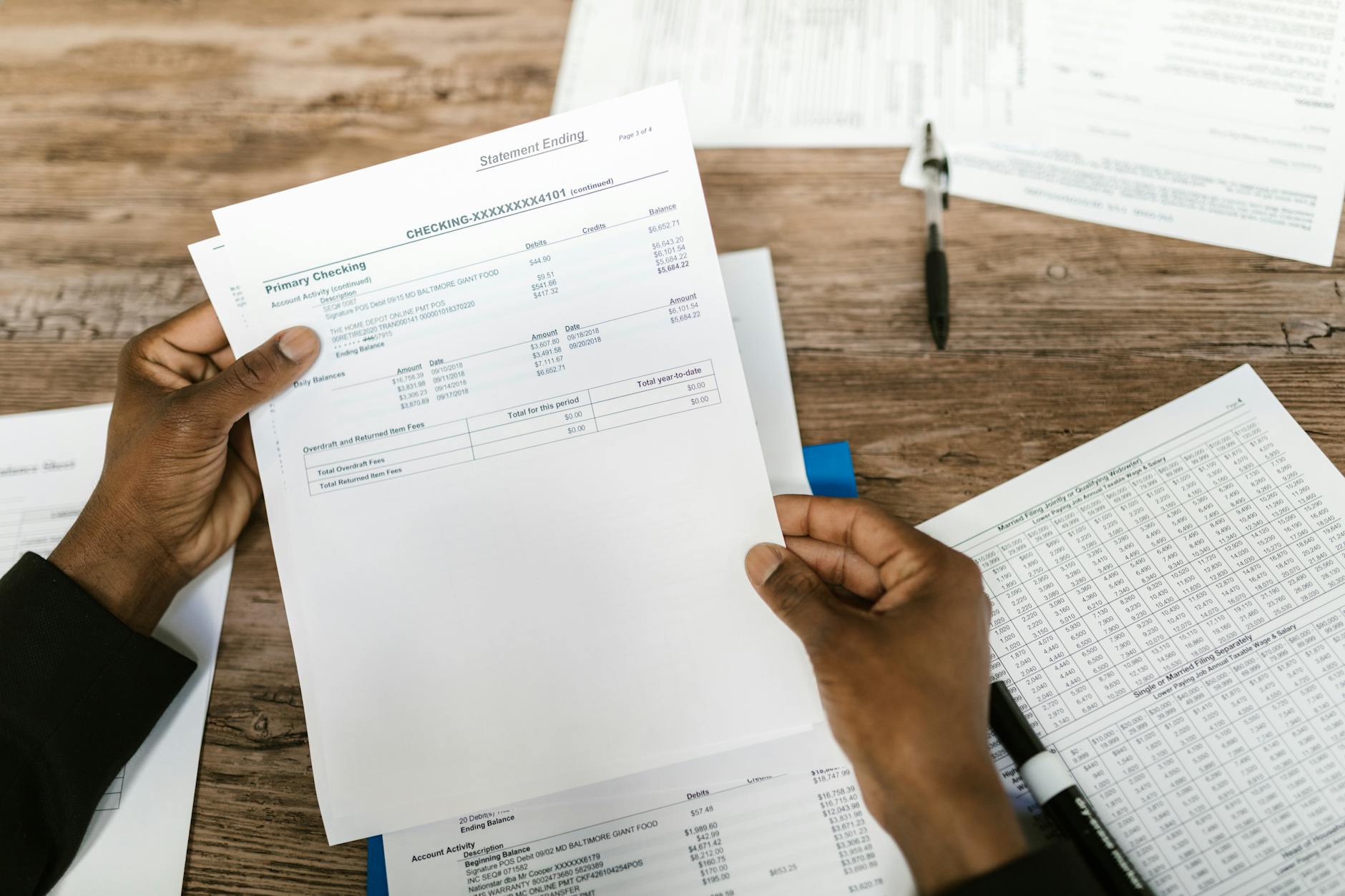
One aspect of Social Security timing that almost never shows up in casual retirement conversations is the tax dimension. The decision of when to claim doesn’t just affect your monthly check. It affects how your other retirement income is taxed and when.
If your total income exceeds $25,000 as an individual or $32,000 as a married couple filing jointly, you must pay federal income taxes on your Social Security benefits. Below those thresholds, the benefits aren’t taxed.
This matters enormously when you’re drawing from a 401(k) or IRA at the same time. Required minimum distributions from those accounts, which kick in at age 73, can push your total income well above the threshold that triggers Social Security taxation. Tax rates aren’t static throughout retirement. Claiming strategies should account for changes in income from working, required minimum distributions, and other fixed payments. Poor coordination can inadvertently push income into higher tax brackets or trigger Medicare premium increases.
Some retirees deliberately delay Social Security specifically to create space for Roth conversions in their early retirement years, when their income is lower. If you defer claiming Social Security, you may be able to execute Roth conversions during those early lower-income years, potentially reducing future tax burdens. That’s a strategic move that has nothing to do with the break-even age and everything to do with managing your total retirement tax picture.
Read More: Retirement Tax Traps Everyone Should Know To Avoid
What Knowing Your Number Actually Means

The most practical thing you can do right now, regardless of your age or how close you are to retirement, is look up your actual projected benefit. Not a rough estimate. Your real number, built on your real earnings record.
You can find your estimated Social Security benefit by creating a mySocialSecurity account at ssa.gov/myaccount. Once logged in, you can view your earnings history and projected benefit amounts at ages 62, at your FRA, and at 70. Most people who do this for the first time are surprised by the spread between the numbers. The difference between 62 and 70 is often more than $1,000 a month, which compounds over decades into a six-figure lifetime difference.
According to a 2024 study by the National Institute on Retirement Security, about 24% of American pre-retirees aren’t entirely sure what they’ll receive from Social Security, while 22% said they have no idea at all. Nearly half of the people approaching retirement are making one of the most consequential financial decisions of their lives without the most basic piece of information. That’s the assumption that actually backfires, not any single claiming age, but the belief that this decision can be made vaguely.
The Part Nobody Tells You Upfront

The honest thing to say about a good social security retirement strategy is that there isn’t one right answer that works for everyone. The 8% annual growth from delaying is mathematically compelling. The break-even analysis suggests most healthy people benefit from waiting. The spousal survivor benefit logic strongly favors the higher earner delaying to 70 if at all possible.
But the math lives inside a life. Health matters. Cash flow matters. Whether you have meaningful retirement savings to bridge the gap between 62 and 70 matters. Whether you’re in a couple or single matters. Whether you’re still working matters. Whether your state taxes Social Security benefits matters.
What doesn’t work is making this decision based on fear of what Congress might or might not do, or based on a break-even calculation that ignores taxes, your spouse’s situation, and the rest of your portfolio. Claiming decisions should not be driven by headlines alone. They deserve the same care as any other major financial decision you’ll make in your lifetime.
The common assumption that costs people the most isn’t claiming too early or too late. It’s believing the decision is simpler than it is, and making it without looking at the whole picture. Social Security is one of the few retirement income sources that’s guaranteed, inflation-adjusted, and impossible to outlive. That makes getting it right worth far more time than most people give it.
AI Disclaimer: This article was created with the assistance of AI tools and reviewed by a human editor.