

Most people don’t notice it happening at first. Somewhere between your thirties and your fifties, the weekends get quieter. The group chat goes longer between messages. You realize you haven’t seen a friend you genuinely like in four months, and neither of you has done anything about it. Social circles shrink with aging, and for most of us, it’s not one big dramatic falling-out that causes it. It’s smaller than that. It’s accumulation.
The friends of your twenties had proximity working in their favor: the dorm hallway, the open-plan office, the shared lease. When those structures disappeared, so did the automatic contact they generated. What remains isn’t necessarily a weaker connection, but one that suddenly requires a lot more deliberate effort at exactly the stage of life when time and energy are in shortest supply.
That said, shrinking social circles don’t always signal something going wrong. Research has increasingly found that the story is more complicated than it first appears, and that some of what looks like loss is actually something closer to editing. Here are eleven reasons social circles often shrink as people grow older, and what the research actually says about each of them.
1. Life Naturally Becomes More Structured Around Smaller Units
In your twenties, you exist inside large, loosely organized social ecosystems. School, early careers, shared houses. These environments generate contact passively – you don’t have to arrange a friendship, it just shows up because someone sits next to you every day.
As people age, life tends to reorganize itself around smaller and more specific units: a partner, a household, a nuclear family. Research into communication patterns across the life course found that young adulthood is dominated by a gradual shift from parents to close friends, and then to a romantic partner, with the period of early family formation seeing focus narrow almost entirely onto that partner. What once spread across ten friendships now concentrates into fewer relationships, each carrying more weight.
The math is simple but the emotional reality is more layered. You don’t lose the others on purpose. They just stop being the automatic answer to the question of how you spend a Tuesday night.
2. Work Friendships Often Don’t Survive Retirement

Work is one of the great social generators of adult life. The same faces, day after day, year after year – it creates a kind of sustained proximity that produces friendships, or at least very convincing approximations of them. Retirement removes that structure in a single moment.
A 2025 study published in BMC Public Health, which used longitudinal data from the English Longitudinal Study of Ageing, found that retirement is a major life transition involving significant changes in routine, identity, finances, and social connections – all of which have downstream effects on mental and physical health. The study also found that participants who had built long-term friendships through workplace participation before retirement were better able to adjust afterward, and that those who remained actively involved in other social structures pre-retirement fared better in maintaining connection post-retirement. The social part of that transition is often the least anticipated. People plan financially for retirement for decades. Few plan socially.
The colleagues you promised yourself you’d still see for lunch – most of them disappear faster than you expect once the structure holding you together is gone.
3. Parenthood Quietly Crowds Out Social Time

The impact of having children on a social life is well-documented but consistently underestimated by people who haven’t experienced it yet. The promise of “nothing will change” is almost universal. So is the reality that almost everything does.
Research confirms that once people become parents, they spend significantly less time engaging in informal activities and socializing with friends. This isn’t a choice exactly – it’s arithmetic. A newborn generates a time deficit that has to come from somewhere, and the somewhere is almost always the optional parts of the schedule. Friendships, at least in their early stages, feel optional. Feeding a baby does not.
What compounds this is that the friendships most affected are the ones with people who aren’t parents yet, or who had children at a different time. Diverging schedules create diverging lives. You can still care about each other without being able to easily share a Saturday afternoon.
4. Geographic Distance Slowly Erodes Casual Friendships

Many friendships survive the big moves. The close ones do. But a substantial portion of any social circle is made up of proximity friends – people you see regularly because you happen to live near each other – and those relationships are more fragile than they feel in the moment.
As the Mayo Clinic Press notes, one of the most challenging aspects of growing older is that friends and family members move or die, making sustained connection increasingly difficult. The geography problem is persistent. A friendship that once meant walking across the street now means booking a flight, and most people never book the flight. Not out of indifference, but because the friction is just too high.
The closer a friendship was, the better it tends to survive distance. Older adults’ social circles may also shrink due to poor health, loss of loved ones, poverty, and living in rural or unsafe communities – all of which interact with geography in ways that make rebuilding connection harder for some than for others.
5. People Become More Selective – And That’s Not All Bad
Some of the social circle shrinkage that happens with age isn’t passive loss – it’s active pruning, driven by a psychological shift with decades of research behind it.
Socioemotional selectivity theory, developed by Stanford psychologist Laura L. Carstensen, is laid out in detail on its Wikipedia overview: as time horizons shrink – as they typically do with age – people become increasingly selective, investing greater resources in emotionally meaningful goals and activities. When you’re 25, you have seemingly unlimited future ahead of you, which makes meeting new people and collecting new experiences feel worthwhile even when those experiences are mediocre. At 55, the calculus shifts. You’d rather have dinner with two people you genuinely love than a party with thirty you tolerate.
This selective narrowing of social interaction is thought to maximize positive emotional experiences and minimize emotional risks as people age. Older adults, according to the theory, systematically refine their social networks so that available social partners satisfy their emotional needs. The circle gets smaller. In many cases, it gets better.
6. Diverging Life Paths Create Invisible Distance
You can stay in touch with someone for years and still find, gradually, that you have less and less to actually say to each other. Life paths that once ran parallel start pulling in different directions – different choices about careers, relationships, values, where to live, whether to have children, how to spend money – and the gap between them quietly widens.
Decades of research show that although adults’ social networks tend to shrink with age, the proportion of closest ties stays relatively constant, and older adults consistently rate their remaining relationships as more positive. The friendships that last tend to be the ones where paths stayed close enough that both people continued to recognize each other’s lives.
The ones that don’t survive divergence aren’t usually ended with a conversation. They just thin out. The texts get more infrequent, the birthday message more perfunctory, and one day you realize you’ve gone from weekly calls to annual ones, and that neither of you has tried to reverse it.
7. The Loss of Friends and Family to Illness and Death
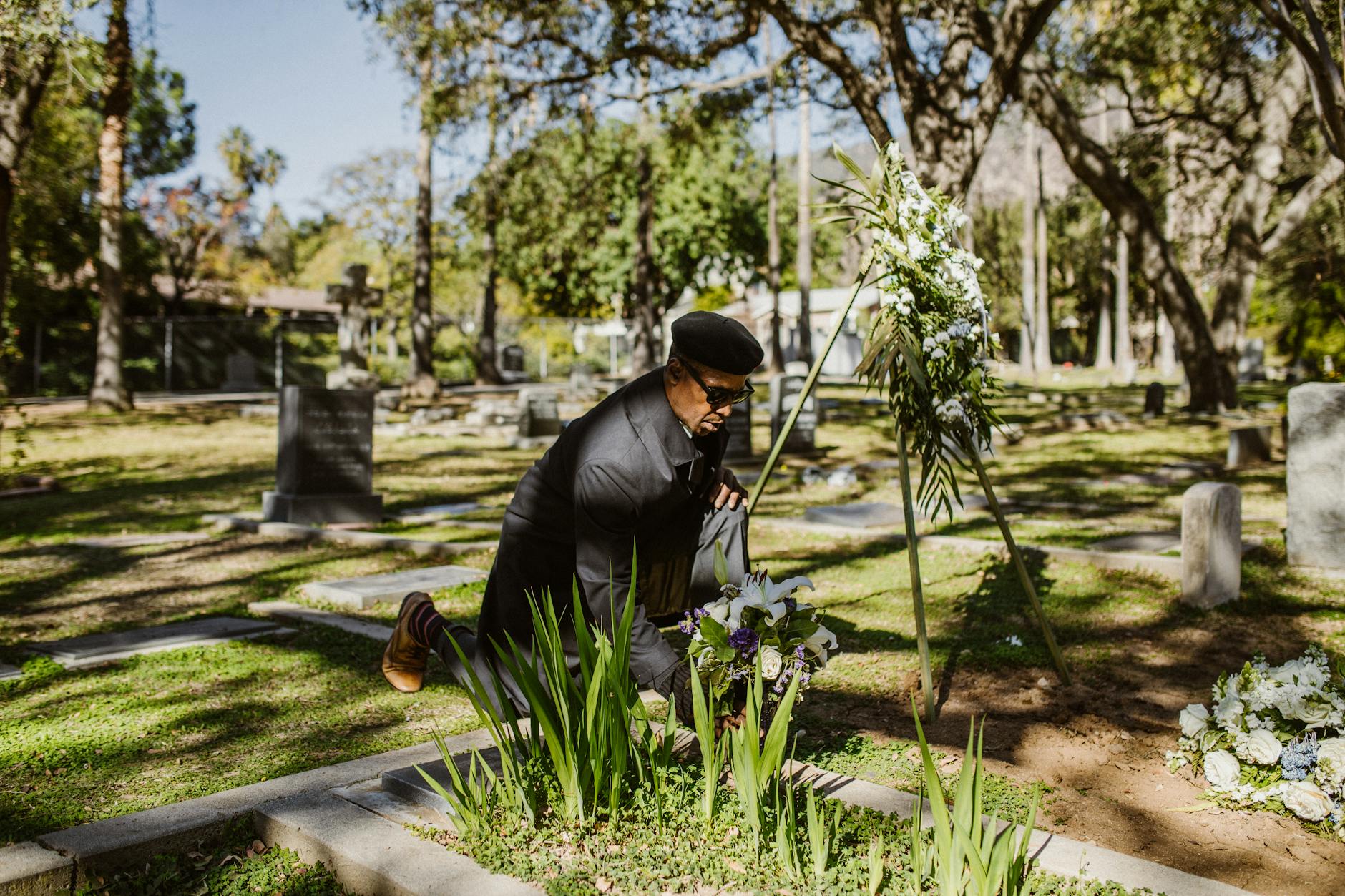
This is the one no one wants to talk about, but it’s one of the most significant drivers of social circle shrinkage in later life. After a certain age, the losses start. A parent. An old friend. A sibling. And each loss takes not just the person but the social energy and time that went into that relationship.
As people age, changes in their social network occur due to retirement, the loss of family and friends, and reduced social participation stemming from health issues, all of which can potentially lead to social isolation and feelings of loneliness. Grief is exhausting in ways that show up in unexpected places, including in someone’s capacity to maintain other friendships during a difficult period.
Older adults are especially at risk of experiencing loneliness due to losing close contacts and declining physical, mental, and cognitive health and mobility. The social and emotional infrastructure for navigating this kind of loss is poorly developed in most people’s lives. There’s a framework for grieving a death. There’s no equivalent framework for the ripple effects on everything else.
8. Health Issues Limit the Ability to Socialize
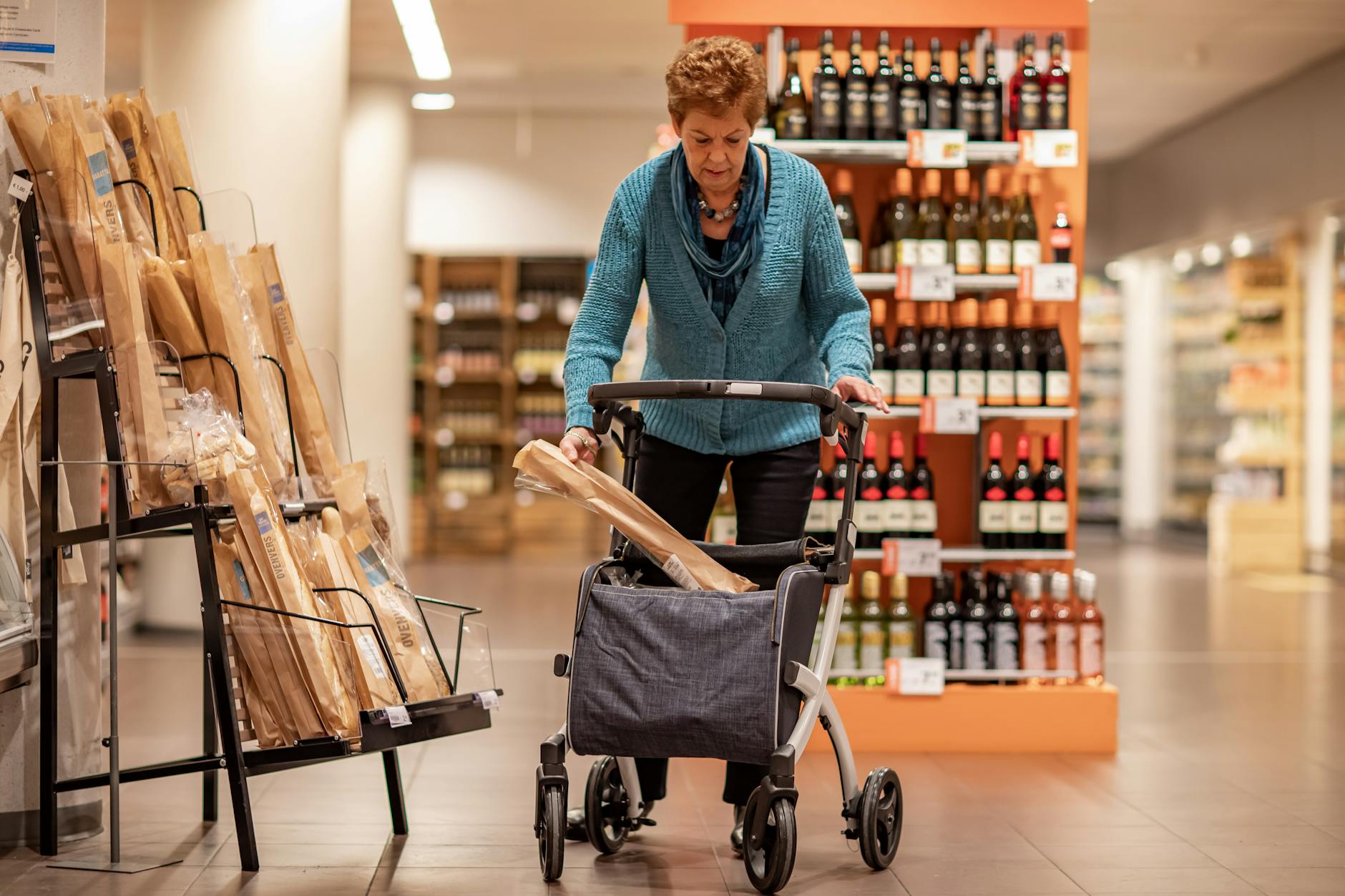
Staying socially connected requires a certain baseline of physical capacity – the ability to get somewhere, to sustain energy in conversation, to move around comfortably. As health declines, that baseline gets less reliable, and the social costs can be significant.
Older adults often worry about leaving the house because of common age-related difficulties such as vision loss, incontinence, disability, or lack of transportation – all of which create friction around the kinds of spontaneous social contact that used to feel effortless. Driving at night becomes harder. Hearing in crowded restaurants becomes harder. The logistics of leaving the house become more complicated, and so people leave the house less.
According to a 2024 study published in JAMA, which drew on national polling data from adults aged 50 to 80 across the United States, adults with fair or poor physical health reported a loneliness rate of 53% and a social isolation rate of 52% – significantly above the broader older adult population. Health and social connection are deeply intertwined, and when one deteriorates, the other often follows.
9. The Social Infrastructure of Shared Institutions Disappears
A lot of adult socializing happens inside institutions – workplaces, religious communities, sports clubs, neighborhood organizations, parent groups at school. These structures create the regular contact that keeps friendships alive without anyone having to schedule it.
As Americans spend more of their time online, the neighborhood – once a primary physical location for real-world socialization – plays less of a central role than it once did. Older adults feel this acutely. When the kids leave school, the parent community dissolves. When you change jobs or retire, the professional community disperses. When health limits attendance at a religious community or a gym, that contact drops away too.
A social life stripped of all those ambient structures has to be maintained entirely by intention, and intentional maintenance is harder than it sounds. It requires someone to make the first move, every time, with no ambient contact keeping the connection warm in between.
10. Personality Shifts Toward Introversion With Age
People often assume their personality is fixed, but research tells a more complicated story. Certain traits tend to shift across the lifespan, and a greater preference for solitude and quiet tends to increase as people age.
As adults grow older, they tend to become more selective about the types of relationships they pursue. Unlike in childhood, where friendships often form based on proximity and shared activities, adults increasingly seek deeper connections built on common interests, values, and life experience. The preference for fewer, higher-quality interactions over a larger, noisier social life is partly a natural personality evolution and partly a rational response to what experience has taught people about which relationships are actually worth sustaining.
Socioemotional selectivity research supports this: older adults don’t just end up with smaller circles by accident. Many of them actively prefer it. The question of whether that preference is chosen or accepted reluctantly is a more individual one – and the answer matters enormously for whether a smaller circle feels like freedom or loss.
11. Making New Friends Gets Structurally Harder

Even when someone wants to expand their social world later in life, the structural conditions for doing so are much less forgiving than they were at twenty. The environments that generate friendships effortlessly in youth – school, college, shared housing – no longer exist. Making new friends as an adult requires deliberate action in contexts that don’t automatically facilitate connection.
Many individuals find that as they grow older, making new friends becomes increasingly daunting. Research shows that loneliness is a major concern for older adults who crave social connections but struggle to meet that need. The problem is structural as much as personal. Adult social environments are typically organized around function – work gets done, errands are run, fitness happens – and not around the kind of open-ended lingering that allows friendship to form.
Nearly one in five Americans reported having no close social connections in a recent national survey, a double-digit increase from 2013. The decline in social connection is generational in scope. Reversing it – even for individuals who actively want to – runs against a tide of structural and cultural factors that make adult friendship harder to build and harder to keep.
The Quiet Part Worth Sitting With
The honest answer to why social circles shrink as people grow older is that it’s all of this at once. Retirement dismantles the daily structure. Parenthood shifts the time budget. Geography separates people who once lived five minutes apart. Illness takes friends before anyone was ready. And through all of it, a quieter internal shift happens too, where the appetite for large, sprawling social lives simply changes.
Research on social aging shows that selective reductions in social interaction begin early in adulthood and continue through middle age, and that as frequency and satisfaction with acquaintances declines, emotional closeness in remaining close relationships tends to increase. That’s not a consolation prize. For many people, the smaller circle they’re left with in their fifties and sixties contains more genuine warmth than the wider one they had at thirty.
Still, the difference between a circle that shrank because life reshaped it and one that shrank because the conditions for connection were never rebuilt after a major transition is worth taking seriously. The 2024 JAMA data found that 33% of older adults reported feeling lonely some of the time or often in the past year – which is not a small number, and not a problem that resolves itself. The relationships that matter most in later life don’t tend to maintain themselves on goodwill alone. They take energy, and initiative, and a willingness to be the person who makes the call first. That’s harder than it used to be. It’s also, for exactly that reason, worth doing.
Disclaimer: This information is not intended to be a substitute for professional medical advice, diagnosis, or treatment and is for information only. Always seek the advice of your physician or another qualified health provider with any questions about your medical condition and/or current medication. Do not disregard professional medical advice or delay seeking advice or treatment because of something you have read here.
AI Disclaimer: This article was created with the assistance of AI tools and reviewed by a human editor.