

Slavery was not a Southern problem, cordoned off below the Mason-Dixon line and kept separate from the real machinery of American prosperity. The United States did not become the world’s dominant economic power despite slavery. In a very direct, measurable, and documented sense, it became that power because of it.
The men and women forced to work without pay, without freedom, and without any legal recourse were not simply victims of a moral catastrophe. They were also, in the cold arithmetic of economic history, the most productive and systematically exploited labor force the country has ever had. Their output didn’t stay in the South. It financed the North, crossed the Atlantic, and built the institutions that Americans still use today.
The Slavery American Economy Ran On: Cotton

Before cotton, the American economy ran on tobacco. The colonies shipped it to Britain by the millions of pounds, and planters in Virginia and Maryland built their fortunes on it. But tobacco wore out the soil, prices swung brutally, and when American independence severed the preferential trading relationship with Britain, its importance began to fade.
By 1860, American cotton made up two-thirds of the global supply. Nearly all of it went to Great Britain, fueling a textile industry that made the British Empire increasingly dependent on American cotton and Southern slavery. The mills of Lancashire ran on American cotton. So did the counting houses of New York, the insurance offices of Boston, and the shipping yards of New England. By 1860, cotton accounted for almost 60 percent of American exports, representing close to $200 million a year.
The gin, Eli Whitney’s 1793 invention that separated seeds from raw cotton fiber, is often credited as the catalyst for this explosion. But the gin didn’t plant the cotton, pick it, process it, or haul it to the docks. Every step of that labor chain was carried out by people held in bondage, people who received no wages, no legal protections, and no share of the enormous wealth their labor generated.
Not a Southern Institution, a National One
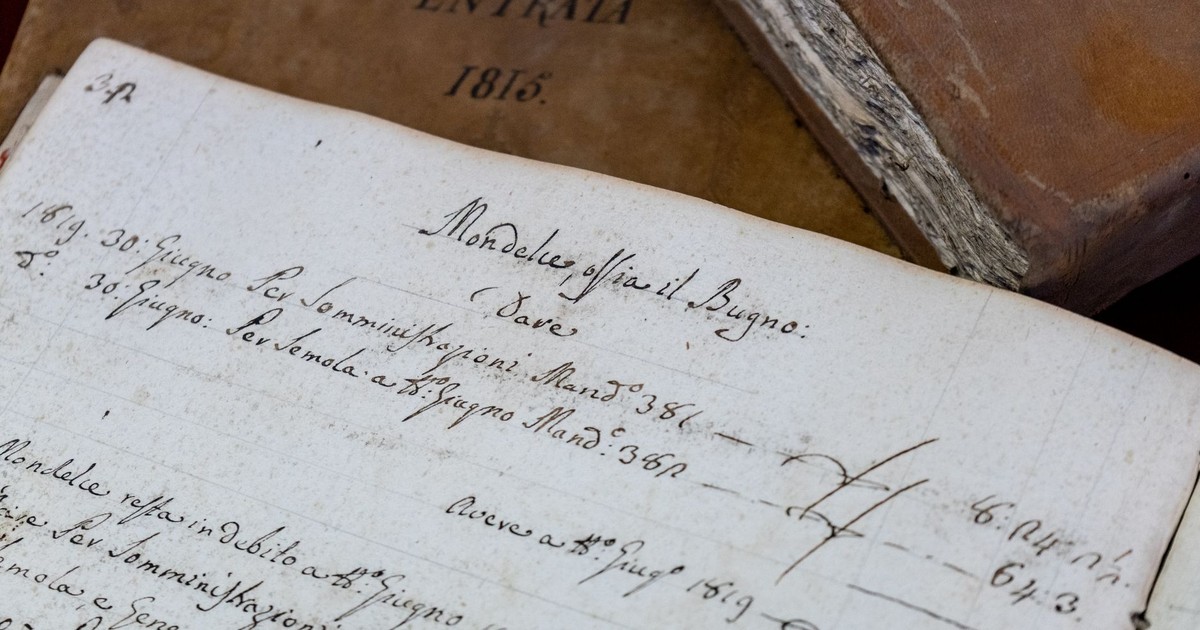
For generations, the standard history of slavery treated it as a regional phenomenon: the peculiar institution of the South, separate from the industrializing North and its market-driven capitalism. Historians mostly depicted slavery as a regional institution of cruelty in the South, and certainly not the driver of broader American economic prosperity.
Sixteen scholars challenged this in the 2016 book Slavery’s Capitalism. More than half of the nation’s exports in the first six decades of the 19th century consisted of raw cotton, almost all of it grown by enslaved workers.
Slavery’s Capitalism identifies slavery as the primary force driving key innovations in entrepreneurship, finance, accounting, management, and political economy. The slaveholders’ methods for extracting greater output from people they owned were sophisticated, brutal, and rational from a business standpoint. The management and financial structures they built became the direct ancestors of practices that American capitalism would carry forward and export globally.
Wall Street Was Built on This, Literally

Dating back to 1711, Wall Street hosted the city’s first official slave market, and the wall that gave the street its name was constructed by enslaved people. New York banks didn’t just stand apart from slavery happening in the South. They financed it, structured it, and profited from it directly.
At City Bank of New York, President Moses Taylor moved enormous sums derived from slavery, both in the South and in Cuba, into industrial development and modern corporations, including Consolidated Edison, which still exists today.
Banks issued loans to planters using enslaved people as collateral. When loans defaulted, they seized those people. They then bundled those mortgages and sold them as bonds to investors in New York and London, the same basic logic of securitization that resurfaced, with different collateral, in the mortgage market collapse of 2008.
U.S. banks financed the survival of Southern plantation owners, while insurance companies including New York Life, Aetna, and US Life sold policies to owners of enslaved people. These policies covered losses on transatlantic voyages and from dangerous labor in mines, lumber mills, and turpentine factories.
How Enslaved Labor Drove National Economic Growth

A 2022 working paper by economist Mark Stelzner and historian Sven Beckert, published via Equitable Growth, established that the labor of enslaved Americans drove growth not only in the South but nationally, at a rate comparable to the per capita output gains of manufacturing workers in New England.
New England manufacturing has always been held up as the defining engine of American industrialization: free labor, ingenuity, market competition. The Stelzner and Beckert findings cut against that framing directly. Their work demonstrates that slavery was an important institution for economic development in the United States, and that the unrequited labor of enslaved women, men and children helped produce in significant ways the nation’s economic expansion in the two decades before the Civil War.
There were 4 million enslaved people in the United States on the eve of the Civil War, 13 percent of the total population. The system was optimized not for productivity in any ordinary economic sense, but for extracting the maximum possible value from people who had no legal power to negotiate, refuse, or leave.
The South’s dependence on slavery also created structural weaknesses. Economic development in the slave South lagged behind that of the free states, as the region neglected infrastructure, declined to recruit immigrants, and underinvested in schools. Plantation owners grew rich. The broader Southern economy, roads, banks, manufacturing base, did not develop at the pace of the North. Slavery concentrated wealth rather than distributing it, and that concentration left the region structurally brittle.
The Wealth That Remained

Wealth does not evaporate with the institutions that created it. The wealth that many corporations and banks hold today traces directly back to stolen labor.
University of Connecticut historian Thomas Craemer has estimated the value of unpaid slave labor in America over 246 years at $14 trillion, using modern wage equivalents with interest. That figure is contested and depends heavily on methodology, but even conservative estimates produce numbers that reframe the national conversation about wealth, inheritance, and the racial wealth gap that persists today.
The labor that went unpaid for generations produced a corresponding gap in generational wealth: never passed down, never used to buy a house in a neighborhood that would appreciate, never deployed to fund a child’s education. The economic consequences of slavery didn’t end with emancipation. Sharecropping, Jim Crow, redlining, and discriminatory lending repackaged those consequences.
What the History Actually Tells Us

The story of slavery and the American economy describes an economic system, deliberately constructed, legally protected, and financially sophisticated, that generated vast wealth for some people by extracting everything from others.
The cotton that built American export dominance couldn’t have been grown at that scale, at that price, at that speed, by any other means available at the time. The financial instruments that New York banks developed to manage plantation debt were purpose-built for slavery. The insurance policies, the mortgage-backed bonds, the credit extended to planters were the innovations of a capitalist system that had found a labor source with zero negotiating power and built its entire infrastructure around exploiting it.
The legacy of the slavery American economy shows up in wealth distributions, in geography, in institutional trust, in generational capital that was compounded on one side of the ledger and denied on the other for two and a half centuries. The numbers didn’t stop at 1865.
Disclaimer: This information is not intended to be a substitute for professional medical advice, diagnosis, or treatment and is for information only. Always seek the advice of your physician or another qualified health provider with any questions about your medical condition and/or current medication. Do not disregard professional medical advice or delay seeking advice or treatment because of something you have read here.
AI Disclaimer: This article was created with the assistance of AI tools and reviewed by a human editor.