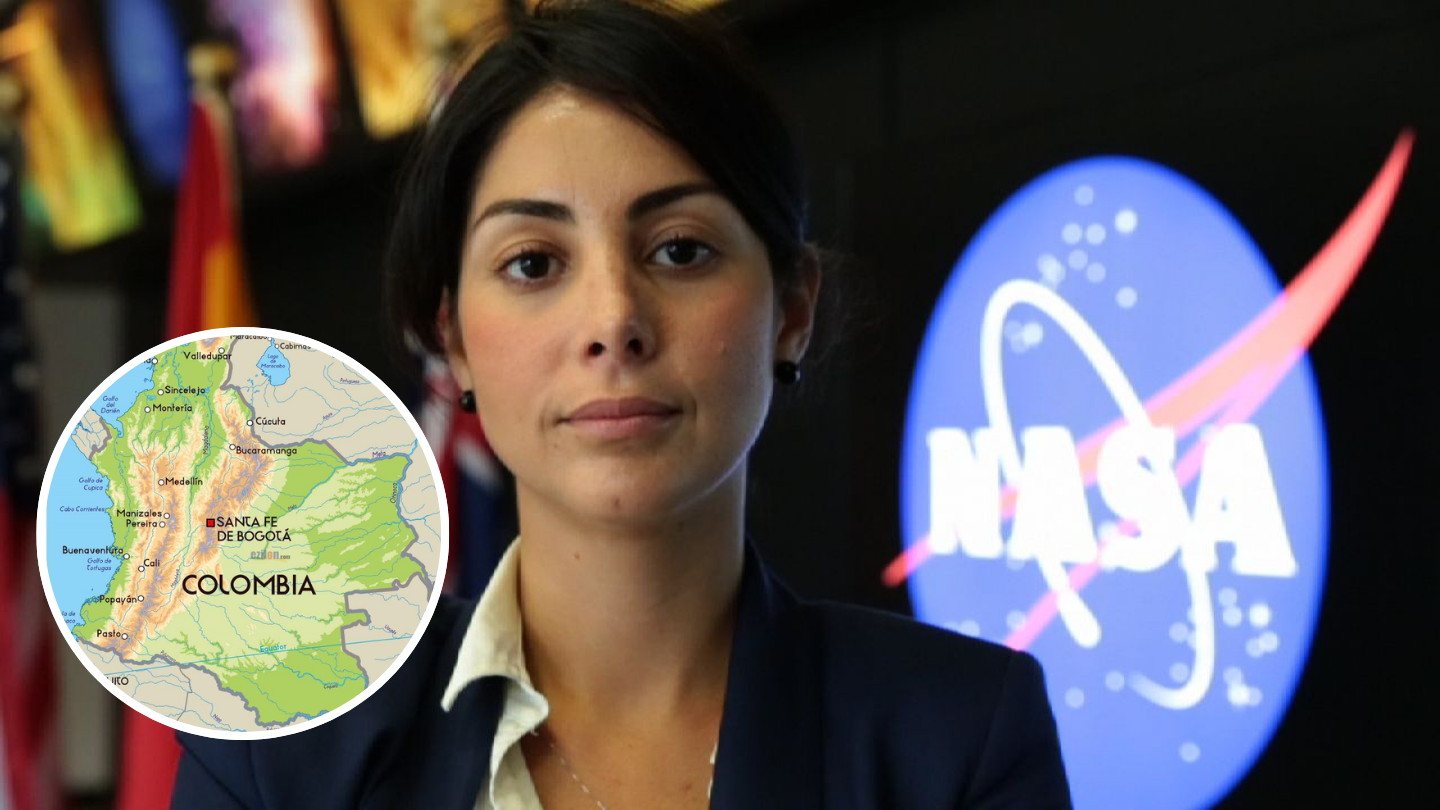

Some stories feel powerful because they connect struggle, timing, and achievement in a way that feels hard to ignore. Diana Trujillo’s story does exactly that. She left Colombia at 17, arrived in the United States with only $300, worked difficult jobs while learning English, and later became an aerospace engineer tied to one of NASA’s most famous modern missions, Perseverance. NASA says Trujillo immigrated to the U.S. at 17 to pursue her dream of working for the agency, and later became a Tactical Mission Lead for the Mars Perseverance rover.
What makes her rise so compelling is not only the destination. It is the distance between where she started and where she ended up. Her life did not move in a straight line from a strong school to a major lab to a top mission. Instead, it moved through financial pressure, language barriers, culture shock, and a series of decisions that could easily have gone another way. By the time the world watched Perseverance land on Mars in February 2021, Trujillo was no longer just chasing a dream. She was part of the engineering effort behind the mission and the public face of NASA’s first Spanish-language planetary landing broadcast.
Her story has become much bigger than one career milestone. It now stands for immigration, ambition, representation in science, and the idea that major talent can come from places many institutions have historically ignored. The more you look at the details, the more impressive the story becomes.
Diana Trujillo grew up in Colombia with big goals
Diana Trujillo was born and raised in Cali, Colombia. Long before she became linked to Mars exploration, she had an interest in science and a strong pull toward space. NASA’s profile on her says she was born and raised in Colombia and moved to the U.S. at 17 to pursue her dream of working for NASA. That detail matters because it shows her future did not come from a random twist of fate. Her path began with a real goal, even if the path itself looked difficult. Plenty of people are fascinated by space, but fascination alone does not carry someone through the kind of upheaval Trujillo experienced. She had to leave home, adapt to another country, and build a life from the ground up while still holding onto a dream that many people would have considered unrealistic. Stories about successful engineers often flatten the early years. They skip over the part where the person is uncertain, under pressure, and dealing with basic survival. In Trujillo’s case, those early years are central to understanding what came later. She did not begin in a polished pipeline designed to produce aerospace leaders. She began as a teenager trying to make a future in a country that was not yet hers.
She came to the United States with almost nothing
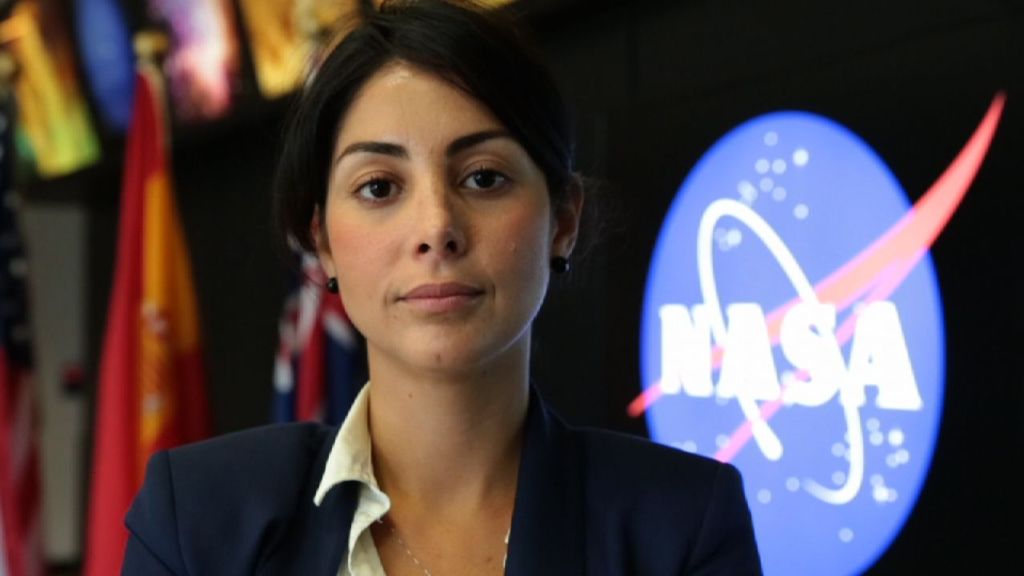
One of the most repeated facts about Trujillo is also the one that catches people first. She arrived in the United States with only $300. This was not a comfortable move backed by financial protection. This was a leap. For a 17-year-old to arrive in another country with little money, limited English, and a dream tied to one of the hardest professional fields in the world says a lot about her mindset. It also puts the rest of her career in sharper focus. Her later success was not built on convenience. It was built on endurance.
According to NASA’s profile, she supported herself while enrolled in English-as-a-second-language courses and later studied in college. Other reporting says she worked cleaning houses and bathrooms while trying to advance in school. These details matter because they remove the easy myth that exceptional success always begins in exceptional conditions. Sometimes it begins in jobs that are physically draining, poorly valued, and invisible to the public.
Learning English and surviving came before prestige
Before Trujillo was associated with rovers and robotic systems, she had to deal with something far more immediate: building a life she could sustain. NASA says she studied English while working full-time and later continued college at the University of Florida and the University of Maryland. This period of her life is often what makes people connect with her story on a personal level. Her later role at NASA sounds almost cinematic, but the beginning feels very real to ordinary people. It involved exhaustion, uncertainty, and the type of work that many immigrants take on because there is no other option. There is nothing glossy about that phase. Yet it was the stage that made everything else possible.
She treated what came her way as an opportunity rather than humiliation. She did not pretend that difficult work was glamorous. She simply refused to let it shrink her idea of what her life could become.
College helped turn a dream into a real path
Miami Dade College became one of the first big academic stops on Trujillo’s journey. From there, she moved deeper into engineering. NASA says she later studied at both the University of Florida and the University of Maryland. That progression is important because it shows how careers in science are often built. They are rarely one giant moment. More often, they develop in stages. One school gives a student footing. One mentor opens a door. One program creates credibility. One successful role makes the next one possible. Trujillo’s path reflects that pattern, even though the outcome became extraordinary.
Accounts of her career also note that she became the first Hispanic immigrant woman admitted to the NASA Academy, a major early milestone in her development. While that detail appears in secondary reporting and biographical coverage, it has become one of the most cited markers of how quickly she began separating herself in elite technical spaces. Even without leaning too heavily on titles, the significance is obvious. She was entering rooms where very few women who shared her background had been welcomed before.
Her NASA journey grew through serious technical work
Trujillo’s public image is often tied to inspiration, but the technical side of her career is just as important. NASA’s own biographical material says she became Technical Group Supervisor for Sequence Planning and Execution and a Tactical Mission Lead for the Mars Perseverance rover. That is not symbolic work. It is engineering and mission operations work inside one of the most demanding scientific environments in the world. She also built experience on other Mars efforts before Perseverance became a global headline. Biographical reporting on her career notes involvement with Curiosity-related work and with engineering tasks linked to robotic systems and sampling operations.
This part of the story matters because people sometimes reduce figures like Trujillo to motivational examples and forget the underlying substance. She is not important only because she overcame long odds. She is important because she became highly skilled in a field where mistakes are expensive and excellence is required. Mars missions do not rely on sentiment. They rely on engineering discipline, planning, testing, and technical leadership.
The Perseverance rover changed how many people saw her
NASA’s Perseverance rover landed on Mars on February 18, 2021. The mission was designed to study the planet’s geology, search for signs of ancient microbial life, and collect samples that may help answer deeper questions about Mars and its past habitability. NASA says Trujillo served as a Tactical Mission Lead for Perseverance and worked on the robotic arm effort connected to the rover. CBS reported that she was part of the team that created the robotic arm that would collect rock samples on Mars.
That robotic arm was not some minor feature. It was a major part of how the rover interacts with Martian terrain and carries out science tasks. In practical terms, it helps the rover examine, access, and collect material that scientists care about. When people say Trujillo helped lead work tied to the Mars rover, this is the kind of work they mean, not a vague support role. Perseverance brought enormous global attention to NASA. It also gave many people their first exposure to Trujillo. In a mission full of advanced systems, international interest, and historic ambition, her presence stood out because she represented both technical leadership and a different public image of who gets to belong in aerospace.
She also led NASA’s first Spanish-language landing broadcast
One of the most historically important parts of Trujillo’s public role came during the Perseverance landing itself. NASA offered a Spanish-language show for the rover’s landing called “Juntos perseveramos,” and Trujillo served as host. NASA said it was the first Spanish-language show for a robotic planetary landing. The University of Maryland also highlighted the program and said it featured live English-to-Spanish translation and commentary during the landing.
This mattered well beyond media strategy. Space agencies often describe their work as belonging to all humanity, but access to that work is not always shared in ways that feel genuinely open. Language can create distance. Trujillo helped reduce that distance. By fronting a Spanish-language broadcast during one of NASA’s most visible recent missions, she widened the audience and made that moment feel more accessible to millions of Spanish speakers. The importance of that cannot be brushed aside as branding. It was part of a broader statement about who science is for, who gets included in major public moments, and who gets to hear world-changing news in their own language. That is part of why her role landed so strongly with viewers across Latin America and among Spanish-speaking families in the United States.
Representation in STEM is a real part of this story
Trujillo’s success highlights the significant underrepresentation of Hispanic women in STEM fields, particularly in engineering and technical leadership roles. While statistics may vary over time, the overarching reality remains: Latina women are still not adequately represented in these areas.
This context adds depth to Trujillo’s achievements, especially for young women, immigrant girls, and Latina students. Her career illustrates what is possible, influencing the aspirations of many. When students see someone with a similar background leading a Mars mission, it leaves a lasting impression. However, representation alone is insufficient; it must be coupled with genuine expertise, which Trujillo exemplifies. Her visibility stems from her substantial technical responsibilities and her commitment to expanding opportunities for others.
Her story also says something bigger about immigration
It is easy for public conversations about immigration to become narrow and political. Stories like Trujillo’s add needed depth. They remind people that immigration is not just a policy category. It is also a source of talent, discipline, and long-term contribution. Trujillo did not arrive with wealth or social power. She arrived with ambition and a willingness to work. The United States did not hand her a top career, but institutions inside the country, colleges, training programs, and NASA itself, became places where her ability could develop. That does not erase the hardship. It makes the result more meaningful. Her life reflects what can happen when opportunity meets determination in a real, demanding way.
At the same time, her success should not be used to pretend that every immigrant gets an even shot. That would flatten the point. Her story is exceptional because the obstacles were real. She dealt with money problems, language barriers, and a field where people like her have long been rare. Her rise proves the possibility, but it also exposes how much pressure some people face before they are even allowed near the starting line.
Why Diana Trujillo’s story still matters
Several years after Perseverance landed, people still talk about Diana Trujillo. That says a lot. News cycles usually move fast. Public attention moves faster. Yet her story keeps resurfacing because it combines a gripping personal journey with real scientific achievement. She did not just beat the odds in a private way. She became part of one of the most-watched Mars missions in history. She helped connect technical excellence with public outreach. She helped make a NASA moment more accessible to Spanish-speaking audiences. And she did all of it after starting from a position that would have caused many people to give up.
In the end, the strongest thing about her story is that it never has to be exaggerated. The facts already carry enough force. A teenager leaves Colombia with $300. She works difficult jobs while learning English. She studies engineering. She enters NASA’s world. She contributes to Mars exploration. She hosts a first-of-its-kind Spanish-language landing show. Every part of that arc is real, and together those facts tell a story that is hard to forget.
Final takeaway
Diana Trujillo’s life is memorable not only because it is inspiring. It is memorable because it joins struggle, technical skill, and historic impact in one story. She did not become important through image alone. She became important through work, and that work reached all the way to Mars. That is why her journey keeps landing with readers. It speaks to immigrants, students, women in science, and anyone who has had to build a future from an unstable start. It also reminds the public that the people behind major scientific missions are not abstract names in a press release. Sometimes they are people who crossed borders, cleaned houses, learned a new language, and still kept aiming at space.
Disclaimer: This article was written by the author with the assistance of AI and reviewed by an editor for accuracy and clarity.