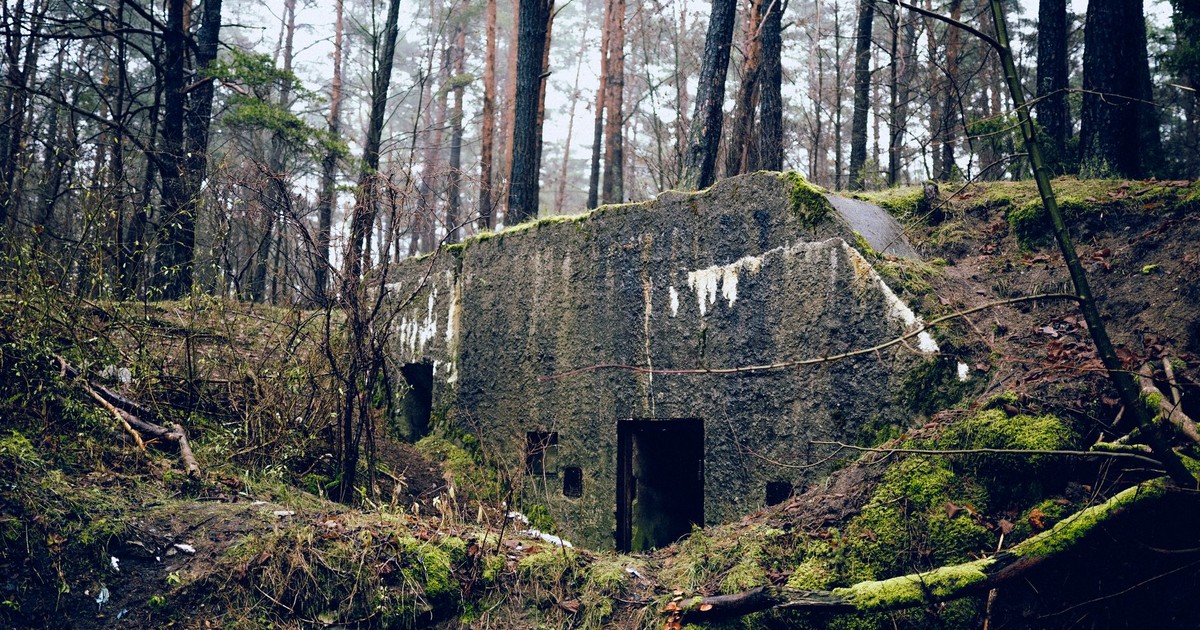

The map of the United States has plenty of blank spaces that aren’t really blank at all. Some of them are hiding in plain sight, the kind of place you could drive past on a Tuesday and never suspect that what’s behind the fence, beneath the floorboards, or through the back of the cabinet is anything other than ordinary. Others have been famous for so long that we’ve stopped asking the obvious question: why would anyone actually build something like that?
Six places across the country have committed to secrecy so fully that the secret became the whole point. Government facilities designed to function after a nuclear attack. A Victorian mansion in California whose architect built in dead ends deliberately. A small New Mexico town that has attracted more conspiracy theorists per square mile than anywhere else on the continent. These are secret American locations where secrecy isn’t incidental to the story; it is the story, baked into the mission, or the mythology, and in most cases, all three.
1. Winchester Mystery House, San Jose, California
The Winchester Mystery House is a Victorian mansion crafted by Sarah Winchester over a span of nearly four decades. Sarah was the widow of the heir to the Winchester Repeating Arms fortune, and by most accounts, she used that fortune to build the most deliberately disorienting private residence in American history. The result is a 160-room mansion with 10,000 windows and staircases that lead straight into the ceiling.
The incoherence is the point. Among the house’s curiosities are a door that opens onto an eight-foot drop down to a kitchen sink and a cabinet that extends over 30 different rooms. There are doors that open onto walls, rooms without floors, and windows in unexpected places. The mansion has countless secret passages, purportedly used by Mrs. Winchester to move through the house unnoticed by the spirits that pursued her. The legend holds that she believed she would die the moment construction stopped, so the carpenters worked in shifts, around the clock, for nearly four decades.
Workers installed 47 fireplaces, 40 staircases, 13 bathrooms, 10,000 windows, and 2,000 doors in a structure that reads less like a home and more like a fever dream rendered in Victorian timber. Winchester’s obsession with the number 13 influenced many of the design details throughout the home, including the number of steps on staircases, the number of lights in chandeliers, and the number of panels in the walls. Many visitors are also struck by the vast collection of Tiffany stained glass hidden away where no light can reach it. The house operates today as a museum, and guided tours take guests through 110 of the 160 rooms, which raises its own question: what’s in the other 50?
2. The Antlers Hotel, Colorado Springs, Colorado
According to the Colorado Springs Pioneers Museum, the first Antlers Hotel had five floors, 75 guest rooms, and amenities like a music room, billiards room, children’s playroom, barber shop, and Turkish baths. That original hotel opened in 1883, named because General William Jackson Palmer used the building’s lobby to house his large collection of deer and elk trophies.
Fire destroyed the Rio Grande Railroad freight station, about seventy buildings, and the original Antlers Hotel on October 1, 1898, with wind blowing at 47 mph. A second, grander hotel opened in 1901, described at the time as the most elegantly furnished, and proudly 100% fire-proof hotel in the West. That one was demolished in 1964. The hotel was then torn down and rebuilt, reopening on March 20, 1967, situated in its original location downtown but this time the first building to face the city center rather than the railroad tracks.
The secret the current Antlers carries isn’t architectural; it’s atmospheric. At least three ghostly residents are said to haunt the halls of the Antlers. A mustachioed male entity is known to hang around Judge Baldwin’s Bar, one of the restaurants inside the hotel. A third spirit has a sad story: undocumented but persistent, she is said to have been a teenager who died on prom night in one of the rooms in the 1970s and has haunted different rooms ever since. A hotel that has burned down twice, been rebuilt from scratch, and still carries the weight of everything that happened on that ground has earned something that most new construction never will.
3. Meow Wolf, Santa Fe, New Mexico (and Beyond)
This one operates differently from the others on this list. The secret isn’t hidden from the public; visitors pay to go looking for it. Opened in 2016 inside a converted bowling alley purchased by George R. R. Martin, the House of Eternal Return in Santa Fe was the first permanent Meow Wolf installation. It covers about 20,000 square feet and trades on raw creativity and an almost scrappy charm.
Visitors are encouraged to follow the site’s mysterious storyline at their own pace and explore its labyrinth of hidden doors, portals, and secret passageways. The format is built on the idea that the full story is never visible on a single visit. Hidden activations, codes buried in wall art, and phone numbers that connect to in-universe characters are tucked into every corner. On the walls of Meow Wolf’s Denver location, codes and numbers that most people walk past because they’re small actually activate things in other areas. The numbers can be plugged into phone booths found throughout the venue, giving access to character recordings or an appointment with a psychic.
The Meow Wolf network now includes the House of Eternal Return in Santa Fe, Convergence Station in Denver, Omega Mart in Las Vegas, The Real Unreal in Grapevine, and a fifth location in Houston. Each one is set inside the same interconnected fictional universe, meaning secrets found in one city technically connect to puzzles in another. The whole enterprise is built around the idea that most people are walking past the interesting thing without realizing it’s there.
4. Dulce, New Mexico
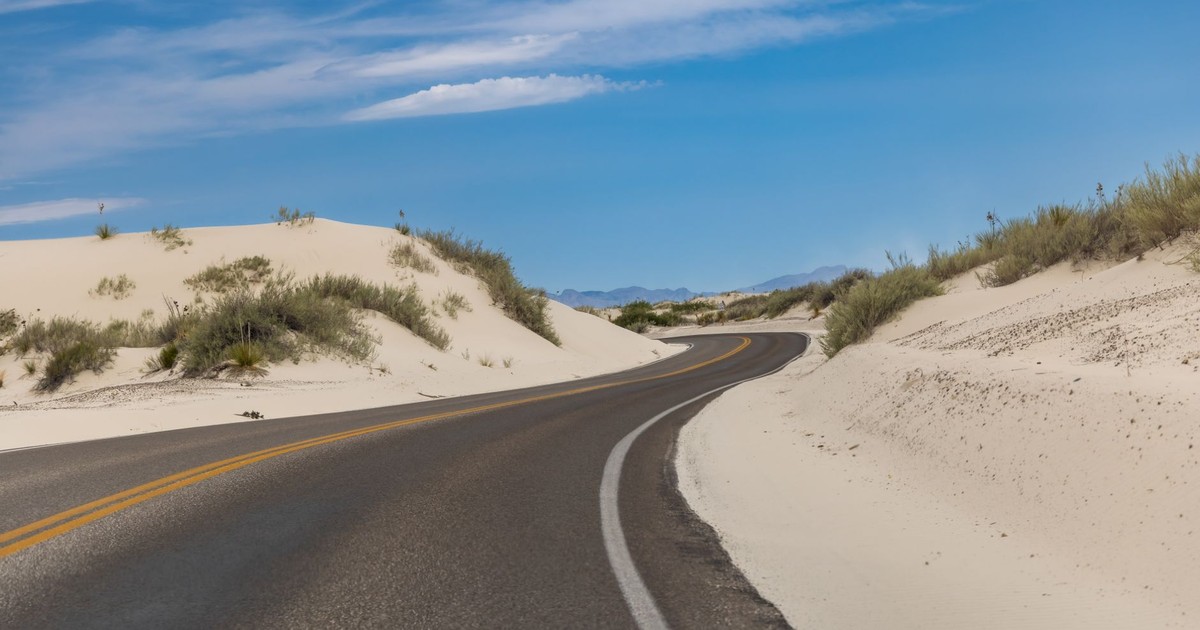
Dulce is a small town in northern New Mexico, close to the Colorado border, with a population of around 2,600 people. It would not appear on most maps of notable American destinations except for one persistent feature: the town sits beneath the Archuleta Mesa and was first brought into the spotlight in the late 1970s by businessman Paul Bennewitz, who claimed to have uncovered secret communications between the military and extraterrestrials.
Rumors about genetic experiments, alien technology, and even human-animal hybrids spread widely, and Dulce became a staple of UFO lore. The supposed underground facility, known as Dulce Base, is described by believers as a multi-level subterranean complex where joint human-alien operations were conducted, hidden beneath an unremarkable stretch of high desert. Despite numerous investigations, no concrete evidence has ever surfaced to prove the base’s existence. Officially, there is no such thing as Dulce Base.
That last sentence is either the straightforward truth or the most effective piece of cover in the history of government disinformation, depending on whom you ask. The town of Dulce sits on the Jicarilla Apache Nation, a federally recognized tribal territory with its own land rights and sovereignty, and restricted federal land surrounds significant portions of northern New Mexico. What’s harder to dismiss is how much energy the U.S. government invested in discrediting Bennewitz during the 1980s, including a documented disinformation campaign by Air Force Office of Special Investigations agent Richard Doty, who fed Bennewitz false information to distract from actual classified projects at nearby Kirtland Air Force Base. The base under the mesa may be fiction. The active effort to muddy the waters around it was not.
5. Mount Weather Emergency Operations Center, Virginia
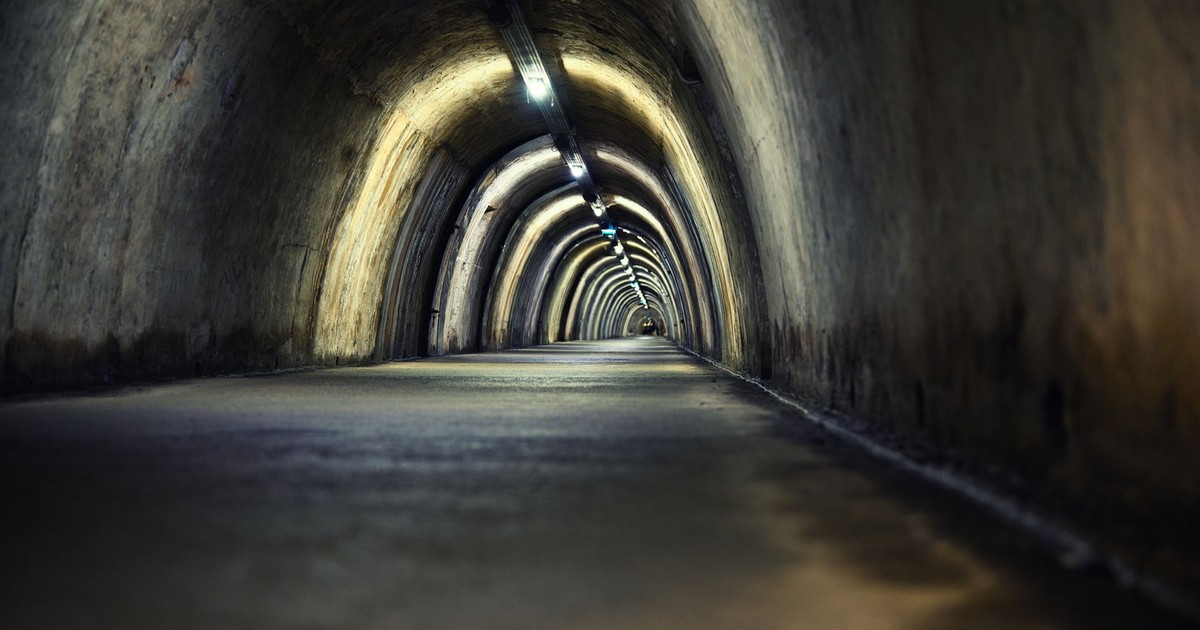
Forty-eight miles from Washington, D.C., there is a facility built into a mountain that the federal government spent decades not acknowledging. Officially, the heavily fortified Virginia facility is the Mount Weather Emergency Operations Center. Dubbed an “Emergency Operations Center,” this facility is designed to house the highest levels of U.S. government should there be a national disaster. Built during the Cold War era, it is operated by the Federal Emergency Management Agency (FEMA) for the purpose of protecting not just high-level American politicians but also some of the country’s national treasures, including art from the National Gallery.
For years, Mount Weather existed in that strange category of things that were technically public knowledge but never officially discussed. The facility was first widely reported after a 1974 plane crash on the mountain brought rescue workers, and journalists, into proximity with a site they weren’t supposed to know about. Congressional testimony in the mid-1970s confirmed the facility’s existence, but its full scope, including the subterranean infrastructure capable of housing a parallel functioning government, remained classified.
The scale of Mount Weather implies something most people don’t sit with for long. The U.S. government built, staffed, and maintained a complete shadow government infrastructure during the Cold War, with a parallel chain of command ready to assume control in the event of a nuclear strike wiping out Washington. The people who would have been sheltered there, and the people who wouldn’t, tell you something very direct about how those in power understood the end of the world.
6. The Greenbrier, White Sulphur Springs, West Virginia
The Greenbrier is a luxury resort in the Allegheny Mountains that has hosted guests since 1778. It looks exactly like what it is: a grand American hotel with rolling lawns, a golf course, and the kind of dining room that requires a jacket. For 30 years, it was also something else entirely.
Beneath the West Virginia Wing of the resort, added in 1962 during the height of Cold War tensions, the U.S. government constructed a hardened underground bunker designed to shelter the entire United States Congress in the event of a nuclear attack. The facility, known as Project Greek Island, contained a legislative chamber built to replicate the Senate chamber above ground, dormitories, a medical clinic, a decontamination center, and enough food and fuel to sustain 1,100 people for 60 days. The resort’s staff, many of whom worked there for decades, were not told what was beneath them.
The secret held for 30 years. In 1992, Smithsonian Magazine reports, Washington Post journalist Ted Gup published a detailed account of the bunker’s existence after years of investigation. The government, faced with a published expose that named the location precisely, decommissioned the facility. The bunker is now open for tours visitors can book directly through the resort. The whole arc of it, a facility built to preserve democracy secretly maintained inside a luxury hotel, then exposed and turned into a museum, is one of the stranger true stories the Cold War produced.
These six places share something beyond their secrets: each one tells you something about who built it and why. Sarah Winchester was a grieving widow who turned her fear into architecture. The Antlers Hotel is really about the persistence of place, the way a location accumulates meaning across time and fire and demolition. Meow Wolf built a secret world on purpose and made curiosity the whole point. Dulce, true or not, tells you something about how readily people believe that the government is capable of almost anything, which itself says something about the government’s record. Mount Weather and The Greenbrier are the most unsettling of the group, because they’re not rumor or folklore. They were real, funded by real tax dollars, staffed by real people, and designed around a scenario so catastrophic that most of us prefer not to think about it too carefully.
What all six share is the human instinct to put something behind a door and decide who gets to know it’s there. Sometimes that’s grief. Sometimes it’s paranoia. Sometimes it’s national security. The most American thing about this list might be that those three categories aren’t always easy to tell apart.
Disclaimer: This information is not intended to be a substitute for professional medical advice, diagnosis, or treatment and is for information only. Always seek the advice of your physician or another qualified health provider with any questions about your medical condition and/or current medication. Do not disregard professional medical advice or delay seeking advice or treatment because of something you have read here.
AI Disclaimer: This article was created with the assistance of AI tools and reviewed by a human editor.