

The argument that comes up most reliably in long-term relationships isn’t about money or parenting. It’s about who noticed what needed doing, and who didn’t. Who followed up on the thing you mentioned last week. Who put their phone down when you started talking. These small, repeatable moments are what researchers mean when they talk about the health of a relationship, and they’re a far more honest measure than how the first three months felt.
Good relationships don’t announce themselves all at once. Most people scanning for right relationship signs are waiting for certainty to arrive in a single recognizable wave. It rarely works that way. What you’re actually looking at is a pattern, built over months, made of dozens of small behaviors that either point in the same direction or they don’t.
1. They Turn Toward You, Not Away

Bids for attention and emotional connection create what researchers call “sliding door moments,” and when a partner does not respond, trust begins to erode. According to research from the Gottman Institute, couples in stable relationships turn toward each other’s bids for connection 86% of the time.
Turning toward doesn’t mean grand romantic gestures. It means when you sigh heavily on the couch, they notice and ask. It means when you mention something happened at work, they follow up about it the next day. These micro-moments of attention are the actual currency of a lasting relationship, far more than date nights or anniversary trips.
Trust is built through countless small actions over time, not announced in a single conversation. If you find yourself keeping score of how often your partner tracks what matters to you, and the score is consistently high, that’s meaningful data.
2. You Fight Well, Not Just Often

Finding “the one” doesn’t mean never fighting. It means fighting well. Couples who last don’t avoid conflict; they move through it without doing lasting damage.
Most problems in a relationship will not be solved. According to Gottman Institute research, 69% of relationship problems are perpetual, meaning that successful couples learn to manage these issues even while still disagreeing. The fight about whose family to visit at Christmas, the tension over how the money gets spent, the difference in how you each need to unwind after work – none of these are necessarily solved. They’re negotiated, repeatedly, by two people who still choose each other after.
What distinguishes the right partner isn’t that they argue less. It’s that after an argument, there’s repair. An acknowledgment. A “that got too heated, can we try again?” The relationship doesn’t disappear into the argument. It survives it.
3. They Let You Change Their Mind
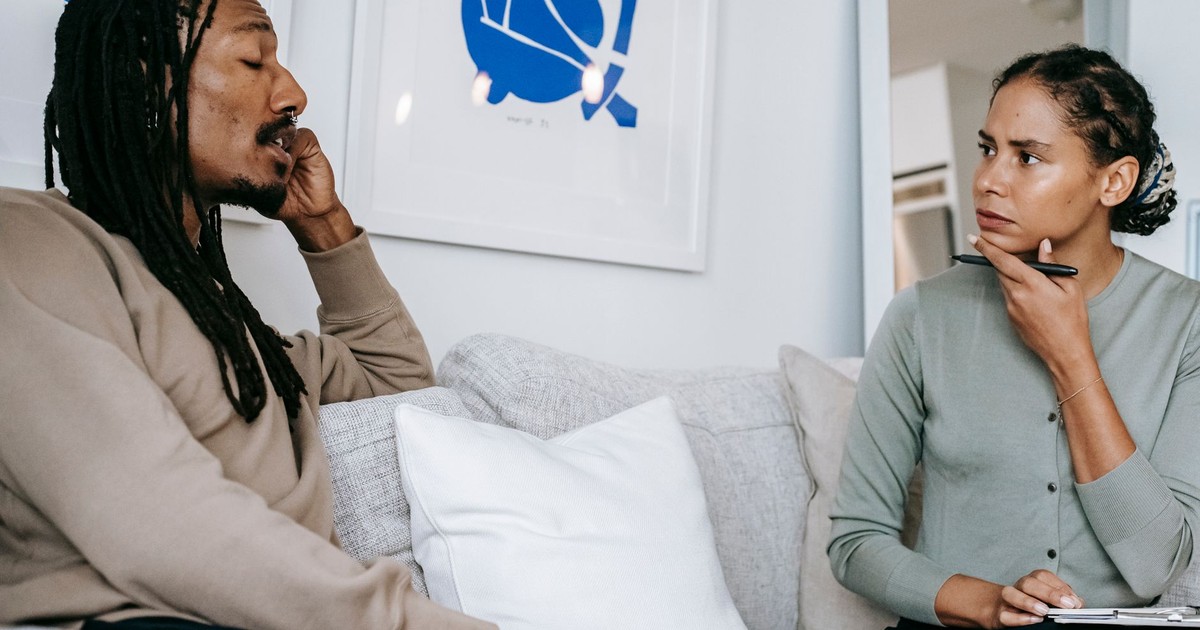
One of the most underrated right relationship signs is a concept the Gottman Institute calls “accepting influence” — the willingness to let your partner’s needs, vulnerabilities, and perspectives actually shape you, and even change something about your own behavior.
This quality tends to surface during moments of tension, not during easy harmony. Anyone can agree with their partner when nothing is at stake. The real signal is whether they adjust course when you tell them something isn’t working for you.
When both partners practice accepting influence, relationships are more stable and more loving. People report less anxiety about their partner’s commitment, and small conflicts are less likely to snowball into chronic gridlock. A partner who genuinely hears you, and occasionally says “you know what, you’re right, I’ll change that,” is showing you something real.
4. Your Stress Levels Drop Around Them

How your body responds when you’re with someone is one of the more reliable indicators of a relationship’s quality. Relationship researchers have long observed links between physiological calm and how safe and supported partners feel with each other.
Most people don’t pay attention to how their body feels in a relationship until something goes wrong. The right person doesn’t just feel good emotionally – you physically relax around them. Your jaw unclenches. The mental list settles. There’s a kind of ease that isn’t the same as boredom; it’s safety.
When you’ve found your person, difficult conversations don’t feel like walking through a minefield. You can share your thoughts, feelings, and concerns without fear of explosive reactions or emotional withdrawal. If you notice you’re always bracing slightly before you speak, that’s worth paying attention to.
5. They Champion Your Individual Goals

The right partner is not threatened by your success or your need for personal space – they are your most enthusiastic supporter. Good partners actively maintain individual identities and interests, and encourage each other’s separate goals and personal time.
A relationship that requires you to shrink to fit it isn’t the right one. The partner who encourages you to take the class, apply for the promotion, visit the friend you haven’t seen in two years – the one who celebrates your wins without making it a referendum on their own worth – is telling you something important about what kind of partnership you’re in.
This isn’t just a warmth issue. It’s a stability issue. Relationships where one partner consistently subordinates their own identity to keep the other comfortable tend to accumulate resentment in slow, invisible ways. The right person wants to know who you are outside of the relationship, and finds that person interesting.
6. You’re Genuinely Best Friends

Romantic partners who also function as best friends are surprisingly rare. A 2025 study published in the Journal of Social and Personal Relationships surveyed 940 American adults in romantic relationships and found that only about one-third listed their partner as a friend at all, with just 14.4% identifying their partner as their best friend.
Couples who do describe each other as best friends aren’t just happy; they’ve built something with a different foundation. They’re people who actually want to tell each other things, who seek out each other’s opinions, whose company they’d choose even if the romantic element weren’t part of the equation.
Finding someone you can develop a genuine friendship with – someone willing to grow, evolve, and stay emotionally present – is closer to the core of what makes a relationship last than any amount of initial chemistry. Sustainable intimacy built on friendship, respect, and real compatibility outlasts dramatic passion.
7. You Share Core Values, Not Just Interests

Loving the same TV show is not the same thing as wanting the same things from life. Shared values are a strong predictor of long-term compatibility, alongside communication quality and conflict management, which research consistently identifies as central to relationship stability and mutual support.
Values aren’t just about religion or politics, though those matter. They’re about how you both think money should be used, whether family comes first or career does, what you believe you owe other people, how you handle hard times. Two people can be deeply compatible on surface-level personality traits and still spend years grinding against each other because they want fundamentally different things from a life.
The right person doesn’t need to share every opinion. But the non-negotiables – children, location, how to treat people, what counts as a good life – need enough overlap that the relationship doesn’t become a constant compromise of core identity.
8. Gratitude Flows Both Ways

Appreciation enhances relationship quality, and gratitude creates upward spirals of relationship health. A 2025 paper published in Frontiers in Psychology noted this finding across multiple studies: it’s not just that grateful couples are happier, it’s that expressing gratitude actively generates more positive behavior in return.
Most people know whether they feel appreciated in a relationship within about thirty seconds of thinking about it. The signal isn’t complicated. Does your partner notice what you do? Do they say so? Do you feel taken for granted in ways that have slowly calcified over time?
The other side of this is whether you show up gratefully for them. In a relationship that’s working, gratitude isn’t a performance – it’s just what attention looks like. The right partner makes it easy to say thank you because they keep doing things worth thanking them for. And they feel the same way about you.
9. Conflict Doesn’t Destroy the Connection

Decades of couples research have identified what’s sometimes called the “magic ratio” of five positive interactions to one negative interaction during a conflict. The fight itself isn’t what does damage – it’s the ratio of warmth to contempt that accumulates over time.
The health of a relationship is never judged by the absence of conflict but by the quality and fairness of the fight. A strong partnership uses conflict as a tool for growth, not a weapon for harm.
The right person can be angry at you and still clearly be on your side. They fight to resolve things, not to win. After a disagreement, they come back. They don’t hold the argument in reserve to use later. They don’t threaten the relationship during conflict or leave you wondering whether this is the one that breaks you. The connection holds, even when the conversation gets hard.
10. You Both Choose Each Other, Repeatedly

High compatibility in the way you love each other is a more grounded measure of a lasting relationship than searching for a soulmate. That compatibility shows up when you accept your partner as they are and experience acceptance from them in return, and when you both feel genuinely chosen.
Choosing someone isn’t a one-time decision made on one particular day. It’s the decision your partner makes every time they show up for you when they could have checked out. Every time they stay patient in a moment of friction. Every time they prioritize the relationship even when other things compete for their attention.
You know you’ve found this level of partnership when your partner’s success genuinely excites you, when you can be vulnerable without fear of it being used against you later, and when you feel secure in their commitment even during difficult times. That sense of being chosen – not just at the start, but consistently, on ordinary days – is what real security in a relationship actually feels like.
What This Actually Means

The list above isn’t a checklist you grade your partner against on a bad week. No relationship ticks every box on every day. What matters is whether these behaviors show up consistently, whether they’re mutual, and whether the relationship on balance leaves you feeling more like yourself or less.
Most of these behaviors are things both people either do or don’t do. The right relationship isn’t just about finding the right person – it’s about being in a partnership where both of you pull these qualities out of each other. Some of that is chemistry. Some of it is choice. And some of it is the slow accumulation of all those sliding door moments, the ones where someone turned toward you, again and again, when they didn’t have to.
AI Disclaimer: This article was created with the assistance of AI tools and reviewed by a human editor.