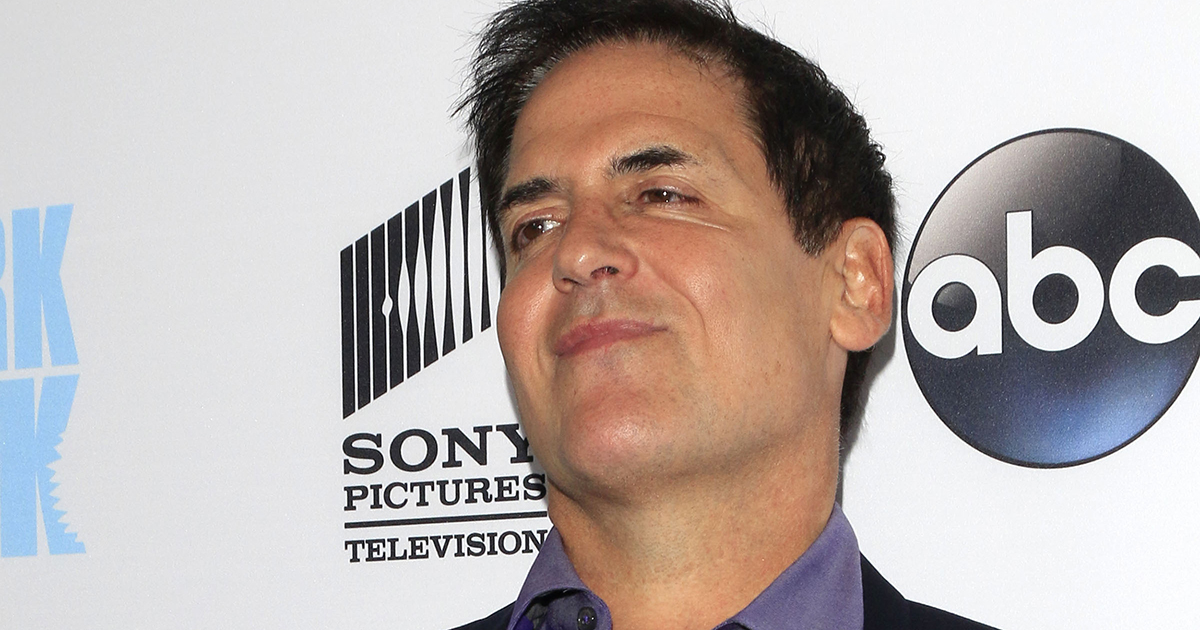

Mark Cuban has never been subtle about money. The billionaire entrepreneur and former Shark Tank investor made his fortune by being blunt, unconventional, and deeply skeptical of the conventional wisdom that tends to keep ordinary people broke. In 1999, Broadcast.com was acquired by Yahoo for $5.7 billion in stock. Cuban hedged the position rather than riding it down when the dot-com bubble burst. That instinct (protect what you have before chasing what you don’t) has shaped virtually everything he’s said about personal finance since.
You’ve spent decades accumulating. The growth phase is mostly over. What matters now is not losing ground, especially in an economic environment that Cuban himself has described in stark terms. He has been sounding economic alarms since 2025, warning that tariffs could squeeze business, federal spending cuts could create a “red rural recession,” and a combination of pressures could create conditions worse than the 2008 financial crisis. Whether or not his worst-case scenarios materialize, the posture behind them is sound retirement financial planning: assume things could get bumpy and structure your finances so that a bad year doesn’t become a catastrophe.
The advice Cuban has shared across TV appearances, social media, and interviews isn’t glamorous. It doesn’t involve picking the next hot stock or timing the market. It’s deliberately boring, which is exactly why it’s worth paying attention to.
Stop Making Decisions Based on Headlines

The billionaire investor and Shark Tank star told investors not to sell following last week’s market turmoil, posting “Don’t sell. It will come back. I just don’t know how long it will take.” He then deleted the post, explaining: “As some other rightfully mentioned, no one knows. You have to look at your own circumstances and talk to those whose advice you value.” That correction is more valuable than the original post. Even people who follow markets closely for a living can’t reliably predict short-term moves, and acting on that kind of prediction is one of the fastest ways to lock in a loss.
Moving an entire portfolio into cash, abandoning stocks after a decline, or making speculative bets could leave retirees worse off than they were before. For someone still in their thirties, a bad year is annoying. For someone already drawing down a portfolio in retirement, selling at the bottom means selling shares that will never be replenished. The math doesn’t recover the same way.
Periodically reviewing the portfolio on a schedule is a more defensible approach. Set a calendar reminder (once a quarter, twice a year, whatever your advisor recommends) and make adjustments based on your actual situation, not on whoever was loudest on cable news that week. The people who panic-sell in downturns aren’t stupid; they’re just reacting to real-time fear without a pre-committed plan to override it.
Treat High-Interest Debt as the Emergency It Is

“People ask me where’s the best place to invest,” Cuban told host Dave Ramsey. “The best place to invest is to pay off all your credit cards and burn them.” He’s not talking about credit cards as a moral failing. He’s talking about them as a math problem, and the math is ugly.
Wiping out a 20% interest charge helps your finances as much as earning a 20% return somewhere else. “If you’re paying 15% or 20% in interest, if you pay that down, you just earned 15% or 20%.” For a retiree carrying balances, those interest payments are pulling cash out of an already-tight budget every month. Paying extra toward the balance with the highest interest rate first can free up more money over time and reduce the amount going toward interest charges each month.
The compounding effect of debt works against you just as aggressively as compound growth works in your favor. In retirement, when income is fixed and there’s less room to absorb extra costs, carrying a $10,000 credit card balance at current rates averaging around 20% or more means paying roughly $2,000 or more a year just to stand still. That’s money that isn’t buying groceries, isn’t in savings, and isn’t available for the unexpected expense that’s coming at some point regardless. Clear the high-interest balances first, and the breathing room you get back is immediate.
Keep a Real Cash Reserve

Cuban has long been vocal about the importance of having cash on hand, not as a permanent investment strategy, but as a buffer that makes every other financial decision less desperate. Retirees are better served by building a financial plan that can handle different possibilities, such as reducing high-interest debt to lower monthly bills or keeping an appropriate cash reserve on hand.
If a market correction happens and your portfolio drops 20%, the retiree with six months of expenses in cash doesn’t have to sell anything. The retiree without that buffer may have no choice. Selling investments to cover living expenses during a downturn is how temporary paper losses become permanent real ones.
Most financial planners suggest six to twelve months of essential expenses in an accessible, low-risk account. A high-yield savings account earning 4% or 5% isn’t exciting, but it’s not supposed to be. Its job is to sit there being boring and available. The portfolio does the growing; the cash reserve does the protecting. Cuban positions this not as a concession but as a competitive advantage. The person with a cushion gets to make calm decisions while everyone else is scrambling.
Use Index Funds and Ignore the Rest

Cuban has endorsed uncomplicated S&P 500 index funds in previous interviews as a smart default for investors, arguing that people won’t beat the market with active stock picking, and that this set-and-forget option still lets people benefit from market growth. Complexity is usually the enemy, not the ally.
The overwhelming majority of actively managed mutual funds underperform their benchmark index over a ten-year period, and the ones that do outperform in one decade rarely do so in the next. Active fund managers typically charge higher fees than passive funds, with the asset-weighted average expense ratio for actively managed funds running around 0.59%, compared to 0.11% for passive funds, according to Morningstar. For retirees living on a fixed income, those fees compound into real money over a twenty-year retirement.
A simple allocation (some percentage in a broad stock index fund, the rest in bonds or stable assets) requires very little management and stays on the right side of the math. Rebalancing once a year to maintain the target allocation takes an afternoon. The money saved on fees, combined with avoiding the churn that active management produces, adds up over time in ways that are surprisingly significant. Cuban’s point is that the most sophisticated investors in the world built their wealth through discipline and patience, not through clever tricks, and the discipline-and-patience approach is available to everyone.
Don’t Treat Social Security as a Guarantee

In a March 2025 Bluesky post, Cuban called recent government changes to Social Security access “a back-door way to cut SS benefits,” arguing that harder-to-access support can create added pressure for retirees. When getting help takes longer, even routine financial issues can become more frustrating to deal with.
According to the Social Security trustees, if the two trust funds were combined, reserves are projected to become depleted in 2034, at which point 83% of scheduled Social Security benefits would be payable. That’s not a prediction of collapse (Congress tends to act before a program affecting tens of millions of voters goes insolvent), but it’s a reason not to build a retirement plan that depends on a full Social Security benefit landing on the first of every month without fail.
If you haven’t claimed Social Security yet, waiting a little longer can increase your monthly check. For every year you delay past full retirement age, up to age 70, your benefit grows by about 8%. That 8% per year is a guaranteed, inflation-adjusted return on a government-backed payment. It’s hard to find anything comparable in the private market. Waiting until 70 is not realistic for everyone, especially if income is already tight. Delaying by even one or two years can lead to a noticeably larger monthly payment for the rest of retirement, which may make monthly expenses easier to manage later on. The goal isn’t to treat Social Security as irrelevant. It’s to build a plan where it supplements your income rather than being the only thing holding the whole structure together.
Spend Smarter, Not Just Less

Cuban has shared what he would do with a large windfall, and it’s not to invest in the latest high-tech stock. He actually recommended investing in pantry staples like soup, in bulk, to lock in guaranteed savings that can be higher than what the stock market offers. Every dollar you don’t spend is a dollar you don’t have to earn. Buying items you’ll definitely use, at a locked-in price, before inflation erodes your purchasing power further, is a form of saving.
The same principle extends to negotiating on your phone bill, comparison shopping for Medicare plans, and maximizing tax savings when possible. The retiree who spends two hours comparison-shopping their Medicare supplement plan might save $150 a month. Over ten years, that’s $18,000. The retiree who pays whatever they’re charged because “it’s not worth the hassle” has essentially worked two weeks a year for free.
Cuban’s broader point about spending isn’t about deprivation. It’s about being intentional: the difference between someone who knows exactly what they’re getting for every dollar going out of their account and someone who doesn’t. In retirement, that intentionality is what makes a fixed income feel like enough rather than like a constant scramble.
The Basics Work Better Than Almost Anything Else

Mark Cuban is a billionaire who has spent years watching smart people make avoidable mistakes with their money, and his consistent message is that the basics, done consistently, without drama, work better than almost anything else. Don’t panic. Eliminate debt that’s eating you alive. Keep cash that lets you make calm decisions. Invest in something simple and cheap. Understand the limits of Social Security. Spend on purpose.
Retirement financial planning doesn’t have to feel like a second job. The retirees who get it right are rarely the ones who found some clever angle nobody else knew about. They’re the ones who avoided the expensive mistakes: the panic sale at the bottom, the balance that never got paid off, the plan that assumed everything would go smoothly. Cuban’s advice is essentially a checklist for avoiding those mistakes and a reminder that protecting what you have is just as important as building it.
Disclaimer: This information is not intended to be a substitute for professional medical advice, diagnosis, or treatment and is for information only. Always seek the advice of your physician or another qualified health provider with any questions about your medical condition and/or current medication. Do not disregard professional medical advice or delay seeking advice or treatment because of something you have read here.
AI Disclaimer: This article was created with the assistance of AI tools and reviewed by a human editor.