

In Georgia, the 2020 election produced the highest turnout in state history, flipped a presidential race for the first time in nearly three decades, and delivered two Senate seats to Democrats in a January runoff. By March 2021, Republican state lawmakers had signed a 98-page rewrite of Georgia election law into effect. Other states were watching. And then they started moving too.
Since the 2020 presidential election, at least 30 states have enacted 123 restrictive voting laws, according to the Brennan Center for Justice. The 44 restrictive laws passed between January 2025 and April 2026 alone have already set a new high for a two-year federal election cycle, and 2026 isn’t over. The laws vary in scope, but the pattern is consistent: tighter ID requirements, reduced windows for mail-in voting, stricter rules around ballot drop boxes, and new documentation requirements for voter registration.
In 2025, states enacted as many restrictive laws as they did in 2021, despite the fact that the 2024 presidential election results went largely unchallenged. That pattern suggests that passing laws making it harder for eligible Americans to vote has become an ongoing legislative project in some states, not a one-time reaction to a disputed election. Ten states stand out as having enacted the broadest and most consequential changes. Here is what actually changed in each one.
1. Georgia
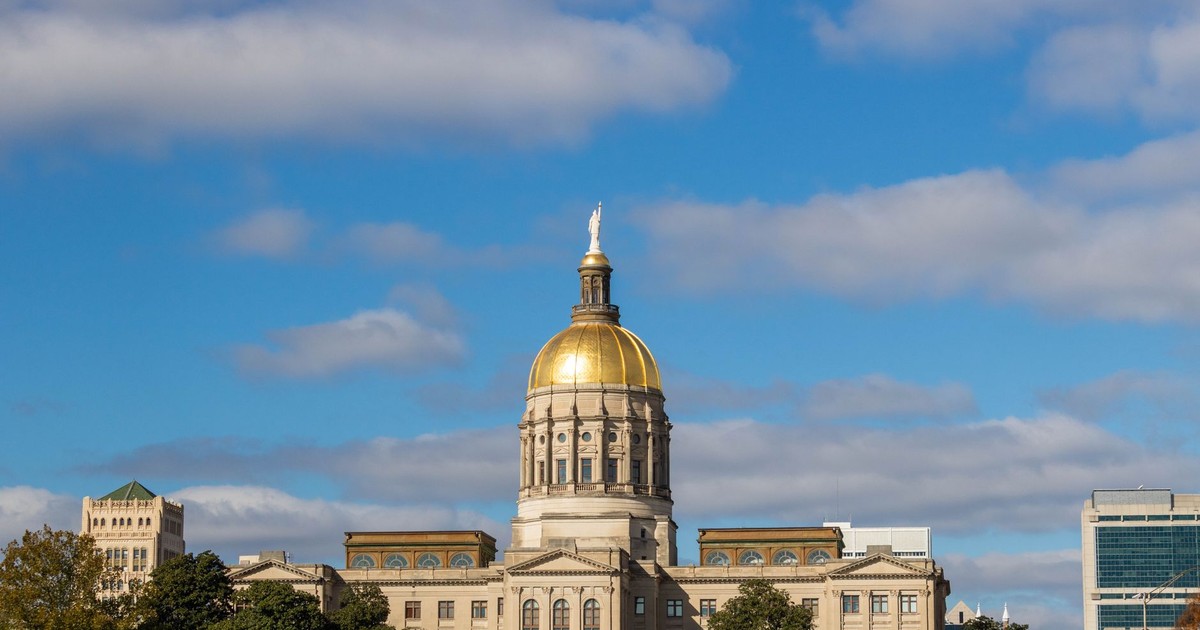
Georgia’s transformation started almost immediately after the 2020 results were certified. The Election Integrity Act of 2021, known as Senate Bill 202, was signed into law by Governor Brian Kemp on March 25, 2021. At 98 pages, it touched nearly every aspect of how Georgians vote.
Mail-in voting changed significantly. Voters must now request absentee ballots at least 11 days before an election, replacing the previous Friday-before-Election-Day deadline. The law also mandates new ID requirements for both requesting and returning absentee ballots, requiring a driver’s license number, state ID number, or the last four digits of a Social Security number, replacing the previous signature verification process.
The number of drop boxes is now capped at one per 100,000 active voters or one per early voting location, whichever is fewer. They must be located inside early voting sites and are accessible only during early voting hours, a sharp reduction from 2020 when drop boxes were accessible 24 hours a day outdoors. Fulton County, which had 38 drop boxes during the 2020 election, was reduced to fewer than ten.
SB 202 also expanded the grounds on which third parties can challenge voter registrations and tightened the procedures counties must follow when a challenge is filed. The law requires counties to hold a hearing on each registration challenge within 10 business days of the challenged voter being notified. New data filed in federal court in 2025 found that more than 1.6 million registered voters faced increased barriers as a result of the law, with Black and minority voters bearing the heaviest burden.
2. Texas

Texas had its own omnibus moment in 2021. Senate Bill 1, signed into law after a prolonged standoff that saw Democratic lawmakers walk out of the legislature twice to deny quorum, reshaped the rules for voting across the state.
SB 1 makes it harder for voters to get assistance with mail ballots, imposes harsher voter ID requirements, increases barriers for voters with disabilities, reduces polling place availability, and limits early voting opportunities. The law also makes it a crime for election workers to encourage voters to request a mail ballot, or to take any action that makes a poll watcher’s observation “not reasonably effective,” with the law itself leaving that standard deliberately vague.
Texas returned to the issue in subsequent sessions, authorizing its attorney general to prosecute election crimes despite the state’s highest criminal court ruling in 2021 that the state constitution bars the attorney general from having such power. Multiple provisions of SB 1 have been successfully challenged in federal court and struck down as violations of the Voting Rights Act and the U.S. Constitution, though some of those rulings remain under appeal. Most of the law’s core provisions remain in effect ahead of the 2026 midterms.
3. Florida
Florida passed its own comprehensive elections bill in 2021 and has continued adding layers since. In 2022, Governor Ron DeSantis signed Senate Bill 524, establishing the Office of Election Crimes and Security within the Department of State, a dedicated unit for investigating alleged election law violations.
Florida’s changes included new restrictions on who can assist voters in returning mail ballots, tighter rules on the use of drop boxes, and requirements that voters opt in to receive mail ballots each election cycle rather than being automatically enrolled. The state also instituted new criminal penalties for voting by a noncitizen.
A 2024 national survey conducted by VoteRiders and the Center for Democracy and Civic Engagement at the University of Maryland found that 21.3 million American citizens of voting age, roughly 9 percent of all voting-age citizens, lack ready access to documents proving citizenship, such as a passport or birth certificate. At least 3.8 million don’t have those documents at all.
As of early 2026, Florida now requires documentary proof of citizenship from some voters registering for the first time, a change added ahead of the midterms.
4. Iowa
Iowa’s 2021 overhaul was substantial. The Republican-controlled legislature passed a wide-ranging elections bill that shortened the early voting period from 29 days to 20 days, cut the deadline for returning absentee ballots, and made it easier for the secretary of state to take control of county election operations.
Iowa’s law also reduced the number of days that absentee ballots received after Election Day could be counted, and permitted the secretary of state wide discretion to take over county-level recounts. That last provision shifted significant control of local election administration to a single statewide political office, reducing flexibility for voters who plan around work schedules, travel, or medical appointments. Subsequent years brought additional changes. Iowa was among the states that enacted election interference legislation, laws that create new criminal penalties for election workers or expand opportunities for partisan actors to intervene in the vote-counting process.
5. Arizona
Arizona’s voting law changes since 2020 have been complicated by an unusual number of court challenges, with some provisions blocked before they could take effect and others surviving legal scrutiny.
A law passed in 2022 risks wrongfully purging voters ahead of elections based on outdated information indicating noncitizenship, a particular concern in a state with a large and growing naturalized citizen population. Arizona also enacted four new election interference laws that impose criminal penalties on election workers for routine administrative activity, such as sending a mail ballot to a voter who did not affirmatively request one.
The criminalization of ordinary election-worker decisions has had a chilling effect on election administration, making experienced poll workers reluctant to continue in their roles. Several of Arizona’s most far-reaching provisions have been blocked by state or federal courts, but the cumulative effect of multiple restrictive voting laws and significant interference legislation has meaningfully narrowed voting access since 2020.
6. North Carolina
North Carolina’s path to broader voting restrictions was enabled in 2023 when Republican lawmakers secured a veto-proof majority in the state legislature, removing the last check that Democratic Governor Roy Cooper had been able to exercise on election legislation.
Republicans used their veto-proof majority in October 2023 to enact an omnibus restrictive voting law over Cooper’s veto. The law eliminated a three-day grace period for mail ballots postmarked by Election Day, requiring instead that all mail ballots arrive at county election offices by 7:30 p.m. on Election Day itself. It also made new allowances for partisan poll observers and toughened the rules for voters who both register and cast ballots during the state’s early voting period.
That 7:30 p.m. deadline had real consequences almost immediately. In the 2024 primary, the first election under the new law, 999 absentee ballots were received after the deadline and could not be counted. The omnibus law was challenged in federal court within three months of enactment. North Carolina voters also faced a new strict photo ID requirement in 2024, years in the making and subject to multiple court battles before finally taking effect.
7. Tennessee
Tennessee has taken a more incremental approach than some of its peers, but the cumulative legislative output since 2020 has been considerable. The state enacted a law requiring election officials to consult a state-run citizenship database before accepting voter registration applications, one of several citizenship-focused measures that moved through multiple states in 2024 and 2025.
That kind of database check relies on data that is frequently incomplete or outdated, which can lead to eligible citizens being incorrectly flagged and having their registration delayed or denied. Tennessee also appeared among the states that enacted election interference legislation in 2025, with laws creating new criminal penalties for election workers and expanding opportunities for partisan actors to intervene in the vote-counting process.
At least seven states enacted eight such interference laws in 2025. Tennessee was among them. For voters in the state, the combined effect of citizenship database checks and new criminal exposure for election officials means both the registration process and the administration of elections have become materially more complex since 2020.
8. New Hampshire
New Hampshire’s voting law story has a distinctly local character, shaped by the state’s unusual tradition of same-day registration and a population long accustomed to relatively accessible voting procedures. The changes since 2020 represent a real break from that tradition.
New Hampshire passed a law in 2024 requiring proof of citizenship to vote, specifically requiring registrants to provide a birth certificate, passport, or naturalization documentation. For a state where same-day registration at the polls was a long-standing feature of civic life, that requirement represented a significant shift in how new voters can participate.
A 2025 law then extended the documentary proof of citizenship requirement to voters who submit applications by mail, closing a gap in the earlier legislation. Another 2025 provision allows any voter to request a hand-count of their ballot. While hand-counts are a legitimate part of election audits, provisions enabling widespread hand-count requests can be used to delay certification of results and create administrative disruption. New Hampshire’s laws also drew attention for bills that targeted the state’s historically permissive absentee voting system with restrictions that go beyond what most states require.
9. Mississippi
Mississippi’s post-2020 changes have concentrated in two main areas: restrictions on who can assist voters with absentee ballots, and further tightening of the state’s already-strict voter ID requirements.
A Mississippi law makes it a crime for anyone other than election officials, postal workers, family members, household members, and caregivers to help a voter return their mail ballot. That restriction can harm all voters but particularly affects those with disabilities or a limited ability to read or write. A federal judge blocked enforcement of the law as applied to voters with those conditions, but the state appealed.
Mississippi tweaked its voter ID laws to allow voters to use an outdated or undated ID, but the state still requires a driver’s license, state ID card, U.S. passport, firearm carry license, tribal ID card, military ID card, college student ID, employment ID issued by a government agency, or a Mississippi voter ID card to vote. As of 2026, Mississippi now requires documentary proof of citizenship from some voters as part of the registration process, placing it among the states that have moved most aggressively in that direction in the current legislative cycle. For a state where significant portions of the population lack ready access to passports or birth certificates, the practical consequences of that requirement are substantial.
10. Utah
Utah is the most unexpected entry on this list. The state had long been held up as a model of voting access, having pioneered vote-by-mail decades before the rest of the country considered it. In Utah, voting by mail was not a pandemic accommodation. It was simply how the state did things.
That changed in 2025. A Utah law enacted that year eliminates universal mail voting starting in 2029, meaning a generation of Utah voters who have only ever voted by mail will need to adapt to a different system if the law survives legal and political challenges. Kansas, North Dakota, and Utah also passed similar laws preventing mail ballots postmarked by Election Day from being counted if received after Election Day, reversing practices that had long given voters flexibility around postal delivery timelines.
As of early 2026, Utah now requires all citizens to show documents like a passport or birth certificate to register to vote, an extraordinary change for a state previously known for making registration as straightforward as possible. Utah’s shift from voting access leader to restrictive voting laws adopter is perhaps the clearest illustration of how quickly state election law can change and how much the political calculus has shifted since 2020.
What This Actually Means
The period since the 2020 election contains by far the most activity for passing restrictive legislation compared to the four-year spans between the last few presidential elections. Early predictions held that the 2021 wave reflected a one-time response to a uniquely contested race. State legislatures kept moving, session after session, adding layers even in years when no one was contesting election results.
The 10 states above account for a disproportionate share of those changes, but they are not acting in isolation. They are part of a documented national pattern with no sign of slowing ahead of the November 2026 midterms. For the roughly tens of millions of Americans who live in states where the rules around voting have tightened since 2020, the practical effect is not abstract. It’s the extra document you need to find before you can register, the drop box that isn’t there anymore, the mail ballot you needed to return three days earlier than you did last time. Some of those changes are small. Some are not. And once a restriction is written into state law, reversing it requires the same political will that passed it in the first place.
AI Disclaimer: This article was created with the assistance of AI tools and reviewed by a human editor.