

A millennial mentions they’ve been living with their partner for two years. Their boomer parents look at each other across the dinner table in a way that says everything without saying anything at all.
That look carries decades of assumption. Assumptions about how relationships are supposed to work, what commitment looks like, who pays for dinner, who does the laundry, and whether a couple needs a piece of paper from the county clerk to prove they’re serious. For boomers, born roughly between 1946 and 1964, many of those assumptions were simply the water they swam in. Marriage came first. Roles were understood. Finances were kept separate from conversation. You worked it out as you went along, and you stayed.
Millennials, born between 1981 and 1996, grew up inheriting the wreckage of some of those assumptions. Many watched their boomer parents divorce. They entered adulthood facing student loans, unaffordable housing, and gig work that made the traditional relationship timeline feel like instructions written for someone else’s life. The result is a generation that has deliberately rejected a set of relationship habits their parents considered non-negotiable. Here are nine of the most significant ones.
1. Marrying Young Because That’s Just What You Do

Boomers married when social expectations were stricter and women had fewer choices and less independence. Getting married in your early twenties wasn’t a bold romantic decision so much as the next item on the list, right after finishing school and landing a job. The question wasn’t whether you’d get married, but when.
Millennials often carry student loan debt, high housing costs, and unstable job markets. Many postpone marriage because of these financial challenges, and waiting longer correlates with a lower divorce rate among millennials. The delay isn’t cold feet or commitment phobia. Millennials tend to take marriage more seriously, not less, which is exactly why they’re in less of a rush to do it.
Millennials have a lower divorce rate than boomers or Gen Xers. They marry later, which is one of the reasons they have the lowest divorce rate. The boomer habit of marrying young because society expected it produced a generation with some of the highest divorce rates on record.
2. Keeping Finances Off the Table Until You’re Serious
For boomers, asking about someone’s salary on a first date would have been jaw-dropping. Money was private, almost intimate in the uncomfortable sense. You met, you courted, you got serious, and somewhere in the middle of all that, finances eventually came up. According to a 2025 J.P. Morgan study, 8 in 10 investors say they would not discuss finances on a first date. However, 35% of Gen Z and millennials would talk about money right away on a first date, versus just 7% of boomers.
For millennials who watched their parents navigate surprise debt or incompatible spending habits in a marriage that already had a mortgage attached to it, financial transparency early in a relationship is a form of respect. As J.P. Morgan Wealth Management advisor Alpa Patel Vitale put it, “Money is incredibly personal, for many people, it can feel uncomfortable to talk about it early on in dating,” but the study found this is changing for younger generations, “who are more open to discussing finances earlier in a relationship.”
The boomer model of keeping money off the table until feelings are established assumes that financial incompatibility can be worked out once you’re in love. The millennial model treats it as information worth having before you’re in too deep to use it.
3. Defaulting to Traditional Gender Roles at Home

The division of domestic labor that boomers often fell into, where women managed the home and men handled the yard and the bills, wasn’t usually a negotiated arrangement. It was the default. You bought the house and the roles came with it. A majority of women, 59%, say they do more household chores than their spouse or partner. That statistic spans generations, but the conversation around it has shifted considerably.
Millennials grow up with more flexible roles. Both partners tend to work and split chores. The difference isn’t just that millennials divide housework more evenly, it’s that they’ve made it an explicit conversation rather than something that gets absorbed by whoever ends up doing it.
This has produced generational friction in two directions. Boomer parents sometimes read millennial male partners as insufficiently “providing,” or boomer female relatives wonder aloud why a millennial woman “lets” her husband skip certain domestic tasks. Who cooks and who fixes the gutters gets decided by preference and schedule, not by which set of chromosomes showed up.
4. Treating Marriage as the Only Valid Form of Commitment
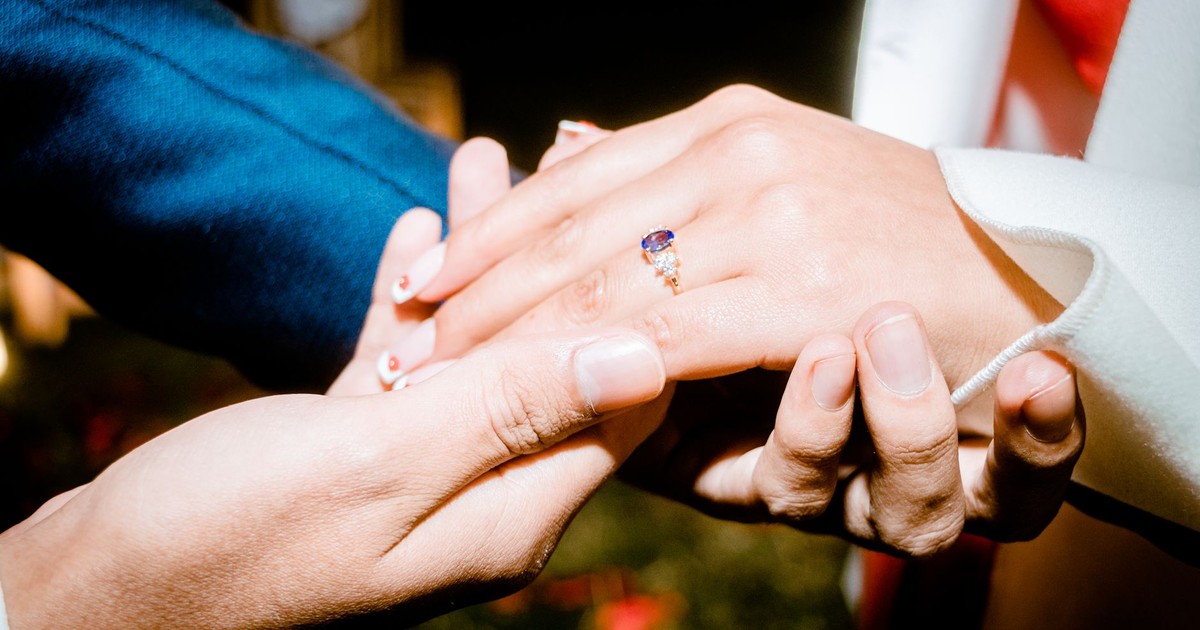
The boomer relationship escalator had clear stops: date, get engaged, marry, buy a house, have children. Cohabitation without marriage wasn’t just unusual; in many communities it was actively judged. Living together before the wedding was, at best, a temporary arrangement and, at worst, a moral failing.
As millennials delay marriage, a significant share are living with a romantic partner. Pew Research Center data shows that among adults ages 18 to 44, 59% have lived with an unmarried partner at some point in their lives, while 50% have ever been married. Among adults who are currently cohabiting, millennials have headed more cohabiting-couple households than any other adult generation since 2011. Cohabitation is no longer a stopgap for millennials. For many, it’s the relationship itself, an intentional way of building a shared life that doesn’t require legal recognition to be real.
The relationship at ten years without a marriage certificate can run deeper and more stably than the marriage at ten years that happened because everyone expected it at year two.
5. Suffering Through an Unhappy Marriage Rather Than Ending It
Boomers grew up in a world where divorce, even if it happened, carried social weight. You didn’t leave a marriage over unhappiness. You worked on it, within the family unit, and you stayed for the children, for the finances, for the neighborhood’s opinion of you. Divorce was failure, and failure was public.
Divorce became more normalized over time and people began waiting longer to marry. Expectations of personal happiness and equality in relationships became more prominent. For millennials, compatibility matters; they are willing to end committed relationships to prioritize themselves. That doesn’t mean they give up easily. They don’t accept the premise that staying in a structurally broken relationship is morally superior to leaving it.
The millennial calculus is different: a relationship that isn’t working, even after genuine effort, is not a relationship worth preserving at the cost of both people’s lives. Boomers sometimes read this as impatience or selfishness. Millennials read the boomer alternative as two people spending forty years making each other miserable in front of their children.
6. Keeping Therapy and Mental Health Private

Boomers, broadly speaking, did not go to couples therapy when the marriage hit trouble. You talked to your priest or you talked to your friends or you didn’t talk about it at all. Professional help for a relationship was rarely the first instinct, and in many communities it was simply not part of the available vocabulary.
Therapist Leigh Norén has noted that millennials’ exposure to social media has led to a greater vocabulary around challenging topics, and that “millennials seem more versed and comfortable with topics such as mental health and sexuality compared to previous generations.” For millennials, going to therapy isn’t a last resort. It’s part of relationship maintenance, like exercise or a decent sleep schedule. The fact that a couple goes to therapy is not evidence that something is broken. It’s evidence that they’re paying attention.
This extends beyond formal therapy. Millennials are significantly more likely to discuss attachment styles, emotional patterns, and communication needs within their relationships in plain, direct language, something that would have been unfamiliar to most boomer couples for whom “we need to talk” was a phrase reserved for emergencies rather than a Wednesday evening check-in.
7. Assuming One Partner Will Sacrifice Their Career for the Family

The boomer relationship model almost always contained a silent assumption: at some point, one person’s career would take a back seat. Usually, that person was the woman. She might work, but when children arrived, or when the other partner got a big promotion, her job was the one that bent. It wasn’t always an explicit conversation. It was just understood.
Millennials emphasize individual growth within a partnership. They believe that a strong relationship should encourage both partners to pursue their passions and aspirations rather than limiting them. This has led to more flexible arrangements where couples actively support each other’s personal and professional growth, rather than assuming one trajectory automatically trumps the other.
Millennials approach this as something to negotiate rather than something to absorb. When a career opportunity comes up, the question isn’t automatically “which of us will give this up?” It’s “how do we make this work for both of us?” Those aren’t always the same question, and they don’t always have clean answers. But the starting point is different. No one’s ambition is pre-assigned as the dispensable one.
8. Keeping Relationship Structures Strictly Monogamous by Default

For boomers, monogamy wasn’t a choice so much as a given. It was the structure, and departing from it meant an affair, not an alternative arrangement.
A survey by the Thriving Center of Psychology found that two in five young adults, Gen Z and millennials, view marriage as an outdated tradition. Despite this, 83% still hoped to marry someday, suggesting that while traditional forms of commitment are being questioned, the desire for long-term companionship persists. The survey also found economic anxieties and a belief that marriage is not required for a fulfilling relationship, with 85% of respondents saying they don’t feel marriage is needed to “have a fulfilling and committed relationship.”
Millennials are moving away from traditional wedding vows and opting for open relationships, ethical non-monogamy, and “situationships” more than ever before. This doesn’t describe all millennials, or even most of them. But the difference is that the conversation is now a legitimate one. Millennials are far more likely to have explicitly discussed what kind of relationship structure they want, rather than assuming the answer before the question was ever asked.
9. Letting the Relationship Define Your Social Life

There’s a specific boomer relationship habit that still confuses many millennials: the complete merging of social identity into the couple unit. Once boomers were married, the couple became the primary social actor. You did things together. Friendships were largely shared. A spouse having a separate night out with their own friends was, in some households, met with suspicion or resentment.
Millennials prioritize individuality and authenticity in their relationships. They are less concerned with societal norms and expectations and more likely to pursue non-traditional relationship structures. Part of that individuality is a strong belief that healthy relationships are built between two complete people who have their own friendships, interests, and identities outside the relationship itself. A millennial who spends every Saturday with their own friends isn’t neglecting their partner. They’re maintaining the separate selfhood that keeps the relationship interesting in the first place.
The millennial relationship isn’t a merger. It’s a partnership between two people who also exist independently, and who understand that those independent identities are not a threat to what they’ve built together.
The Real Divide

The tension between boomer and millennial relationship habits isn’t really a disagreement about love. Both generations want it. Both generations have struggled with it. The disagreement is about what love requires of you: whether it requires you to follow a specific structure, absorb a specific role, or stay silent about specific needs in service of the institution.
The habits boomers built were rational responses to the world they grew up in: a postwar economy that rewarded early stability, a social structure that punished deviation, and a limited vocabulary for what was happening inside marriages that weren’t working. Millennials are not rejecting those habits out of laziness or selfishness. They’re rejecting the assumption that the structure itself was the point rather than the two people inside it.
The boomer model was itself a response to instability: the Depression, the war, the social pressure to project normalcy outward at almost any private cost. Millennials inherited a different set of pressures, and they’re building different responses. Neither set of responses is complete. But the millennials who are waiting longer to marry, talking about money on first dates, going to therapy before there’s a crisis, and refusing to silently absorb a career setback are, in most cases, doing exactly what their parents did: trying to make something stable out of an uncertain world, just with different tools.
Disclaimer: This information is not intended to be a substitute for professional medical advice, diagnosis, or treatment and is for information only. Always seek the advice of your physician or another qualified health provider with any questions about your medical condition and/or current medication. Do not disregard professional medical advice or delay seeking advice or treatment because of something you have read here.
AI Disclaimer: This article was created with the assistance of AI tools and reviewed by a human editor.