
Most of us glance at our cash and see nothing more than a dollar amount. We hand it over, stuff it in a wallet, or tuck it into a tip jar without a second thought. The serial number printed on the front – that string of eight digits flanked by letters – is about as eye-catching as a parking ticket. But for a growing community of collectors, that sequence of numbers is the whole point. And a few specific arrangements of those digits can turn a perfectly ordinary piece of paper money into something worth far more than anyone paid for it.
The world of fancy serial number currency has been heating up. A $5 bill in Gem Uncirculated condition – the kind of note that has never been folded, handled, or breathed on too hard – recently crossed the auction block for $66,000. Not because of the president on the front, or the monument on the back, but because of eight perfectly arranged digits on the serial number. The bill’s serial number read the same forward as it did backward. Collectors call these “radar notes,” and their appeal is surprisingly deep and surprisingly serious.
Understanding why a plain-looking bill can quietly become a collector’s prize takes a little knowledge about how the U.S. government prints money, what makes certain serial numbers statistically rare, and how condition can make or break a note’s value in this market. It also, handily, gives you a reason to check your wallet.
What Is a Radar Note?
So-called “radar” notes feature palindromic serial numbers, which read the same both forward and backward – for example, 12344321 or 77700777 – hence the “radar” nickname for the bills.
The word palindrome comes from the Greek for “running back again,” and most people encounter it through phrases or words – “racecar” and “level” being classics. In mathematical terms, a palindrome is any alphanumeric pattern that has the same order of characters when read in either direction. When that principle lands on the serial number of a Federal Reserve Note, it creates what numismatists (currency collectors and scholars) have spent decades pursuing.
According to PCGS, the professional coin and currency grading service, the chances of encountering a radar note among any given group of bills is about one in 10,000. That calculation assumes the note carries eight numeric characters ranging from zero to nine, divided into two sets of four digits, with the second set a complete reverse arrangement of the first. One in 10,000 is rare enough to be collectible, common enough that determined hunters can still find them in everyday circulation – if they know what they’re looking for.
Fancy serial numbers – a collector term that covers palindromes, all-identical digits, and sequential ladder patterns – make bills more desirable to collectors and can command significant premiums above face value. These patterns occur randomly; the Bureau of Engraving and Printing prints them as part of regular production, which means no single radar bill is manufactured with any intent to be special. That randomness is part of what gives the hobby its treasure-hunt quality.
How the BEP Assigns Serial Numbers
Before getting into what makes a radar note valuable, it helps to understand where serial numbers come from in the first place. The Bureau of Engraving and Printing (BEP) prints billions of Federal Reserve notes each year for delivery to the Federal Reserve System. U.S. currency is used as a medium of exchange and store of value around the world, and according to the Federal Reserve, there is more than $2 trillion worth of Federal Reserve notes in circulation.
The BEP assigns serial numbers sequentially in blocks for each Federal Reserve Bank and series year to ensure uniqueness across all printed notes. The second letter in a modern serial number identifies which of the 12 Federal Reserve Banks issued the note – and some banks are significantly rarer than others depending on the denomination and series. Starting with Series 2023, the U.S. Currency Program began modernizing printing equipment, which means newer notes may have non-consecutive serial numbers – a wrinkle that collectors are still adjusting to.
The practical upshot: because serial numbers are assigned sequentially and not selected for aesthetic interest, any note with a palindromic, repeating, or otherwise patterned number got that number purely by chance. The BEP is not in the business of creating collectibles. The BEP does not appraise or estimate numismatic values and suggests that anyone with questions about old or rare currency contact dealers directly.
The Radar Note Family: Standard, Super, and Everything Between
Not all radar notes are created equal. The basic type – an eight-digit palindrome like 12344321 – is where the category begins, but experienced collectors have developed a precise taxonomy of the more valuable subsets.
A ladder radar features four consecutive digits counting up, one by one, such as “34566543.” A repeater radar contains only two different digits that read in a palindromic binary fashion, such as “33555533.” A super radar note carries just two different numbers, with the first and last digit identical and the middle six all the same numeral.
A super radar, as defined by Executive Currency, is a radar note with identical numbers at each end and six of the same digit inside – for example, 12222221. The rules of mathematics and probability say that a super radar will be found on only one note out of a random 1,111,111. At those odds, the premium is justified.
Doug Mudd, curator and director of the American Numismatic Association’s Edward C. Rochette Money Museum in Colorado Springs, Colorado, notes that certain radar notes are more valuable than others – pointing specifically to higher denomination bills, as those are generally “produced in smaller numbers and thus unusual number sequences are relatively less common.”
Mudd’s observation points to the logic underpinning the whole market: scarcity drives value. A $100 radar note is harder to find than a $1 radar note not because the government deliberately made fewer palindromes, but because far fewer $100 bills are printed in a given production run. The coincidence of a palindromic number in a smaller pool of candidates is, statistically, rarer.
What Are They Worth?
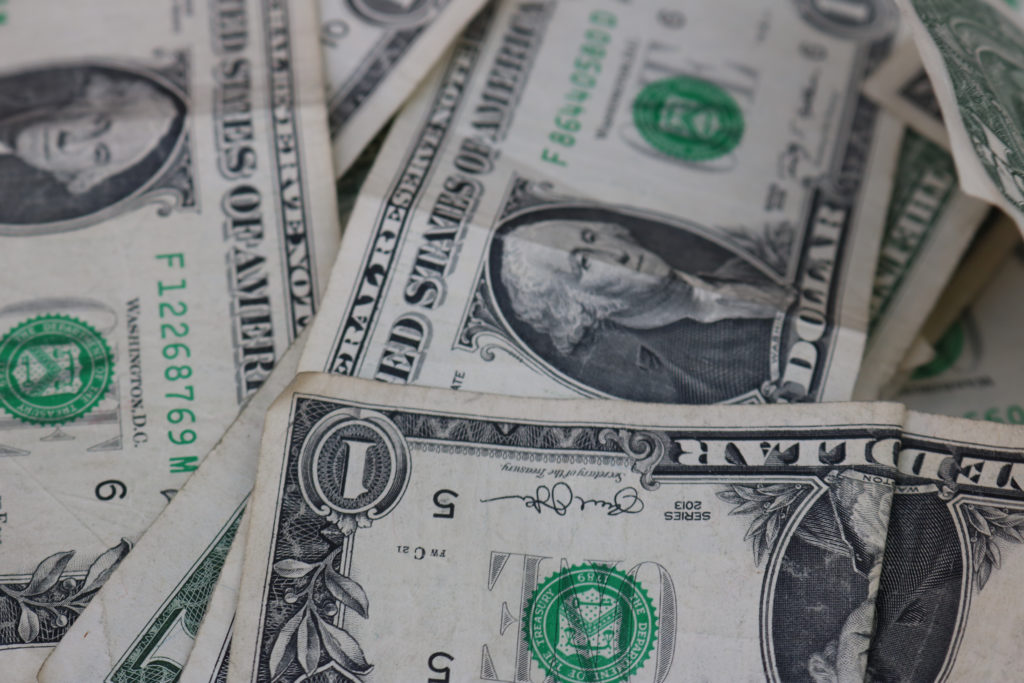
Values for radar notes range depending upon the denomination and age of the banknote as well as its condition, running from roughly $25 to $50 for a typical, basic Crisp Uncirculated $1 radar note of the contemporary period to more than $500 for a late 20th-century $100 radar note.
The super radar category steps up significantly. A standard $1 radar note in circulated condition is likely to be worth close to face value. In uncirculated condition, most standard radar serial number bills fetch around $20. Super radar serial number bills, on the other hand, can clear $100 in uncirculated condition – and significantly more if combined with other desirable features like an older series year, a low print-run Federal Reserve district, or a pristine Gem Uncirculated grade from a recognized certification service.
In the past, U.S. banknotes with palindromic serial numbers have sold for well over a thousand dollars at auction, and sometimes more for older examples, according to data from Heritage Auctions. The $66,000 result for the 2024 $5 bill was exceptional, driven by a combination of factors: the bill was not just a palindrome – it also featured near-perfect serial number alignment, had been graded as “Gem Uncirculated” by professional appraisers, and had never been folded or circulated, retaining flawless ink clarity and edge condition.
Recent auction data from PMG (Paper Money Guaranty) offers a clear illustration of the range. Prices realized through Heritage Auctions for radar serial number notes include a New York National Bank of Commerce 1882 $10 Brown Back note graded PMG 68 Superb Gem Uncirculated EPQ that realized $9,600 in May 2024, and a Straits Settlements British Administration 1935 $10 graded PMG 35 Choice Very Fine that realized $2,520 in October 2024. Those are international examples, but they illustrate how denomination, condition, and age combine to set price.
For modern U.S. notes in everyday collector territory, price estimates based on recent sales data give a workable baseline: a radar serial that also carries a repeating pattern – qualifying it as more than a basic palindrome – can fetch around $20 to $40 in uncirculated condition at the collector-to-collector level, and potentially higher if buyer demand is strong.
Radar Notes in Context: The Wider Fancy Serial Market
Radar notes occupy a specific, well-loved corner of a larger collecting category. A fancy serial number is a distinctive serial number on a U.S. Federal Reserve Note that features unusual, eye-catching patterns such as repeating digits, palindromes, or sequences – making notes highly collectible among numismatists and often commanding premiums far above face value.
The full taxonomy of fancy serials includes several other types, each with its own value scale. Serial numbers that start with five or more zeros are considered fancy – meaning 00000001 through 00000999 – and the more leading zeros, the better. A banknote with a serial number between 00000001 and 00000009 can fetch between $600 and $3,500 depending on its condition. Full ladder serials – where each digit is one higher than the last, like 12345678 – are among the most prized of all, with values sometimes exceeding $2,000 for an uncirculated note.
Much like bills with other out-of-the-ordinary serial numbers – like 00000001 or 12345678 – there could be plenty of collectors or numerology fans willing to pay significant sums for a specimen. The numismatic appeal and the personal, near-mystical attraction of symmetric numbers tend to reinforce each other, drawing in buyers who may not identify as collectors at all.
Recent auctions show growing interest in fancy serial numbers, with record-breaking sales indicating a thriving market. The 2024-2025 period in particular saw heightened activity, which experts attribute in part to social media exposure – when a $66,000 radar bill makes headlines, it sends thousands of people rifling through their wallets.
The Role of Condition: Why Grading Changes Everything
A radar note with a single fold down the middle is worth a fraction of what it would be pristine. This is not a soft preference – it is the organizing principle of the entire collectible currency market. In the world of numismatics, condition is everything. A note in perfect, uncirculated condition will be worth much more than a worn-out one, even if it carries the same fancy serial number. Folds, stains, tears, and even pinholes can dramatically lower a note’s value.
PMG provides an accurate, consistent, and impartial assessment of authenticity and grade, backed by a comprehensive guarantee that protects buyers and sellers. PMG uses a 70-point numerical scale derived from the internationally recognized Sheldon grading scale. A note graded PMG 70 – the ceiling – has no evidence of handling visible at 5x magnification. Most exceptional collector notes that sell for serious money land somewhere between 63 and 68 on that scale.
Professional grading services like PMG and PCGS Banknote use the 70-point Sheldon scale to grade currency. The “Exceptional Paper Quality” (EPQ) designation from PMG – or “Premium Paper Quality” (PPQ) from PCGS – indicates original paper with no restoration, cleaning, or pressing, and this designation can add 10 to 30 percent to a note’s value.
Grading at PMG is a team effort, with multiple professionals examining every note to ensure accuracy and consistency. Graders enter individual grades into PMG’s computer system, and a consensus is then reached on the final grade. Once certified, the note is sealed in a tamper-evident holder with its grade clearly labeled – a standard that makes it easier to buy and sell with confidence in an otherwise subjective market.
The practical takeaway is direct: if you find what you think is a radar note, don’t fold it, don’t clean it, and don’t press it flat. Store it in a Mylar or archival-quality sleeve and handle it by the edges. Any attempt to clean, iron, or otherwise “improve” a bill will permanently damage its value. Collectors prefer original condition, even with minor imperfections, and professional graders can detect any alterations, which will severely reduce value.
How and Where Radar Notes Are Sold
For notes that appraise above $100, the selling venue matters as much as the condition. Auction prices represent what collectors actually paid at retail. Dealers typically pay 60 to 80 percent of retail value when buying, and charge full retail when selling. For maximum value, consigning to an auction is generally the better path.
The two dominant auction houses in this space are Heritage Auctions and Stack’s Bowers. Heritage, in particular, is the largest collectibles auctioneer and third largest auction house in the world, with a robust paper money department and a well-documented track record of realized prices – which makes its historical data useful for valuing comparable notes.
For lower-value radar notes – the standard variety worth $20 to $75 – eBay remains a practical option. The platform hosts an active community of currency collectors and provides transparent recent-sales data that functions as a real-time price guide. For bills worth $75 or more, professional grading from PMG or PCGS is worth considering before attempting a sale, both because it protects the note and because certified notes consistently command stronger prices.
Tax reporting applies when profits exceed $600. If profit on the sale of a collectible exceeds $600, you may receive a 1099-K form for tax reporting purposes. This is worth keeping in mind if you stumble on something genuinely valuable and decide to sell.
What This Means for You
The radar note market asks very little of casual participants: check the serial number before you spend the bill. That’s the entire barrier to entry. Pull out the cash in your wallet right now and look at the eight digits in the middle of each serial number. Read them forward, then backward. If they match, you have something.
What you have depends on the details. A standard radar note on a modern $1 bill in well-worn condition probably fetches $5 to $10 from a collector willing to round out a set – better than face value, but not worth framing. That same note, uncirculated and crisp from a fresh ATM, is closer to $20 to $40. If the six middle digits are all identical – making it a super radar – the math changes substantially, and a professional appraisal starts to make sense.
“Radar notes are very popular and can command a premium, but most people do not really pay attention,” says Doug Mudd, curator and director of the American Numismatic Association’s Edward C. Rochette Money Museum. The observation cuts both ways: there is real money being left on the table, and it costs nothing to look. If you find something that looks unusual, protect it immediately. A sleeve costs less than a dollar. An accidental fold costs considerably more.
The broader habit worth developing is simply this: serial numbers are not noise. They are a record of where a note sits in the vast, ongoing river of currency that the Bureau of Engraving and Printing pushes out every year. Most of those positions are unremarkable. A few, purely by chance, land on a number that reads the same going in as it does coming out – and in that symmetry, a small, genuine market has decided there is value.
AI Disclaimer: This article was created with the assistance of AI tools and reviewed by a human editor.