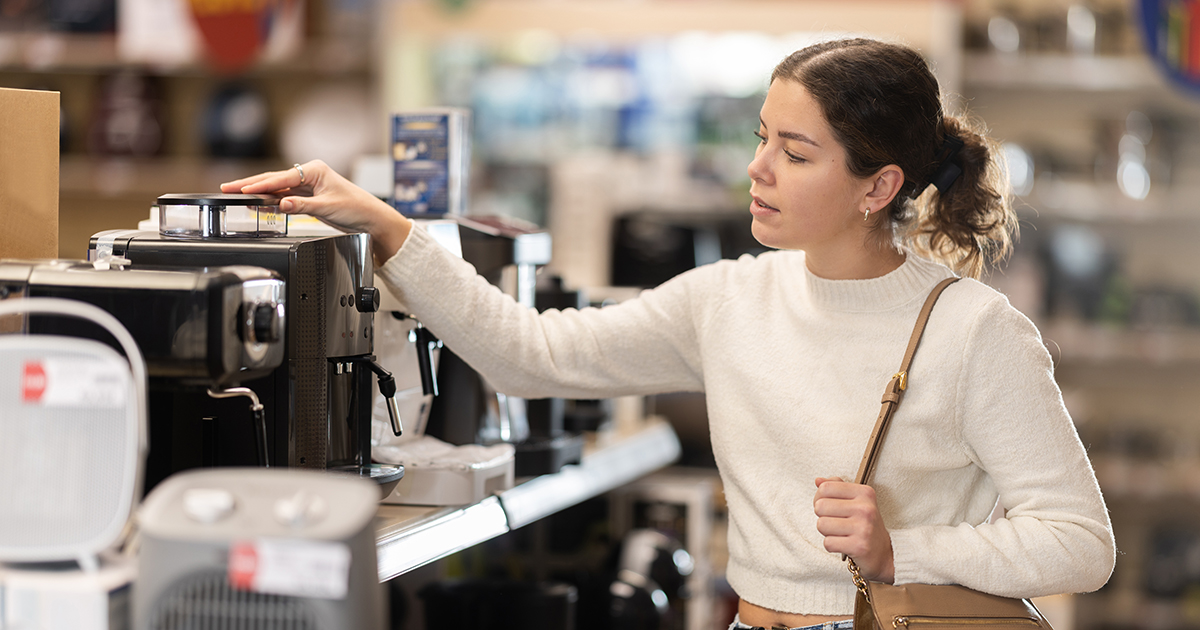

The refrigerator in your grandmother’s kitchen probably ran for 30 years. It had no touchscreen, no Wi-Fi, no ice dispenser with four different settings. It also never needed a service call. The one you bought four years ago, the one with the app, already has a compressor making a sound it wasn’t making last year.
Consumers across virtually every product category are noticing the same thing: goods that used to be built for a decade are now built for a few years, and sometimes less. The complaints have moved from kitchen-table grumbling to online forums with millions of views, to the halls of Congress. Social media posts calling out a perceived decline in product quality across industries have racked up millions of views and thousands of comments.
The products fueling that frustration cover a striking range. Clothes, food, furniture, household appliances, and hand tools, categories that form the backbone of everyday spending, are all showing up in the same conversation. And while some of this is nostalgia being mistaken for data, a good chunk of it isn’t.
Clothing: Less Fabric, Less Fabric Quality, Same Price
Fabrics that used to hold their shape after repeated washing now pill after the third cycle. Seams that should last years come apart in months. And the size six that used to fit the way it always did runs a little snugger now, not because you changed, but because the specs did.
According to a survey by the product auditing firm QIMA, twenty-seven percent of textile and apparel professionals reported that ensuring consistent quality was “difficult” or “very difficult” over the past year, up from 23% in 2024, all as the U.S. fashion industry struggles to maintain quality standards amid stiff competition from overseas rivals and supply-chain shakeups.
Margaret Bishop, a textile development and marketing professor at the Fashion Institute of Technology in New York, said there has been “a significant reduction in the quality of the fabric for a number of the major brands and retailers,” and that the decline intensified during the pandemic recovery, when apparel makers scrambled to untangle disrupted supply chains while contending with weak sales during global lockdown. Supply chains didn’t just get disrupted, they got rebuilt with different priorities, and cheaper fabric was often one of the first compromises.
Fabric is consistently the largest single cost in garment production, typically accounting for 60% to 70% of the total manufacturing budget for basic styles, with trims, labor, and overhead making up the remainder. So when retailers look to save money, fabric is one of the first components to get downgraded. In thread counts, material weights, and subtler ways, brands have started cutting corners on quality that most shoppers don’t catch until they’re already home.
One of the less obvious tactics is shrinkflation applied to clothing, a practice the same QIMA survey captured indirectly through professional frustration with consistency standards. “So that size six that you used to wear might fit a little snugger because the specs might be a little bit smaller,” said Phyllis Sevachko, a production manager at Stateless Fashion and Design Consulting. Saving on a few millimeters of material might sound insignificant, but multiply that by thousands of shirts and companies save considerably.
Appliances: The Price of Adding Features
Home appliances are where the complaints get loudest and the evidence is most mixed. Yes, today’s refrigerator has more features than any model from 2005. It also has more components that can fail. A simpler machine, one with fewer moving parts, is a more durable machine.
The core shift isn’t that manufacturers got lazy, it’s that they started packing appliances with electronics that didn’t exist before, and electronics fail in ways that cast iron doesn’t. Front-loading washing machines, for instance, often have the drum bearing, a critical, wear-prone component, permanently molded into the wash drum itself, making it impossible to replace without swapping the entire drum assembly. The cost of that repair may exceed the residual value of the appliance, forcing it to be scrapped. A consumer-friendly design would let you swap the bearing for $30. This one doesn’t.
According to Kyle Wiens, co-founder of online repair community iFixit, a possible goal for such design is to make the cost of repairs comparable to the replacement cost, or to prevent any form of servicing of the product at all. It’s a strategy that turns a repair into a purchase, every time.
If you want durability, skip the features. A basic refrigerator with no ice maker, no water dispenser, and no screen will almost certainly outlast one with all of those things, because each add-on is another point of failure. Fewer features means fewer ways for the thing to break in year four.
Food: Smaller Packages, Quieter Reductions
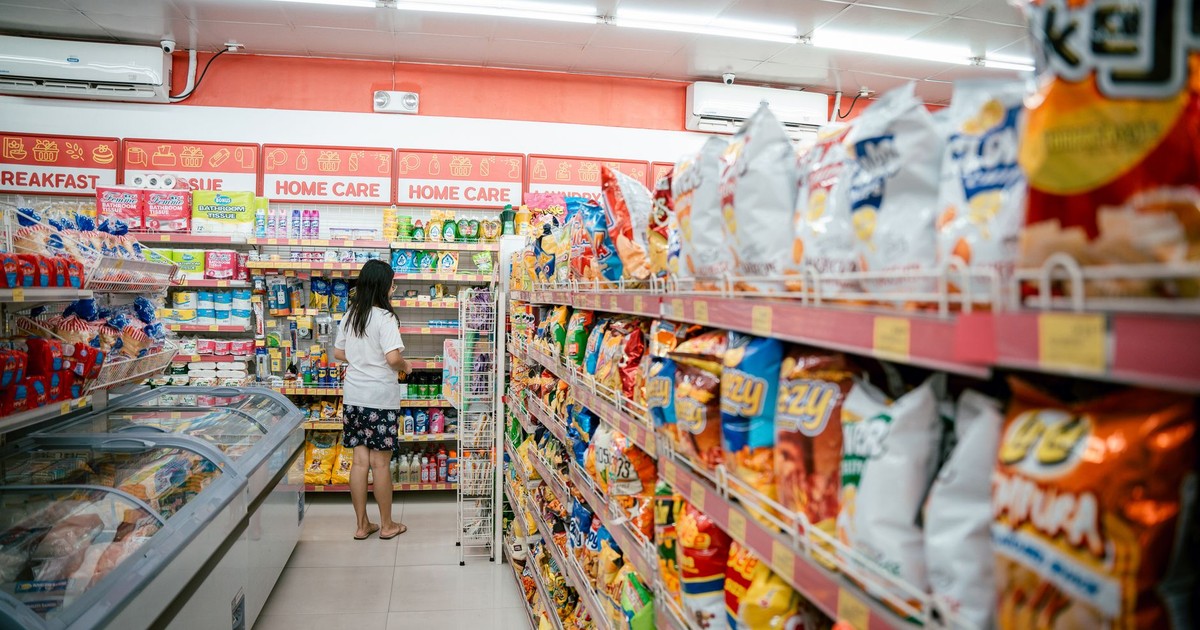
The grocery store version of product quality decline is harder to spot because it’s designed to be. The bag looks the same. The price looks the same. The contents are not the same.
A LendingTree analysis of roughly 100 common consumer products found that about one-third had shrunk in size or servings since the pandemic. Breakfast foods were among the worst offenders: family-sized Frosted Flakes, made by Kellogg’s, slimmed from 24 ounces to 21.7 ounces, resulting in a 40% increase in per-ounce pricing. About 38% of candy items tracked were now sold in smaller amounts, including party-size Reese’s miniatures, which dropped from 40 ounces to 35.6 ounces. About 27% of snacks had gone through portion reductions, including party-size Cheetos, made by Frito-Lay, which shrank to 15 ounces from 17.5 ounces while its per-ounce price rose from 17 cents to 40 cents.
Over three-quarters of surveyed consumers reported noticing shrinkflation at the grocery store in the previous 30 days, according to the October 2024 Consumer Food Insights Report out of Purdue University’s Center for Food Demand Analysis and Sustainability, which surveyed 1,200 consumers across the U.S. Most consumers, 82%, also believe shrinkflation is a common practice used by food companies, and 76% believe it’s a result of companies trying to increase profits even when costs are not rising.
Related to shrinkflation is “skimpflation,” not just less of the product, but a worse version of it. Fewer real ingredients, cheaper substitutes, reformulated recipes that are technically the same product but taste noticeably different to anyone who’s been buying them for years.
Comparing unit price rather than shelf price is the clearest way to catch it. Price per ounce, per count, per sheet, most grocery stores are required to display unit pricing under fair pricing laws, though visibility varies by location. When the shelf price stays flat and the unit price creeps up, that’s the tell.
Furniture: The Disappearance of Solid Wood

Walk into any mid-range furniture retailer today and the overwhelming majority of what you see is made from MDF (medium-density fiberboard) or particleboard, compressed wood fibers and glue, pressed into shapes that look like wood from a few feet away. Both materials are far cheaper than actual hardwood and far less durable. They swell when exposed to moisture. They chip at edges. They don’t hold screws well enough to survive being disassembled and reassembled even once.
Solid hardwood furniture, oak, cherry, maple, used to be standard in the mid-range. Now it’s either a premium purchase or something you find secondhand. Manufacturers have figured out that three MDF tables sold over a decade is a better business than one solid-wood table that outlasts the decade.
Buy used. Secondhand solid-wood furniture from estate sales, thrift stores, or online marketplaces often outlasts anything new at the same or lower price point. A $200 solid-oak dresser from 1985 with its original dovetail joints will survive more years of use than most $400 flatpack alternatives bought new in 2025.
Tools: When “Professional Grade” Stopped Meaning What It Said
A generation ago, a good set of hand tools was a one-time purchase. Craftsmen and tradespeople bought them once, maintained them, and passed them on. The steel was harder, the tolerances were tighter, and the price reflected that.
Much of what’s sold today under recognizable brand names is made to different specifications in different factories than the originals were. The brand name persists. The manufacturing standards that made those brands worth buying sometimes don’t. Power tools have largely shifted toward battery-powered platforms, which makes them more convenient but adds lithium-ion battery packs that degrade over time and are often more expensive to replace than the tool itself is worth.
Watch the warranty terms. Serious professional-grade tools still carry meaningful warranties, some lifetime, because the manufacturers know the tools will hold up. A two-year limited warranty on a hand tool is a reasonable indication of what the manufacturer expects to happen at year three.
Electronics and Phones: The Repair Trap

Smartphones are perhaps the clearest example of products that have become harder to own for the long term even as they’ve become more powerful. The practice of sealing batteries into phone designs started with Apple’s iPhones and spread to most other mobile phones. Earlier phones had back covers that could be opened by the user to replace the battery. Removing that option dramatically shortened the functional lifespan of any phone for users who didn’t want to pay for a factory battery replacement.
The right-to-repair movement has pushed back on this, with real legislative results. In April 2024, the European Parliament adopted the “right to repair” directive for consumers with 584 votes in favour and just 3 against. The rules clarify the obligations for manufacturers to repair goods and are designed to encourage consumers to extend a product’s lifecycle through repair. The directive entered into force on 30 July 2024, with EU member states required to transpose it into national law and apply it from 31 July 2026. The US has been slower, but several states have passed their own right-to-repair laws covering electronics and farm equipment.
For consumers buying electronics now, checking independent repairability ratings before purchasing makes a real difference to long-term cost. A phone that scores a 7 out of 10 on a repairability index is a genuinely different long-term proposition than one that scores a 2, and that gap translates directly into how long you can use it before the manufacturer would prefer you buy a new one.
Read More: Everyone needs to try these 10 commonly overlooked Costco items at least once
The Honest Bottom Line
The product quality decline that consumers have been complaining about for years is real, but it’s not uniform and it’s not inevitable. Some of it is the predictable result of manufacturers responding to consumer demand for lower prices. Some of it is the deliberate result of strategies, sealed batteries, unreplaceable drum bearings, MDF dressed up as wood, that benefit companies at the expense of buyers. And some of it, particularly in food packaging, is close to invisible by design, which is exactly why it keeps working.
Knowing which categories have the most documented quality erosion, clothing fabrics, appliance repairability, food portion sizes, furniture materials, changes what you look for before you buy. Check unit prices on groceries. Ask what a piece of furniture is actually made of. Look for warranty length on tools, not just brand name. Buy secondhand solid wood when you find it. None of these are workarounds for an idealized market. They’re adjustments to the actual one, which rewards the informed buyer slightly less badly than everyone else.
Disclaimer: This information is not intended to be a substitute for professional medical advice, diagnosis, or treatment and is for information only. Always seek the advice of your physician or another qualified health provider with any questions about your medical condition and/or current medication. Do not disregard professional medical advice or delay seeking advice or treatment because of something you have read here.
AI Disclaimer: This article was created with the assistance of AI tools and reviewed by a human editor.