

America is a place people love fiercely, argue about constantly, and sometimes quietly fantasize about leaving. The national mythology says this is the greatest country on earth – and plenty of people believe it. But a growing number of Americans, and most of the rest of the world watching from a distance, have a list of things that make them shake their heads. Not in a “burn it down” way. More in a “why is this still a problem?” way.
This isn’t a partisan hit job and it isn’t nihilism. It’s a look at the things that genuinely frustrate people about life in America – the policies that lag behind peer nations, the cultural patterns that grind people down, and the contradictions that are hard to explain when you’re trying to pitch “the land of the free” to someone who just paid $400 for an emergency room co-pay. Some of these are problems you’ll find in varying degrees across many countries. But the scale, the stubbornness, and the political deadlock around them in America are in a category of their own.
So here they are – ten reasons people roll their eyes, pack their bags, or just sit in their cars for an extra five minutes before going inside.
1. The Gun Violence That Never Stops

Most countries have gun deaths. America has a gun death ecosystem. In 2024, 44,447 people died by firearms in the United States, an average of one death every 12 minutes. That number includes suicides, homicides, and accidents – but it does not include the people who survived being shot, the ones who watched it happen, or the communities that quietly rebuilt after the funerals. Gun violence was the leading cause of death for American children ages one to 17 for the fifth consecutive year in 2024, with one out of every 16 children under 18 who died that year killed by a gun.
The numbers have actually improved in recent years, which should be acknowledged. In 2024, the US saw the largest decline in the gun death rate since 1995, with the rate falling 7% from the year before, meaning 2,281 fewer lives lost. Progress is real. But progress from a number like 44,000 still lands in a very different place than where most comparable nations sit. In 2024, Black Americans were 12 times more likely to be killed in gun homicides than white Americans, a racial disparity that points to something deeper than any single policy fix can touch.
The frustration isn’t just about the death toll – it’s the repetition. The same cycle of mass shooting, national grief, congressional gridlock, and total inaction has played out so many times that it has its own rhythm. People abroad genuinely cannot understand it. Many people inside America can’t either.
2. No Paid Maternity Leave – Seriously, None

The United States is one of the only countries on the planet where you can grow a human being for nine months, give birth, and be legally entitled to exactly zero paid days off to recover and care for your newborn. There is no national paid maternity leave in the US. Instead, the Family and Medical Leave Act requires some employers to provide up to 12 weeks of unpaid, job-protected leave – but only for workers at companies with 50 or more employees, which leaves about 44% of US workers ineligible even for that.
For comparison, Norway offers parents a choice of 49 weeks at 100% pay or 59 weeks at 80% pay, and that’s considered normal. Besides the United States, only seven other countries in the world don’t guarantee any paid family leave to mothers. The company the US keeps on this particular list is not the company it likes to keep when ranking itself among developed nations.
The real-world impact is that low-income women – who are disproportionately women of color – are forced to choose between their jobs and their newborns, often returning to work within weeks of giving birth because rent doesn’t pause. The policy gap isn’t just inconvenient. It’s a structural signal about who the system is actually built for.
3. A Work Culture That Wears Exhaustion as a Badge

Americans don’t just work a lot. They’ve built a culture around it. The person who answers emails at midnight isn’t just keeping up – they’re implicitly expected to. A 2024 observational survey of more than 1,200 workers found that 40% of Americans work 41 to 50 hours per week compared to 26% of Europeans, and about 33% of Americans often feel guilty about taking time off – nearly double the 18% of Europeans who said the same.
The guilt around rest is arguably the more revealing data point. It’s not just that Americans work more hours. It’s that they’ve internalized the idea that not working is a kind of failure. 60% of Americans said they never take longer holidays of two weeks or more, while 30% of Europeans reported taking more than 25 vacation days. France legally mandates 25 paid vacation days. Germany mandates 20. The US federal government mandates zero.
The physical toll of this culture is real. Chronic overwork is linked to elevated cortisol levels, cardiovascular strain, and higher rates of burnout – which is now a recognized occupational phenomenon by the World Health Organization. Americans are not lazier or more fragile than workers elsewhere. They are operating inside a system that has decided their time is worth less than their output.
4. Mental Health Care That’s Out of Reach for Half the Country

The US has a mental health crisis and a mental health care access crisis happening simultaneously – and the second one is making the first one worse. Of the 61.5 million adults with a mental health condition in 2024, 29.5 million received no treatment. For substance use disorders, 80% of people who needed treatment didn’t get it.
The barriers are not mysterious. A 2024 Gallup poll found that affordability (52%) and difficulty finding a provider (42%) were the top two reasons Americans cited for not getting mental health treatment. On the supply side, as of late 2025, 40% of the US population lives in a federally designated Mental Health Professional Shortage Area, and an American Psychological Association survey found that 46% of psychologists have no openings for new patients, with only 20% accepting Medicaid.
Insurance doesn’t solve it either. Only 55% of psychiatrists accept private insurance, compared to 89% of other healthcare providers, largely because reimbursement rates for mental health professionals are so much lower. So you can have insurance and still spend months on a waitlist, or get a list of “in-network” therapists where three are retired and two haven’t taken new patients since 2022. The system is technically there. It’s just not actually accessible for millions of people who need it.
If you’re struggling and need support, NAMI (the National Alliance on Mental Illness) has a free helpline at 1-800-950-6264 and resources for finding affordable care.
5. The Cost of Living Is Breaking People

The US housing market is deep in crisis, with little sign that record-high unaffordability is going to ease anytime soon. High home prices and elevated interest rates reduced homebuying to its lowest level in 30 years, according to the Harvard Joint Center for Housing Studies. As of early 2025, home prices were up 60% nationwide since 2019 and still rising. The median existing single-family home price hit a new high of $412,500 in 2024 – roughly five times the median household income.
Renting isn’t a comfortable fallback either. The National Low Income Housing Coalition’s 2025 Out of Reach report defines a “Housing Wage” as what a full-time worker must earn to afford a modest rental without spending more than 30% of their income on housing. In 2025, that figure was $33.63 per hour – more than four times the federal minimum wage of $7.25. Nearly half of all US renter households are cost-burdened, with approximately 22.4 million renter households paying more than 30% of their income on housing, and 12 million classified as severely cost-burdened.
When people say they feel like they’re treading water no matter how hard they work, the math confirms it. Someone earning the median renter wage of $23.60 an hour is already more than $10 short of what it takes just to afford a two-bedroom apartment. That’s before groceries, childcare, or a car payment.
6. Discrimination Is a Measurable Reality, Not a Debate Topic
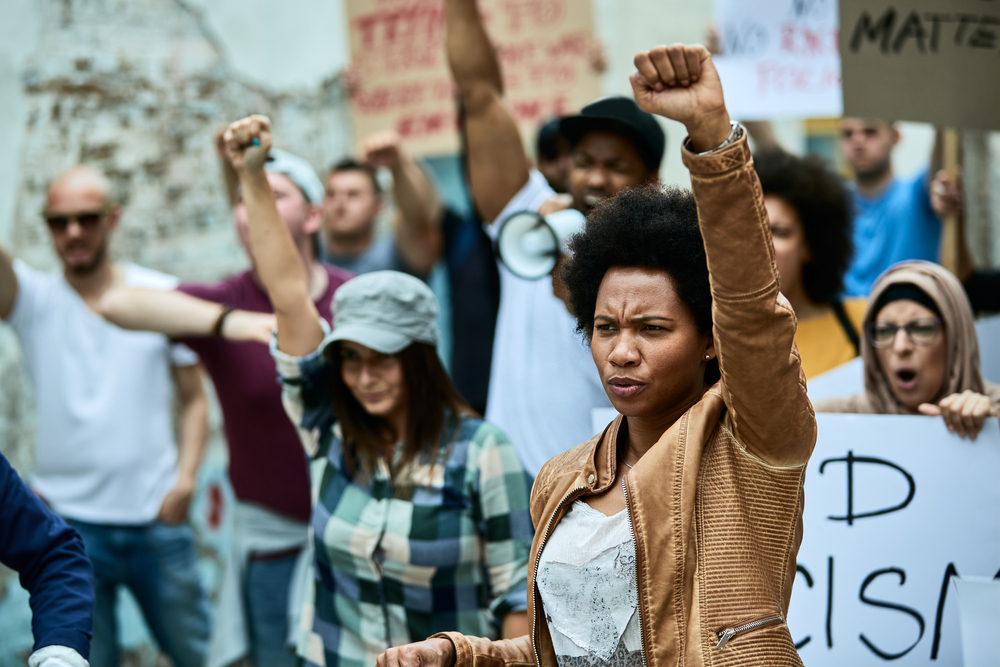
America has a discrimination problem it can neither fully deny nor seem to fix. It’s present in housing, in healthcare, in the criminal legal system, in who gets a callback after sending a resume. The concentrated poverty, under-resourced neighborhoods, and policy neglect don’t emerge from nowhere – they’re the downstream result of decades of inequity stacking on top of itself.
In mental healthcare, the access gap tracks closely with race. 58% of white adults with mental health conditions receive services, compared to 39% of Black adults and 33% of Asian adults. The disparity isn’t explained away by prevalence – it’s a gap in access, in affordability, in the availability of culturally competent providers. For LGBTQ+ Americans, the picture is similarly stark. The CDC’s 2023 Youth Risk Behavior Survey, a nationally representative cross-sectional study of over 20,000 high school students, found that LGBQ+ students reported attempted suicide at nearly three times the rate of their heterosexual peers – 19.7% versus 6.0%.
Discrimination in America tends to get debated as an ideological question when the evidence for it is concrete and measurable. The numbers don’t need interpretation. They just keep coming.
7. The Legal System Doesn’t Work the Same for Everyone

The principle at the center of American justice is that everyone gets a fair trial. The practice is something else. Public defenders in many states carry caseloads so heavy that meaningful representation is mathematically impossible – sometimes hundreds of cases per attorney per year, in a system that gives them minutes, not hours, to review files before hearings.
The result is a criminal legal system where outcomes correlate closely with how much money you have. If you can afford a private attorney, your odds improve dramatically. If you’re relying on an overworked public defender in a jurisdiction that has been chronically underfunded for decades, you are not getting the same legal system as someone with resources. The constitutional promise of equal justice and the daily reality of it sit very far apart.
Bail reform is happening in some states. But in much of the country, someone who cannot afford $500 bail can sit in pretrial detention for months – losing their job, their housing, sometimes their family – before a case is ever heard. Not because they were convicted. Because they were poor.
8. The News Bubble Is Getting Harder to Escape

Americans are well-informed, in theory. They have access to more information than any generation in human history. In practice, the media environment is so fragmented and so algorithmically reinforced that a significant portion of the country is operating from a fundamentally different set of facts – not just different values, but different accounts of what literally happened. Two people in the same family can watch different news channels and come away with completely incompatible versions of the same event.
In two observational diary studies from 2023, each tracking participants’ daily responses to political events over several weeks, researchers found that politics triggered at least some negative emotions on 81% of days surveyed. On those days, participants reported higher levels of fatigue, dissatisfaction with life, and depression. The constant churn of partisan news and outrage content isn’t just exhausting – it’s measurably harming people’s health and relationships. About 1 in 3 people reported the political climate strained their family relationships.
The filter bubble isn’t unique to America, but the stakes feel particularly high in a country where the two sides increasingly cannot agree on basic reality. When shared facts collapse, shared solutions become nearly impossible.
9. Everything Is Politicized – Including Your Groceries
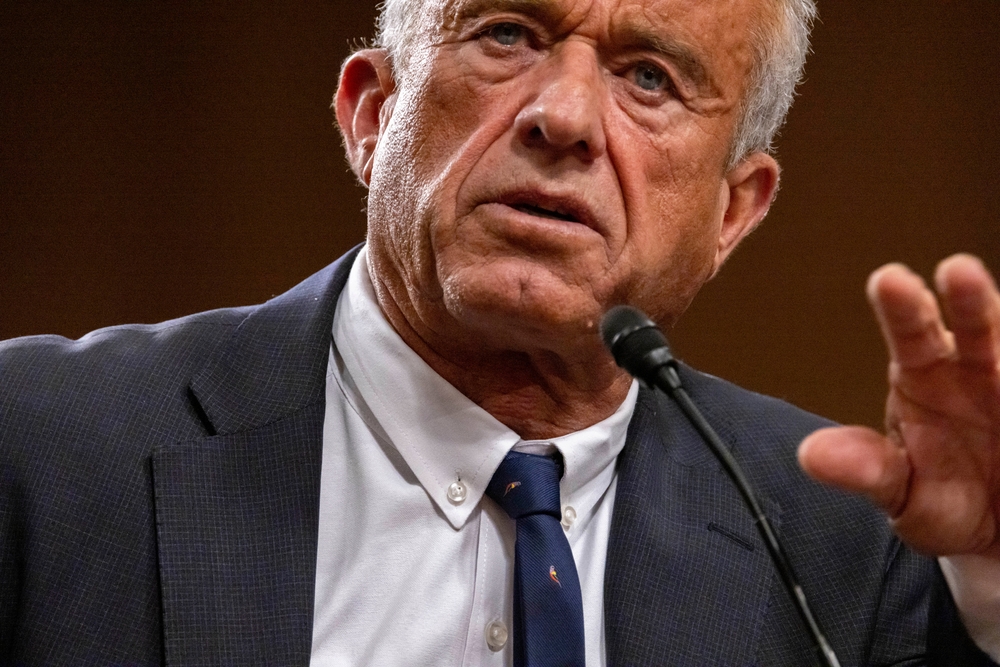
At some point, buying milk became a political act. Not figuratively. The debate over whole milk, plant-based alternatives, and USDA dietary guidelines has been pulled into the culture war in ways that would strike most people in other countries as genuinely surreal. The same goes for vaccines, sunscreen, gas stoves, electric vehicles, pronouns, coffee cups, shoe brands, and whether or not a children’s book is acceptable. Every consumer choice, every lifestyle preference, every word you use has become a potential signal of tribal identity.
Researchers found that believing polarization has increased – as many experts do – is linked with increased anxiety and depression, with people who perceived rising political polarization showing up to 57% higher odds of developing anxiety and depressive disorders. The exhaustion people feel about politics isn’t just cynicism. It’s a stress response to living in a constant state of low-grade culture war, where relaxing your guard is read as a political statement.
The irony is that this level of politicization sits inside a country that prides itself on individual freedom. When everything from your diet to your car choice to which doctor you trust carries ideological weight, freedom starts to feel more like a performance than a reality.
10. Religious and Ideological Pressure in a Supposedly Secular Nation

America’s founding documents are explicit about the separation of church and state. The lived experience of that separation depends heavily on where you live, who you work for, and what choices you’re trying to make about your own body and life. For millions of people – those who don’t share the dominant religious framework of their community, those in states where legislation is openly shaped by specific theological beliefs – the promise of freedom from imposed belief systems feels like a long way from home.
A survey by the Society for Human Resource Management found that 42% of Americans experienced political disagreements with coworkers that resulted in stress and discrimination in the workplace due to political opinions. That number speaks to something broader than workplace etiquette. When belief systems – religious, ideological, partisan – are pushed into spaces that are supposed to be neutral, the people whose beliefs don’t match the dominant culture bear the cost. That cost is often invisible to the people doing the pushing.
This is not an argument against religion, or against strong values, or against people advocating passionately for what they believe. It’s an observation that “land of the free” rings hollow for someone whose reproductive healthcare decisions are being made by legislators whose stated basis is a specific religious doctrine, or whose child’s school curriculum reflects one narrow worldview presented as universal truth.
What to Do With All of This

None of this means America is uniquely terrible. Many of these problems exist elsewhere in some form. What’s distinctive is the combination: the richest country in the history of the world, with the most guns, the least parental leave, the most political noise, and the widest gap between what it promises and what it delivers for people without resources. That gap is what tends to generate the most frustration – not the individual failures, but the pattern of them, recurring year after year in a country with every conceivable resource to address them.
And here’s the thing about frustration – it can be productive or it can just be exhausting. The people who push for change in any of these areas are usually people who haven’t given up. The researchers counting the gun deaths are trying to make fewer of them. The advocates for paid leave are trying to change a law, not just complain about it. The people who are furious about the cost of housing are showing up to local zoning meetings and city council sessions. Caring enough to be angry is, quietly, a form of patriotism.
If any of these issues are weighing on you personally, Mental Health America has resources for finding care and support, including tools to search for affordable providers in your area.
AI Disclaimer: This article was created with the assistance of AI tools and reviewed by a human editor.