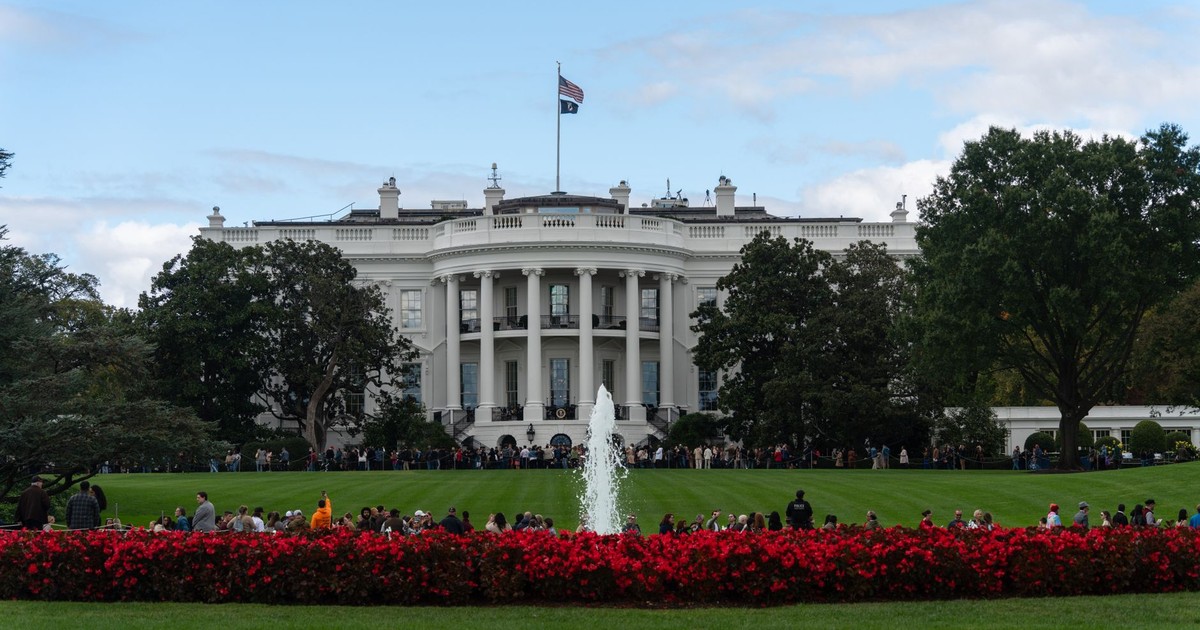

In 1831, Alexis de Tocqueville visited the United States and came away convinced that democracy had a problem: it selected for popularity, not wisdom. The men who have occupied the Oval Office represent one of the most cognitively unusual populations in history. One president scored 175 on a retroactively estimated IQ scale. Another scored somewhere around 124.
In 2006, UC Davis psychologist Dean Keith Simonton published a study in the journal Political Psychology that attempted to quantify the intelligence of every American president from Washington to George W. Bush. Formal IQ tests didn’t exist until the 20th century. Simonton used historiometric methods, analyzing biographical records, published writings, early achievements, and documented intellectual traits, to generate estimates for each president after age 18. He produced four separate IQ estimates per president and worked with missing-values statistical methods to fill gaps in the record.
The methodology has its critics, and the scores should be treated as educated estimates, not hard measurements. Some historians argue the approach disadvantages self-taught figures whose intellectual output doesn’t fit the patterns the model was built to detect.
1. John Quincy Adams (Estimated IQ: 168-175)
No president comes close to Adams at the top of the list. He attended Harvard and entered at 15, having already studied law, classical languages, and diplomatic theory at institutions across Europe. He became fluent in seven languages throughout his life and was admitted to the bar without completing law school in the conventional sense.
He later served in the House of Representatives after his presidency, the only former president to do so, and argued the Amistad case before the Supreme Court in his early seventies. Simonton himself noted that Adams’s number was the highest, but his brilliance was intensely focused on languages, law, and diplomacy rather than spread across domains.
2. Thomas Jefferson (Estimated IQ: 160)
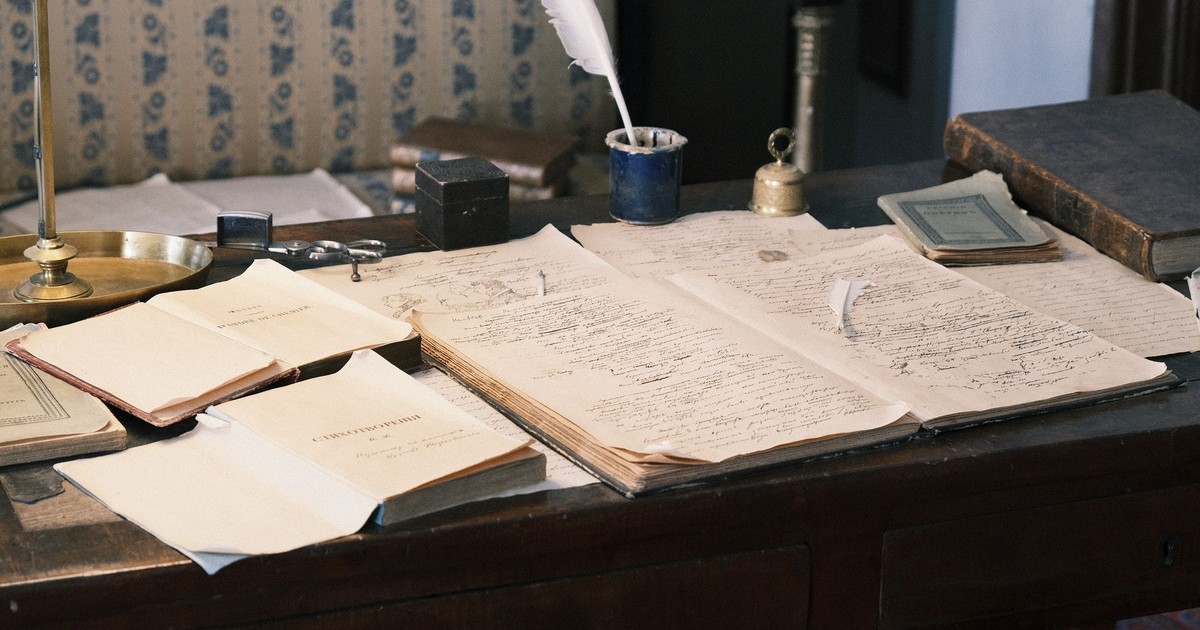
Simonton described Jefferson as “a great writer” and “the main author of the Declaration of Independence,” a “great architect, designing not only his own mansion but also the original campus of the University of Virginia,” and “a political theorist” who authored foundational texts that shaped the Constitution. Jefferson championed scientific farming techniques and crop diversification. A voracious lifelong reader, he amassed an extensive personal library that later contributed to rebuilding the Library of Congress.
When JFK hosted a White House dinner for Nobel Laureates, he observed that it was probably the greatest collection of human knowledge ever assembled there, with the possible exception of when Thomas Jefferson dined alone. Jefferson’s intellectual range, from paleontology to architecture to political philosophy, remains unmatched in the history of the American presidency.
3. James Madison (Estimated IQ: 160)
Madison ties Jefferson in Simonton’s estimates. He studied classical texts and political philosophy at the College of New Jersey, now Princeton University, effectively becoming the institution’s first graduate student. He is known as the “Father of the Constitution” and authored the Bill of Rights.
Madison co-authored the Federalist Papers with Alexander Hamilton and John Jay. The arguments Madison made in those essays about separation of powers and the dangers of faction remain as analytically sharp as anything written in American political history. His presidency, which included guiding the country through the War of 1812, was less celebrated than his pre-presidential intellectual output.
4. John F. Kennedy (Estimated IQ: 159.8)
Kennedy had a reputation in childhood for being a poor student, preferring games and sports to books. He graduated from Harvard in 1940. At 43, Kennedy was the youngest person to be elected president. His Pulitzer Prize-winning book Profiles in Courage, published in 1956, demonstrated genuine literary ability.
His handling of the Cuban Missile Crisis in 1962, threading the gap between military advisors pushing for airstrikes and Soviet demands, is widely studied as an example of high-stakes analytical reasoning under pressure. His brief presidency included establishing the Peace Corps in 1961, proposing the civil rights legislation that laid the groundwork for the Civil Rights Act of 1964, and committing the country to a moon landing before the decade’s end, a goal fulfilled in July 1969, less than six years after his assassination.
5. Bill Clinton (Estimated IQ: 159)
Clinton won a Rhodes Scholarship to study at Oxford University, a distinction that requires not just strong academic credentials but demonstrated leadership and intellectual promise. His educational path ran through Georgetown University, Oxford, and Yale Law School. His political career showed a particular kind of intelligence that goes beyond formal learning: the ability to master policy detail across dozens of domains simultaneously and explain it to ordinary voters without losing precision.
Presidential historian Barbara Perry, director of presidential studies at the University of Virginia’s Miller Center, says she would put Obama and Clinton in the top five of all presidents for raw intellectual ability. “There’s just an ability of those men to comprehend, to analyze and synthesize, that is, to me, a true sign of brightness,” Perry has said. Clinton’s post-presidency work building global health and development programs through the Clinton Foundation suggests the intellectual engagement didn’t stop at the White House door.
6. Jimmy Carter (Estimated IQ: 156.8)
Carter graduated from the US Naval Academy and later took graduate courses in reactor technology and nuclear physics at Union College in Schenectady, New York. Before entering politics full-time, he worked under Admiral Hyman Rickover in the early US nuclear submarine program. Rickover, known as the “Father of the Nuclear Navy,” was notorious for his grueling selection process and demanded both scientific rigor and the ability to perform under intense pressure from every officer he accepted.
Carter brokered the 1978 Camp David Accords between Egypt and Israel, a feat that required not just political instinct but a detailed grasp of history, religion, and regional dynamics. He also worked to establish a formal diplomatic relationship with China and pushed for a nuclear limitation agreement with the Soviet Union. In 2002, he was awarded the Nobel Peace Prize for his efforts in finding peaceful solutions to international conflicts and advancing democracy and social development.
7. Theodore Roosevelt (Estimated IQ: 153)
A prolific author, Roosevelt published 35 books on subjects ranging from the naval war of 1812 to African game trails, and was also a respected naturalist and conservationist. He read at least one book a day while president, often several, across subjects as varied as military history, natural science, and poetry. He spoke French and German, studied at Harvard with serious intent rather than social convenience, and wrote a well-regarded history of the War of 1812 while still in his early twenties.
Roosevelt reshaped antitrust law, created the national park system, negotiated the end of the Russo-Japanese War (for which he received the Nobel Peace Prize in 1906), and pushed for the construction of the Panama Canal. The volume and variety of his intellectual output across his lifetime put him firmly in this company, even at a lower estimated IQ than the four above him.
8. Abraham Lincoln (Estimated IQ: 128-150)
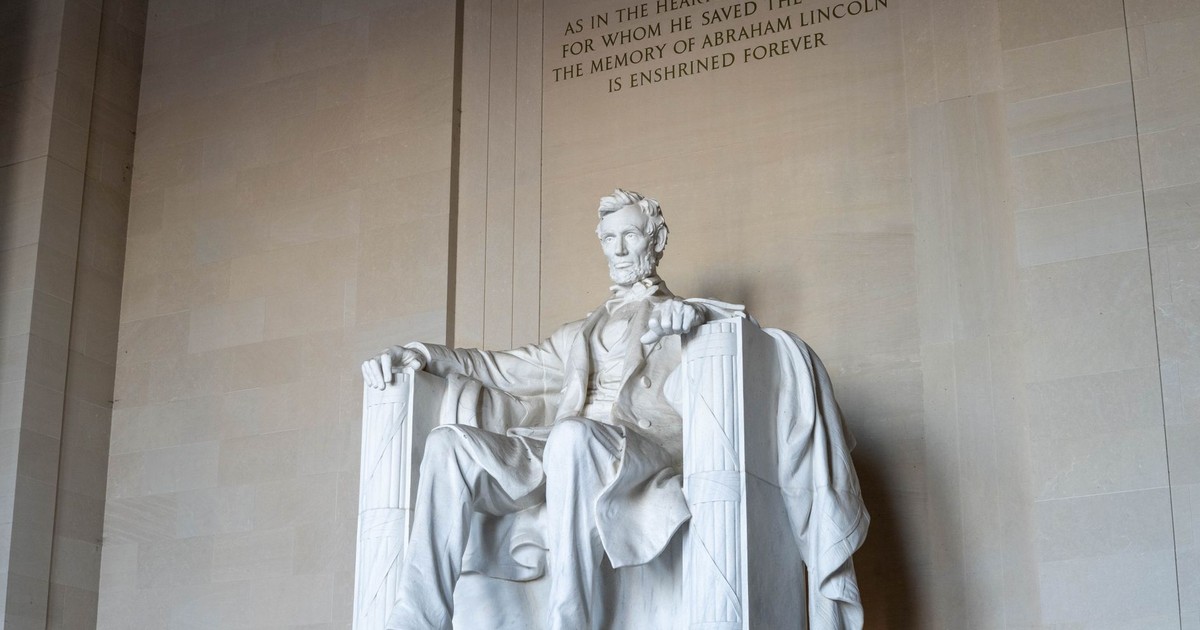
Lincoln sits at an interesting position in these rankings because the estimates vary more widely for him than for almost any other president. He had almost no formal education (less than a year total) yet taught himself law, read voraciously, and produced some of the most eloquent presidential prose in American history.
The wide range in his estimates reflects a genuine problem with the historiometric approach. The method relies heavily on early educational records and published works, which naturally disadvantages anyone who was largely self-taught. Lincoln’s legal career, his use of Euclidean geometry as a mental discipline, and the extraordinary precision of his rhetoric suggest a mind operating at a very high level despite the absence of institutional scaffolding. The Gettysburg Address runs to 272 words. That economy of language is itself a form of intelligence that standardized methods struggle to capture.
9. Ulysses S. Grant (Estimated IQ: 120-130)
According to the History News Network’s analysis of Simonton’s study, the lowest IQ estimate in the rankings belonged to Ulysses S. Grant. As a boy, Grant was mocked by classmates and showed little interest in school. Grant possessed a tactical and practical intelligence that served him brilliantly as a Civil War general but didn’t translate into policy success as president. He graduated from West Point with a middling academic record, yet demonstrated strong spatial and strategic ability on the battlefield.
The man who engineered the defeat of the Confederacy was demonstrably not the same man who managed a presidency riddled with corruption scandals. As president, he worked to build trade and American influence abroad and maintained an unusual-for-the-era peace policy with Native Americans, but his administration was dogged by scandal, and he was unable to prevent the financial depression of the 1870s, which ultimately ended in bankruptcy for Grant himself.
10. Warren G. Harding (Near the Bottom)
Harding looked the part of a president. He was frequently described as the most physically impressive occupant of the Oval Office, and his 1920 campaign ran largely on the appeal of normalcy after the upheaval of World War I. His grasp of policy detail was thin, and he reportedly knew it. Simonton’s full range of IQ estimates placed Harding at or near the bottom of presidential rankings on three of the four measurement criteria used in the study, putting him below Grant and alongside Andrew Johnson, a tailor who never attended school, as one of the least intellectually equipped men to hold the office.
The Teapot Dome scandal, in which members of his administration accepted bribes to lease federal oil reserves to private companies, became one of the most notorious corruption cases in American history. Harding died in office in 1923 before its full extent became public.
What Intelligence Actually Gets You

The relationship between intelligence and presidential greatness is real, but complicated. Simonton explored this in later research, reviewing the empirical evidence on the intelligence–performance association in presidential leadership and concluding that IQ alone does not suffice to predict presidential greatness. The numbers matter up to a point, and then other things (character, timing, the quality of the people around you, and plain luck) start to matter more.
Lincoln, who sits in the middle of these rankings with a disputed score and almost no formal schooling, is rated by historians as one of the three or four greatest presidents ever. Grant, who lands near the bottom, was the military genius who preserved the Union. Woodrow Wilson had a PhD from Johns Hopkins, the first and only president to hold a doctorate, and still presided over a post-war settlement that helped plant the seeds of World War II.
The US presidential intelligence rankings reveal something more modest but still genuinely useful: the Oval Office has, across its history, attracted an unusually high concentration of cognitive horsepower. Anyone who rises to the presidency has had to outmaneuver, outthink, and out-persuade thousands of other highly capable people just to get there. The floor is higher than most people expect. The ceiling, as John Quincy Adams demonstrated, is higher than almost anyone achieves.
Disclaimer: This information is not intended to be a substitute for professional medical advice, diagnosis, or treatment and is for information only. Always seek the advice of your physician or another qualified health provider with any questions about your medical condition and/or current medication. Do not disregard professional medical advice or delay seeking advice or treatment because of something you have read here.
AI Disclaimer: This article was created with the assistance of AI tools and reviewed by a human editor.