

In the hills of Himachal Pradesh in northern India, a woman from the Hatti community married two brothers in a ceremony that drew journalists and photographers from several countries. To the people attending, it was a practical solution their families had been using for generations.
Polyandry, the practice of a woman taking multiple husbands simultaneously, has been documented across the Himalayas, the Amazon basin, southern India, and southwestern China. The communities practicing it are separated by thousands of miles, speak different languages, and share no common religion or cultural tradition.
The communities where polyandry women marriage arrangements have persisted longest tend to sit on thin strips of farmable land surrounded by geography that doesn’t permit expansion. When you start there, a lot of things that look unusual begin to make sense.
The Himalayan Blueprint

In the hills of Himachal Pradesh, polyandry is known variously as Jodidara or Pandav Pratha, invoking the legend from the Hindu epic Mahabharata in which Draupadi wed the five Pandava brothers. The mythology gives it cultural gravity, but the people who practice it explain it in more practical terms.
Researchers publishing in Human Ecology found that in Kinnaur, fraternal polyandry functions as a cooperative strategy for managing environmental uncertainty in conditions of severe land, resource, and labor scarcity.
The same research found that where polyandry is declining, land is being partitioned into smaller plots, a process further strained by climate change, with measurable economic consequences for the households involved.
Nepal’s Dolpa District: Numbers in Freefall
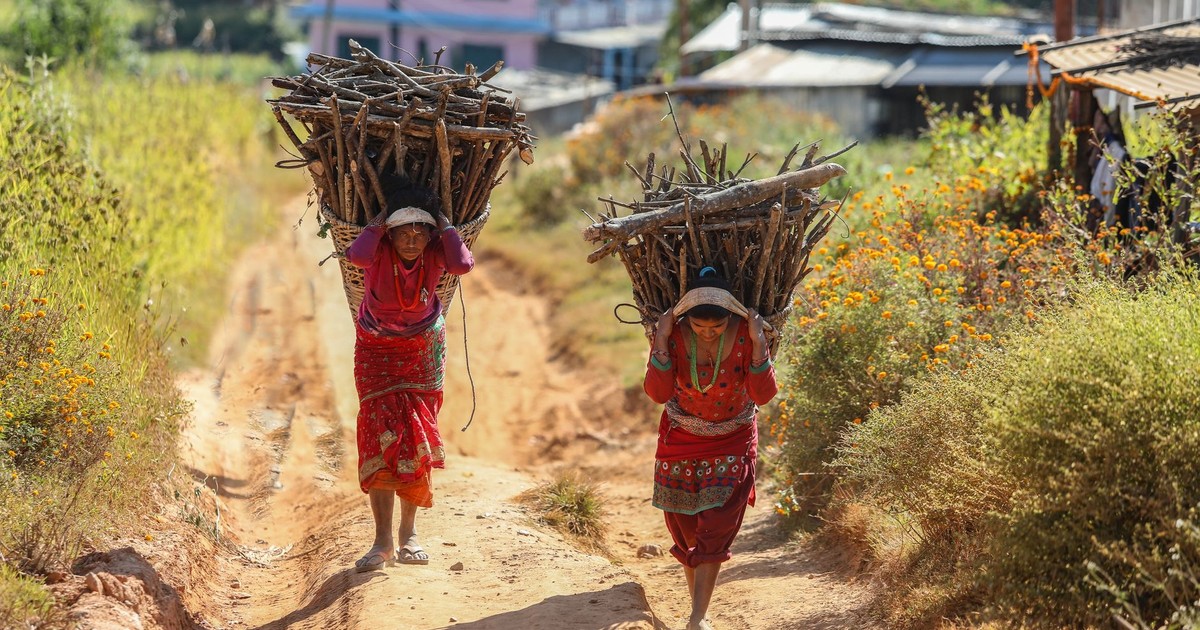
In Nepal’s remote Dolpa district, which spans elevations from roughly 1,500 to over 7,600 meters, fraternal polyandry once defined the social fabric. Anthropologist Melvyn Goldstein argued that its logic was never about creating wealth. It was about preserving it. Two brothers inheriting ten acres might seem prosperous, but by the time their grandchildren arrived, those acres could shrink to plots too small to live on.
A generation ago, roughly eight in ten Dolpa households were polyandrous. Today that figure has fallen sharply, as tourism income and shifting ideals of romance reshape what young people expect from marriage. Young men and women in the valley now grow up watching television that carries images of romantic partnership, a solo husband, a solo wife, a story that begins with choosing each other freely. The old arrangement starts to look less like a community strategy and more like a compromise nobody voted for.
Younger generations in Himachal Pradesh and Uttarakhand are making the same turn, drawn by city jobs, modern education, and new expectations arriving in remote valleys by screen. The economic logic of polyandry hasn’t changed. The emotional expectations around it have.
The Amazon: When the Body Itself Is Shared

Half a world away, a completely different form of polyandry has been documented across dozens of indigenous communities in the Amazon basin, one that rests not on land inheritance but on a belief about biology itself.
In lowland South America, many communities hold what researchers call partible paternity, the belief that more than one man can contribute biologically to the formation of a fetus. A child with multiple recognized fathers draws investment, protection, and material support from each of them. Communities including the Barí, the Matis, and the Canela have institutionalized these arrangements across generations.
A comparative study of 128 lowland South American societies published by the National Academy of Sciences found that partible paternity beliefs may be up to two times more common in the region than biologically singular beliefs about conception. The principle has been documented in at least 18 different societies including the Araweté, Mehinaku, Tapirapé, Xokleng, and Wari’, spanning four major language families: Carib, Pano, Tupi, and Macro-Jê. The underlying driver isn’t romance or custom for its own sake. It’s a collective answer to the question of who keeps a child alive when resources are thin and any one man might die young, leave, or fail.
The Mosuo of China: A Different Kind of Choice

The Mosuo, a small ethnic group living near Lugu Lake in southwestern China, offer perhaps the most striking case, and the one that most confounds outside assumptions about what polyandry involves.
The Mosuo practice a form of courtship and reproduction known as walking marriages. No contract is signed, no obligations are formalized, and multiple partnerships are permitted for both men and women without the social conflict that would attach to such arrangements in most other cultures. Children born from these unions are raised not primarily by fathers but by their mothers’ brothers, and wealth passes through the female line, from mothers to daughters rather than to sons.
Research published in Culture and Evolution describes the system as producing measurable adaptive outcomes: offspring care and investment, gratification, low levels of conflict, and improved overall wellbeing, not despite the absence of a singular husband, but partly because of it. The Mosuo inhabit narrow strips of farmable land along the shores of Lugu Lake, surrounded by steep forested hills that can’t be cultivated. The geographic constraint is not incidental. It shapes everything about how resources are held and how families are structured.
India’s Toda People: Ritual and Practicality

Polyandry has been practiced in several parts of India, including Rajasthan, Ladakh and Zanskar, the Jaunsar-Bawar region in Uttarakhand, and among the Toda of South India. The Toda, a small indigenous community from the Nilgiri Hills of Tamil Nadu, practiced fraternal polyandry within a ritual framework. The marriage was recognized not just socially but through elaborate ceremony, with specific protocols governing how co-husbands related to one another and to any children born into the union.
Their case points to something the land-scarcity argument alone doesn’t fully capture: once polyandry becomes embedded in a community’s ritual and social life, it carries meanings beyond the economic. It becomes an expression of kinship loyalty, of the idea that brothers belong to each other’s lives completely, their labor, their home, their family. The original practical rationale remains, but it acquires layers of ceremony and meaning that make it feel like something other than what it started as.
Polyandry is gradually fading across India and Nepal due to modernization, legal restrictions, and changing social norms. Urbanization and economic development reduce the reliance on traditional arrangements, while laws in both Nepal and India prohibit polyandrous marriages outright. Being illegal doesn’t stop it happening, but it does mean it happens with less visibility and without legal protection for the women and children involved.
Why Scarcity Shapes Who You Marry
From Himalayan farming villages to Amazonian river communities, the same pressure keeps generating the same solution. But the scarcity argument is more precise than it first sounds. This isn’t simply a story about poor communities inventing unusual arrangements out of desperation. Wealthy landholding families in Kinnaur and among the Tibetan taxpayer class practiced polyandry precisely because they had something worth protecting. The threat wasn’t poverty. It was dilution.
Breaking up productive farmland between too many heirs across too many generations is the oldest way a prosperous family becomes a struggling one. If each son took a different wife, the land splintered. A fraternal polyandrous marriage, where brothers shared one wife and the household remained legally and practically undivided, was a direct answer to that arithmetic.
Read More: Why More And More Intelligent Women Are Choosing Hypogamy
The Part That Stays Complicated

Monogamy, promoted across the world by legal systems modeled on Western European frameworks, religious institutions, and the global spread of television romance, has become the default setting. As that default spreads, polyandrous communities find themselves caught between the logic that built their marriage structure and the cultural expectations that now surround it.
Young women in the Dolpa district want to choose their own husbands. Young men in Himachal Pradesh want a marriage that resembles what they see on screen. These aren’t unreasonable desires. But the land hasn’t gotten larger. The farms haven’t multiplied. The problem that polyandry was solving is still there. What’s changed is the appetite for that particular solution.
The Negi wedding in Shillai that made global headlines looked unusual to most people who read about it. To the Hatti community, it was practical, deliberate, and old. That gap, between how an arrangement looks from outside and what it does for the people inside it, is usually wider than we expect when one culture examines another’s most intimate decisions. Some of these structures go back further than the communities that currently practice them. The land pressure, the inheritance logic, the collective investment in a child’s survival, these are human problems. The specific solutions only look strange from a distance.
AI Disclaimer: This article was created with the assistance of AI tools and reviewed by a human editor.