
The Odyssey is a 2026 epic fantasy action film written and directed by Christopher Nolan – not a television series. It’s a theatrical film, and a genuinely enormous one.
It’s Nolan’s first release since Oppenheimer (2023), which won seven Academy Awards including Best Picture, Best Director, and Best Actor. Three years is a long time in Hollywood, and the gap has only sharpened the appetite. The Odyssey was ranked as the most anticipated film of 2026 by IMDb.
What follows is everything you actually need to know before you walk into the theater: the poem, the cast, the filmmaking choices, the mythology, and what Nolan is doing with all of it.
1. It’s a film, not a TV show – and it’s in theaters now
The movie releases July 17, with preview showings on July 16, and features a star-heavy cast including Matt Damon, Anne Hathaway, Tom Holland, Lupita Nyong’o, and Zendaya. The confusion around “The Odyssey TV show” has been widespread online, likely driven by people searching for it before understanding the format. The film is being released by Universal Pictures, the same studio behind Oppenheimer.
It’s also worth knowing this is a theatrical-first event in the fullest sense. Tickets for IMAX, IMAX 70mm, and premium large format screenings went on sale on June 4, 2026, ahead of general admission tickets being made available later that month. If you want the intended experience, the bigger the screen you can find, the better.
2. The source material is one of the oldest stories ever told
According to Britannica, the Odyssey is an epic poem in 24 books traditionally attributed to the ancient Greek poet Homer. The poem is the story of Odysseus, king of Ithaca, who wanders for 10 years – although the action of the poem covers only the final six weeks – trying to get home after the Trojan War. Scholars date the writing of the Odyssey to about 725 – 675 BCE.
The poem was composed of 12,109 lines written in dactylic hexameter – that is, each line consisted of six feet, or metrical units, and each foot consisted of a dactyl, a stressed syllable followed by two unstressed syllables. In practical terms, it was originally sung or chanted aloud, not read silently from a page. It was intended for oral performance, and was likely transmitted through generations of oral poets well before it was written down. One of the cornerstones of Western literature, it’s believed to have been composed nearly 3,000 years ago.
3. The plot, in plain terms
Set in and around the Mediterranean Ancient World, the poem and the film follow Odysseus, the heroic king of the Greek kingdom of Ithaca. After fighting in the Trojan War, Odysseus begins the journey home to his wife Penelope and son Telemachus, but the meddling of the gods and a series of adventures with sirens, cyclops, and more turn his trip home into a 10-year fight for survival, and a struggle to reclaim his kingdom from those who seized it in his absence.
The poem actually opens not with Odysseus himself but with his son. Telemachus is a young man powerless to stop the swarm of arrogant suitors who have invaded his father’s palace and are competing to marry his mother, Penelope, on the assumption that Odysseus is dead. The goddess Athena urges Telemachus to travel to Pylos and Sparta in search of news of his father – a coming-of-age journey scholars call the Telemachy. Meanwhile, Odysseus is stranded on the island of Ogygia, held by the nymph Calypso, who loves him but cannot offer him what he wants: home.
4. The Trojan War is backstory, not the main event
One of the most common points of confusion for first-timers: The Odyssey begins after the Trojan War is already over. Both the Iliad and the Odyssey are epic poems attributed to Homer, and are part of the cycle of myths surrounding the Trojan War, with the Odyssey succeeding the Iliad chronologically. The Iliad makes the Greek warrior Achilles and his part in the war its focus, while the Odyssey details the wanderings of Odysseus as he sails home to Ithaca from Troy.
Nolan’s film does appear to begin with the fall of Troy – trailers have shown the Trojan Horse sequence prominently – but the war itself is the setup, not the story. The story is the ten-year journey afterward, and everything Odysseus loses, survives, and becomes along the way.
5. The mythological episodes you should know before you go
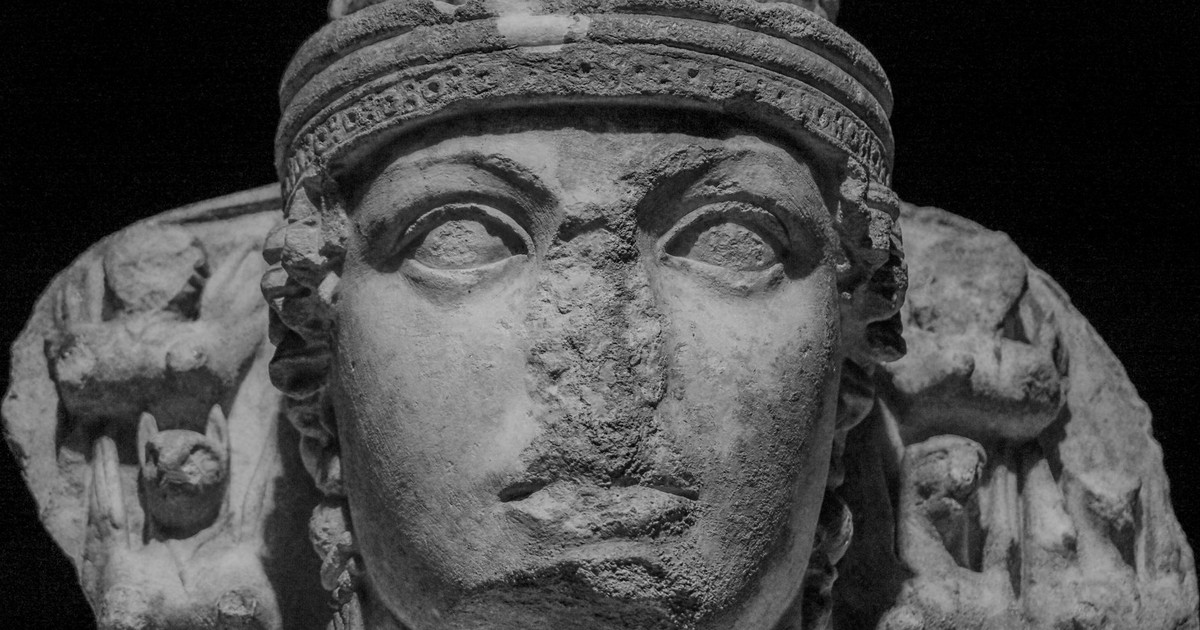
The most famous episodes in the Odyssey include Odysseus blinding the Cyclops Polyphemus, resisting the song of the Sirens, sailing between the monster Scylla and the whirlpool Charybdis, encountering the witch Circe who turns his men into pigs, visiting the underworld, and being held captive by the nymph Calypso.
Each of these encounters functions as a test, and not just a physical one. The Sirens tempt Odysseus with knowledge. Circe tests his loyalty to his men. Calypso offers him immortality in exchange for giving up his identity. The monsters are almost beside the point. The poem asks, encounter after encounter, how much a man will endure for the sake of getting home.
6. The poem’s core themes – and why they still land
The Odyssey explores themes such as hospitality (xenia), loyalty, divine intervention, and homecoming (nostos). These aren’t abstract concepts in the poem – they’re the engine of the plot.
Hosts owe guests food, shelter, and safe passage; guests owe hosts respect and restraint. The poem uses xenia as a moral measuring stick: the Cyclops violates it monstrously; the Phaeacians embody it perfectly; the suitors destroy it utterly by abusing Odysseus’s own household. Every encounter on the journey can be read as a test of this code. Understanding this makes the suitor subplot – which can feel like a distraction from the adventure – suddenly make complete sense. The suitors aren’t just romantic rivals. They’re the most profound violation of the world’s moral order.
7. Cunning wins, not brute strength
Unlike the Iliad, where battlefield prowess defines greatness, the Odyssey celebrates cunning intelligence over brute force. Homer’s epithet for Odysseus is polytropos – “of many turns” – a man who survives by wit, disguise, and adaptability.
Odysseus escapes the Cyclops not by fighting him but by outsmarting him, first by getting him drunk, then by hiding under a sheep. He survives the Sirens by having himself tied to the mast. Even his return to Ithaca involves an elaborate disguise rather than a frontal assault. He’s a hero who would rather trick you than fight you, and who’s proud of it. Matt Damon, known for playing physically capable but inwardly clever protagonists, is a sensible choice for the role.
8. Matt Damon plays Odysseus
In The Odyssey, Damon plays the titular character, Odysseus, the Greek king of Ithaca. After the Trojan War, he attempts to return home to his wife and son but is thwarted by a frankly significant number of distractions and deterrents from that goal.
He was the lead in the Bourne films, co-starred in the Ocean’s 11 movies, and this is actually his third time working with Nolan – a creative relationship deep enough in trust that the director has spoken freely about the casting decision. The pairing of a physically credible but cerebrally played star with a hero defined by intelligence rather than invincibility is one of the film’s most interesting choices on paper.
9. Tom Holland plays Telemachus – Odysseus’s son
Tom Holland plays Odysseus’s son, Telemachus. It’s a genuinely substantial role, not a supporting one. In the poem, his growth from a helpless boy to a young man capable of fighting beside his father runs as a parallel story to his father’s journey.
Holland, who built his career playing young men navigating impossible pressure – Spider-Man, Cherry, The Devil All the Time – is well-suited to that arc. The Telemachy sections of the poem gave the Odyssey some of its most emotionally grounded material, and if Nolan keeps them intact, Holland will have a lot to work with.
10. Anne Hathaway plays Penelope
In The Odyssey, Hathaway plays Queen Penelope of Ithaca, Odysseus’s wife and the mother of Telemachus. She awaits the return of her husband but has to stall suitors who say that her husband is dead and seek to take the crown.
Penelope is one of literature’s great strategic minds. Her famous trick of weaving and unraveling a burial shroud by day and night – stalling the suitors for years – is not passive waiting. It’s active resistance. Hathaway previously played Selina Kyle/Catwoman in The Dark Knight Rises and Dr. Amelia Brand in Interstellar, making The Odyssey her third collaboration with Nolan.
11. Zendaya plays Athena – the goddess who runs the whole show
Zendaya takes on the role of the Greek goddess Athena. In Homer’s poem, Athena is Odysseus’s protector – she advocates for him at the council of the gods, guides Telemachus, and repeatedly appears in disguise to steer events. She’s arguably the most powerful presence in the entire poem. Playing her well requires someone who can convey authority without effort, which is a fair description of Zendaya’s screen presence.
12. Robert Pattinson plays the villain – the lead suitor, Antinous
Robert Pattinson plays the suitor Antinous, the most aggressive and dangerous of the men competing to claim Penelope and the throne of Ithaca. In the poem, Antinous is the ringleader – the one who proposes murdering Telemachus, and the first suitor Odysseus kills when he reveals himself at the climax. Pattinson’s track record in Nolan’s Tenet, and his broader body of work in films like The Batman and Good Time, has established him as one of the most interesting actors working in morally complicated villain territory.
13. Charlize Theron plays Circe
Charlize Theron plays Circe, the powerful goddess of sorcery who plays a pivotal part in Odysseus’s journey. In the poem, Circe initially turns Odysseus’s men into pigs and then, after Odysseus resists her magic, becomes a crucial ally – giving him directions to the underworld and eventually helping him navigate past the Sirens. She’s a character who begins as an antagonist and ends as something more complicated, which is the kind of role Theron has made a specialty.
14. Lupita Nyong’o plays a double role: Helen and Clytemnestra
Lupita Nyong’o co-stars as the mythical Helen of Troy, and also plays Helen’s sister, Clytemnestra. Helen is the woman whose abduction by Paris triggered the Trojan War. Clytemnestra is the wife of the Greek king Agamemnon, who murdered her husband when he returned from Troy. Together, the two sisters represent opposite poles of how women navigate power in a world run by men: Helen through beauty, Clytemnestra through vengeance. Nyong’o playing both is one of the film’s more philosophically loaded decisions.
15. Travis Scott appears – and there’s a specific reason for it
Travis Scott appears in The Odyssey. In a trailer released in January 2026, the American rapper was shown giving a speech that included a line about the Trojan War. Nolan explained in an interview that he cast Scott in order to draw a connection between rap and oral poetry as analogous art forms.
It’s a deliberate conceptual choice, not stunt casting. Homer’s poem was originally performed aloud – sung or chanted by traveling poets – making it far closer to hip-hop than to the silent, text-on-page experience modern readers have with it. Oral poets likely performed epics such as the Odyssey in song form, and the poem was probably transmitted through generations of performers well before it was ever written down.
16. Elliot Page plays a character who isn’t actually in the Odyssey
In The Odyssey, Elliot Page plays Sinon. The character is not actually present in either the Odyssey or the Iliad. Sinon first appears in the Aeneid, a Latin epic poem written from about 30 to 19 BCE by the Roman poet Virgil.
In Virgil’s telling, Sinon pretends to have been abandoned by Odysseus and the other Greeks. He persuades the Trojans that the horse is an offering to Athena that will make Troy impregnable. The Trojans bring the horse inside the city gates, and that night Odysseus and the other Greek warriors inside the horse emerge from their hiding place and open the gates to let in the rest of the Greek army. Nolan is clearly drawing from the broader ancient tradition, not just the one poem. The Trojan Horse sequence is one of the film’s set pieces, so a character whose entire purpose is to sell that deception makes dramatic sense – even if classicists might raise an eyebrow.
17. The budget is $250 million – Nolan’s most expensive film ever
NBC reports the follow-up to Oppenheimer carries an estimated budget of $250 million, making it the most expensive film of his career, and is the first feature to be shot entirely on IMAX’s 70mm film cameras. Variety predicted it would need to attract a wide audience due to its restrictive R-rating and approximate $250 million budget, which would make it one of the most expensive R-rated films, ahead of Joker: Folie à Deux and Deadpool & Wolverine (both 2024). For context, Oppenheimer – itself considered one of Nolan’s most ambitious productions – cost around $100 million. The jump to $250 million tells you something about the scale of what was shot in the real world, not in a digital studio.
18. It’s the first feature film ever shot entirely on IMAX 70mm cameras
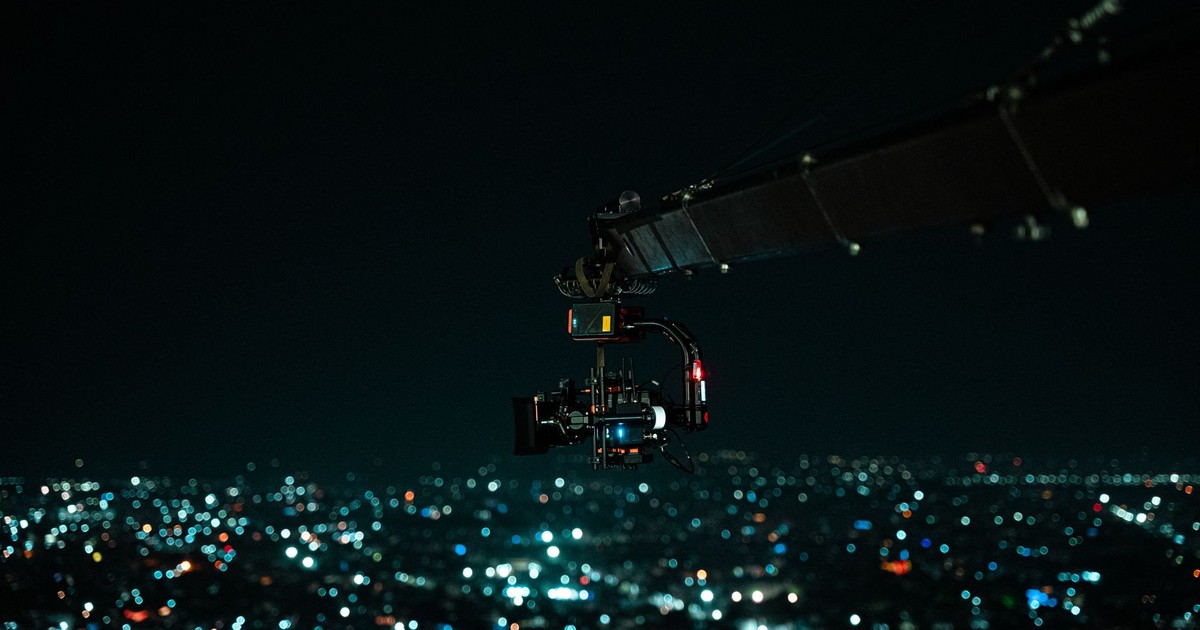
The Odyssey is the first feature film in history to be shot entirely on IMAX’s 70mm film cameras. NBC confirms that it’s currently the only way to experience the full scope of the film as Nolan intended, with 70mm IMAX presentations delivering the biggest, tallest image any theatrical format can produce.
The film will be presented in a variety of aspect ratios depending on the exhibition format: 1.43:1 on IMAX 70mm film prints, 1.90:1 on IMAX digital screens, 2.20:1 on 70mm film prints, and 2.39:1 on 35mm prints. What that means in practice: if you see it on a true IMAX 70mm screen, you’re seeing a taller, larger image than any other theatrical format can deliver. The picture fills more of your peripheral vision. That’s not marketing language – it’s physics.
19. The IMAX cameras created serious technical problems – which they solved
Each IMAX camera magazine only allows between two and a half to three minutes of continuous shooting before it needs to be reloaded. That constraint alone required constant crew coordination across an epic production.
The bigger problem was sound. The IMAX cameras are loud during operation, which historically made recording clean dialogue on set nearly impossible. Nolan’s team and IMAX collaborated to create a specialized housing to muffle the camera sound. Matt Damon put it plainly, saying intimate scenes would have been impossible in IMAX even a year before production began – the audio simply wouldn’t have worked. Those technical problems being solved is part of why this film is a milestone, not just for The Odyssey specifically but for future productions that might follow the same path.
20. They filmed across six countries – and shot water sequences practically
Principal photography took place across six countries from February to August 2025: Greece (Peloponnese), Italy (Sicily and Aeolian Islands), Morocco (Aït Benhaddou, Marrakech, Essaouira, Dakhla), Scotland (Moray Coast), Iceland, and Malta.
All water sequences and seascapes were filmed practically across multiple locations rather than using CGI. A film about a man lost at sea for a decade, shot on real water in real locations around the Mediterranean and beyond, is a very different proposition from shooting the same story in front of a green screen on a soundstage. The filming period encompassed an extensive, multi-country shoot with a 500-person crew, alongside studio work in Los Angeles.
21. Ludwig Göransson is composing the score
Joining Nolan on the 2026 project is composer Ludwig Göransson, best known for his acclaimed scores on The Mandalorian, Oppenheimer, and Sinners. Göransson won the Academy Award for Best Original Score for Oppenheimer, and his collaboration with Nolan on that film produced one of the most discussed scores of 2023. Returning for The Odyssey makes this pairing one of the more exciting creative continuities in the film – early audience reactions have already noted the music as a standout element.
22. Hoyte van Hoytema is the cinematographer
Nolan reteams with his Oscar-winning cinematographer Hoyte van Hoytema, who has worked on every Nolan film since Interstellar. Van Hoytema is the person actually operating and framing those IMAX cameras across Morocco, Iceland, and the Greek coast. His collaboration with Nolan spans a decade and four films, and his ability to work within IMAX’s demanding technical constraints while maintaining visual poetry is central to why the format choice is credible here.
23. The film is rated R and runs 2 hours and 52 minutes
The runtime, confirmed at 2 hours and 52 minutes, puts it just under three hours, consistent with Nolan’s recent output. Oppenheimer ran exactly three hours, and Interstellar ran just under that mark. Factor in travel time and plan accordingly. The R-rating is for violence and some language, which fits a story involving cyclops attacks, war, mass killing, and encounters with figures like Circe. The poem itself is not gentle.
Ticket demand has been extraordinary – IMAX and premium large format screenings triggered crashes on AMC’s ticketing app, with wait times stretching up to an hour.
24. Nolan drew on two specific films as visual inspiration
He depicted a realistic interpretation of Greek mythology, drawing inspiration from the epic historical films Andrei Rublev (1966) and Ran (1985), as well as the films of special effects artist Ray Harryhausen. Andrei Rublev is Andrei Tarkovsky’s Russian masterpiece about a medieval icon painter – austere, elemental, shot in ways that make historical periods feel genuinely ancient rather than costumed. Ran is Akira Kurosawa’s epic adaptation of King Lear, set in feudal Japan, famous for its overwhelming battle sequences and formal visual grandeur. Ray Harryhausen’s stop-motion creature effects – including the famous skeletons in Jason and the Argonauts – were foundational to how fantasy and mythology looked on screen for decades. The combination tells you what Nolan is aiming for: mythological scale with historical texture, not a CGI spectacle.
25. Nolan’s non-linear storytelling suits the poem perfectly
Homer’s original poem is itself non-linear, beginning in medias res – in the middle of the story – so the source material naturally lends itself to Nolan’s storytelling style. The poem opens with Odysseus already trapped on Calypso’s island, 10 years into his journey. His own adventures – the Cyclops, the Sirens, Circe, the underworld – are told in flashback when he narrates them to the Phaeacian king who agrees to take him home. Homer invented the structural device that Nolan built his entire career on. The match between director and material goes deeper than anyone might have initially realized.
Read More: 14 Celebrities Who Could Use Their Millions to Live Lavishly — But Don’t
26. Several Nolan regulars are reuniting for this film
Repeat or frequent collaborators on this film include Matt Damon, Anne Hathaway, Robert Pattinson, and Elliot Page. Nolan has built his career on returning to the same actors across different films – Michael Caine, Cillian Murphy, Tom Hardy, and Marion Cotillard all appeared in multiple Nolan projects. The Odyssey extends that pattern, with several cast members on their second or third Nolan film. That institutional knowledge matters on a production of this complexity, where trust between director and actor can save hours on a tight IMAX shoot.
27. The casting has sparked debate – which Nolan addressed directly
Leading up to the film’s release, the costume and production designs, accents, dialogue, and casting choices sparked critical discussion and scrutiny regarding historical accuracy to the source material and the setting depicted.
Nolan insisted on the cast using American accents rather than British or Greek, and acknowledged concerns about the film’s historical accuracy, comparing his approach to that of Interstellar as an exploration of “what is the best speculation and how can I use that to create a world?” His position is essentially that a 3,000-year-old oral poem has always been interpreted and reimagined by whoever is telling it. His version is one more iteration in a tradition that has never been static.
28. The Odyssey first reviews are actually extraordinary
Forbes reports that the film achieved a 98% “fresh” score on Rotten Tomatoes, with critics lauding its ambition, breathtaking spectacle, and Matt Damon’s compelling performance. The Rotten Tomatoes critics consensus describes The Odyssey as “reinvigorating an ancient adventure with majestic sweep and sterling work by its colossal ensemble.” Early box office projections put the opening weekend between $80 million and $120 million, with some analysts predicting it will become Nolan’s highest-grossing film to date, surpassing The Dark Knight. Early audience reactions from London premiere screenings have been similarly enthusiastic, with multiple viewers describing physical reactions to the scale and sound of the film in IMAX.
29. The Trojan Horse in Nolan’s version looks nothing like what you’re picturing
One detail circulating from Nolan’s interview with Time magazine is worth knowing before you walk in. His Trojan Horse is not a towering wooden monument. It’s sinking. Half-submerged, it looks less like a monument than a mistake – an offering to the gods already being claimed by the sea. Inside, filthy soldiers press up against the wood. They breathe through straws as the water rises, waiting in silence for the Trojans to drag the horse through their city’s impenetrable walls. Nolan’s reasoning, as he explained in the interview: if the horse looked too grand and imposing, the Trojans would never have believed there could be men hiding inside it. So he made it look like it was barely surviving. The ruse only works because it doesn’t look like a ruse.
That’s Nolan thinking like Odysseus.
What to Expect When the Lights Go Down

The Odyssey search query that brought you here is understandable – the title is everywhere right now – but what opens today is a nearly three-hour IMAX film built on the oldest adventure story in Western literature, directed by one of the few filmmakers alive who can spend $250 million on practical effects and ancient mythology and make it feel like the obvious choice.
Go in knowing the broad strokes of the poem – the journey, the suitors, the mythological encounters – and you’ll spend less time orienting yourself and more time inside the story. Know that Nolan is not making a strict historical document. He’s doing what Homer’s original oral poets did: taking a foundational myth and running it through the imagination of their own time. The poem has been retold in every century since it was first sung. This is 2026’s version – shot in formats no feature film has ever used, on real water in six countries, with a cast assembled across years of deliberate trust-building.
If you’re seeing it in IMAX 70mm, you’re watching the format being invented around this story in real time. The early word suggests the screens were built for exactly this.
AI Disclaimer: This article was created with the assistance of AI tools and reviewed by a human editor.