

History has produced a few thousand people who ended up in textbooks and several billion who didn’t. Most of the billion were simply ordinary. But a small, strange subset were genuinely extraordinary, in some cases more consequential than the figures who got the chapters, and they fell out of the record anyway – because they were too inconvenient, too singular, or too difficult to fit into whatever story a given era needed to tell about itself.
Most of these obscure historical figures weren’t minor players pushed to the margins by circumstance. Several were famous in their own time: the subject of newspaper headlines, royal inquiries, and parliamentary debates. They faded not because they lacked impact but because the historical record tends to organize itself around movements and milestones, and these people defied every available category.
They were pirates who outmaneuvered navies. Surgeons who spent 46 years hiding in plain sight. A Scottish soldier who invented a country from scratch and sent 180 people to die in the jungle looking for it. Real people, real lives, and in most cases stories stranger than anything a novelist would risk putting in print for fear of being called implausible.
1. Gregor MacGregor – The Man Who Invented a Country and Sold It

Styling himself the “Cazique” or prince of a fictional Central American nation, MacGregor seized upon the era’s feverish interest in colonial opportunity and foreign investment by convincing hundreds of people to invest in and even emigrate to a country that did not exist. The country was called Poyais. It had a capital city, a coat of arms, banking regulations, a flag (a green cross on white), and a richly illustrated guidebook describing its fertile farmland and thriving port. Every single detail was fabricated.
MacGregor was born in 1786 in Scotland and spent his early years building a credible military reputation, joining the British Army in 1803 at the start of the Napoleonic Wars. By the early 1820s his reputation in South America had cooled, and he returned to Britain, where he parlayed his supposed status as a victorious general into the invention of Poyais. He printed currency for the Bank of Poyais, appointed diplomatic envoys to represent his fictional nation at the British court, and hired people to sing promotional songs about it in the streets of London.
By January 1823, two ships carrying around 250 passengers had arrived in Poyais to find not a thriving town as promised, but untamed jungle. Disease and malnutrition set in and about 180 of them died. MacGregor fled to France, ran a smaller version of the same con on Parisian investors, was briefly tried for fraud, and was somehow acquitted. He eventually retired to Venezuela, where he received a military pension. No prison. No meaningful consequences. Just an early retirement funded entirely by the suffering of people who believed him.
2. Mary Toft – The Woman Who Convinced Doctors She Gave Birth to Rabbits
In late 1726, much of Britain was caught up in the curious case of Mary Toft, a woman from Surrey who claimed to have given birth to a litter of rabbits. King George I’s own court physicians were fooled. This wasn’t a local curiosity quickly dismissed. Toft was transferred to London, examined repeatedly by the country’s most eminent surgeons, and became, for several months, the most talked-about person in England.
In September 1726, news reached the court of King George I of the alleged birth of several rabbits to Mary Toft of Godalming, near Guildford, in Surrey. Mary was a twenty-five year old illiterate servant, married to Joshua Toft, a journeyman clothier. The monarch dispatched two investigators: the King of England dispatched two men to investigate the situation, one of whom was surgeon-anatomist Nathanael St. André. St. André was so convinced that he published a formal paper titled “A Short Narrative of an Extraordinary Delivery of Rabbets” – a document that would destroy his career within days of its printing.
Toft refused to confess until a surgeon named Manningham threatened to perform surgery to determine whether she had unusual reproductive organs. On December 7, she came clean. She was charged as a “Notorious and Vile Cheat” and incarcerated at Bridewell prison for about four months. Crowds came to gawk into her public-facing cell. She was released without further punishment. When she died in 1763, the parish recorded her simply as “Mary Toft, Widow, the Impostress Rabbitt.” The physicians who rushed to London arrived expecting to witness something unprecedented, and their professional eagerness to be first to verify the claim made them easy to deceive.
3. Timothy Dexter – The Man Who Sold Coal to Newcastle and Made a Fortune Doing It

Timothy Dexter (1747 – 1806) was an eccentric American businessman who made a fortune through unconventional schemes. The phrase “selling coal to Newcastle” exists precisely to describe pointless endeavors – Newcastle being England’s coal-mining capital. Dexter did it anyway, and somehow turned a profit, because the coal arrived during a miners’ strike and sold at a premium. Every trade his peers mocked as idiotic turned out to be accidentally brilliant.
He bought up Continental currency after it was discontinued during the American Revolution, paying just a few cents for each dollar. In the 1790s, the U.S. Constitution allowed all Continental money to be traded for bonds, making Dexter rich. He once sent bed warmers to the tropical West Indies, where they found an unexpected use as tools in the molasses industry. Every investment his peers dismissed turned out to be accidentally correct.
Dexter styled himself “Lord Timothy Dexter” and surrounded himself with lavish trappings of nobility. His Newburyport mansion was adorned with numerous statues, including one of himself bearing the inscription “I am the first in the East, the first in the West, and the greatest philosopher in the Western World.” He organized an elaborate fake funeral for himself, complete with refreshments and a coffin, then watched the proceedings from a hidden vantage point and berated his wife for not appearing sufficiently grief-stricken. His 1802 book, “A Pickle for the Knowing Ones,” was remarkable for its entirely idiosyncratic spelling and the total absence of punctuation. In the second edition, he added a full page of punctuation marks so that readers could “peper and salt it as they please.”
4. Tarrare – The French Soldier Who Could Eat Anything

In the 1790s, French military physicians documented one of the most physiologically inexplicable cases in medical history: a young soldier named Tarrare, born around 1772, who could not stop eating and appeared to digest almost anything he consumed. His appetite wasn’t a figure of speech. Army surgeons watched him eat a meal intended for 15 people in a single sitting, swallow live cats, snakes, and eels whole, and remain visibly hungry afterward.
Despite his massive caloric intake, he remained slender, reportedly weighing only about 100 pounds at age 17, indicating an extremely high metabolic rate or severe malabsorption. He constantly exuded a noticeable body odor that worsened significantly after he ate, and he was perpetually hot and covered in sweat, from which a visible vapor was said to arise.
He was used briefly as a military courier, tasked with swallowing documents in sealed wooden cylinders and passing them through enemy lines. During the French Revolutionary War, he was used as a courier to swallow a wooden box containing secret messages, leading to his capture by Prussian forces. The experiment was abandoned after he failed to retrieve the message. He was later suspected, though never conclusively proven, to have eaten a toddler who went missing from the hospital where he was being treated. His bizarre case was documented by contemporary military surgeons in records that survive today. An 1798 autopsy revealed a “cavernous” internal anatomy that baffled the attending surgeons, and he died that year, probably of tuberculosis.
5. Ching Shih – The Pirate Admiral Who Negotiated Her Own Retirement
Most people who know the history of piracy could name Blackbeard or Bartholomew Roberts. Almost no one outside of East Asian history circles can name Ching Shih (also spelled Zheng Yi Sao), which is a serious omission, because she commanded a fleet that made every European pirate look like a hobbyist.
Born around 1775 in Guangdong, China, Ching Shih married the pirate commander Zheng Yi in 1801 and, after his death in 1807, took command of his fleet herself. Under her leadership, the Red Flag Fleet grew to roughly 1,800 vessels and somewhere between 80,000 and 180,000 sailors. She imposed a strict code of conduct – soldiers who raided without authorization were beheaded, and those who assaulted female captives faced execution. The Qing Dynasty sent repeated naval expeditions against her. The Portuguese navy tried. The British East India Company got involved. All of them failed. In 1810, the Chinese government offered her a peace deal. She negotiated the terms herself, kept most of her fleet, kept her wealth, retired to Canton, opened a gambling house, and died at the age of 69. She won.
6. Alessandro Cagliostro – The Alchemist Who Fooled All of Europe

Giuseppe Balsamo (1743 – 1795), known by the alias Count Alessandro di Cagliostro, was an Italian occultist, self-styled magician, and confidence trickster. He became a glamorous figure associated with the royal courts of Europe, where he pursued various occult arts including psychic healing, alchemy, and scrying. He claimed to be centuries old, insisted he had met Moses, and told anyone who would listen that he possessed the secret of eternal youth.
Cagliostro’s real achievement wasn’t making these claims – plenty of 18th-century fraudsters did – it was that the most powerful people on the continent believed him. He was received at Versailles. He performed “healings” for the French aristocracy. Cardinal de Rohan, one of the most senior Catholic figures in France, gave him access and funds based on his supposed mystical powers. Cagliostro became entangled in the Diamond Necklace Affair of 1785, a scandal that helped erode public confidence in Marie Antoinette and arguably contributed to the conditions that made the French Revolution possible. He was eventually arrested by the Inquisition in Rome in 1789, convicted of heresy and founding a Freemason lodge, and sentenced to life imprisonment. He died in the fortress of San Leo in 1795. His legacy is the uncomfortable fact that educated, powerful people in positions of authority suspended disbelief entirely when the con was dressed up with enough ceremony.
7. James Barry – The Military Surgeon Who Kept a Secret for 46 Years

James Barry was one of the most accomplished military surgeons in the British Army during the 19th century – performing one of the earliest successful caesarean sections in which both mother and child survived, rising to the rank of Inspector General, and spending a career reforming prison conditions and military hospital standards across three continents. Barry was also, according to the examination conducted after death in 1865, assigned female at birth.
Barry enrolled at the University of Edinburgh Medical School around 1809, at a time when women were categorically barred from the medical profession. The identity held through a 46-year military career, numerous campaigns including service in the Crimean War, and a famously fierce argument with Florence Nightingale over hospital management at Scutari. After Barry’s death, a physician recorded the finding in private notes. The British Army sealed the file for 100 years. Historians and scholars continue to debate the appropriate modern framing of Barry’s identity, but the bare biographical fact is unambiguous: one of the Victorian era’s most distinguished surgeons built an entire career the establishment insisted was structurally impossible.
8. Nongqawuse – The Prophet Whose Vision Destroyed a Nation

In 1856, a 15-year-old Xhosa girl named Nongqawuse told her uncle that she had received a message from the spirits of their ancestors. The message was specific: if the Xhosa people slaughtered all their cattle and destroyed all their stored grain, the ancestors would rise from the sea, drive the British colonizers from the land, and fill the earth with new, superior cattle.
Her uncle believed her. The Xhosa paramount chief believed her. Over the following year, in what became known as the Xhosa Cattle-Killing Movement, an estimated 400,000 cattle were slaughtered and grain stores across the Eastern Cape were destroyed. The ancestors did not rise. What followed was one of the most catastrophic famines in southern African history. The Xhosa population, estimated at roughly 105,000 before the killings began, fell by around half within two years – through starvation, disease, and displacement. Many historians argue the British colonial administration, which had been actively unable to defeat the Xhosa militarily, watched the destruction unfold with satisfaction and did nothing to intervene. Nongqawuse survived, was eventually taken into British custody, and lived under a pseudonym until around 1898. Whether she was a true believer, a manipulated child, or something more complicated remains genuinely unresolved.
9. Elagabalus – The Roman Emperor Who Threw Roses

Most Roman emperors are remembered for conquests or massacres. Elagabalus, who ruled from 218 to 222 AD and died at the age of 18, is remembered for smothering his dinner guests with rose petals. Ancient sources, including the Historia Augusta (a collection of Roman imperial biographies, though notoriously unreliable), describe banquets where so many flowers were released from concealed ceiling compartments that several guests suffocated before they could escape. Whether or not this particular story is literally true, it captures something real about his reign.
Elagabalus came to power as a Syrian teenager, installed by his grandmother Julia Maesa after the assassination of Emperor Caracalla, and promptly made his primary god – the sun deity Elagabal from Emesa – the supreme god of Rome, above Jupiter. He installed the deity’s sacred black stone in a newly built temple on the Palatine Hill and required Rome’s most senior priests and senators to perform ritual dances in its honor. Ancient sources also describe a series of personal behaviors that defied every Roman social convention of the time, including reportedly offering large rewards to physicians who could surgically alter his body, a claim that scholars debate but that appears across multiple independent ancient accounts. The Praetorian Guard eventually assassinated him and his mother in a latrine. His reign lasted four years, and almost every account of it, ancient and modern, reads like something assembled from incompatible documents about entirely different people.
10. William Phips – The Treasure Hunter Who Became a Governor

William Phips was born in 1651 in a log cabin in colonial Maine, the 21st of 26 children, and grew up to become the first royally appointed Governor of Massachusetts. The path between those two facts runs directly through a sunken Spanish galleon, 34 tons of silver, and an almost deranged level of personal stubbornness.
Phips taught himself to read as an adult, became a ship’s carpenter, and spent most of the 1680s trying to convince anyone with money that there was a fortune sitting on the ocean floor off the coast of Hispaniola. He had heard stories of a Spanish ship, the Concepción, that had sunk in 1641 with a massive cargo of silver. He badgered King Charles II, then King James II, into providing ships for the search. His first expedition found nothing. He went back. In 1687, he found the wreck. The treasure he recovered – worth roughly £300,000 at the time – was one of the most extraordinary salvage operations of the 17th century. He received a knighthood and, in 1692, became Governor of Massachusetts, arriving in office just in time to find the Salem witch trials underway. His administration eventually helped bring them to a close.
11. Rögnvald Kali Kolsson – The Viking Earl Who Wrote Poetry and Built Cathedrals
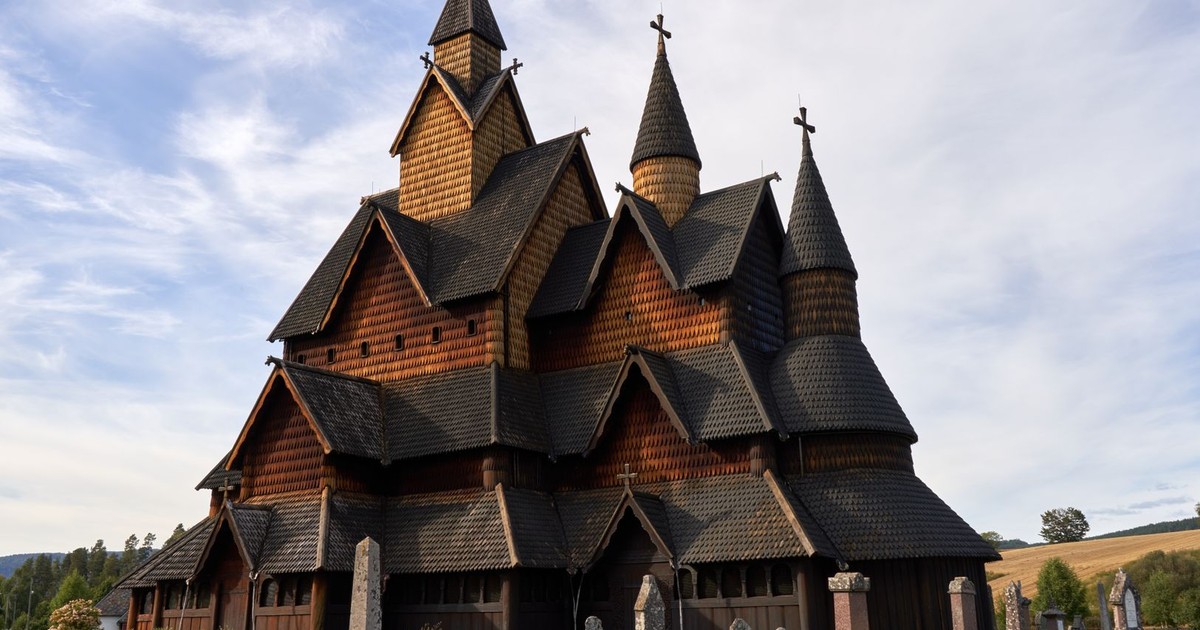
The word “Viking” conjures raiders. Rögnvald Kali Kolsson, who ruled as Earl of Orkney from around 1136 until his death in 1158, raided nobody worth mentioning. He was instead a chess player, a poet, a skier, a blacksmith, an archer, a harpist, a rower, and the man who commissioned and helped build St. Magnus Cathedral in Kirkwall – which still stands today as the most complete medieval cathedral in Scotland.
Rögnvald listed his own accomplishments in verse, in a bragging poem that names nine skills he possessed and is one of the better-preserved examples of skaldic poetry (a highly formal Norse verse tradition requiring strict meter and elaborate wordplay). He also led a crusade to the Holy Land in 1151, which veered significantly off-course into piracy, poetry competitions, and a romantic entanglement with a noblewoman in Narbonne, France. Medieval chronicles treat all of this as entirely normal for a man of his standing. He was canonized by the Catholic Church in 1192. The cathedral he built in Kirkwall continues to hold regular services.
12. Eliza Lynch – The Woman Who Claimed a Country

Eliza Lynch was born in Cork, Ireland, in 1833, married a French military officer at 15, left him, and by 1854 had arrived in Paraguay as the companion of Francisco Solano López, the man who would soon become Paraguay’s dictator. Over the following two decades, she became the de facto first lady of a country in the middle of the most destructive war in Latin American history.
The War of the Triple Alliance (1864 – 1870), in which Paraguay fought simultaneously against Brazil, Argentina, and Uruguay, killed an estimated 60 to 70 percent of Paraguay’s total population. By its end, men of military age had been almost entirely eliminated. Lynch organized military fundraising, donated her personal jewelry to the war effort, oversaw López’s household and finances, and reportedly buried both López and their eldest son with her own hands on the final day of the war when no one else remained to do it. She was subsequently expelled from Paraguay, her properties seized. She spent her remaining years in Paris and London attempting, unsuccessfully, to reclaim her assets through legal action. She died in Paris in 1886. Paraguay has variously condemned and rehabilitated her reputation across the decades since, and the debate about whether she was a ruthless opportunist or a genuinely courageous figure in an impossible situation has never quite settled.
13. Pope Joan – The Legend That Refuses to Die
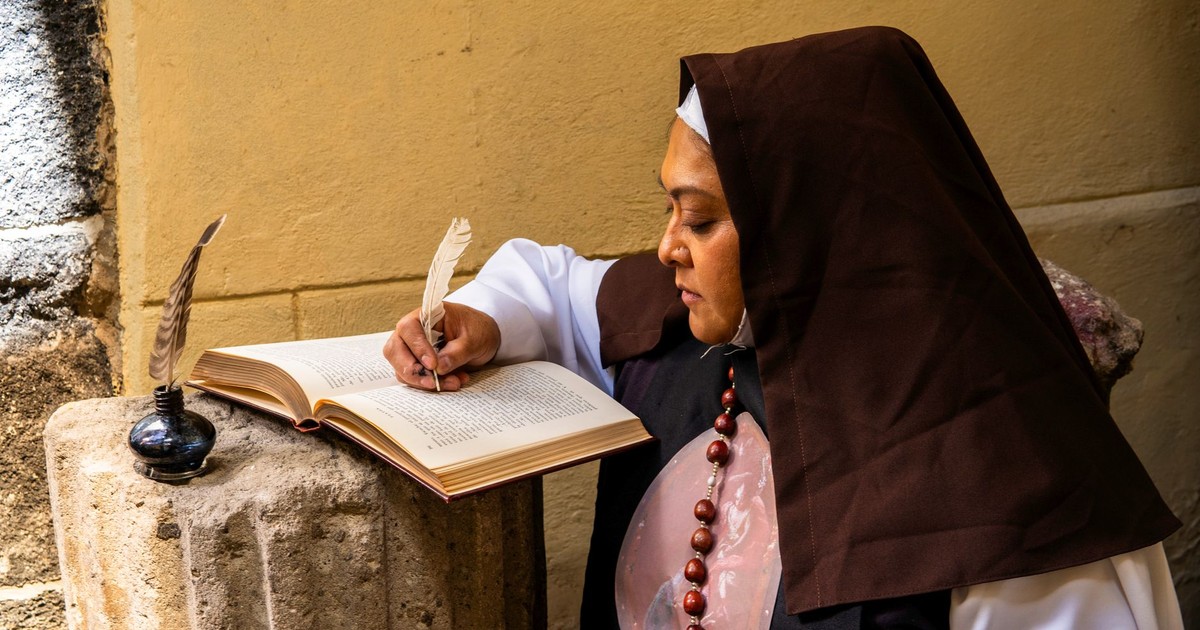
Pope Joan occupies an unusual category among obscure historical figures: not definitively proven, not definitively disproven, and stubborn enough in the historical record that serious medieval scholars have spent careers arguing about her. The legend holds that a woman, born in Germany of English parents in the 9th century, disguised herself as a man, rose through the Catholic Church’s ranks through sheer intellectual ability, and was elected Pope somewhere around 855 AD. According to the legend, she was exposed when she went into labor during a papal procession near the Colosseum.
The story appears in serious ecclesiastical chronicles from the 13th century onward, including the “Chronica Universalis Mettensis” written by Jean de Mailly around 1250, which predates the period when the legend is usually said to have been invented as anti-papal propaganda. Medieval Catholic Church authorities neither consistently denied the story nor kept any systematic record that might settle it. A chair with a hole cut in the seat, supposedly used in papal investiture ceremonies to verify the new pope’s gender, is documented in multiple medieval accounts. A thoroughgoing review of the contemporary papacy records from the relevant period reveals a gap: the reigns on either side of where Joan supposedly ruled contain chronological ambiguities that have never been fully resolved. The Catholic Church’s official position is that she did not exist. The position of a handful of historians is that the evidence is too scattered and old to be completely certain either way.
The Part Nobody Puts in the History Books
What connects these thirteen is not eccentricity for its own sake. Most of them were responding, rationally, to the world they actually lived in. MacGregor understood that colonial-era investors wanted desperately to believe in opportunity. Mary Toft understood that male physicians wanted to witness miracles. Timothy Dexter didn’t understand economics in any formal sense, but he understood that doing the unexpected thing in a predictable market sometimes just works. The ones who operated at the edges of what their societies said was possible – James Barry, Ching Shih, Eliza Lynch – didn’t get there by ignoring the rules. They got there by understanding them precisely enough to know which ones could be bent and how far.
History written around movements and milestones flattens real people into functions. Someone has to represent colonial expansion, or medical progress, or revolutionary politics. The figures who don’t fit those functions get left in footnotes, or in the kind of list that ends a pub quiz. That’s a loss. Some of the most illuminating things about any era aren’t visible in its great events. They’re visible in the strange case of the woman who gave birth to rabbits and the physicians who couldn’t stop themselves from believing her, or the 15-year-old prophet whose vision dismantled an entire people’s capacity for survival.
The bizarre and the consequential turn out, fairly often, to be the same story. What makes these lives hard to file away neatly is also what makes them worth knowing about. Some of these patterns – the powerful believing what they want to believe, the outsider succeeding by reading the room more clearly than the insiders – go back further than any single era. They don’t resolve into a lesson. They just keep turning up.
Disclaimer: This information is not intended to be a substitute for professional medical advice, diagnosis, or treatment and is for information only. Always seek the advice of your physician or another qualified health provider with any questions about your medical condition and/or current medication. Do not disregard professional medical advice or delay seeking advice or treatment because of something you have read here.
AI Disclaimer: This article was created with the assistance of AI tools and reviewed by a human editor.