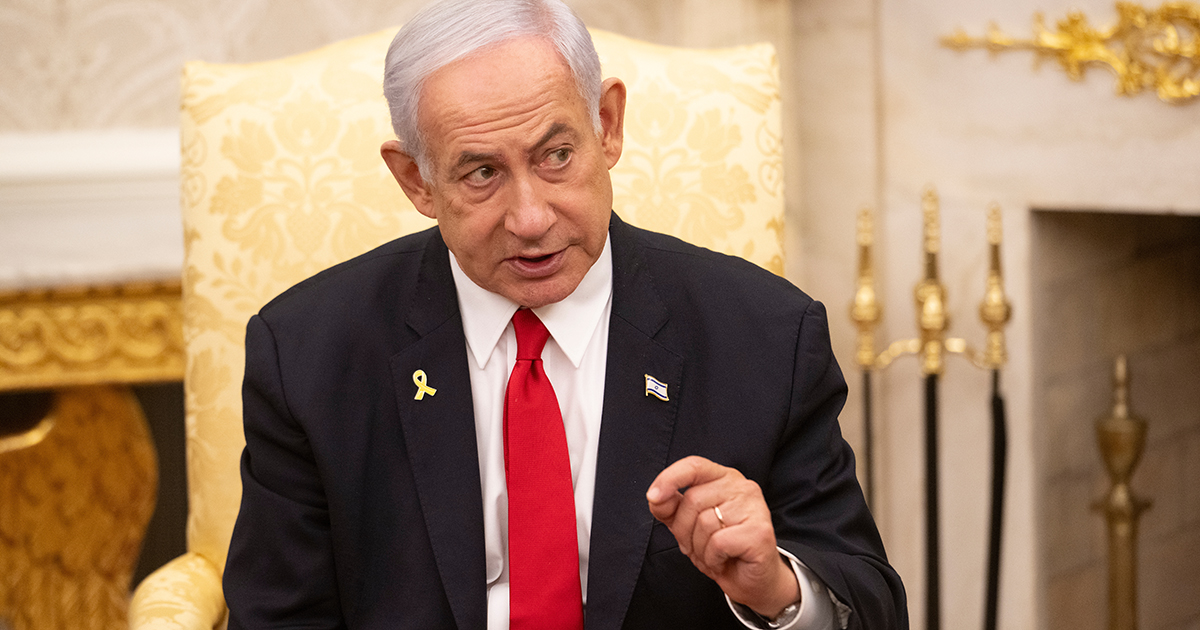

Vance and Netanyahu held a private conversation about their differences in a one-on-one meeting in Washington on Tuesday evening, according to Israeli and U.S. officials. The meeting in the Oval Office earlier that day had gone well by most accounts. The session at Blair House, just the two men, was different: months of visible deterioration compressed into a single conversation with no cameras and no joint statement.
For the better part of 2026, the relationship between Vice President JD Vance and Prime Minister Benjamin Netanyahu had been coming apart in full public view, through podcast appearances, political sideswipes, and barely disguised accusations. The Blair House session was an attempt to stop doing that, or at least slow it down.
The rupture started not with any speech or interview but with the war itself, and with what Vance believed he had been told before it began.
How Vance Became the Skeptic in the Room
In the early hours of February 28, 2026, Israel and the United States launched the first stage of their military campaign on Iran, targeting key leadership, air defence capabilities, missile sites, and the IRGC Navy. The opening salvo attacked a leadership meeting in Tehran that included Supreme Leader Ali Khamenei, Iran’s defence minister, the chief of staff of the armed forces, and the IRGC commander. All were killed in the attack.
The campaign had been framed as targeted, decisive, and likely to produce regime change. In a tense phone call in March, Vance pointed out to Netanyahu that several of his predictions about the war had proved far too optimistic, particularly the prospect of a popular uprising toppling the regime. According to a U.S. source, Netanyahu had sold the campaign to the president as easy, with regime change being far likelier than it turned out to be. Vance was clear-eyed about those statements.
From the start of the war, Vance was the most Netanyahu-skeptical voice in Trump’s inner circle. As the conflict dragged on, he grew increasingly critical of the Israeli prime minister and took on a larger role in war policy and Iran negotiations.
The Deal Netanyahu Hoped Would Die

The memorandum of understanding, signed on June 17, 2026, between President Trump and Iranian President Masoud Pezeshkian, was meant to permanently end hostilities and establish a framework for a comprehensive agreement over the following 60 days. Getting to that signature had been Vance’s project. Netanyahu opposed the agreement but didn’t come out against it publicly, hoping it would collapse on its own. It did, several weeks later.
While Netanyahu was waiting for the deal to fall apart, Vance had reached his own conclusion about what was happening behind the scenes. Vance believed Netanyahu was deploying his associates and allies in the pro-Netanyahu media in Israel and the U.S. to attack him and undermine him politically. Netanyahu, for his part, was unhappy about Vance’s public criticism, including the vice president’s accusations that the Israeli leader had stoked opposition to the MOU and had been insufficiently loyal to President Trump.
A Warning Dressed as Advice

The tensions broke into the open in June. Vance issued a blunt public warning to members of the Israeli government who were attacking the deal with Iran. If he was in the cabinet of the Israeli government, he said, he might not be attacking the only powerful ally that Israel had anywhere left in the entire world. Netanyahu pushed back, telling reporters Israel had many friends. In Jerusalem, officials read the comment as an implied threat of a weapons embargo from someone who was supposed to be on their side.
Then came the Joe Rogan appearance. Vance spoke on Joe Rogan’s podcast, published July 15, 2026, where he downplayed Israel’s alleged political influence on U.S. policies in the Iran war while making unusually direct accusations. Vance defended the deal the U.S. reached to end the war with Iran, adding that he knew beyond a shadow of a doubt that there had been people within the Israeli government trying to shift U.S. policy away from the deal because they wanted to continue the military campaign.
Vance told Rogan there was a literal foreign influence campaign being funded to tank the deal he was pursuing, citing a report published by Time Magazine which said a former Trump campaign manager was hired on behalf of Israel to run a digital campaign to influence U.S. views of Israel and the Iran war.
The Rogan interview generated particular alarm among Israeli officials and American commentators. Vance had been openly critical of Israel, including accusing Netanyahu’s government of trying to undermine U.S. talks with Iran and even floating conspiracy theories of Israeli intelligence ties with the late sex offender Jeffrey Epstein.
What the July 28-29 Washington Visit Was Really About
Netanyahu’s trip to Washington at the end of July carried weight beyond any single meeting. The Israeli prime minister had seen backing for the Iran war fall at home, and support for his government’s Gaza campaign plummet in the United States. Netanyahu, who leads the most right-wing government in his country’s history, also faces elections in October.
The July 28 Oval Office meeting between Netanyahu and Trump was also attended by Vance and Pete Hegseth, as well as Secretary of State Marco Rubio and special envoy Steve Witkoff. Netanyahu called the meeting in the Oval Office very good, adding it was one of the best conversations he had ever had with the President of the United States. Still, the atmospherics around the visit were different from previous ones. Netanyahu entered through the West Wing without cameras, and the images released afterward were not the extended one-on-one the two men had shared in easier times.
That evening came the Blair House session with Vance. No joint statement. No photo opportunity. A senior Israeli official said Netanyahu spoke to Vance about his recent criticism of the Israeli government and Israel’s standing among Republicans. The conversation was frank and candid, the Israeli official said. A U.S. official confirmed that characterization: the conversation was direct.
For his part, Netanyahu raised something broader than just Vance’s recent comments. His concern was not only about the specific accusations Vance had leveled, but about what those accusations were doing to Israel’s political standing inside the Republican Party it has long depended on.
What This Means for the Alliance

The way Vance spoke about Israel on Rogan’s podcast carried an unmistakable echo of how he and Trump had addressed Ukrainian President Volodymyr Zelensky in the Oval Office the previous year, with the same transactional framing, the same implication that gratitude was owed and not being paid. For decades, the U.S.-Israel relationship operated on the assumption that it sat in a different category from ordinary alliances, not subject to the same pressures France or the UK might face. Vance, through his public statements in 2026, has argued the opposite: that Israel is an ally like any other, entitled to no special immunity from American frustration when the two countries’ interests diverge.
A second U.S. official described the Blair House talks as cordial and productive, covering Middle Eastern developments, with the leaders agreeing to sustain collaboration on common strategic goals. The official emphasized that the engagement was not adversarial and that Netanyahu and Vance retain a functional working partnership despite recent friction. Both sides had obvious reasons to want that framing. Netanyahu, facing an October election and trailing in the polls, needed to return home with something that looked like stability in the American relationship. Vance, whose 2028 ambitions are well understood in Washington, had his own reasons not to be seen as having permanently torched a relationship with one of America’s closest partners.
Where That Leaves Them
The Iran memorandum of understanding that Vance defended so publicly has already collapsed. The military conflict it was meant to end remains unresolved. Netanyahu privately hoped the deal would fail, and watched it do exactly that, but without the clarity or the victory that was supposed to follow.
These disagreements go back further than the war does. Vance challenged Netanyahu’s prewar assumptions before the first strike was launched. Netanyahu’s political survival depends on an American relationship that his country’s most powerful ally is now treating as negotiable. Neither of those underlying tensions was resolved over an evening at Blair House.
Disclaimer: This information is not intended to be a substitute for professional medical advice, diagnosis, or treatment and is for information only. Always seek the advice of your physician or another qualified health provider with any questions about your medical condition and/or current medication. Do not disregard professional medical advice or delay seeking advice or treatment because of something you have read here.
AI Disclaimer: This article was created with the assistance of AI tools and reviewed by a human editor.