
On October 4, 1957, a beach ball-sized metal sphere beeped its way into orbit, and the United States panicked. The Soviet Union had launched Sputnik, the world’s first artificial satellite, and the message it sent back to Earth wasn’t a transmission. It was a dare. Within a year, America had created an entirely new federal agency to answer it.
That agency has since put 12 humans on the Moon, sent probes beyond the edge of the solar system, renamed its own headquarters to honor a woman who wasn’t allowed to use the same bathroom as her white colleagues, and apparently shown a 1998 disaster movie to new recruits as a training exercise in how not to do science. The range spans from geopolitical panic to human dignity to genuinely strange institutional quirks, and that’s before you get to the rockets.
Sixty-eight years of history don’t compress neatly. What follows covers 30 of the most significant, surprising, and underappreciated chapters in the story of an agency that has defined what human beings are capable of when curiosity gets properly funded.
1. NASA Was Born Out of Panic
When the Soviet Union launched Sputnik in 1957, the Space Race exploded as the U.S. and Soviet Union competed to show their dominance in the technology and military spheres. The response inside the U.S. government was fast and urgent. Congressional hearings began in 1957, and President Eisenhower formed the President’s Scientific Advisory Committee. In February 1958, it recommended a civilian space agency be established; by April, Eisenhower had asked Congress to pass legislation to that end.
On July 29, 1958, President Eisenhower signed the National Aeronautics and Space Act of 1958, establishing the National Aeronautics and Space Administration. The decision to make it a civilian agency rather than a military one was deliberate: the administration wanted to position American space exploration as science, not warfare.
The agency officially opened for business on October 1 at its first headquarters at the Dolley Madison House in Washington, D.C. From those relatively modest beginnings in a historic townhouse, NASA would go on to manage one of the most extraordinary engineering achievements in human history.
2. NASA Didn’t Start From Scratch

NASA didn’t emerge from nothing. The fledgling agency absorbed the earlier National Advisory Committee for Aeronautics, known as NACA, which was a U.S. federal agency founded on March 3, 1915, to undertake, promote, and institutionalize aeronautical research.
When NASA began operations on October 1, 1958, it absorbed the 46-year-old NACA intact: its 8,000 employees, an annual budget of $100 million, three major research laboratories, and two small test facilities. That transfer of people and infrastructure gave the new agency an immediate, experienced foundation to build on.
Elements of the Army Ballistic Missile Agency and the United States Naval Research Laboratory were also incorporated into NASA. From day one, it was drawing on the best talent the country had been accumulating for decades.
3. NACA Was Itself Created to Catch Up
NACA’s origin story mirrors NASA’s almost exactly. Congress established NACA in 1915 to catch up with Europe’s aircraft innovations. After the Wright Brothers’ 1903 breakthrough, American aviation leadership had slipped as European nations poured resources into the new technology.
The National Advisory Committee for Aeronautics began in 1915 as an unpaid advisory committee which met periodically to coordinate U.S. aeronautical research, but evolved into an independent research institution with its own engineers and facilities.
The 12-member committee was small and unsalaried, with a budget of only $5,000. Within a decade, the U.S. was a leading force in aeronautics again. That trajectory, a scrappy start followed by outsized results, would repeat itself when NACA became NASA.
4. Orville Wright Sat on the NACA Committee
The direct link between the Wright Brothers and NASA is more literal than most people realize. The National Advisory Committee for Aeronautics was formed on March 3, 1915, with a charter to supervise and direct the scientific study of the problems of flight. Orville Wright served as one of its members.
The same man who made the first powered flight in 1903 helped shape the organization that would, 55 years later, become the agency responsible for sending humans to the Moon. That’s a span of history compressed into a single career.
Throughout and beyond World War II, the NACA developed or helped develop many aeronautical breakthroughs still used today, from engine cowlings to retractable landing gear, and jet engine compressors and turbines. The institutional knowledge didn’t evaporate when the nameplate changed.
5. NASA’s First Headquarters Was a Historic Mansion
The Dolley Madison House on Lafayette Square in Washington, D.C., served as the first headquarters of the new space agency until 1961. The building, named for the wife of President James Madison, had been a Washington landmark long before anyone dreamed of putting a person in orbit.
In April 1959, NASA introduced the seven Mercury astronauts to the world at an event in the house’s ballroom. The announcement that would define a generation happened not in a government auditorium or a press stadium, but in the ballroom of a nineteenth-century mansion.
It’s one of those details that captures the improvised, optimistic energy of NASA’s early years: a very new idea being unveiled in a very old room.
6. The First Administrator Was a University President
T. Keith Glennan and Hugh L. Dryden were sworn in as NASA’s first administrator and deputy administrator, respectively. Glennan wasn’t a scientist or a general. President Eisenhower nominated T. Keith Glennan, president of Case Institute of Technology in Cleveland, Ohio, and Hugh L. Dryden, director of NACA, to be NASA Administrator and Deputy Administrator, respectively.
Glennan served until 1961, Dryden until 1965. Their pairing was deliberate: an administrator from outside the agency alongside a technical director who had built his career inside NACA. Eisenhower wanted leadership that could manage politically while retaining scientific credibility.
7. NASA Became Operational the Same Day NACA Closed

The transition between the two agencies happened on a single date. NACA was a U.S. federal agency founded on March 3, 1915. On October 1, 1958, the agency was dissolved, and its assets and personnel formed the core of the newly created National Aeronautics and Space Administration.
There was no gap, no awkward handover period, no months of institutional limbo. One agency ended and another began on the same morning. The same engineers who showed up for work on September 30, 1958 as NACA employees arrived the next day as NASA employees.
Within days of opening, NASA began work on America’s first human spaceflight program. The pace tells you everything about what it felt like to be inside that agency in October 1958.
8. NASA Absorbed Three Major Research Laboratories on Day One
The physical infrastructure NASA inherited was considerable. NASA absorbed three NACA research laboratories: Langley Aeronautical Laboratory in Hampton, Virginia; Ames Aeronautical Laboratory in Mountain View, California; and Lewis Flight Propulsion Laboratory in Cleveland, Ohio, as well as elements of the Army Ballistic Missile Agency in Huntsville, Alabama, and the Naval Research Laboratory in Washington, D.C.
In December 1958, NASA gained control of the Jet Propulsion Laboratory in Pasadena, California, a contractor facility operated by the California Institute of Technology. JPL, as it’s known today, would go on to manage some of the most significant unmanned missions in NASA’s history, including the Mars rovers.
The combined infrastructure gave NASA, in its first few months of existence, research capacity that most nations’ space programs still don’t match.
9. Sputnik Wasn’t Just a Political Crisis, It Was a Technical Humiliation
The significance of Sputnik wasn’t only symbolic. Following the Soviet Union’s launch of Sputnik, the world’s first artificial satellite on October 4, 1957, the United States responded with the creation of a new agency to oversee the nation’s civilian space program. After months of congressional hearings spearheaded by Senate Majority Leader Lyndon B. Johnson, the U.S. Congress passed the National Aeronautics and Space Act of 1958 on July 16, 1958.
The hearings led by Johnson were pointed: how had the country that built the atomic bomb failed to launch a satellite before a communist rival? The answer was fragmentation, too many agencies, no central coordination, no shared urgency.
President Eisenhower felt growing pressure from then Senator Lyndon B. Johnson, whom the Johnson Space Center was later named after, and other members of Congress to establish a new space agency. The naming of that center after Johnson is its own small acknowledgment of the political labor that made the whole enterprise possible.
10. The Jet Propulsion Laboratory Predates NASA
JPL’s existence has a stranger origin than most people know. The lab was founded in 1936 by a group of Caltech graduate students who were passionate about rocketry. They were nicknamed the “Suicide Squad” because their experiments had a habit of going catastrophically wrong. By the time NASA was created, JPL had been running for more than two decades.
In December 1958, NASA gained control of the Jet Propulsion Laboratory in Pasadena, California, a contractor facility operated by the California Institute of Technology. The arrangement, where Caltech operates JPL under a NASA contract, has remained in place ever since. JPL today manages many of NASA’s most complex deep-space missions, including the Mars Perseverance rover and the Voyager probes.
It is a reminder that some of NASA’s most important work is done by people who are technically not NASA employees at all.
11. Project Mercury Began Less Than a Week After NASA Opened
Within days of opening, NASA began work on America’s first human spaceflight program. Project Mercury, the effort to put an American in orbit, launched almost immediately after the agency turned the lights on. The first group of astronaut candidates was being evaluated within the year.
John Glenn was selected to be one of the Mercury Seven, NASA’s inaugural class of astronauts, in 1959. That original cohort of seven military test pilots became national celebrities before any of them had left the ground, a sign of how desperately the country needed space heroes to rival the Soviet cosmonauts.
Glenn, of course, would go on to become the first American to orbit the Earth in February 1962 and, decades later, the oldest person to fly in space when he returned to orbit aboard the Space Shuttle Discovery in 1998 at age 77.
12. The Apollo Astronauts Couldn’t Get Life Insurance
One of the stranger financial realities of the Apollo era concerns what the astronauts did when no insurance company would cover them. “It was driven by the fact that, given the nature of the astronauts’ livelihood, they were not able to secure much life insurance,” according to collector and expert Howard C. Weinberger.
The Apollo 11 mission was a dangerous endeavor that put the crew’s lives at risk. Aware of the risks, the crew of the historic moon mission signed autographs as a way to provide for their families in case of disaster. Standard life insurance policies were extremely expensive for interstellar missions and would not have adequately supported the astronauts’ families.
In the weeks before the launch, all three men autographed hundreds of envelopes, each with a special design commemorating the mission and a postage stamp celebrating a previous Apollo mission. These envelopes were to be postmarked on launch day or Moon-landing day to increase their value as collectibles. If the astronauts didn’t return, their families could sell these “insurance covers” to stay afloat.
13. The Insurance Autographs Sold for Tens of Thousands of Dollars Decades Later
The Apollo 11 crew returned unharmed, so these “insurance policies” weren’t sold. The crews of Apollo 12 through 16 continued this tradition until 1972, though all of those crafts also returned safely.
Then something unexpected happened. In the 1990s, covers from the Apollo 11 mission began appearing in memorabilia auctions and commanded incredible value, with some selling for tens of thousands of dollars. The objects that were created out of financial desperation became, by the logic of the collector market, extraordinarily valuable precisely because of the story behind them.
The postmark is a time-stamp that captures a moment of uncertainty, when no one knew if the man who signed it would be alive in a few days. That’s what collectors were paying for: not the autograph but the weight of what it meant when it was signed.
14. Twelve Men Have Walked on the Moon
From Apollo 11 in July 1969 through Apollo 17 in December 1972, six missions successfully landed on the lunar surface. Each carried two astronauts who descended to the Moon while a third remained in orbit. The total count of humans who have walked on the Moon stands at 12.
Neil Armstrong and Buzz Aldrin were first, on July 20, 1969. The last humans to walk on the Moon were Harrison Schmitt and Eugene Cernan during Apollo 17. Cernan was the final person to step back into the lunar module before it lifted off, making him, technically, the last human to walk on the Moon, a record that stood for more than 50 years and counting as of 2026, with NASA’s Artemis program working to change that.
Apollo 13, of course, never landed. An oxygen tank rupture on the way to the Moon forced the crew to abort the landing and return home using the lunar module as a lifeboat, one of the most dramatic improvised survival stories in the history of spaceflight.
15. NASA Renamed Its Headquarters After a Woman Who Wasn’t Allowed to Use the Same Facilities as White Colleagues
NASA named its Washington, D.C., headquarters for Mary W. Jackson, the first Black woman engineer at the space agency, whose role and contributions were celebrated in the movie “Hidden Figures.”
Jackson, a native of Hampton, Virginia, was recruited by the agency that preceded NASA, the National Advisory Committee for Aeronautics, in 1951, and worked in the West Area Computing Unit, which was segregated. The computing unit where she worked was separated by race. The same woman who had to fight for access to an engineering training class would eventually have the agency’s headquarters named after her.
In June 2020, NASA renamed its D.C. headquarters to The Mary W. Jackson NASA Headquarters. The building sits on Hidden Figures Way in Washington, D.C., a street name that tells its own story about what recognition, when it finally arrives, can look like.
16. The “Hidden Figures” Were Called Human Computers
Mary Jackson was one of a small group of African American women who worked as aeronautical engineers, called “human computers,” at NASA during the Space Age. The term referred to people, overwhelmingly women, who performed complex mathematical calculations by hand before electronic computers became standard. Their work underpinned mission trajectories, orbital mechanics, and reentry calculations.
The story of Jackson and her NASA colleagues Katherine G. Johnson and Dorothy Johnson Vaughan, who calculated flight trajectories for Project Mercury and the Apollo program in the 1960s, made it to the big screen in 2016 in Hidden Figures. The film was nominated for the Academy Award for Best Picture.
Katherine Johnson, whose orbital calculations John Glenn specifically asked to be checked before his 1962 Mercury flight, became one of the most celebrated figures in NASA’s history. NASA named a computational research facility after her in 2017, three years before she died at age 101.
17. NASA’s Seal Was Approved by President Eisenhower in 1959

A NASA seal was approved by President Eisenhower in 1959. The design has evolved over the decades, but the core identity of the agency, the circular emblem, the orbital path, the stars, was established in the agency’s first year of operation.
The “meatball,” as NASA employees call the original round insignia, has become one of the most recognized logos in the world. A second logo introduced in 1975, a stylized red letterform known inside the agency as the “worm,” was retired in 1992 before being reinstated in 2020 for use on specific programs.
Few government agencies have had as contentious a relationship with their own logo. The internal debate over “meatball vs. worm” is, improbably, a real and recurring conversation in agency culture.
18. Armageddon Is Used as a Training Tool for New Employees
The 1998 film Armageddon, directed by Michael Bay and starring Bruce Willis as an oil driller sent to detonate a nuclear bomb inside an asteroid, is not exactly a textbook of aerospace engineering. NASA knows this. According to widely reported accounts, the film is screened for new NASA employees, who are tasked with identifying every scientific inaccuracy in it. The list is reportedly long, estimates put it at over 160 errors.
This practice functions less as film criticism and more as a demonstration of the gap between Hollywood’s version of space and the real thing. When an audience that includes actual rocket engineers and mission scientists watches the movie together, the exercise becomes a shared ritual that reinforces technical standards through the humor of collective disbelief.
The film remains, despite everything, one of NASA’s favorite recruitment tools, not for its accuracy, but for the enthusiasm about space it seems to generate in the general public.
19. Voyager 1 Took 33 Years to Reach the Edge of the Solar System
NASA’s Voyager 1 probe launched in September 1977. Its primary mission was to fly past Jupiter and Saturn, returning detailed images and data from both gas giants. It completed those objectives by 1980. What happened next was unplanned.
Voyager 1 continued traveling outward, and scientists realized its trajectory would take it beyond the heliosphere, the bubble of solar wind and magnetic fields that surrounds our solar system. In 2012, it crossed that boundary and became the first human-made object to enter interstellar space, having traveled continuously for 35 years. At the time it crossed over, it was more than 11 billion miles from the Sun.
As of 2026, Voyager 1 is still operational, still transmitting data, and is the most distant human-made object in existence. It is so far away that a radio signal from it, traveling at the speed of light, takes more than 22 hours to reach Earth.
20. The Hubble Space Telescope Was Launched With a Flawed Mirror
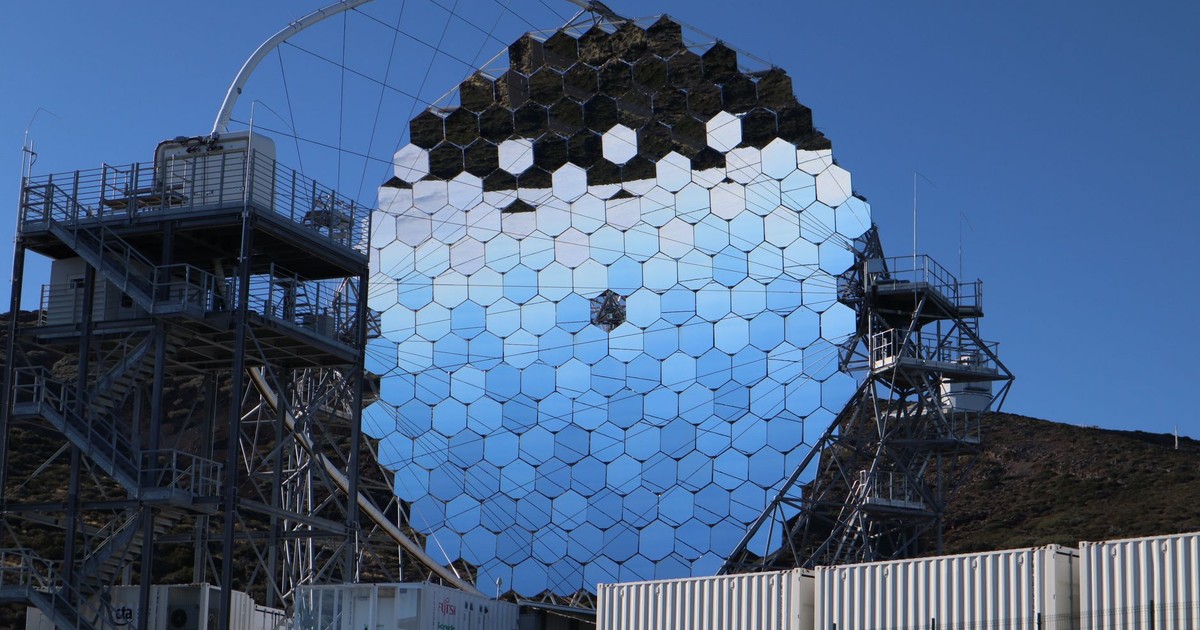
When the Hubble Space Telescope launched in April 1990, after years of development and a cost of $1.5 billion, its primary mirror had been ground to the wrong shape. The error was tiny, about the width of a human hair, but in optics, tiny is catastrophic. The first images it returned were blurry.
NASA’s response was an audacious repair mission. In December 1993, astronauts aboard the Space Shuttle Endeavour performed a series of spacewalks to install corrective optics, essentially glasses for a telescope in orbit. It worked. Hubble went on to produce some of the most important astronomical images ever taken, including the Hubble Deep Field, which revealed thousands of previously unknown galaxies in a patch of sky that appeared empty to the naked eye.
The Hubble story is sometimes told as a NASA failure. It’s more accurately a NASA recovery story, an example of what the agency does when things go wrong in a very public way.
21. The Space Shuttle Was the First Reusable Spacecraft
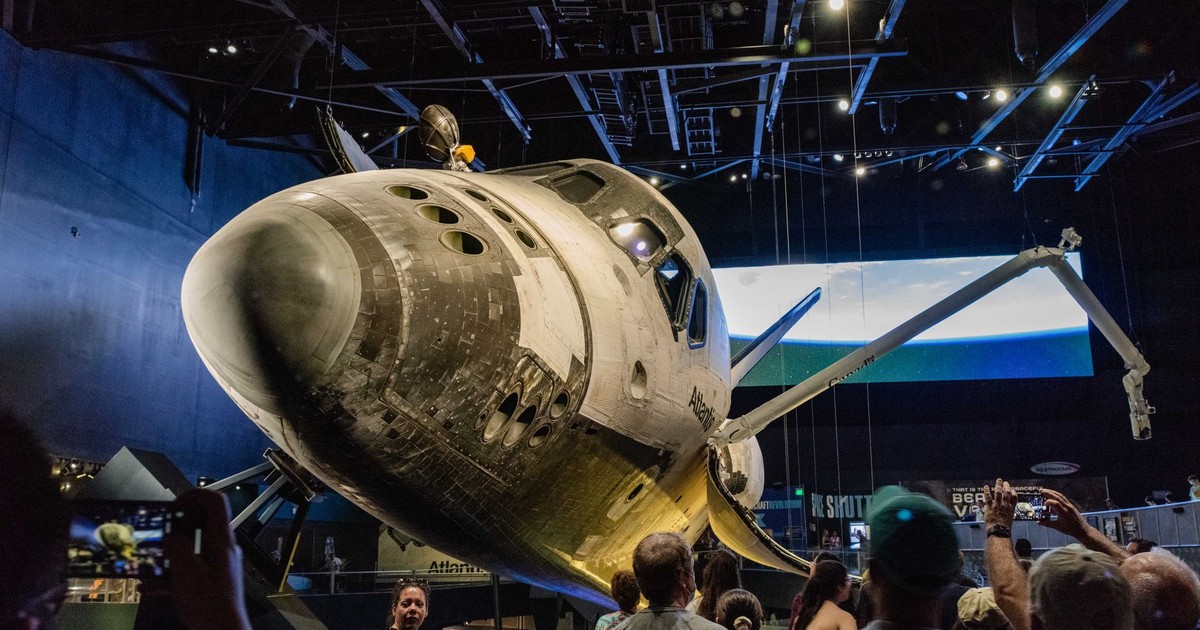
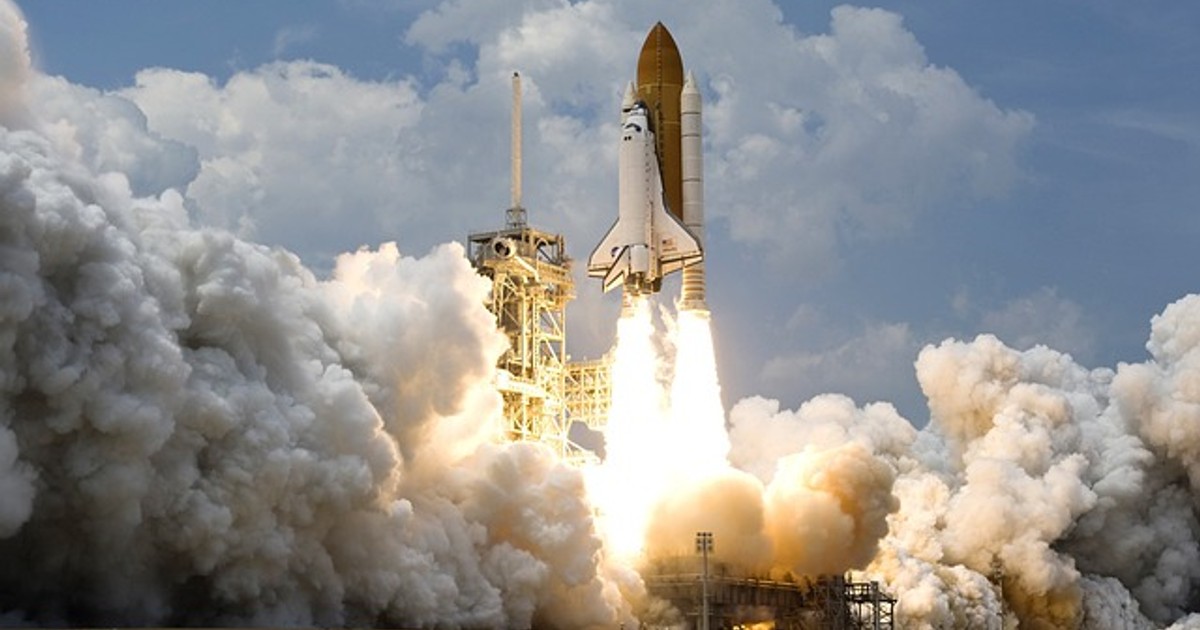
Every spacecraft before the Space Shuttle was expendable, launched once, then discarded. The Shuttle, which flew its first orbital mission in April 1981, was designed to be reused up to 100 times per orbiter. It could launch like a rocket, deploy and retrieve satellites, carry a crew of up to eight, and then glide back to land on a runway like an aircraft.
Over 30 years of the Shuttle program, five orbiters completed 135 missions. The program also suffered two catastrophic losses: Challenger in 1986 and Columbia in 2003. Both disasters killed all seven crew members aboard and grounded the Shuttle fleet for years.
The Shuttle’s final flight was in July 2011. Its retirement left the United States without its own crewed launch capability for nine years, until SpaceX’s Crew Dragon carried NASA astronauts to the International Space Station in 2020.
22. The International Space Station Has Been Continuously Inhabited Since November 2000
The International Space Station, assembled in orbit over more than a decade beginning in 1998, has had at least one human being aboard every day since November 2, 2000. That unbroken streak of human presence in space is now more than 25 years old and counting.
The ISS is the largest structure humans have ever assembled in space, stretching 356 feet across, roughly the length of an American football field including the end zones. It orbits Earth at approximately 17,500 miles per hour, completing about 16 orbits every 24 hours. Astronauts aboard see roughly 16 sunrises and sunsets every day.
The station is a collaboration between NASA, Russia’s Roscosmos, the European Space Agency, the Japan Aerospace Exploration Agency, and the Canadian Space Agency, one of the most sustained international scientific cooperations in history.
23. NASA Has Landed Rovers on Mars Six Times
NASA has successfully delivered six rovers to the Martian surface: Sojourner in 1997, Spirit and Opportunity in 2004, Curiosity in 2012, and Perseverance in 2021. Each mission built on the one before it. Curiosity, which landed in Gale Crater, has been operating for more than 13 years and has driven more than 20 miles across the Martian surface.
Perseverance, which landed in Jezero Crater in February 2021, carried the Ingenuity helicopter, the first powered, controlled flight on another planet. Ingenuity was designed for five flights. It completed 72 before communication was lost in January 2024. Perseverance is also collecting rock samples that are intended to be returned to Earth by a future mission.
Every rover that has landed on Mars still rests there. None have been recovered. The hardware we’ve left on another planet is, in a certain sense, the most remote museum in existence.
24. NASA’s Apollo Guidance Computer Had Less Power Than a Modern Pocket Calculator
The computer that guided Apollo 11 to the Moon and back had 4 kilobytes of RAM and operated at roughly 0.043 MHz. A modern smartphone has hundreds of billions of times more processing power. The engineers who wrote the software for the Apollo Guidance Computer did so under extraordinary constraints, hand-weaving ferrite core memory in what amounted to a physical record of every line of code.
Margaret Hamilton, the software engineer who led the team that developed the flight software, coined the term “software engineering” during the Apollo project. When she delivered the navigation software, the printed code was taller than she was. NASA gave her the Presidential Medal of Freedom in 2016 for that work.
The achievement wasn’t just getting to the Moon. It was getting there with a computer that most people today would consider hopelessly primitive, running software that had to work perfectly the first time with no opportunity for an update.
25. NASA Invented Technology That Now Appears in Everyday Life

NASA’s engineering challenges have produced technologies that migrated into ordinary consumer life. Memory foam, originally developed to improve crash protection in aircraft seats, came from NASA research in the 1960s. Scratch-resistant lenses, the water filtration systems used in many home filters, cordless power tools (developed for the Apollo program), and several types of baby formula containing a fatty acid first researched through NASA’s closed-loop life support work all trace their origins to NASA-funded projects.
The agency’s contribution to everyday technology is often underestimated because the connection between a moon mission and a mattress isn’t obvious. But the engineering problems NASA faced, how to protect people in extreme environments, how to purify water in space, how to power tools without a wall outlet, turned out to have very direct applications on Earth.
NASA’s technology transfer program formally catalogs these spinoffs. As of 2024, the agency has documented more than 2,000 such technologies over its history.
26. The Challenger Disaster Changed How NASA Manages Risk
The Challenger disaster of January 28, 1986, remains one of the most haunting moments in space exploration history. As millions of Americans, including schoolchildren, watched the live broadcast, the Space Shuttle Challenger disintegrated just 73 seconds after liftoff.
Engineers at Morton Thiokol, the company responsible for the shuttle’s solid rocket boosters, had long been concerned about the O-ring seals used in the boosters. These seals were critical for containing hot gases during the shuttle’s launch. They were known to lose flexibility in cold temperatures. On the morning of the launch, temperatures at Cape Canaveral were unusually low, hovering around 36°F. Engineers warned NASA that the O-rings might fail, but their concerns were overridden by managers under pressure to stick to the schedule.
The Rogers Commission investigation that followed identified not just a physical failure but an organizational one, a culture in which safety concerns were systematically downplayed. That finding reshaped how NASA approaches dissent, risk communication, and the relationship between engineers and management. The lessons from Challenger are still taught in engineering ethics programs worldwide.
27. NASA Has Sent Spacecraft to Every Planet in the Solar System
As of 2026, NASA has successfully sent a spacecraft to every planet in our solar system. Mercury was visited by Mariner 10 in 1974 and later by the MESSENGER orbiter. Venus has been studied by multiple NASA probes. Mars is now home to two active rovers. Jupiter was reached by Pioneer 10 in 1973 and later studied in detail by the Galileo orbiter. Saturn was explored by Cassini, which spent 13 years in orbit before a controlled descent into the planet’s atmosphere in 2017. Uranus and Neptune were visited by Voyager 2 in the 1980s.
The New Horizons mission, which launched in 2006, reached Pluto in July 2015 and returned the first detailed images of the dwarf planet’s surface, revealing a nitrogen-ice plain in the shape of a heart that became one of the most shared space images of the decade. New Horizons has since continued deeper into the Kuiper Belt, the ring of icy bodies at the outer edge of the solar system.
The fact that a single space agency has made contact with every planet in our solar system, within the span of a single human lifetime, is a detail that tends to be absorbed too quickly.
28. The NASA Budget Is a Fraction of What Most People Think
Public polling consistently shows that Americans believe NASA receives around 20-25% of the federal budget. The actual figure is less than half a percent. In fiscal year 2024, NASA’s budget was approximately $24.8 billion, substantial in absolute terms, but modest relative to the scope of what the agency attempts.
At its peak during the Apollo era, NASA’s budget reached roughly 4.4% of the total federal budget in 1966. That level of investment, in today’s terms, would represent a figure several times larger than what the agency currently receives. The Moon landing happened, in part, because the country was willing to spend at a scale that hasn’t been matched since.
The perception gap around NASA funding is one of the more persistent misunderstandings in American public life. The agency does more per dollar than almost any other federal program, but it also operates under resource constraints that most of its supporters don’t realize exist.
29. NASA’s Artemis Program Aims to Return Humans to the Moon
NASA’s Artemis program, named for the twin sister of Apollo in Greek mythology, is the agency’s effort to return humans to the Moon for the first time since 1972. The program’s goals go beyond simply repeating Apollo. Artemis is designed to land the first woman and the first person of color on the lunar surface and to establish a sustainable long-term human presence there.
The program has experienced repeated delays and budget pressures since its announcement. The Space Launch System rocket, developed as Artemis’s primary launch vehicle at a cost of more than $23 billion, launched successfully in November 2022 on an uncrewed test flight. As of 2026, a crewed lunar landing remains the target, with NASA working through the final stages of test missions and lunar gateway planning.
Artemis is also international in scope, with the Artemis Accords, a set of norms and principles for peaceful space exploration, signed by more than 40 countries as of 2025.
30. NASA’s History Is Still Being Written
In its 68 years of operation, NASA has launched more than 1,000 missions, employed hundreds of thousands of people, and fundamentally changed how humanity understands its place in the universe. The Voyager probes are still transmitting. Curiosity is still driving across Mars. The James Webb Space Telescope, which launched in December 2021, is returning images of galaxies that formed fewer than 300 million years after the Big Bang, looking back in time further than any instrument before it.
The agency has survived political shifts, budget cuts, disasters, and the loss of 17 astronauts across three major accidents. It has reinvented itself repeatedly, from the race to the Moon to the Shuttle era to commercial partnerships with companies like SpaceX and Boeing that have changed what government space programs even look like.
The NASA history facts that tend to get remembered are the big, cinematic ones: the Moon landing, the Challenger explosion, the first spacewalk. But the details, the 12-member unsalaried committee with $5,000 to change American aviation, the woman calculating trajectories in a segregated computing pool, the astronauts signing envelopes in quarantine, tend to say more about what the agency actually is and where it came from.
What Endures
Space exploration has always been, at its core, a bet on the future placed by people who knew they might not live to see the payoff. The engineers who built the Apollo Guidance Computer knew they were solving problems for missions they’d never fly. The human computers who calculated orbital trajectories did so knowing their names would be absent from the mission reports. The astronauts who signed those envelopes in 1969 did it because they were honest about the odds.
That combination, clear-eyed realism about the risks alongside an almost irrational commitment to going forward anyway, is the thing that runs through all 68 years of NASA history facts, from the $5,000 NACA committee in 1915 to the James Webb images arriving from the edge of the observable universe. The agency’s story isn’t a triumph narrative. It’s something more honest than that: a record of what happens when a country decides that certain questions are worth whatever it costs to answer them.
Disclaimer: This information is not intended to be a substitute for professional medical advice, diagnosis, or treatment and is for information only. Always seek the advice of your physician or another qualified health provider with any questions about your medical condition and/or current medication. Do not disregard professional medical advice or delay seeking advice or treatment because of something you have read here.
AI Disclaimer: This article was created with the assistance of AI tools and reviewed by a human editor.