

The word “groovy” didn’t outlast the 1970s, and nobody misses it. But some language shifts do outlast their generation, sticking around long enough to follow millennial women into their thirties and forties, into job interviews and family dinners, and into the ears of older colleagues and parents who don’t quite know what to do with what they’re hearing. The judgment is rarely about the words themselves. It’s about what those words signal to someone who grew up with a different set of rules.
That gap between intent and perception is what makes millennial speech patterns genuinely interesting. The phrases below aren’t random; they cluster around a specific set of linguistic habits that emerged when one generation came of age online, absorbed the informality of texting and social media, and carried those habits wholesale into spoken conversation. To the woman using them, they feel natural, even precise. To a 65-year-old hiring manager or a baby boomer parent, some of them can land as careless, unpolished, or just hard to take seriously.
None of that makes the judgment fair. But it does make it real, and worth understanding.
Research examining language use in public Instagram accounts of women across generations found measurable differences in tone, clout, authenticity, and analytical thought between millennial, Gen X, and Gen Z women, which confirms that millennial speech isn’t just a vague cultural impression – it has a documented profile. Words like “literally,” “basic,” and “slay” all drifted far from their original definitions across generational lines, and those drifts don’t go unnoticed by the people who remember the originals.
1. Vocal Fry
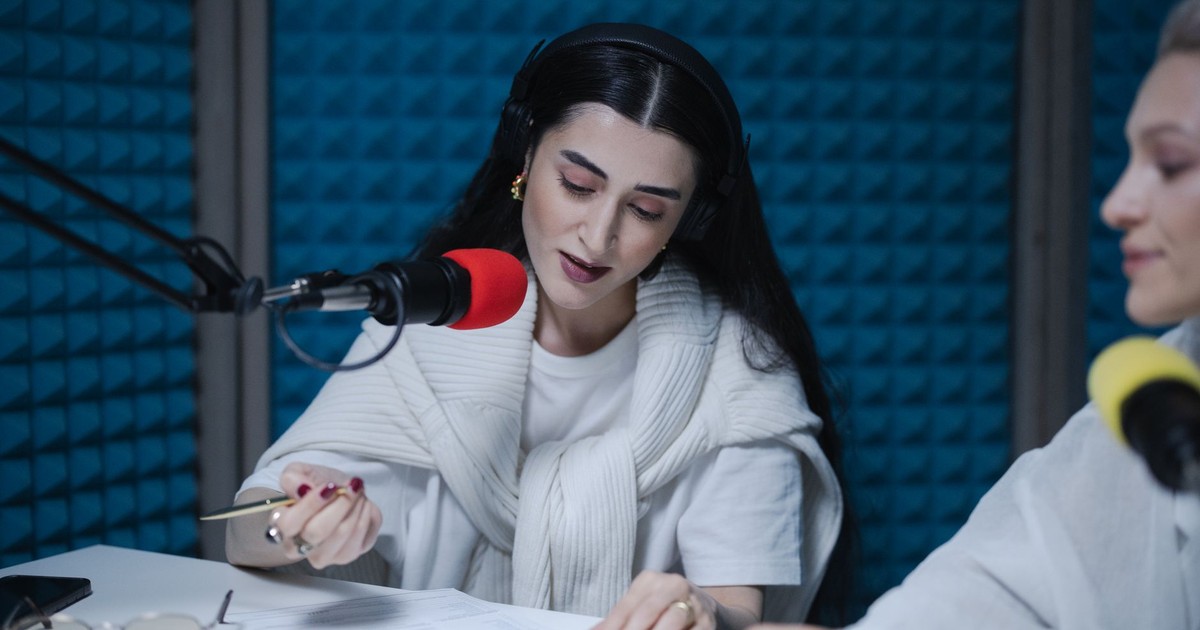
Of all the features associated with millennial speech patterns, vocal fry has attracted the most serious scientific attention, and the findings are stark. Vocal fry is that low, creaky, almost crackling quality that drops into the voice at the end of sentences – the sound that became so associated with a certain type of young American woman that it eventually earned its own cultural commentary. In a large national sample of American adults, researchers found that vocal fry is interpreted negatively: relative to a normal speaking voice, young adult female voices exhibiting vocal fry are perceived as less competent, less educated, less trustworthy, less attractive, and less hirable.
The negative perceptions of vocal fry are stronger for female voices relative to male voices, which tells you something important about how the judgment works. Men use vocal fry too, but it doesn’t follow them the same way. Women face the brunt of these judgments about language, primarily due to two patterns – uptalk and vocal fry – and although both are used by men and women, cultural conditioning has increasingly framed them as signs that women are less serious and less knowledgeable, simply because of the natural ways they speak.
The cruelest part of the vocal fry finding is that many women adopted it precisely because it lowers pitch and can project authority. Supporters of vocal fry point to its use among successful women in traditionally male-dominated industries like finance and media, suggesting it communicates seriousness, intelligence, and determination. What research found, though, is that older listeners – the very people most likely to be doing the evaluating and hiring – don’t receive it that way at all.
2. Uptalk (Ending Statements Like Questions?)

Uptalk is the habit of finishing a declarative sentence with a rising inflection, the way you’d end a question. You’re not asking anything, but your voice goes up anyway, as if you need confirmation that what you just said is acceptable. When making a statement, traditional speech patterns lower inflection at the end of a sentence. When asking a question, inflection rises. That’s not the case with uptalk, which uses a rising inflection no matter what’s being said.
Those who notice the speech pattern often perceive it as coming from someone who is hesitant, timid, or unsure of themselves. In more pronounced cases, the speaker may be perceived as less than serious, or even less than intelligent. For millennial women who grew up using uptalk as a social softener – a way to invite agreement, to keep conversation open – this perception gap can be a genuine professional liability. They’re attempting warmth and connection. Older listeners are hearing uncertainty.
Linguists often argue that uptalk serves a real communicative function: it checks in with the listener, holds conversational space, and signals inclusivity rather than dominance. Uptalk likely appeared well before it became widely noticeable in the 1950s. That doesn’t make it new or foolish. But in contexts where projecting confidence matters – a salary negotiation, a client presentation, a first impression with someone who was trained in a different era of professional speech – it can work against the speaker in ways she might not anticipate.
3. “Literally” (When Nothing Is Literal)

“Literally” may be the most argued-over word in the millennial vocabulary. To millennials, “literally” is often used to mean the complete opposite of its standard definition. While it usually means actually rather than figuratively, millennials purposefully use it in phrases like “literally dying” or “literally the worst” for dramatic effect. The word has become an intensifier, not a descriptor – a way to add weight to a feeling rather than confirm a physical fact.
To older listeners, this sounds like an error. The word means one thing, and using it to mean the opposite suggests either carelessness or poor education. Anne Curzan, an English professor whose work tracks how language evolves, has noted that what looks like chaos to older generations often has its own internal logic for younger speakers. The intensifier use of “literally” is centuries old – it appears in Jane Austen, in Dickens – but that history doesn’t help in the moment when a 60-year-old interviewer hears “I was literally dead on my feet” and registers a grammatical stumble.
Millennials created much of their language through texting and embedded it into everyday talk, and even regularly used words like “literally,” “awkward,” and “dying” took on completely new meanings within their context. The problem isn’t that the shift happened – language drifts constantly and always has. The problem is that it happened fast enough that two generations now share the same word with genuinely different definitions, and neither always realizes the other is working from a different dictionary.
4. “I Can’t Even”

“I can’t even” has no grammatical object. The sentence just stops, suspended in emotional overwhelm. That’s the point. It signals complete emotional overload – usually meaning you literally can’t function. For the millennial woman who says it, the truncation is expressive: the feeling is so large that language breaks down, and the break itself communicates the intensity. It’s a performance of being overwhelmed that works because the listener fills in what the speaker is too overcome to finish.
To a baby boomer or traditionalist, a sentence with no conclusion reads as a failure to articulate. The argument from older generations isn’t that the emotion is wrong; it’s that adult communication involves completing your thoughts. A half-sentence might work in a text thread, but when it shows up in a meeting, or a confrontation with a parent, or a professional feedback session, it can suggest that the speaker hasn’t developed the vocabulary to say what she actually means.
The normalization of this kind of English slang can be controversial when communicating with people from different age groups and cultural backgrounds, and miscommunication may occur when it’s used with people who aren’t acquainted with it. “I can’t even” is probably the clearest example: it communicates everything to people inside the generation and almost nothing concrete to people outside it.
5. “No Worries” (As a Response to “Thank You”)

“No worries” crept into American speech patterns via Australian English and landed with millennial women in particular as a breezy, casual replacement for “you’re welcome.” The intention is warmth – it sounds relaxed, unbothered, easy. But for older generations raised on “you’re welcome” as the correct response to thanks, “no worries” can read as either dismissive or sloppy.
The issue isn’t just formality. “You’re welcome” acknowledges that something was done for someone and accepts their gratitude as valid. “No worries” deflects the entire transaction, as if help were nothing worth noting. In a professional or formal context, that deflection can subtly undermine the speaker: it suggests she either doesn’t know the expected response or doesn’t consider the interaction worth honoring with precise language. Neither impression serves her well.
The phrase sits inside a broader millennial tendency toward verbal casualness in all settings, which research on generational communication suggests is genuinely perceived differently depending on the age and background of the listener. A 30-year-old colleague receives “no worries” as friendly. A 60-year-old boss might register it as a little too relaxed for the occasion.
6. “Adulting”

“Adulting” – used as a verb to describe doing ordinary grown-up things like paying a bill on time or cooking a meal from scratch – is one of the most distinctively millennial coinages in circulation. Millennial terms are unusually easy to date because they spread through platforms that kept records: “humblebrag” began as a Twitter account in 2010, and the same is true of many slang terms from that era. “Adulting” follows the same pattern: it appeared online, spread through Twitter and Tumblr, and embedded itself in everyday millennial speech.
The word is self-aware and self-deprecating, which is part of its appeal within the generation. It acknowledges that becoming an adult is harder and later-arriving than previous generations expected, and it carries that acknowledgment lightly, even humorously. Older generations tend to find millennial coinages like “adulting” genuinely confusing. “You mean you’re just doing normal life stuff?” is the reaction – and the answer is: yes, pretty much.
That gap in reaction reveals something real. To baby boomers who moved into adult responsibilities earlier and without the language to make it ironic, “adulting” can sound like a refusal to take those responsibilities seriously. As if the speaker is distancing herself from adulthood rather than inhabiting it. In a professional setting, the irony doesn’t always land; what remains is the impression of someone who finds ordinary competence remarkable.
7. “My Bad”

“My bad” as an apology is short, casual, and complete. It acknowledges an error in two words and moves on without ceremony. Millennials absorbed it from 1990s basketball culture and it settled comfortably into everyday conversation as the default low-stakes apology – you bumped into someone, you got an order wrong, you forgot to CC someone on an email. My bad.
For older generations, the brevity is the problem. An apology that runs two words and contains no actual apology word – no “sorry,” no acknowledgment of impact, no explanation – can read as insufficient, particularly in situations where something more formal is expected. A 60-year-old colleague who receives “my bad” after a significant mistake may feel the response doesn’t match the weight of the situation.
Being mindful of lexical and tonal choices when speaking in professional settings or making first impressions matters regardless of the perceived age of your conversation partner. The disconnect with “my bad” is about register: it belongs to casual speech and functions fine there. The trouble starts when it migrates into situations that call for a different level of formality, and the speaker doesn’t notice the difference or doesn’t care.
8. “Sorry Not Sorry”

“Sorry not sorry” is a phrase that does the opposite of what apologies are supposed to do. It signals defiance dressed up in the language of accountability. The speaker names the apology, then immediately withdraws it, communicating that she knows the social expectation exists and has chosen to ignore it. Within the millennial generation, it works as a kind of badge – assertive, self-aware, done with performing regret she doesn’t feel.
Outside that generation, it tends to land differently. The combination of invoking an apology and refusing to mean it can read as passive-aggressive to people who take the grammar of social gestures literally. Older generations were trained in a more direct model: either you’re sorry or you’re not, but you don’t announce both simultaneously. “Sorry not sorry” collapses that distinction in a way that reads as confusing, immature, or unnecessarily combative to someone who didn’t grow up with ironic self-presentation as a social language.
If Gen X slang traveled mostly by word of mouth, millennial slang was the first to travel by Wi-Fi. Millennials, born between 1981 and 1996, grew their vocabulary on AIM away messages, MySpace profiles, and early Twitter feeds. A good share of that lexicon was born in captions and status updates rather than conversation. “Sorry not sorry” is a perfect example: it was designed for text, where irony is legible through cultural context, and can lose that legibility entirely when spoken aloud to someone outside the cultural frame.
What This Actually Means

The word “educated” in the title of this piece deserves a careful look, because the perception isn’t really about education. It’s about familiarity. Every generation develops speech patterns that outsiders interpret as markers of something – confidence, carelessness, warmth, immaturity – and those interpretations are almost always more about the listener’s frame of reference than the speaker’s actual intelligence or credibility.
What the research makes clear is that the gap between intent and perception is real and consequential, especially for women. Research conducted on previous generations regarding vocal fry indicates that women with that speech pattern tend to be perceived more negatively than men with the same pattern across different settings. The phrases in this list are doing genuine communicative work inside the generation that uses them. The frustrating truth is that they’re doing different work outside it, and the speaker is often the last one to know.
That’s not an argument for abandoning how you talk. It’s an argument for knowing your audience – which has always been the most useful linguistic skill anyone can develop, regardless of generation.
Disclaimer: This information is not intended to be a substitute for professional medical advice, diagnosis, or treatment and is for information only. Always seek the advice of your physician or another qualified health provider with any questions about your medical condition and/or current medication. Do not disregard professional medical advice or delay seeking advice or treatment because of something you have read here.
AI Disclaimer: This article was created with the assistance of AI tools and reviewed by a human editor.