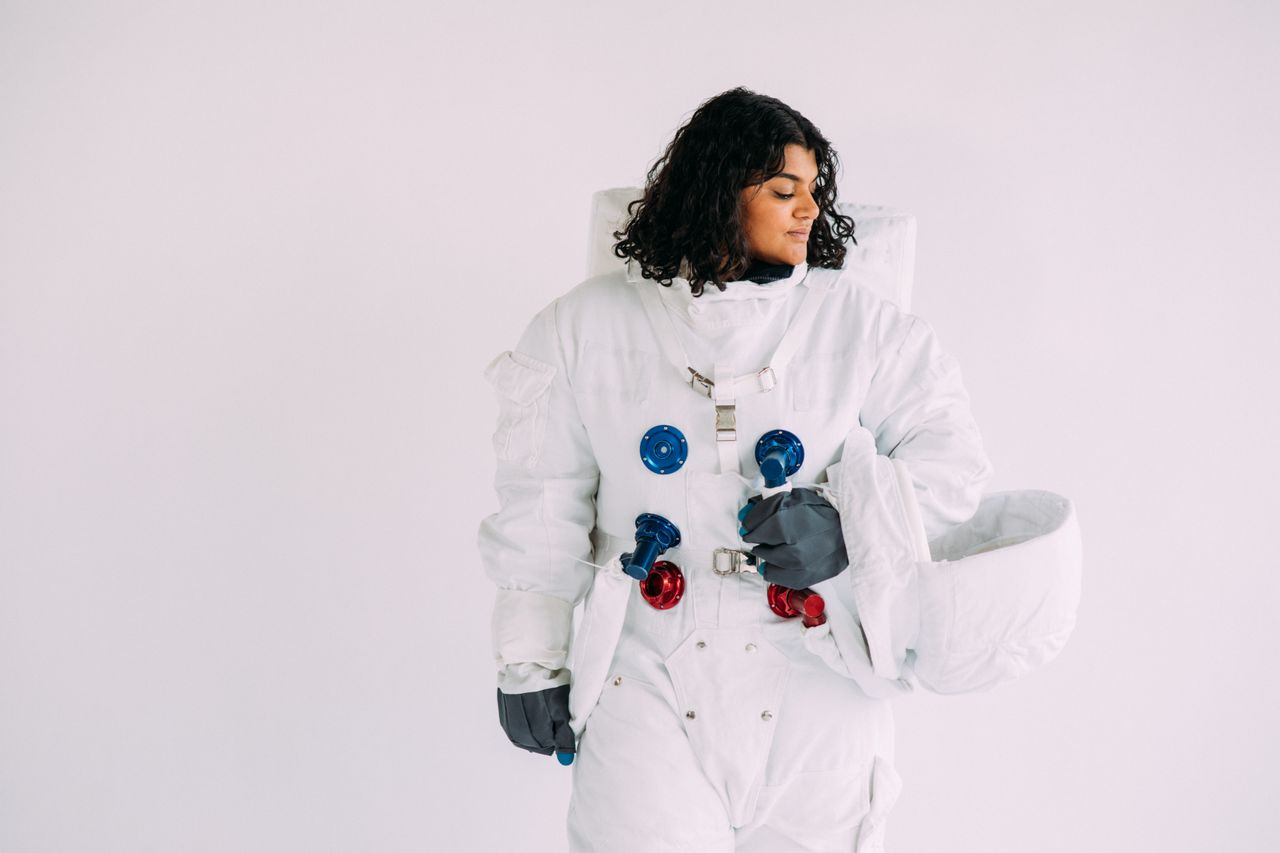

Sixty years of human spaceflight, and no one ever thought to ask what happens to a period in zero gravity. Not formally, not scientifically, not in a way that produced anything more than anecdote and educated guesswork. Women have been going to space since 1963. They’ve conducted spacewalks, commanded space stations, logged hundreds of days in orbit. And yet the biological event that affects roughly half of all humans for roughly three decades of their lives has never been the subject of a dedicated, quantitative study conducted in actual space conditions.
That absence is finally being addressed. A reproductive health nonprofit called Operation Period has announced a planned 2027 suborbital mission that will, for the first time in history, directly and quantitatively study menstruation in space. The research will focus on menstrual fluid dynamics and menstrual product performance in microgravity, with implications stretching from astronaut health protocols to reproductive medicine and chronic disease research back on Earth.
It is, by any measure, a long time coming. The conversation around menstruation in space has always been treated as a footnote, a logistics problem to be managed rather than a scientific question worth answering. Operation Period-01 sets out to change that.
The Mission: What OP-01 Will Actually Study About Menstruation in Space
Manju Bangalore and Priya Abiram of Operation Period will board a spaceflight with Virgin Galactic that will launch from Spaceport America in southern New Mexico in 2027. The mission, designated Operation Period-01 (OP-01), is part of a broader research initiative through Operation Period’s Redshift Lab, and represents the first dedicated effort to directly study menstrual health in space, addressing what the organization describes as a long-overlooked gap in both human spaceflight and reproductive health research.
The 90-minute suborbital mission is scheduled for next year and will investigate menstrual physiology and product performance in microgravity. The research is expected to focus specifically on menstrual fluid dynamics and product performance, with potential applications for long-duration spaceflight as well as broader medical innovation. Findings may inform clinical counseling, medical systems, and resource planning for future spaceflights.
While previous research explored the effects of space on the human body, “menstruation has never been directly and quantitatively studied in space,” Virgin Galactic said in a news release. That sentence carries more weight than it might initially seem. It is not that researchers assumed everything was fine. It is that nobody formally checked.
Operation Period is seeking to raise $1.2 million to fund the flight, with the stated goal of studying the impacts of space on menstrual physiology, described as a key consideration for female astronauts during long-duration space travel.
Spaceport America Executive Director Scott McLaughlin called the OP-01 mission important to understanding “the physiology of the people who will be eventually working in space as opposed to just visiting temporarily.” That distinction points to where space travel is heading. The era of brief orbital visits is giving way to extended lunar stays, Mars missions, and permanent crewed outposts. At those timescales, every unresolved biological question becomes a genuine risk factor.
The Researchers: Manju Bangalore and Priya Abiram
Manju Bangalore is a reproductive health scientist and astronaut-in-training who leads work at the intersection of human spaceflight and menstrual health. She is also the founder of Operation Period, a nationally recognized nonprofit advancing menstrual freedom through science, media, and education. She holds a B.S. in Physics and Mathematics from the University of Oregon and a M.S. in Astronautical Engineering from the University of Southern California.
Her path to this mission wasn’t conventional. Bangalore has already conducted research on multiple parabolic flight campaigns, including work on menstruation in microgravity, and has previously worked at NASA’s Marshall and Johnson Space Centers on propulsion systems and spacecraft interfaces, as well as contributed to science policy in the Obama White House.
Founded by Bangalore in 2015, Operation Period is a Gen-Z led organization advancing menstrual freedom by investing in young organizers, leading research, and transforming culture through media and community action. What started as an access and equity initiative has evolved into something that is now, quite literally, going to space.
Bangalore and Abiram are engineers and astronauts in training. Priya Abiram is an engineer, astronaut-in-training, and pilot focused on building technologies for human spaceflight that enhance life on Earth. Together, they bring a rare combination of scientific depth, advocacy experience, and personal investment in closing the gender gap in space medicine.
In Bangalore’s own words, “This mission is about more than a scientific first, it’s about correcting a fundamental design gap. Human spaceflight has historically been built around a narrow definition of the human body.”
Abiram has framed the scientific stakes plainly: “By studying menstruation in microgravity, we have the opportunity to potentially unlock insights for astronauts, as well as help inform future biomedical research on Earth, from reproductive science to chronic conditions that remain underresearched and underfunded.”
In addition to its scientific objectives, the OP-01 mission aims to spark a broader cultural and educational conversation around menstrual justice, representation in STEM, and the future of human-centered design in space exploration.
The Historical Gap: Six Decades of Neglect

When NASA selected its first female astronauts in the late 1970s, there was little understanding of how women’s bodies would function in space. While physiological studies had been conducted, no woman had yet traveled beyond Earth’s atmosphere, and scientists had lingering concerns about menstruation in microgravity. Some researchers worried that menstrual blood might not flow properly due to the absence of gravity, potentially leading to retrograde menstruation, a condition in which blood flows backward into the abdomen instead of exiting the body.
Sally Ride became the first American woman to travel to space in 1983, and before her mission, NASA engineers famously asked whether she would need 100 tampons for a week-long trip, a moment that highlighted how little the agency actually understood about menstruation.
The retrograde concern turned out to be largely unfounded. The female astronauts themselves expected a period in space to behave the same as a period on Earth, and they wanted to treat it as a non-issue until it became one. The problem was, there was no way to prove them right. Someone would have to menstruate in space to settle it. Eventually, someone did, and it did behave normally. But that anecdotal confirmation is essentially where the scientific record stopped.
Hormonal menstrual suppression has become the preferred method for managing menstruation in space, offering significant advantages. However, this is not an option for astronauts who choose to menstruate. The decision to suppress rather than study is itself a symptom of the original oversight. Without data on what menstruation actually does in microgravity, the default became avoidance.
The long-term stakes of this approach are becoming clearer as mission durations grow. An astronaut joining the 2026 Artemis mission and participating in two subsequent Moon missions by 2028 would require over a decade of menstrual suppression. For longer commitments, such as an astronaut involved in the Artemis program from 2025 to 2035, this could extend to nearly 20 years. The health implications of that kind of hormonal management, compounded by the other physiological stresses of spaceflight, are almost entirely unknown.
The Broader Science Gap: Women in Space Medicine
The menstruation gap doesn’t exist in isolation. It sits inside a much larger pattern of neglect in female astronaut health research, one that the scientific community has only recently begun to seriously address.
More female astronauts than ever have flown on space missions or will fly in the coming years as part of growing government and commercial space efforts, meaning more women are now exposed to the risks of spaceflight for longer durations than at any prior point in history. At the same time, significant gaps in understanding women’s health in space have been recognized, including conditions specific to women such as fibroids, conditions that disproportionately affect women such as osteoporosis, and conditions that affect women differently than men such as cardiovascular disease.
A 2024 review published in Experimental Physiology found that exposure to the spaceflight environment causes adaptations in most human physiological systems, many of which are thought to affect women differently from men, and that since only approximately 11.5% of astronauts worldwide have historically been female, these issues are largely understudied. Key sex-linked differences that still need direct study during missions include increased inflammatory markers and coagulation factors following sleep deprivation, increased incidence of orthostatic intolerance, greater severity of muscle atrophy and bone loss, and differing susceptibility to specific cancers following radiation exposure.
The picture that emerges is one where women have been flying to space in growing numbers for decades, while the medical knowledge base required to protect their health has failed to keep pace. OP-01 won’t close that gap on its own, but it addresses one concrete, measurable piece of it.
The implications for long-duration missions are hard to overstate. Research from this mission could inform protocols for future missions, particularly as agencies and private companies prepare for longer stays aboard space stations or lunar bases. Medical experts suggest findings may also contribute to broader knowledge about human adaptation to space, offering insights into cardiovascular health, fluid distribution, and hormonal cycles, with results potentially shaping the design of spacecraft life-support systems and medical kits to be more inclusive of all crew members’ needs.
Menstrual Product Performance: A Practical Research Priority
One part of the OP-01 research agenda that has received less public attention is the menstrual product performance component. This is not a minor logistics footnote. In microgravity environments, fluid behavior changes in ways that standard product design does not anticipate.
A December 2025 study published in npj Women’s Health took a preliminary step toward addressing this, becoming the first to test menstrual cups under spaceflight conditions. Led by astrobiologist Lígia Coelho through the AstroCup research group, the study sent two silicone menstrual cups as payload on an uncrewed rocket flight and found that the cups retained their structural integrity and function even under higher acceleration forces than a typical crewed mission would produce. As the authors noted, “Astronauts on Moon and Mars missions may decide that they would like to keep menstruating for personal preference, as well as for health or reproductive reasons.” Female astronauts already delay parenthood by an average of 5.6 years compared to their male counterparts, and for longer missions, without sustainable menstruation options, that gap could increase significantly.
OP-01 will build on this preliminary work with direct in-flight data collected by researchers who are themselves menstruating. The difference between a laboratory approximation of microgravity and the real thing matters enormously for this kind of product research, which is precisely why a flight mission is necessary and why parabolic flight campaigns, while useful, can only take the science so far.
Amber Favaregh, Virgin Galactic’s Director for System Analysis and Research, described the mission as “a powerful example of how Virgin Galactic can continue to support real-time, in-flight scientific investigation into long-overlooked areas of human health, helping advance more inclusive and innovative exploration that delivers insight for both space and life on Earth.”
The Road to Launch: Funding, Timeline, and What Comes Next
Operation Period is aiming to raise $1.2 million for the OP-01 flight, to study how menstruation functions in weightless conditions, an area researchers say has received little scientific attention despite growing ambitions for long-duration human spaceflight.
The mission is being built for community, by community, and has been made possible by generous support from family foundations, individual donors, and community members. Donations are tax-deductible via the organization’s dedicated OP-01 page. Further details on the mission timeline, research payloads, and additional collaborators will be announced in the coming months.
The fundraising model reflects something deliberate about how Bangalore and Abiram have positioned this mission. They are not waiting for an institutional grant cycle or a government program office to recognize the research as worthy. They are building the funding from the ground up, in a way that keeps the mission accountable to the communities it is meant to serve.
Read More: 8 Types of Men Women Tend to Notice Right Away
What This Actually Means
There is a temptation to frame OP-01 as a feel-good milestone: two impressive women doing something no one has done before, a historic first for the headlines. That framing, while not wrong, undersells what is actually at stake.
The absence of direct menstruation data is not just an inconvenience or an embarrassment. It is a gap in the foundational knowledge needed to safely send women on the missions that space agencies are currently planning. Artemis is already flying. Mars planning is underway. The clock is moving. Given the increasing involvement of female astronauts in long-duration spaceflight, it is critical to determine how to protect their health and optimize their performance, and right now, the data to do that simply doesn’t exist in any complete form.
OP-01 represents a small but precise correction to that broader failure: one mission, one 90-minute flight, one dataset that did not exist before. That dataset won’t answer every question. But it will make it substantially harder to argue, going forward, that the question isn’t worth asking. For the women already in training for extended lunar and deep-space missions, the research is directly relevant to their health. For the broader field of women’s reproductive health on Earth, the data may have applications nobody has yet predicted. That is usually how overlooked research works, once someone finally does it.
Disclaimer: This information is not intended to be a substitute for professional medical advice, diagnosis, or treatment and is for information only. Always seek the advice of your physician or another qualified health provider with any questions about your medical condition and/or current medication. Do not disregard professional medical advice or delay seeking advice or treatment because of something you have read here.
AI Disclaimer: This article was created with the assistance of AI tools and reviewed by a human editor.