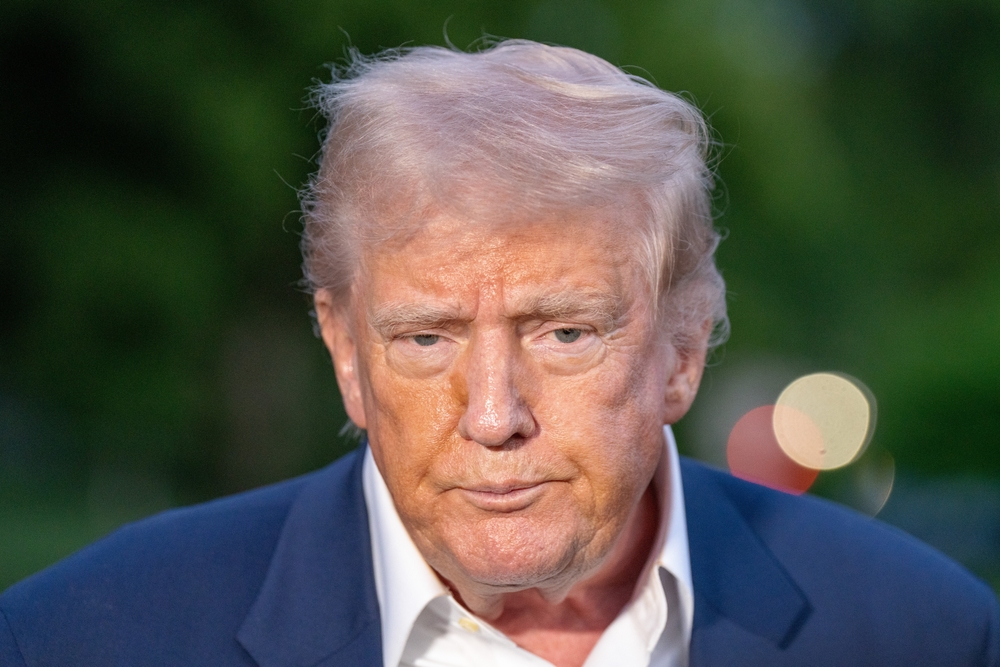

You want to know what your rights are if the President dies. Not in a dark or political way – just the practical, legal question that nobody seems to answer clearly. What happens to the First Lady? What does she get? Where does she stand? The question has floated through plenty of living rooms and news feeds since Donald Trump, now 79, became the oldest president in American history at the moment he was inaugurated in January 2025. And the answer turns out to involve a surprisingly detailed web of constitutional law, federal pension rules, inheritance statutes, and military protocol that was written precisely for a moment like this – and sits in a drawer hoping it never needs to be used.
Start with who Trump is in terms of the historical record. Should he serve the full remainder of his second term, he will leave office at 82 years and 7 months old, a record that would eclipse every president who came before him. Polling has tracked the public’s unease about this from the start. By May 2026, the Economist/YouGov poll found that 51% of Americans said Trump was too old to be president, while 38% said he wasn’t.
The concern isn’t only about age. In July 2025, photos of the president’s bruised hand circulated on social media, and the White House revealed that Trump had been diagnosed with chronic venous insufficiency, which his physician described as “benign and common.” His White House physician, Captain Sean Barbabella, later declared that Trump “exhibits excellent cognitive and physical health and is fully fit.” His critics – and the polling – point elsewhere. The gap between official reassurance and public skepticism has stayed wide throughout his second term. So the practical question, stripped of politics: what actually happens to Melania if he dies in office?
The Power Transfer Is Instantaneous
The constitutional part is completely unambiguous. The 25th Amendment states plainly: “In case of the removal of the President from office or of his death or resignation, the Vice President shall become President.” No gap. No committee. No vote. The moment a sitting president dies, the vice president is already the next one.
Vice President JD Vance is first in line, and the transfer has happened four times before: Lincoln, Garfield, McKinley, and Kennedy. All four were assassinations. None offered the country a moment’s notice. The constitutional machinery was designed exactly because moments of crisis don’t come with advance warning.
Trump reportedly keeps a letter in the Resolute Desk addressed to Vance in the event he dies or is assassinated, according to senior White House counterterrorism official Sebastian Gorka, who revealed its existence in a podcast interview. The letter’s contents remain unknown.
The succession matters to the Melania question because her status changes in the same instant it resolves. At the moment Vance takes the oath, he is president, Usha Vance becomes First Lady, and Melania Trump is no longer either of those things. She becomes a presidential widow, which comes with its own distinct, legally defined set of circumstances.
What the Government Owes Her
The federal government’s financial obligations to a president’s widow are governed by the Former Presidents Act, a 1958 law that lays out what former presidents and their survivors are entitled to for the rest of their lives. The widow of a former president is eligible for an annual pension of $20,000, but it’s optional – Betty Ford and Nancy Reagan both waived this benefit.
Twenty thousand dollars a year. To put that in context, former presidents themselves get pensions matching the salary of a Cabinet secretary – about $246,000 in 2024. The widow’s pension is a fraction of that – a symbolic gesture more than a meaningful source of income. And it comes with a condition: the widow must relinquish any other statutory pension to claim it.
The pension question is almost beside the point for Melania specifically, given the scale of Trump’s personal wealth. What matters more, practically, is the security package. After a 1994 law limited Secret Service protection for former presidents and their spouses to ten years, the Former Presidents Protection Act of 2012 reinstated lifetime protection. According to the Congressional Research Service, former First Spouses can continue to receive lifetime Secret Service protection unless they remarry. That protection – the agents, the secure communications, the whole apparatus – doesn’t pause for paperwork. It continues.
Protection costs for former presidents and their spouses or widows are not publicly disclosed for security reasons. The Former Presidents Act does, however, authorize the General Services Administration to provide up to $500,000 to each former First Spouse for travel and security if they are not receiving direct Secret Service protection.
The Money Question – And Why It’s Complicated
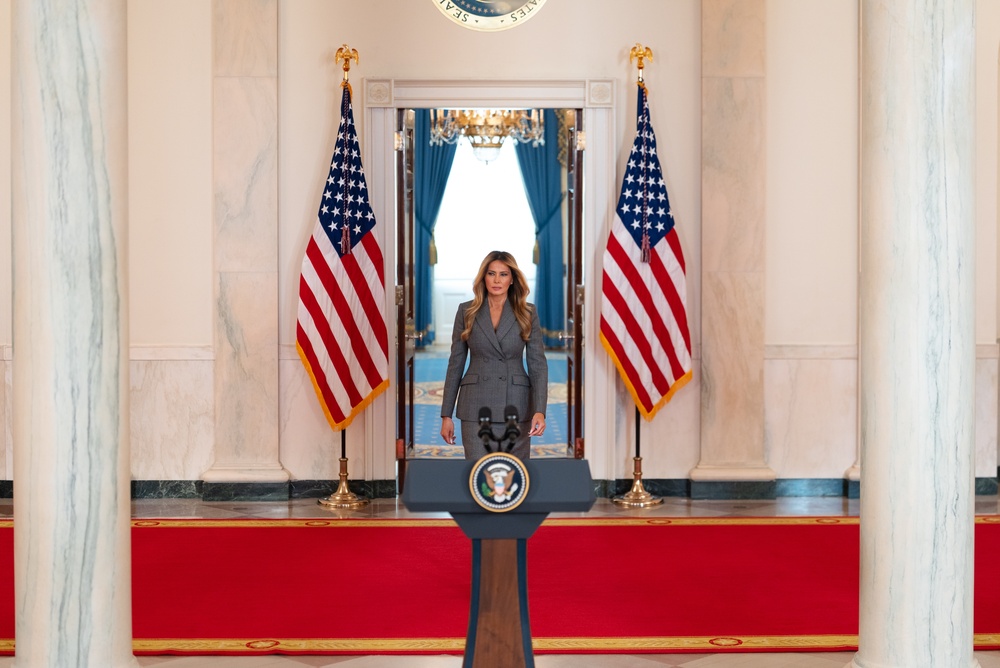
The part people actually want to know is simpler to ask than to answer: what would Melania inherit? Trump’s personal fortune is vast – though the exact figure depends on who’s counting and when. What we know is that any estate of that scale runs into federal inheritance rules. On July 4, 2025, Trump signed into law the One Big Beautiful Bill Act, one of whose most consequential provisions permanently extends and expands the federal estate and gift tax exemption. Under the new law, the exemption rises to $15 million per individual and $30 million per married couple starting in 2026. The first $30 million of a married couple’s combined estate can pass between spouses completely free of federal estate tax, with everything above that subject to rates reaching up to 40%.
Even with that expanded exemption, an estate of Trump’s reported size would involve substantial federal tax exposure. What Melania would actually receive depends on two private documents the public has no access to: their prenuptial agreement and Trump’s will. The terms of those documents – what she is entitled to outright, what flows to trusts, what goes to children – are entirely between them and their lawyers.
What the law does guarantee her, regardless of those private arrangements, is the spousal portability provision. Any remaining unused exclusion amount upon a married person’s death transfers to the surviving spouse, effectively sheltering $30 million from federal estate and gift tax for a married couple. In plain terms: whatever portion of the estate tax exemption Trump hasn’t already used can be transferred to Melania, giving her a larger tax-free threshold on her own eventual estate.
A Nation in Mourning – The Protocol Nobody Talks About
Beyond the legal and financial mechanics is the ceremonial one. Americans have watched the rituals of a president’s death on television – the flag at half-staff, the caisson, the lying in state – but most people have no idea how precisely choreographed it all is, or how immediately it begins.
Early in their presidencies, US commanders-in-chief are given the task of planning their own presidential funerals. When they pass away, they can choose a state funeral funded by the federal government. The state funeral is not improvised in the aftermath of loss. It’s a plan that sits in a drawer, updated periodically, approved by the president himself. The lying in state at the Capitol, the military honors, the procession – these are determined in advance, down to the music and the order of the motorcade.
For Melania, this would mean navigating the most intensely public grief imaginable: a global audience, strict protocol about where she stands and when, a nation’s cameras on her face for days. The role of the widow in a state funeral is largely silent, largely visible, and carries enormous symbolic weight that has nothing to do with whatever she might actually be feeling.
The Part That’s Genuinely Unknown
What this all adds up to is a picture that’s partly clear and partly opaque. The constitutional handover: certain and immediate. The federal benefits: defined by law. The wealth transfer: governed by documents nobody outside their circle has seen.
What nobody can know is the human reality underneath the legal framework. The Trumps have had a famously unreadable marriage. Melania spent significant stretches of his political career appearing removed from it – living separately for periods, declining to hold his hand in public on enough occasions that it became its own running commentary. What she would feel, what she would want, what kind of life she would build afterward – none of that is answered by the 25th Amendment or the Former Presidents Act.
What the Law Covers and What It Doesn’t
American succession law was written to handle exactly this kind of uncertainty, and in the constitutional sense, it does its job cleanly. Presidents die. Some have died young, some old, some violently, some quietly. The moment the oath is administered to the next president, the country has a functioning executive. That part has never failed.
What the law doesn’t cover is the part that’s harder to pin down: the private reality of the person standing at the center of it. Melania would leave the White House as a presidential widow with lifetime federal protection, a $20,000 annual pension she may or may not claim, and a private inheritance shaped by agreements only a handful of people have ever read. The presidency would transfer. The security detail would follow her home. Life, in the way of institutions, would continue.
Whether that feels like a safety net or a footnote probably says something about what you think of the marriage, the office, and the particular kind of solitude that comes with having lived inside the most watched household in the world. The law settles the mechanics. Everything else remains, as it always has, between them.
AI Disclaimer: This article was created with the assistance of AI tools and reviewed by a human editor.