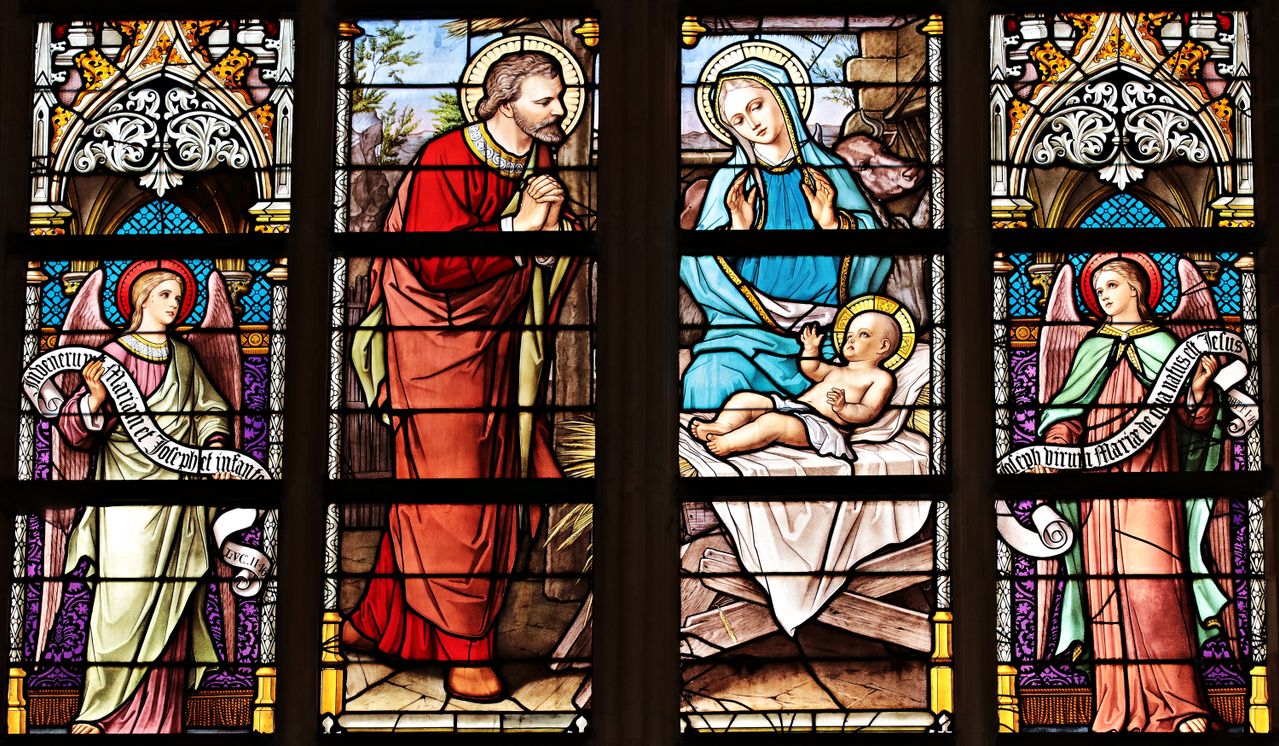

The story most people think they know about Mary and Joseph fits neatly into a few nativity images: a star, a manger, a donkey, a young woman who said yes without hesitation. What gets lost in that picture is almost everything about who these two people actually were, what their relationship looked like by the customs of their time, and how genuinely precarious their situation was the moment an angel delivered news that neither of them had asked for.
We know remarkably little about Mary. In the New Testament, there is nothing about her birth, death, appearance, or age. What we do know has been filtered through theology, centuries of veneration, and artistic traditions that tell us more about the painters than the person. Joseph fares even more obscurely. He disappears from the Gospel accounts without any explanation after Jesus is found in the temple as a boy, and the New Testament never records a single word he spoke. The couple at the center of Christianity’s founding story are, in terms of verifiable biographical detail, almost entirely unknowable.
That absence of information has a way of making the details we do have more arresting. Because what those details reveal, once you understand the historical context they lived in, is a relationship that was nothing like its modern depictions, a betrothal that carried legal weight equivalent to full marriage, and two people who were operating under enormous social pressure with very little room to maneuver.
The World They Lived In

To understand Mary and Joseph, you have to set aside the way first-century Jewish marriage has been romanticized in popular imagination. According to historian David A. Fiensy, writing in the Biblical Archaeology Society, marriages in the first century were transactional unions between families. Children did not choose their spouses; parents arranged marriages on behalf of their children. The idea of two teenagers in Nazareth exchanging longing glances across a marketplace and gradually falling in love is a projection from a different era entirely.
As a 2024 analysis by New Testament scholar Bart Ehrman explains, in first-century Palestine the ideal age for marriage was during late adolescence, with men often marrying a bit later, sometimes as late as 30. Mary was probably between 14 and 19 years old, while Joseph may have been in his 20s. Some later apocryphal traditions described Joseph as much older, even elderly, but those accounts were written centuries after the fact and reflect theological concerns about Mary’s perpetual virginity rather than any reliable historical record.
Mary, whose true biblical name in Hebrew was Miriam, lived with Joseph 70 miles north of Jerusalem in the town of Nazareth, nestled among the slopes of lower Galilee. Both were descendants of David from the tribe of Judah, and Joseph, although a carpenter, was a direct heir to a Jewish throne and a Jewish kingdom that had lain in ashes for 580 years. That lineage mattered enormously to the story the Gospel writers were telling, even if it translated into no actual political power whatsoever. Being descended from a king when your kingdom no longer exists is an inheritance of identity rather than of privilege.
Betrothal Was Not What We Think It Was
The English word “engagement” is a poor translation of what Mary and Joseph were to each other when the annunciation arrived. Jewish marriage, even to this day, involves a double ceremony: a betrothal (kiddushin or erusin) followed by a second stage. But in the first century, the betrothal was not a preliminary promise. It was a legally binding contract. The couple was considered husband and wife in the eyes of Jewish law from the moment the betrothal was formalized, even though they did not yet live together.
Some English Bible translations of Luke 2:5 use the archaic word “betrothed,” while others use “engaged” or “fiancée,” suggesting the couple’s marriage was incomplete. The Biblical Archaeology Society notes that Matthew’s Gospel is actually clearer on this point. In the genealogy, Joseph is called the “husband of Mary,” who gave birth to Jesus – a detail that reflects the full legal weight of what the betrothal actually meant under first-century Jewish law.
This distinction matters in a practical sense because it determines exactly what was at stake when Mary was found to be pregnant. A modern engagement can be called off with embarrassment and some returned gifts. A first-century Jewish betrothal required a formal legal instrument to dissolve, something close to a divorce. Which is precisely what Joseph considered doing.
The Decision Joseph Had to Make
According to Britannica’s account of Saint Joseph, after marrying Mary, Joseph found her already pregnant and, “being a righteous man and unwilling to expose her to public disgrace” (Matthew 1:19), decided to divorce her privately. An angel then told him that the child was the Son of God, conceived by the Holy Spirit, and Joseph obeyed, taking Mary as his wife.
The phrase “put her away privately” is easy to read as an act of kindness, and in a sense it was. But it helps to understand what the alternative looked like. Joseph could have made Mary a public example, and she could theoretically have been killed according to the Law of Moses, though this appears to have been rarely exercised during the first century. A public accusation would still have destroyed her social standing entirely, made her unmarriageable, and left her dependent on the mercy of her own family in a society with almost no safety net for women outside of marriage or family household.
Joseph’s initial plan to dissolve the betrothal privately was, in the context of his world, a significant act of restraint. He was choosing to absorb his own shame rather than amplify hers. Whether the Gospel account is read as historical or theological, that characterization of Joseph as someone who acts with deliberate care before he has any divine explanation is one of the more compelling details in the entire nativity story.
The second-century Protevangelium of James and the fourth-century History of Joseph the Carpenter present him as a widower with children at the time of his betrothal to Mary, contributing to the confusion over several questions about the Holy Family. These apocryphal texts filled in narrative gaps that the canonical Gospels left open, but scholars treat them as documents of early Christian piety rather than historical records. Written well after the events they describe, they supply specific scenes that later tradition popularized, but their late dates and theological aims reduce their weight as historical evidence. They are windows into early Christian devotion rather than factual records of first-century Galilean life.
What the Gospels Don’t Say
Outside of the accounts of the birth of Jesus, Mary is specifically mentioned at only three other events in the life of her son. She is present at a wedding where Jesus turns water into wine, she makes an attempt to see her son while he is teaching, and she is there at his crucifixion. For a figure who has accumulated more titles, more feast days, more artistic representation, and more theological commentary than perhaps any woman in Western history, the actual textual record is startlingly thin.
Mary is mentioned more often in the Quran than in the New Testament. As the Abrahamic Study Hall documents, her name appears more times in the Quran than in the Christian New Testament, and an entire chapter of the Quran bears her name. The Islamic tradition holds her, under the name Maryam, as the holiest of all women. That a woman about whom the Gospels offer so little biographical information became so central to so many different traditions is itself a significant fact about how meaning accumulates around figures in the absence of evidence rather than because of it.
Joseph’s record is even thinner. He is last mentioned in the Gospels when he and Mary frantically searched for the lost young Jesus in Jerusalem, where they found him in the temple. The circumstances of Joseph’s death are unknown, except that he probably died before Jesus’ public ministry began and was certainly dead before the Crucifixion.
The silence around Joseph’s death is telling. He was central enough to the early part of the story that his absence from Jesus’ adult ministry requires explanation, yet the Gospels never provide one. The man who took on the legal, social, and physical responsibility of raising someone else’s child drops out of the narrative sometime before his son began the work that would change the world.
The Journey and What It Cost
Mary and Joseph had to travel far and under dangerous conditions to get from their home in Nazareth to the childhood home of Joseph in Bethlehem, to participate in a census ordered by Caesar Augustus. The distance between Nazareth and Bethlehem is roughly 90 miles through hill country. This is not a romantic road trip. It’s a physically punishing journey for anyone, let alone a woman in the final stage of pregnancy. The Gospel of Luke says simply that they went. It says nothing about how long it took, how hard it was, or what they talked about on the way.
The two Gospel accounts agree that Jesus was born in Bethlehem in Judea, that his mother Mary was engaged to a man named Joseph who was descended from King David and was not his biological father, and that his birth was caused by divine intervention. Matthew’s account of the appearance of an angel to Joseph, the wise men from the East, the massacre of the innocents, and the flight to Egypt do not appear in Luke, which instead describes the angel’s appearance to Mary, the census, the birth in a manger, and the choir of angels appearing to the shepherds.
The two accounts have never been fully reconciled. Matthew places the family in Bethlehem as their home base and describes a flight to Egypt to escape Herod. Luke describes a temporary journey to Bethlehem for registration purposes, with home clearly in Nazareth. Scholars have wrestled with these discrepancies for centuries. The honest answer is that they describe the same central events but in ways that cannot be made to fit together into a single seamless timeline.
Read More: 7 Predictions from Jesus That Actually Came True
What’s Left When You Set the Theology Aside
None of what we know about Mary and Joseph, stripped of theological framing, makes them extraordinary by first-century standards. They were young people from a small town in Galilee, part of an arranged match between families of modest means, living under Roman occupation, navigating Jewish law, trying to keep a household running. Despite what the Gospels say about their travels, it is historically likely that they were both from Nazareth and that they were matched by their parents or older relatives for economic reasons. They probably spent most of their lives there, raising their children, with Joseph cobbling together whatever work was available.
What makes them remarkable in the accounts that survive is not wealth, education, or status but a particular quality of response to circumstances that gave them no good options. Mary accepted a pregnancy that would expose her to public disgrace. Joseph, with no explanation available to him at the moment of decision, chose protection over punishment. These are not grand gestures. They’re the kind of choices that happen in ordinary lives under pressure.
What the Story Actually Holds
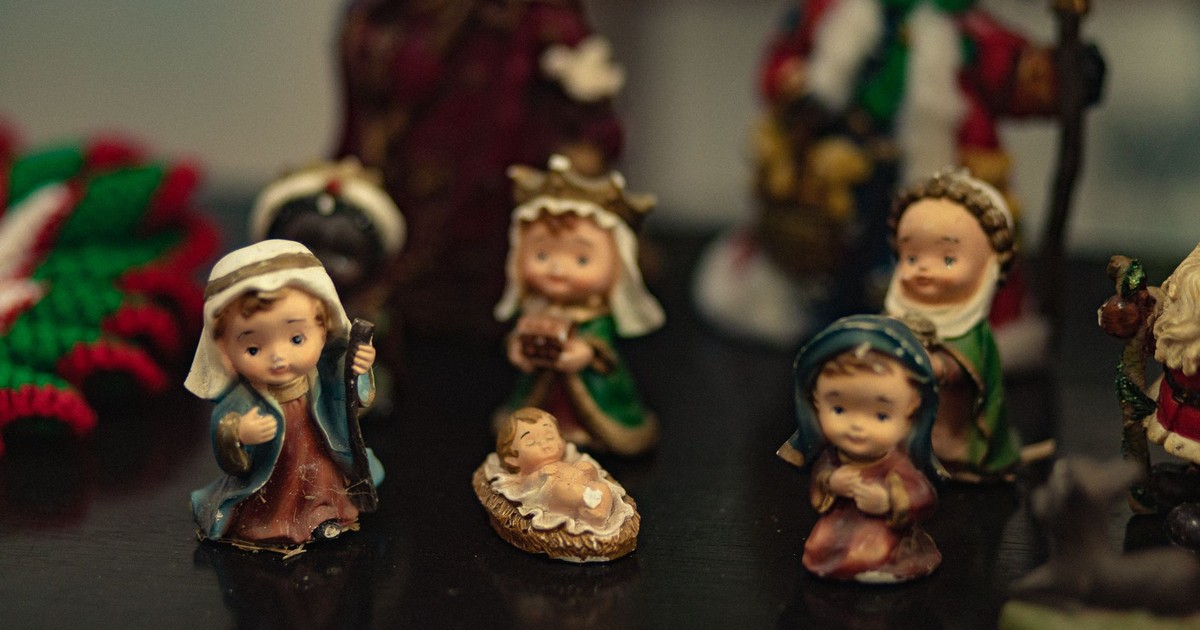
The nativity gets retold so often, with so much pageantry layered on top, that the actual human situation at its center becomes almost invisible. Two young people, legally bound to each other before they lived together, dealing with a pregnancy neither of them planned, in a legal and social environment that gave them almost no room to maneuver without consequences. Joseph deciding to absorb the shame himself. Mary saying yes to something she couldn’t have fully understood.
The details that historians argue about, the exact nature of the betrothal, whether the Gospels can be reconciled, what Joseph’s trade actually meant in terms of daily life, are interesting precisely because they resist the softening that centuries of tradition have applied to this story. The real first-century Galilee was not a gentle backdrop for a gentle story. It was a place of occupied land, strict social codes, and severe consequences for transgression.
That’s the thing about Mary and Joseph that keeps the story grounded, whatever your relationship to its theological claims. They didn’t get to choose the situation they were in. They had to choose how to respond to it. The gap between those two things is where most of the story lives, and it’s the same gap most people are navigating in their own lives, just without the angel to explain what happens next.
AI Disclaimer: This article was created with the assistance of AI tools and reviewed by a human editor.