

The most common complaint marriage therapists hear from men isn’t about money or infidelity. The husband who keeps saying “everything’s fine” at dinner and means it less every time. The man who can’t quite explain why he feels disconnected, only that he does, and that he’s been feeling it for longer than he’ll admit.
Men are socialized from early on to treat frustration as something to absorb and move past, not something to bring to a conversation. In a marriage, that tendency compounds. A 2015 Rutgers study of 722 couples found that when marriages run into difficulties, men respond with frustration more than any other emotion and don’t really want to talk about it or spend too much time thinking about it. The feelings pile up without being processed or expressed, and eventually they reshape the entire atmosphere of a marriage.
These are the frustrations that come up most often among men in long-term relationships, the ones that rarely make it into direct conversation but show up everywhere else: in withdrawal, in distance, in the slow drift that partners sometimes mistake for contentment.
1. Feeling Chronically Unappreciated

A man can go months doing things in a marriage (showing up to work, fixing things around the house, managing finances, being present with the kids) and never once hear that it’s noticed. Not because his partner doesn’t notice, but because both partners have moved into maintenance mode, where effort is expected rather than acknowledged.
A 2025 Harvard Business School study published in the Journal of Marriage and Family looked at gratitude and resentment in couples, finding that these emotions directly reflect whether household members feel their efforts meet or fall short of each other’s expectations. Men’s resentment most often centered on feeling that their physical contributions were underappreciated or that their partner’s expectations for their labor were unreasonable. When a man’s expectation of being seen goes consistently unmet, resentment fills the space where gratitude should be. He doesn’t usually announce it. He just gets quieter.
2. The Slow Disappearance of Physical Intimacy

Men who feel their sex lives have gone cold rarely know how to raise it without sounding demanding or insecure. So they don’t raise it. They track the weeks between encounters and say nothing.
The Institute for Family Studies, analyzing 2024 General Social Survey data, found that the proportion of adults having sex weekly dropped from 55% in 1990 to 37% in 2024. Among married couples, the rate of weekly sex fell from 59% between 1996 and 2008 down to 49% between 2010 and 2024. For married men, the decline in physical intimacy isn’t only about sex itself. It tends to signal a broader withdrawal of closeness: fewer touches in passing, fewer evenings of actual contact, a creeping sense that the relationship has been reclassified from romantic partnership to functional co-arrangement.
The Gottman Institute notes that in marriages with significant sexual disconnection, a gradual avoidance pattern has usually developed that leads both partners to a lonely place. Couples also tend to feel embarrassed about the gap, which keeps the conversation from happening and lets the distance grow.
3. Not Feeling Heard in Arguments

Most couples have a recurring fight. It doesn’t matter what the fight is technically about (dishes, money, scheduling) because the actual argument underneath it is almost always the same: you don’t actually hear me.
Many men report that in disagreements, the conversation veers into territory they didn’t expect, earlier grievances get layered in, and by the end they can’t remember what the original issue was. What they can remember is the feeling of having whatever point they were making get bypassed entirely. Over time, that pattern trains them to stop making points. Withdrawal starts to look like indifference from the outside, but from the inside it’s often exhaustion.
The Rutgers research found something striking: husbands who rated their marriages positively and reported strong emotional support still felt frustrated, both when giving support and when receiving it. The frustration wasn’t born from a bad marriage. It was born from communication patterns where effort didn’t translate to connection.
4. Carrying Financial Pressure in Silence
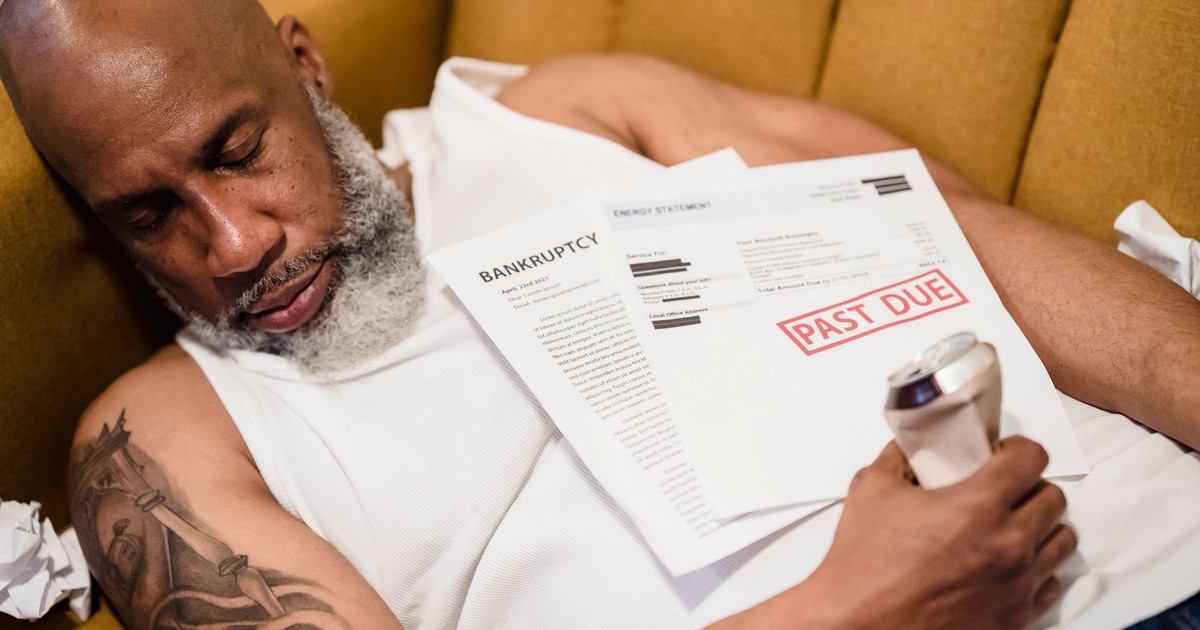
Even in dual-income households, many men report feeling that financial anxiety is primarily their burden to carry. The mortgage, the retirement savings, the cost of the kids’ activities, the car that needs replacing – men often feel the weight of these concerns more acutely, and feel less able to voice the anxiety that comes with them.
Men are still broadly conditioned to associate financial stability with worth and competence. Admitting that money is stressful can feel like admitting to inadequacy. So the stress goes internal, and their partners often have no idea it’s there, which creates friction when financial decisions get made without what feels like full awareness of the stakes.
5. The Loss of Male Friendships

Marriage, especially when children arrive, tends to hollow out a man’s social world faster than he expects. The nights out get shorter, then rarer, then essentially stop. The friendships that were maintained through regular contact slowly go to text-only, then occasional check-ins, then nothing. Unlike women, who tend to maintain friendships more actively and feel the loss more acutely when they don’t, many men let it happen without identifying it as a problem until years later.
The result is that marriage becomes the sole source of social and emotional connection for many men. When the marriage is strained, there’s nowhere else to turn (no one to call, no one to debrief with, no context outside the relationship to provide perspective or relief). That’s enormous pressure to place on one relationship, and most men carrying it don’t realize quite how much weight it is until something cracks.
6. Being Managed Rather Than Talked To

A dynamic creeps into long marriages where one partner starts to organize the household’s emotional life (decisions, plans, conversations, even moods) and the other partner gradually becomes someone who receives instructions rather than a co-author of the household. For many men, this starts to feel like being managed.
It’s rarely done deliberately. It usually develops through a slow accumulation of small decisions where one partner was more available, more prepared, or simply faster to act. But over time, men who feel managed describe it as a kind of demotion. They aren’t being asked what they think; they’re being told what’s happening. When they push back, the response is often frustration from the other side (“I’m just trying to get things done”) and neither partner can understand why the other is upset.
Arguments about household tasks are rarely about the tasks themselves. Equity, respect, and the sense of being treated as a genuine partner tend to sit beneath fights that look, on the surface, entirely trivial. The same is true when men feel their autonomy within the household has been steadily reduced.
7. Feeling Like Roommates

The transition from romantic partners to functional co-managers is gradual enough that most couples don’t notice it until it’s well established. The schedule gets optimized. The household runs. And somewhere in the middle of all that efficiency, the relationship that was supposed to be at the center of it stops getting tended to.
Men describe this as a specific kind of loneliness: not alone, not in crisis, but with a flatness to daily life in the marriage that they can’t quite shake. Conversations are transactional. Evenings are parallel rather than shared. The last time the two of them talked about something that wasn’t logistics or the kids, neither can remember.
Connection doesn’t require grand gestures. It requires time and attention, both of which are among the first things to get sacrificed when life gets full.
8. Parenting Disagreements

Couples who agree on most things before children arrive often discover, once the children are there, that they have fundamentally different instincts about how to raise them. How strict, how permissive, how much structured activity, how much free time, how to handle discipline, who steps in and when. These disagreements are normal. What makes them a marriage frustration rather than just a parenting challenge is how rarely they get resolved.
Men often feel that their parenting instincts are overridden or dismissed rather than discussed. If the mother tends to be the primary day-to-day parent, her instincts carry more weight by default, and men who push back can find themselves positioned as the one who doesn’t know what he’s talking about. Over time, many fathers describe stepping back from parenting decisions not because they stopped caring, but because pushing back didn’t seem worth the cost.
9. Criticism Without Credit

Criticism lands differently depending on the ratio. A man who receives regular appreciation for what he does well can absorb critical feedback without it defining how he sees himself in the marriage. A man who receives primarily criticism (even constructive criticism) and rarely acknowledgment for what’s working eventually starts to feel like he’s failing at marriage regardless of what he does.
This is a pattern that compounds slowly. Each individual piece of critical feedback might be entirely fair. But when fair criticism arrives in the absence of any recognition of effort, it stops functioning as useful input and starts functioning as a verdict. The response to a verdict isn’t improvement. It’s defensiveness, and eventually, disengagement.
Valid criticism without any counterweight of appreciation rarely moves anyone forward. It just makes them want to stop trying.
10. The Erosion of Personal Identity

Marriage, done properly, involves a genuine merging of lives: shared finances, shared routines, shared social circles, shared goals. That merger is the point. But for some men, the merger tips over into an erasure, a slow loss of the things that felt distinctly theirs before the relationship became the organizing principle of everything.
The hobby that got traded for couple time. The friendships that didn’t make the cut when schedules got tight. The career ambition that got de-prioritized to make room for the family’s logistics. Men who experience this rarely frame it as a complaint about their marriage. They frame it as something they chose. But there’s an underlying frustration that builds from feeling like there’s no part of their life left that’s purely their own.
11. The Expectation to Suppress Emotion

Men in marriages often feel an unspoken expectation to be the stable one, to absorb stress without visibly carrying it, to be calm when things are tense, to process difficult feelings privately rather than bringing them into the relationship. When men do express emotional struggle, the response is sometimes discomfort rather than support, because the role they’ve been assigned doesn’t include emotional vulnerability.
Research on men in long-term marriages consistently shows that for husbands, frustration tends to be the dominant emotional response to marital difficulties, and not much else gets expressed. That’s not because men feel only frustration. It’s because frustration is the one emotion that doesn’t require them to reveal much. Sadness, fear, loneliness, grief involve exposure that many men aren’t certain will be received without judgment.
Men end up carrying emotional weight that their partners don’t know about, which creates a double isolation: lonely inside the marriage, and unable to bridge that loneliness through the very relationship that’s supposed to be the closest one they have.
12. Feeling Like the Relationship’s Handyman

Many men find that they are primarily valued in their marriages for what they do rather than who they are. Home maintenance, financial management, car issues, the things that need lifting, carrying, fixing, organizing. Necessary contributions, all of them. But a man who is consistently approached as a solution to a problem (rather than a person to connect with) starts to feel that his worth in the marriage is purely functional.
Being needed isn’t the same as being wanted. A man who is needed but not particularly desired (as a companion, a romantic partner, a person whose company his spouse actively seeks) describes a particular hollowness in a marriage that otherwise looks fine from the outside. The shift from partner to provider is gradual and often unintentional. But it registers.
13. The Assumption That He’s Fine

Of all the marriage frustrations men don’t usually talk about, this one underlies most of the others. The assumption (on the part of the spouse, the family, the culture) that the man in the marriage is basically okay. That he’s handling it. That his emotional needs are either already met or, if they’re not, he’d say something.
Men are rarely asked how they’re actually doing in a marriage. The question defaults to the assumption that if something were seriously wrong, they would bring it up. But they don’t, and for reasons that run deep: socialization, pride, the fear of being seen as weak or ungrateful for a life that looks, on paper, like it should be enough.
Inside marriages, the result is a man whose emotional needs aren’t being met, who isn’t voicing that fact, and whose silence is being read as contentment. That silence has a cost (for him, for his partner, and for the marriage itself).
What Gets Left Unsaid

There’s a particular kind of marital distance that doesn’t show up in any obvious way. No arguments, no visible cracking, no dramatic scene. Just two people who have, by increments so small they were individually invisible, stopped fully showing up for each other. Many of the marriage frustrations men experience sit exactly in that space, not dramatic enough to force a conversation, not small enough to actually disappear.
The frustrations listed here aren’t indictments of marriages or the people in them. They’re patterns, and patterns are by definition things that developed gradually, on both sides, without anyone deciding to create them. Most of the men who experience these things love their partners. Most of their partners would be genuinely surprised to hear the full picture. That gap between what’s felt and what gets communicated is where most of the real work in a marriage actually lives, not in the big conversations, but in the willingness to have the smaller, less comfortable ones before things calcify.
Disclaimer: This information is not intended to be a substitute for professional medical advice, diagnosis, or treatment and is for information only. Always seek the advice of your physician or another qualified health provider with any questions about your medical condition and/or current medication. Do not disregard professional medical advice or delay seeking advice or treatment because of something you have read here.
AI Disclaimer: This article was created with the assistance of AI tools and reviewed by a human editor.