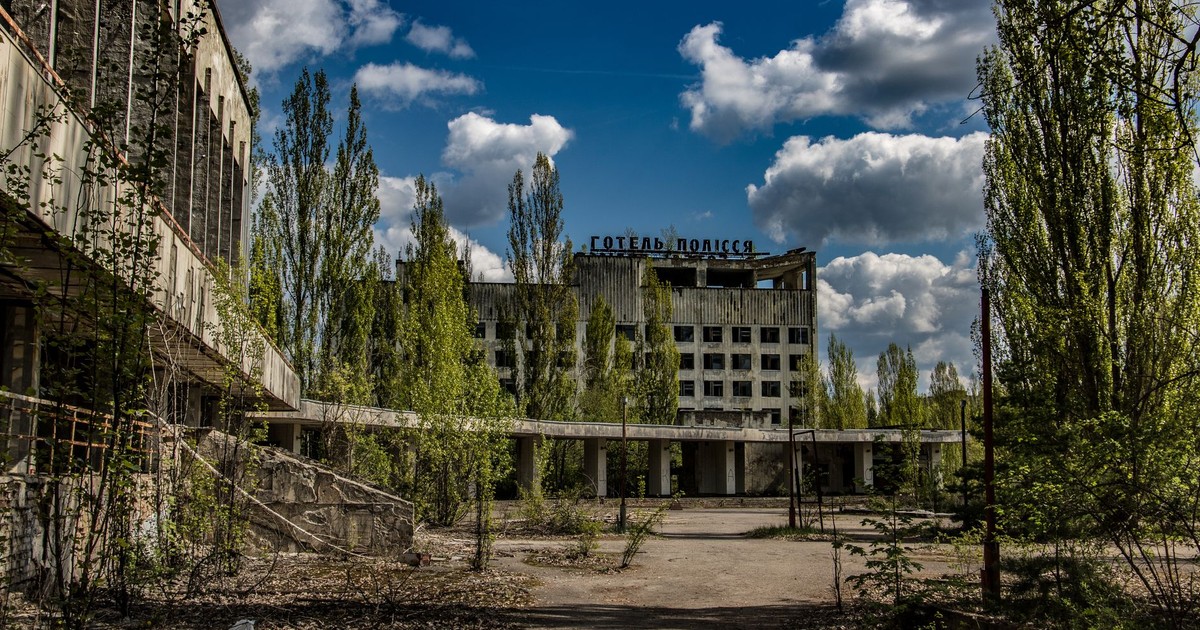

The name had nothing to do with where the bomb was built. Most of the real work happened in a remote corner of New Mexico, a makeshift city of scientists walled off from the rest of the country by mountains, security checkpoints, and an agreement no one had signed but everyone understood. The address on all their mail was a P.O. box in Santa Fe. Their children were born on government forms that listed their birthplace as simply: “rural.”
That deliberate erasure was the point. The Manhattan Project, which ran from 1942 until after the end of World War II, was built on the idea that secrecy could be industrialized at a national scale – that you could mobilize the equivalent of an entire auto industry, staff it with some of the most brilliant minds on the planet, and keep most of the workforce from knowing what they were building. For the most part, it worked. Most of the 130,000 people who worked on the project never knew its purpose.
What they produced changed the world in ways that still haven’t finished rippling. The physics had been known for a few years. The engineering was almost incomprehensibly difficult. The moral questions that followed the project’s success have never been resolved. And the full story of how it happened – who made it possible, who tried to stop it, who stole its secrets, and what it cost the man at the center of it – is still being told.
How It Started: Fear of the Nazis

In 1939, many American scientists, including European refugees who had fled fascist regimes, were acutely aware of advances in nuclear fission and deeply worried that Nazi Germany might get there first. Physicists Leo Szilard and Eugene Wigner persuaded Albert Einstein to write directly to President Franklin D. Roosevelt, warning him of the danger and urging him to establish an American nuclear research program. That letter led to the creation of the Advisory Committee on Uranium.
A British report in July 1941 was a turning point. British scientists argued that producing an atomic bomb was feasible within two years. In October 1941, Roosevelt authorized a study into whether the U.S. could build such a weapon. After Pearl Harbor, he approved full atomic weapons production in January 1942.
The U.S. Army Corps of Engineers formally established the Manhattan Engineer District on August 13, 1942 to conceal the development program – which is where the project got its name. It was an odd bureaucratic cover. The actual work was spread across the entire country, and the most critical facility sat at 7,300 feet elevation in a high desert in New Mexico.
A Secret City in New Mexico
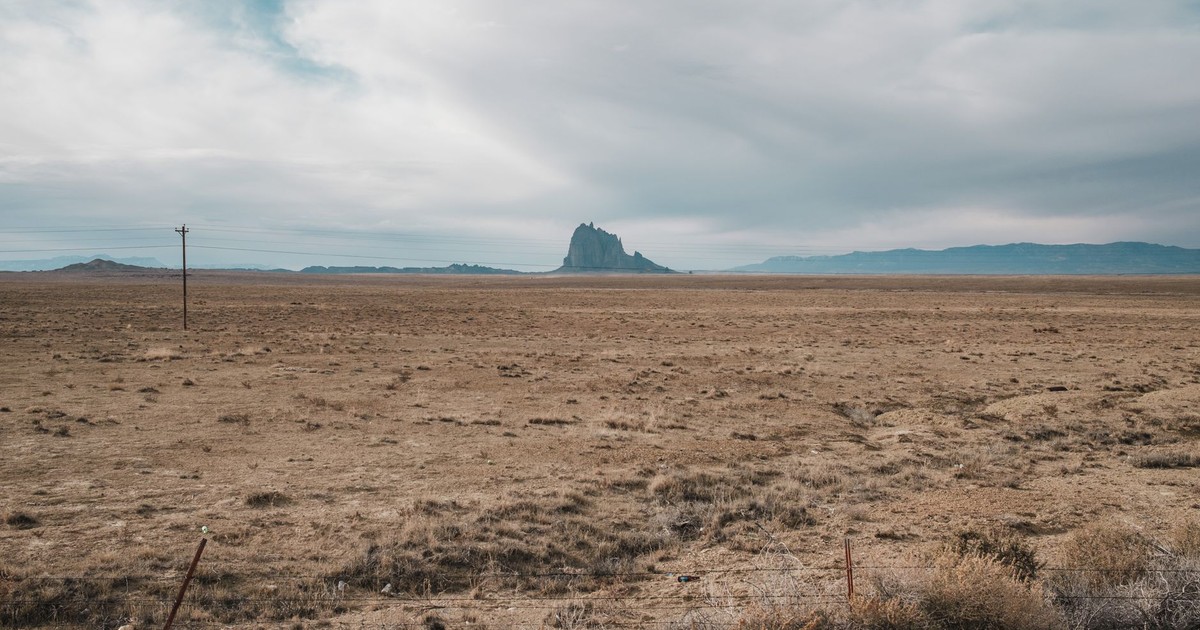
According to Scientific American, thousands of scientists, including theoretical physicist J. Robert Oppenheimer, took part in the project, often while they and their families were lodged at secret military bases in remote locations. Los Alamos, New Mexico, was the most important of these. Oppenheimer ran it. The scientists working there included some of the most decorated physicists in the world.
The team Oppenheimer assembled at Los Alamos was arguably the most talented group of minds ever gathered in a single laboratory. According to Los Alamos National Laboratory, 18 of Oppenheimer’s colleagues at Los Alamos alone were awarded the Nobel Prize.
The man who actually ran the whole operation from above, however, was not a scientist. He was Brigadier General Leslie Groves of the U.S. Army. Groves was chosen because he had just overseen the construction of the Pentagon. He was not beloved by the scientists under him, but he got things done in a way that mattered: he cut through bureaucracy, secured funding, and kept the project moving at a pace its more cautious members thought reckless. His relationship with Oppenheimer was complicated, often tense, and probably essential.
When the existence of the project was finally revealed to the American public after the bombings of Hiroshima and Nagasaki, most were stunned to learn that such a vast, government-run, top-secret operation had existed – with physical properties, payroll, and a labor force comparable to the automotive industry. At its peak, the project employed 130,000 workers, and by the end of the war had spent nearly $2 billion.
The Sites, the Secrets, and the Science
The work wasn’t confined to one location. Research facilities were scattered across the U.S., including Los Alamos, New Mexico; Oak Ridge, Tennessee; and Hanford, Washington. Each site had a specific purpose. Scientists worked to overcome enormous technical challenges in uranium enrichment and plutonium production, pushing the limits of what was then physically possible.
Aside from one or two key senators who agreed to a blank check for the project, Congress and the press were kept entirely in the dark. Workers at Oak Ridge – a site that processed uranium – were told only that they were helping the war effort. The town itself didn’t appear on maps. Mail came in and went out under strict censorship. To keep scientists and those working on the most sensitive parts of the project engaged, family homes were built for those with families and dormitories constructed for single workers.
Enrico Fermi, an Italian-born physicist, played a key role in achieving the first controlled nuclear chain reaction in December 1942, a crucial milestone. His expertise in reactor design laid the foundation for the production of plutonium, a critical component of the atomic bomb.
The Spies in the Room
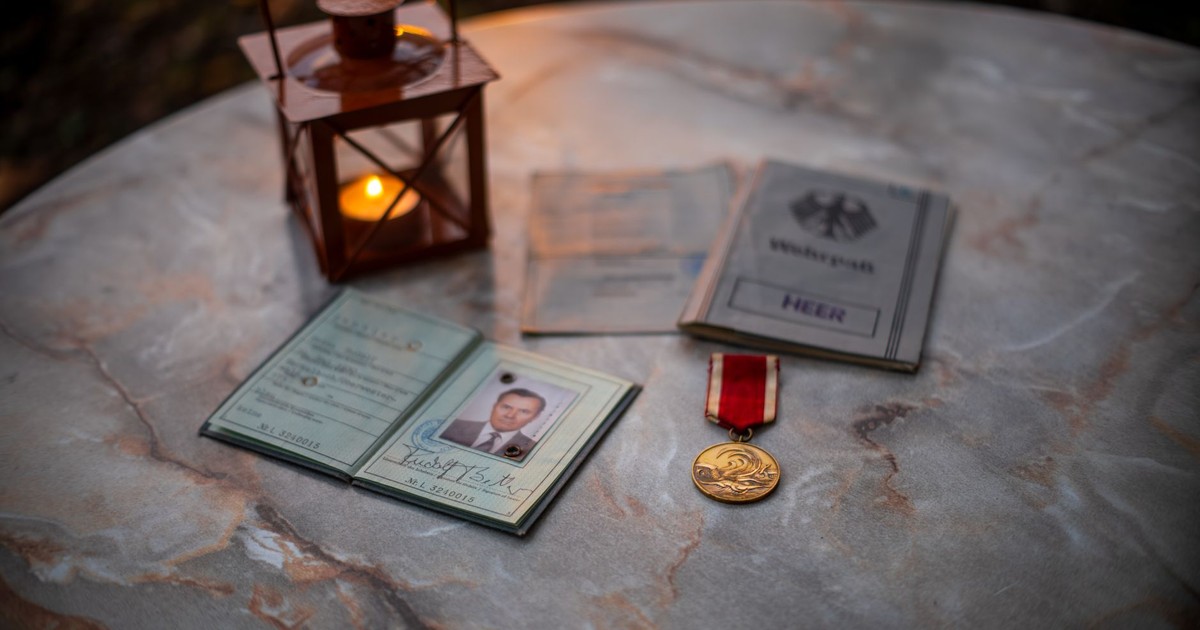
For all of its security apparatus and compartmentalized operations, the Manhattan Project history includes one of the most damaging intelligence failures in American history. The project was infiltrated not by its enemies Germany and Japan, but by the Soviet Union. Soviet spies occupied positions of trust and importance, passing on valuable information about the bomb and its design.
Among the most consequential of those spies was Klaus Fuchs. According to the Atomic Heritage Foundation, Fuchs was a German theoretical physicist who worked at Los Alamos and passed atomic secrets to the Soviet Union throughout the war. He calculated the approximate energy yield of an atomic explosion and specialized in implosion methods, focusing specifically on the “Fat Man” bomb dropped on Nagasaki. Some experts estimate that his intelligence allowed the Soviets to develop and test their own atomic bomb one to two years earlier than they otherwise would have.
Theodore Hall was another significant spy inside the project, passing parallel intelligence to Moscow independently of Fuchs. Soviet espionage inside the project changed the course of history. When the Soviets detonated their first atomic weapon in August 1949, it closely resembled the bomb designed at Los Alamos.
Julius and Ethel Rosenberg were convicted on charges of conspiracy to commit espionage in March 1951 for their role in sharing classified Manhattan Project documents with the Soviet Union. The spy operation had been running for years before anyone in the U.S. government had a clear picture of how deep it went.
Oppenheimer himself was never proven to be a spy, but his associations made him a target. We know that in the 1930s, and until 1943, Oppenheimer was a Communist sympathizer. His brother and former girlfriend had both been Communist Party members. That was enough, in the climate of the early 1950s, to destroy him. You can read more about how Cold War paranoia shaped postwar America in a related feature here on The Amazing Times.
Trinity: The First Detonation
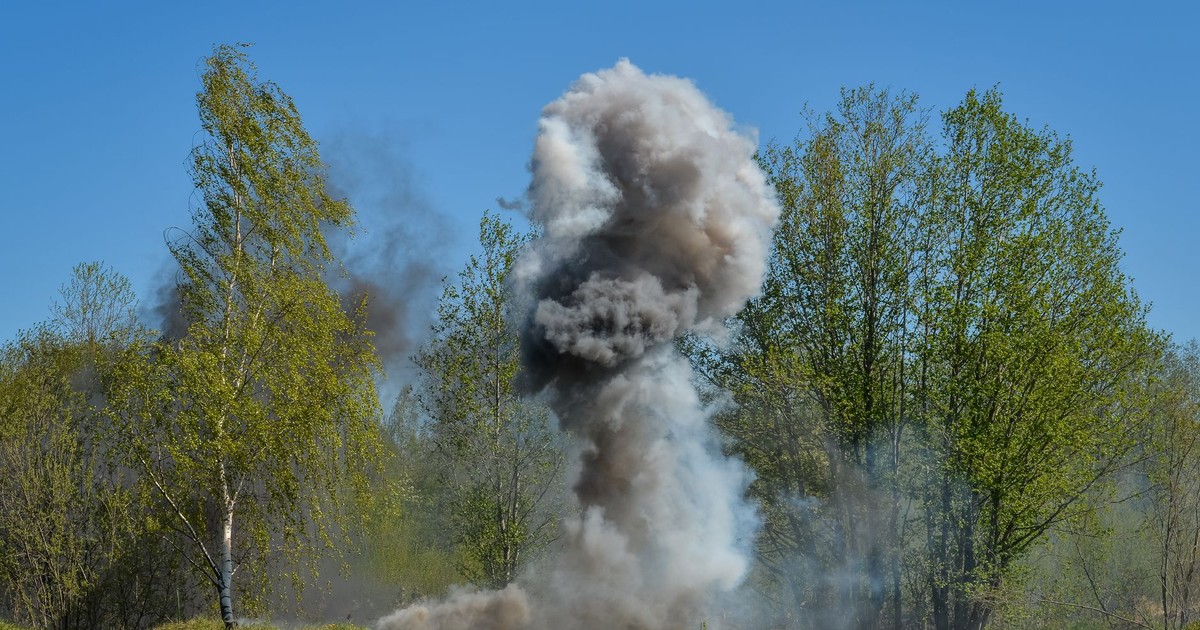
The Manhattan Project culminated in the Trinity test on July 16, 1945 – the first detonation of a nuclear weapon in human history. The National WWII Museum reports that the device emitted as much energy as 21,000 tons of TNT and created a fireball roughly 2,000 feet in diameter, detonated in the Jornada del Muerto desert in New Mexico.
None of the scientists knew how large the explosion would be. Some of them bet on whether it would even work, and if it did, just how powerful the blast would be. The answer, when it came at 5:29 a.m. local time, was beyond what most had expected. The sky lit up brighter than the desert sun. The shockwave knocked people off their feet miles away.
Oppenheimer’s reaction afterward has passed into legend. He recalled a line from the Hindu scripture the Bhagavad Gita: “Now I am become Death, the destroyer of worlds.” Whether he said it at that moment or recalled it later, the quote has outlasted almost everything else about him.
Three weeks later, the weapon was deployed. The two atomic bombs dropped on Hiroshima and Nagasaki in August 1945 brought World War II to its end. Three days after Hiroshima, on August 9th, the “Fat Man” bomb was dropped over Nagasaki, destroying more than three square miles of the city. Estimates of the total death toll from both bombings combined range from 125,000 to 225,000 people, the majority of them civilians.
Oppenheimer’s Fall, and His Eventual Vindication

The night of the Hiroshima bombing, Oppenheimer was cheered by a crowd of fellow scientists at Los Alamos. Within a few years, that adulation had turned. His outspoken criticism of the hydrogen bomb program and his past associations made him a target of the anti-Communist hysteria gripping the country.
Oppenheimer was also publicly opposed to the development of the more powerful hydrogen bomb. In 1954, after a 19-day trial, the Atomic Energy Commission declared him a security risk, citing what it called “fundamental defects” in his character. With his security clearance revoked, Oppenheimer was cut off from the restricted information he needed to continue his work, and his career effectively came to an abrupt halt.
Notably, the AEC did not claim that Oppenheimer had ever divulged or mishandled classified information. Nor did it question his loyalty to the United States. The revocation was, in the plainest reading, a political act.
In December 2022, the Biden administration reversed the decades-old decision. The U.S. Department of Energy’s official order states that the 1954 AEC decision had been made through “a flawed process that violated the Commission’s own regulations,” and that “more evidence has come to light of the bias and unfairness of the process.” Oppenheimer had been dead for 55 years by then. The vindication arrived in the form of a government order, and the man it was meant for wasn’t there to receive it.
What History Actually Owes This Story
The Manhattan Project history is usually framed as a triumph of science and a tragedy of use – great minds producing the right weapon at the wrong cost. That framing isn’t wrong, but it’s incomplete.
In July 1945, several of the project’s own scientists wrote a letter to the president arguing that the U.S. should reveal the bomb’s existence or test it somewhere without civilian casualties. The hope was that the weapon’s existence alone would force Japan to surrender. That letter was ignored. The debate over whether it should have been has never stopped.
What the project also produced, beyond the weapon itself, was the template for every subsequent collision between science, government, and moral accountability. The scientists who built the bomb didn’t simply hand it over and go back to their labs. Many of them spent the rest of their lives arguing about what should be done with what they had made. Oppenheimer himself became the most visible casualty of that argument. He helped create a weapon powerful enough to end a world war, and a government powerful enough to end his career over it.
The 130,000 workers who operated the enrichment plants, poured the concrete, and drove the trucks never got to have that argument. Most of them didn’t know what they were building until the news came on the radio in August 1945. Some of them learned what they had been a part of in the same moment the rest of the country did.
That gap – between what the people at the top knew and what those further down were permitted to understand – is built into the project’s DNA. It didn’t end with the war. The questions it raises about secrecy, scientific responsibility, and the cost of building something no one can take back are still live ones. The Manhattan Project isn’t just history. It’s the origin story of the world we’re still living in.
Disclaimer: This information is not intended to be a substitute for professional medical advice, diagnosis, or treatment and is for information only. Always seek the advice of your physician or another qualified health provider with any questions about your medical condition and/or current medication. Do not disregard professional medical advice or delay seeking advice or treatment because of something you have read here.
AI Disclaimer: This article was created with the assistance of AI tools and reviewed by a human editor.