
The phrase “male lesbian” turns up on TikTok, Reddit, and across LGBTQ+ forums more and more often now, and the reaction it tends to get says something interesting about how most people still think about identity. The initial confusion is almost universal. One Reddit user put the bewilderment plainly: “I looked it up but only came to the conclusion that male lesbians are men who like women… isn’t that just heterosexuality?” The short answer is no. The longer answer is where things get genuinely worth understanding.
What makes this conversation worth having is that it sits directly at the intersection of two things that have genuinely shifted in recent years: how younger generations think about gender identity, and how the categories we use to describe sexuality are being renegotiated in real time. Neither of those shifts is trivial, and neither is going away. The confusion around the term isn’t a failure of logic. It’s what happens when language designed for simpler categories meets the actual complexity of how people experience themselves.
Setting aside the instinct to resolve the apparent contradiction is the first step to understanding it. Gender and sexuality don’t always move in the same direction. A person can have a masculine gender identity and a sexuality that has always been oriented toward women and queer community in a way that feels, to them, unambiguously lesbian. That’s not a paradox. It’s a description.
What “Male Lesbian” Actually Means
While the phrase may initially sound contradictory, experts say there is no single, universally accepted definition, and that understanding it requires considering history, gender identity, community, and personal experience together.
The most commonly cited meaning comes from within the trans and non-binary community. Samuel Byrd, director of the Yale LGBTQ Center and an LGBTQ+ and gender studies educator, explained that the term most commonly refers to transgender men, transmasculine people, or some non-binary individuals who continue to identify with the lesbian community after transitioning. In other words, someone who was assigned female at birth, came out as a lesbian, and then later identified as male or transmasculine might still feel a deep connection to lesbian identity, both as a community they belong to and as a description of their attraction to women and femme-presenting people. For them, dropping the lesbian label doesn’t feel honest. It erases a part of their history and their sense of self.
According to John Jay College’s LGBTQ+ terminology resource, a male lesbian is primarily attracted to other lesbian, bisexual, or queer-identified people, and may sometimes identify as gender variant, or as female or a woman. The attraction is not just to women in a general sense. It’s specifically oriented toward queer women and queer community. The sexuality and the identity are doing different work.
One of the biggest misconceptions is assuming everyone who uses the label means the same thing. Online discussions frequently group together transgender men, non-binary people, he/him lesbians, and other gender-diverse identities, even though they describe very different experiences. A trans man who still calls himself a lesbian because he came out that way and never stopped feeling at home in lesbian spaces is describing something quite different from a non-binary person who uses “male lesbian” to capture a gender presentation that reads masculine but a sexuality that has always been lesbian-identified.
A History That Goes Back Further Than TikTok
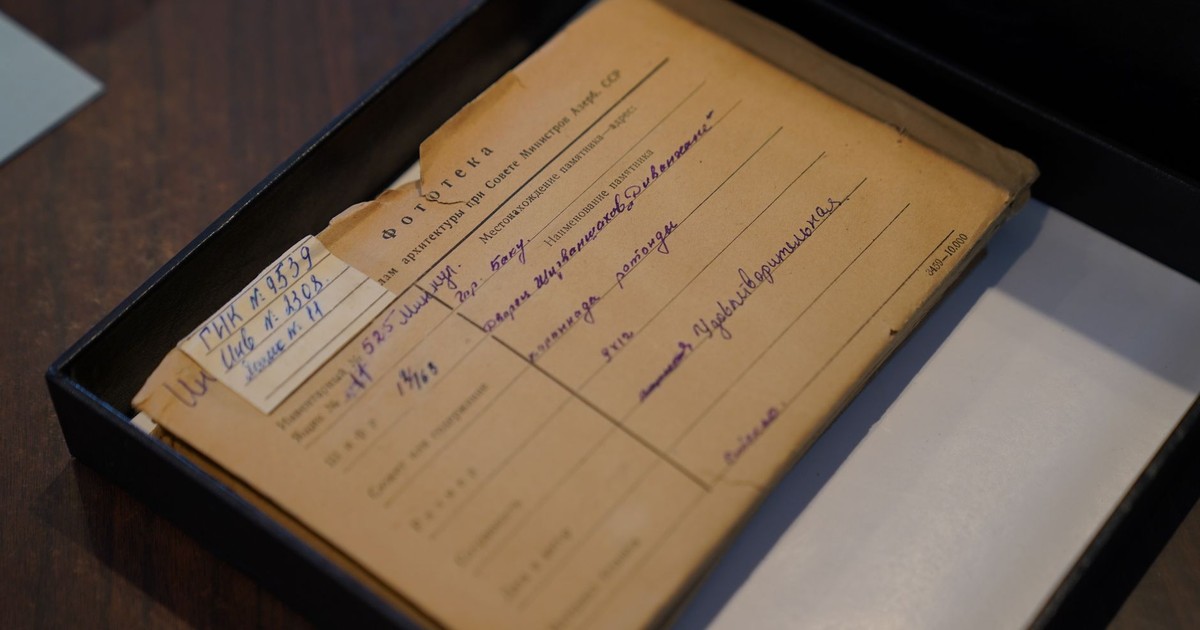
The term didn’t originate on social media. Its academic history stretches back to at least the early 1990s. Philosopher Jacquelyn N. Zita explored it in her influential essay “Male Lesbians and the Postmodernist Body,” first published in Hypatia in 1992 and later appearing in her 1998 book Body Talk: Philosophical Reflections on Sex and Gender. Rather than approaching the issue from a psychological perspective, Zita explored it as a philosophical question about how society defines sex, gender, and identity. Her work examined whether identity should be understood primarily through biology, lived experience, or self-identification, and highlighted the tensions these questions created within feminist and lesbian communities.
Those tensions were real and sometimes fierce. Second-wave feminism in the 1970s and 1980s often defined lesbianism in explicitly political terms – as a rejection of patriarchal structures, not just a description of attraction. A political definition of lesbian identity that defines lesbianism as a continuum, fluid and nonessentialist, has been important to sustaining lesbian identity over time. Unlike the “born this way” narrative more common in gay men’s communities, lesbians have often described and theorized lesbian identity as political, based on women’s choice to love other women.
That history is relevant because it’s part of why the question of who gets to call themselves a lesbian has long been contested within the community itself, not just from outside it. The current social media conversation is new in its reach, but the underlying questions are not.
Why It’s Spreading Now

The set of vocabulary and specific labels reflecting the diversity of sexual orientation has continued to evolve well beyond “lesbian,” “gay,” and “bisexual.” That evolution is partly generational. Gallup’s latest update on LGBTQ+ identification finds 9.3% of U.S. adults identifying as lesbian, gay, bisexual, transgender, or something other than heterosexual in 2024, up from 7.6% in 2023 and nearly double the figure from 2020. LGBTQ+ identification is rising as younger generations enter adulthood, with more than one in five Gen Z adults identifying as LGBTQ+.
Within that broader shift, gender identity is becoming increasingly decoupled from sexuality in how young people understand themselves. Sexual orientation – who you’re attracted to – and gender identity are independent of each other: a trans person can be gay, straight, bisexual, and so on. That seems obvious once it’s stated plainly, but it’s a relatively recent mainstream understanding. When more people live at the intersection of a trans or non-binary gender identity and a lesbian sexual orientation, a label that captures both becomes useful – and for some, necessary.
Dr. Shanéa Thomas, AASECT’s 2024 Sexuality Educator of the Year, noted that she rarely hears the phrase used in LGBTQ+ spaces themselves and believes much of the current discussion is being driven by social media rather than everyday community language. That’s an important caveat. The online conversation about male lesbians is not necessarily representative of how the identity is actually lived in queer communities day to day, where people tend to describe themselves in more specific, contextual ways rather than through terms that have gone viral.
The Debate Within the Community
Not everyone in LGBTQ+ spaces welcomes the label, and the pushback is worth taking seriously. Some lesbians argue that the word “lesbian” refers specifically to women attracted to women, and that expanding it to include people who identify as male – regardless of how they came to that identity – dilutes its meaning and potentially erases the specificity of lesbian experience. The debate touches the same fault lines that have run through queer feminism for decades: who defines a community’s boundaries, and who has the standing to do so.
How queer identity labels evolve has never been straightforward, and this case is no different. Even the experts who study these questions professionally don’t offer a clean resolution. Rather than focusing on whether the label is “right” or “wrong,” experts say it’s more helpful to ask individuals what they mean by it. That’s not a dodge. It’s an acknowledgment that identity labels are tools, not verdicts, and the same word can mean genuinely different things to different people who use it in good faith.
Lesbian intellectual traditions offer an understanding of lesbian identity as political, nonessentialist, intersectional, and community-grounded. The rejection of the “born this way” narrative of lesbian identity allows lesbianism to be inclusive of different configurations of gender identities, including trans, non-binary, and cisgender women, as well as different sexual orientations including bisexuality, demisexuality, and asexuality. For those who hold this view, a transmasculine person who identifies as a lesbian is not a contradiction. They are a continuation of a tradition that has always been bigger than biology.
What This Tells Us About Identity Labels in General
The discomfort that many people feel around the term “male lesbian” is, at its core, a discomfort with complexity. We tend to prefer categories that are clean, stable, and mutually exclusive. Sexual orientation goes here; gender identity goes there. But human experience has never been that tidy, and the language people use to describe themselves tends to resist the diagrams we draw around it.
Transgender experiences have been attested since the dawn of civilization. Long before gender was reinterpreted as socially constructed and non-binary by 20th-century Western scholarship, concepts such as not belonging to the gender assigned at birth, transitioning, and being “neither a man nor a woman” integrated the belief systems and practices of various societies worldwide. The labels are modern; the experiences they describe are not.
What has changed is visibility. More people are living openly outside traditional categories, which means more people need language that captures experiences those categories weren’t built for. A term like “male lesbian” isn’t a sign that identity politics has gone too far. It’s a sign that the existing shorthand wasn’t doing enough of the work.
The Part That Stays Complicated
The identity means something specific to a trans man who came out as a lesbian at 19 and still considers lesbian community his home at 35. It means something different to a non-binary person whose gender shifts and whose attraction to women has always felt most accurately described as lesbian. And it means something different again to a cis woman who feels the label represents an intrusion into a space that was built around her specific experience. All three of those people are engaging with the same two words. They are not, in any straightforward sense, having the same conversation.
Some of these debates go back further than social media does, further even than the academic literature of the 1990s. The question of who gets to claim lesbian identity has always carried political weight inside the community, not just curiosity from outside it. Naming that history doesn’t settle the argument – but it does change the texture of it. The most useful question when you encounter the term is probably the simplest one: what does it mean to the specific person using it?
Disclaimer: This information is not intended to be a substitute for professional medical advice, diagnosis, or treatment and is for information only. Always seek the advice of your physician or another qualified health provider with any questions about your medical condition and/or current medication. Do not disregard professional medical advice or delay seeking advice or treatment because of something you have read here.
AI Disclaimer: This article was created with the assistance of AI tools and reviewed by a human editor.