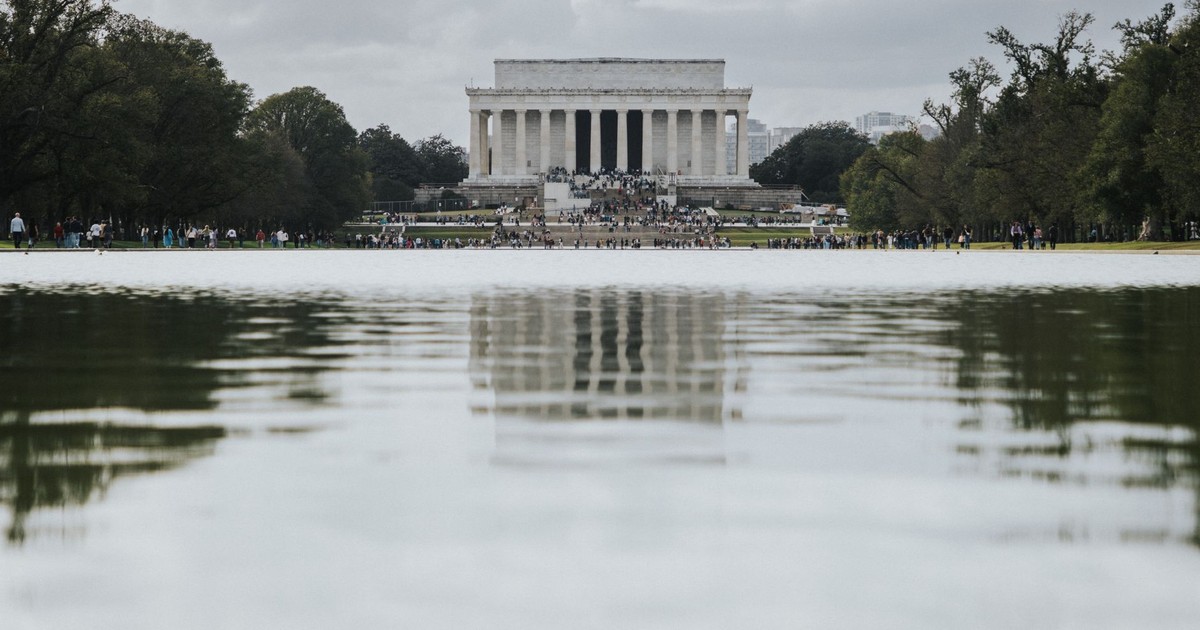

Photographs of the exposed Lincoln Reflecting Pool bottom, shared online just hours after pumps were installed, show something that has nothing to do with vandals. Running across sections of the drained basin are what appear to be a series of parallel track-like impressions pressed into the pool’s blue floor. The pool is being drained for the second time in a matter of weeks. And the marks on the bottom were almost certainly there before anyone thought to look.
The markings have attracted renewed attention because Trump’s motorcade was driven across the drained Reflecting Pool during a highly publicized inspection on May 7, with video posted by White House Communications Director Steven Cheung showing presidential vehicles traveling across the basin. The timing matters. The motorcade crossed the pool just after the new blue coating was applied. The photographs showing marks on the Lincoln Reflecting Pool bottom are now circulating widely, and they are raising a pointed question: if the coating was damaged by vandals, why does the most visible evidence of anything being pressed into that surface look like tire tracks?
The White House’s answer, delivered repeatedly by President Trump on Truth Social, has been consistent: vandals did it. Critics, pool coating specialists, and at least one aquatics expert aren’t so sure. Several different problems appear to be happening at once, with different causes.
A Pool With a History of Problems
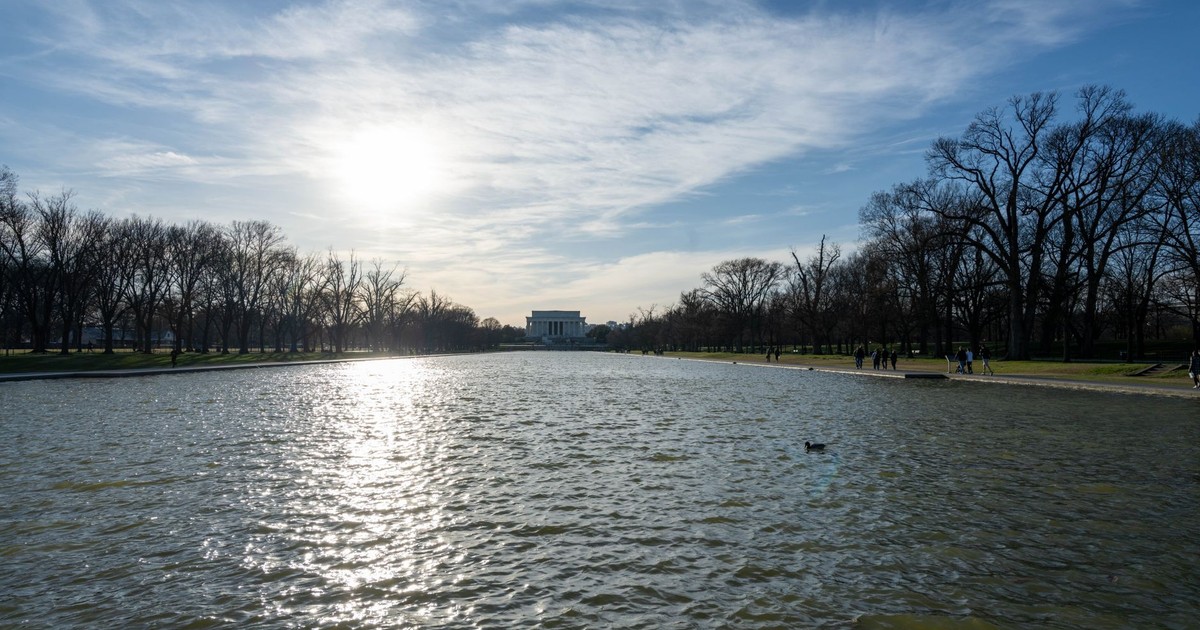
Before any of the current controversy, the Lincoln Memorial Reflecting Pool had a long track record of structural failure that had nothing to do with politics. The pool sank about a foot in the decades after its 1920s construction, a slow-motion engineering problem rooted in the ground itself. Built as a complement to the Lincoln Memorial, the pool was installed on marshland that had been drained and supplemented with dredged material from the Potomac River, constructed without an underlying support structure, sitting directly on soft ground. Over time, the heavy structure began to slowly sink and leak.
In the 1980s, concrete was poured into the bottom of the pool to try to fix some of the damage, but by 1986, the pool’s structural system was failing. Eventually, the pool was losing around 500,000 gallons of water per week due to cracks, leaks, and evaporation. A fix finally came in 2010, when a comprehensive federal restoration project broke ground.
Between November 2010 and August 2012, crews drained the reflecting pool and worked to restore the water feature, elevating it back out of the marshland and decreasing the depth by about 6 inches. Nearly all of the original structure was torn out, and over 2,100 timber pilings were pounded into the ground every 2 feet, 9 inches apart to provide support.
That restoration, which ran to a $34 million final cost, was thorough and took nearly two years. Trump initially estimated the 2026 project would cost $1.5 million to $2 million and take about two weeks.
The “American Flag Blue” Renovation
According to NBC News, President Trump announced the renovation of the Lincoln Memorial Reflecting Pool in April as a beautification effort that included painting the bottom of the pool “American flag blue.” The pitch was simple: clean the pool, waterproof the floor, get it done in time for the nation’s 250th anniversary on July 4. In April, Trump estimated the cost would be between $1.5 million and $2 million. The federal government has since spent at least $14 million to refinish the pool, not including federal employee labor costs such as National Park Service staff, making the total cost at least seven times greater than the original estimate.
The Department of the Interior awarded a no-bid contract on April 3 to Atlantic Industrial Coatings for $13.1 million, with subsequent contract amendments bringing the total to approximately $14.7 million. The agency justified not getting bids from various contractors by saying the project was urgent and needed to be completed by July 4. The material chosen was polyurea, a type of plastic-like sealant, applied over an epoxy primer on top of the pool’s concrete slabs.
There was an early warning sign that the contractor and the timeline might not be well-matched. Installing linings on pools and making sure they properly adhere is challenging, experts in pools and waterproof coatings have told news outlets, and improper surface prep or water intrusion can cause peeling. One company that knew the pool well had already passed on the job. Sika, the firm that worked on the 2010-2012 restoration, was approached in late March about the project and declined, after assessing the work as unfeasible given the tight timeline and the technical challenges of lining the pool’s expansion joints.
Coating specialists say that some polyureas are not stable under UV light, and that an epoxy primer, which is common on garage floors, is too rigid to handle the flexing joints in a structure like the Reflecting Pool. These are not obscure engineering concerns. They are the kinds of things that typically get sorted out during a competitive bidding process with time built in for assessment.
Peeling, Algae, and a Drained Pool
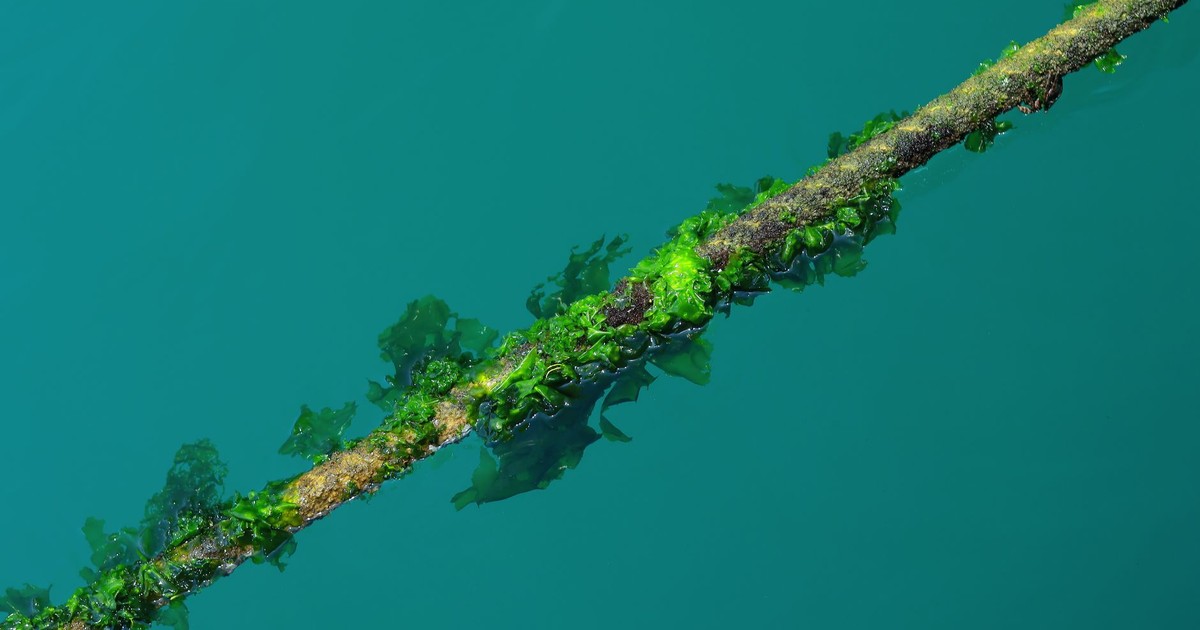
Within days of the renovation being declared complete, things started going wrong. The project faced a series of setbacks, including algae blooms that turned the water green and reports that portions of the newly installed coating were peeling away from the bottom of the pool. Images circulating online showed blue chunks floating to the surface, peeling away in large flakes.
Algae would be expected in a shallow, still, unshaded pool fed by nutrient-rich water, Steven Chapra, a water quality modeler and professor emeritus at Tufts University, told FactCheck.org. The dark blue bottom absorbs more heat than a lighter surface, keeping the water warmer and compounding conditions that favor algae growth. None of that requires a villain.
Trump’s response was to attribute the deterioration to deliberate sabotage. President Trump has repeatedly blamed vandals for damaging the new blue lining of the Lincoln Memorial Reflecting Pool, which is peeling, as well as for the algae in the water. But the administration has not provided evidence to back up those claims. His description of the alleged damage has also shifted considerably. In June, the president said the so-called “gash” was just 250 feet long. Then it changed to 300 feet, 350 feet, and finally, 300 yards long, the size of three football fields.
Six people were arrested for alleged vandalism in connection with the pool, including former Olympic canoe racer David Hearn, who maintains he was doing nothing more than picking up one of the large chunks of blue coating that had floated to the surface on its own.
What the Drained Pool Actually Showed
When the pool was drained a second time beginning around July 10, the expectation was that the alleged gash, whatever size it turned out to be, would finally become visible and settle the debate. Several social media users who have been tracking the drainage process said they could not identify evidence of a large “gash” from the images currently available. Visibility remains limited, and much of the pool remains inaccessible behind fencing installed around the site. One widely shared post said there was “no sign of a 350-foot gash” as the drainage continued.
Photographs did show something else entirely. A series of parallel marks stretching across sections of the exposed pool floor appeared in the photographs. Tim Auerhahn, chair of Aquatic Council, LLC, told Newsweek that it is difficult to draw clear conclusions from the current images. “Based on publicly available photographs alone, I don’t think it’s possible to definitively identify those features as tire tracks or determine their significance.”
Auerhahn added something worth noting: if those features are in fact related to vehicle traffic, they would represent one of several factors that should be evaluated as part of a comprehensive forensic failure analysis. The motorcade crossing is not off the table as a contributing cause of the coating damage.
Court filings submitted by National Park Service officials have also cited a June 9 incident in which a sharp object allegedly cut through caulk covering the pool’s foam sealant and debris was thrown into the basin. That is a real documented incident. What it does not do is explain the much larger pattern of peeling, the algae growth, the bubbling reported in the coating in mid-May, or the marks that appear on the Lincoln Reflecting Pool bottom now. Tim Auerhahn told the New York Times in May that he would want to look closely at the impact of Trump driving his motorcade over the newly coated surface the day before, and the Times reported that Department of Interior staff had expressed concerns about bubbling and small holes in a layer of the waterproofing material. Those concerns predate the first vandalism arrest by more than a month.
Interior Secretary Doug Burgum has said the latest draining was anticipated and would allow crews to remove debris, repair vandalism, and carry out additional maintenance before refilling the pool. A second full draining of a roughly 4-million-gallon basin, weeks after the project was declared done, is not part of a routine plan.
The Part That Doesn’t Add Up

A coating system that specialists warned was ill-suited to the conditions. A contractor with no prior federal contract history, billing a profit margin that a National Park Service analysis flagged as two to three times the industry standard. A motorcade driven across the freshly coated floor. Bubbling and small holes reported internally weeks before any public vandalism claim. Algae predictable enough that a Tufts professor could explain it in a single sentence. And then, after all of that, a criminal arrest of a former Olympian who says he was picking up loose material from the surface.
These facts don’t resolve neatly into a single story because they don’t belong to one. The peeling has plausible engineering explanations. The algae has plausible chemistry explanations. The marks on the floor have a plausible explanation sitting in the footage that Steven Cheung posted in May. Each of those threads exists alongside the vandalism claims, not because of them. The pool is still fenced off, still not fully visible to independent observers, and still being worked on as of mid-July.
A landmark that has stood at the center of American civic life since 1922, that reflected the Washington Monument the morning of the March on Washington when 250,000 people gathered at its banks, is currently behind a chain-link fence on the National Mall, being drained for the second time in a month, with pumps humming where the reflection of the sky used to be.
AI Disclaimer: This article was created with the assistance of AI tools and reviewed by a human editor.