

Most Americans will chalk up a higher July electric bill to running the air conditioner harder during a hot stretch. That explanation works until you look at the numbers. Bills have risen faster than inflation every year since 2022, and the nation’s largest electricity grid just held a capacity auction that came up 6,831 megawatts short of what the region needs to stay reliable. The air conditioning explanation doesn’t account for that.
For most of the twenty-first century’s first two decades, overall U.S. electricity use was essentially flat. Efficiency gains in appliances, lighting, and industrial equipment absorbed most of the growth from new homes and businesses. Then, roughly between 2020 and 2023, forecasts began moving sharply upward. The culprit was not a new population surge or a manufacturing renaissance. It was the server.
The AI boom that followed ChatGPT’s public launch at the end of 2022 sent hyperscale data center construction into overdrive. Every large-language model query, every image generated, every AI-assisted search requires a cluster of chips drawing continuous, uninterrupted power at scales that dwarf almost any other commercial load. The grid was not built for this, and the bill for catching up is arriving now, distributed across millions of residential electricity customers who had nothing to do with building the infrastructure.
The Price Trajectory: What the Numbers Actually Show

The U.S. average residential electricity rate has risen 25% in four years, climbing from 15.04 cents per kilowatt-hour in 2022 to 18.83 cents as of April 2026, according to Electric Choice, which draws on EIA data. Year-over-year changes tell the story of escalating pressure: up 6.4% in 2023, 3.0% in 2024, 5.0% in 2025, and then 7.4% in the most recent year-over-year comparison. Rising natural gas prices, record data center construction, and grid-hardening investments after extreme weather are the primary drivers.
Regional variation makes July genuinely painful for some households. The Northeast already averages 25.91 cents per kilowatt-hour for residential customers, about 38% above the 18.83-cent national average. California sits at 35.25 cents per kilowatt-hour, driven by renewable mandates and wildfire infrastructure costs, while Connecticut comes in at 32.24 cents. For households in those states, any further price increase compounds on a base that is already nearly double the national average. North Dakota, by contrast, sits at 12.35 cents.
The EIA’s May 2026 Short-Term Energy Outlook projects that residential electricity prices will increase by 5% in 2026 and continue rising in 2027, with the largest increases concentrated along the East Coast. That same report contains a milestone that most residential customers haven’t heard about: the commercial sector, which includes data centers, is forecast to consume about the same amount of electricity as the residential sector in 2026 at roughly 1,530 billion kilowatt-hours each. Commercial electricity demand is likely to surpass residential use for the first time on record in 2027.
Why Summer Bills Hit Hardest
Summer is when electricity markets tighten the most. Cooling demand peaks in July and August, wholesale prices spike during heat events, and grid operators approach their reserve margin limits. Above-average temperatures this summer contribute to a forecast 3% increase in U.S. electricity generation compared with the summer of 2025. More generation means more fuel consumed, more grid infrastructure stressed, and more cost flowing through to consumers.
Data centers run at full capacity around the clock, 365 days a year, creating what grid engineers call baseload demand. Unlike a factory that ramps down at night or a shopping mall that closes at 9 p.m., a data center serving AI workloads draws consistent, massive power at every hour of every day. During a summer heat wave, when residential air conditioning peaks are already straining the grid, data center demand does not relent. The grid has to serve both simultaneously.
The PJM Auction: A Reliability Alarm Hiding in Plain Sight
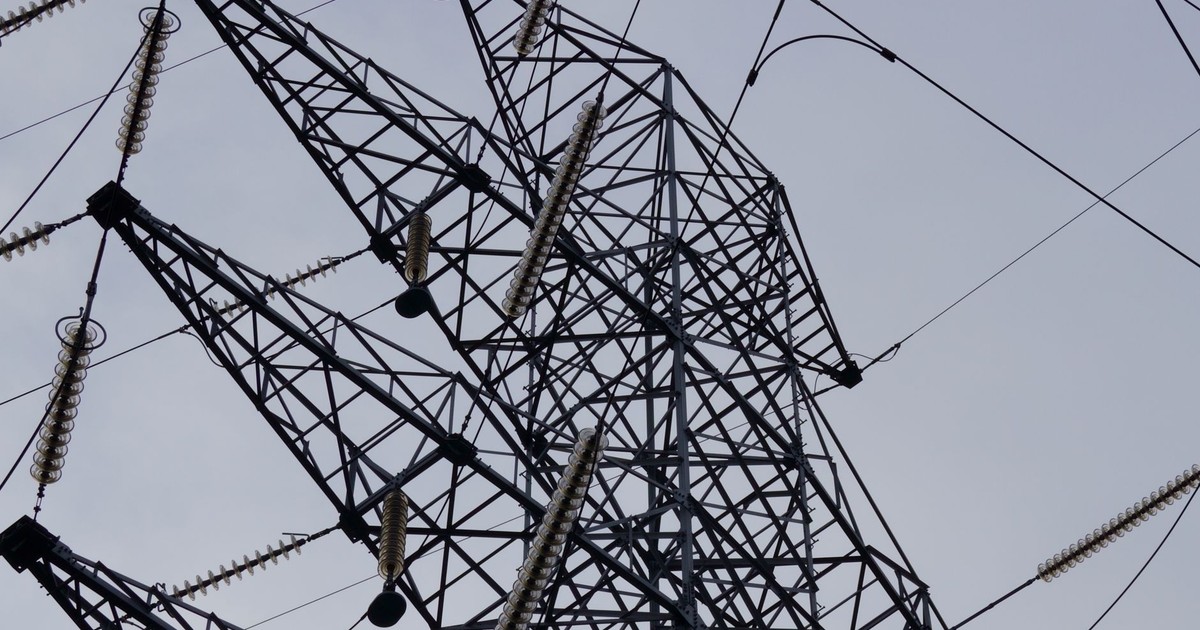
The most revealing single data point about where the U.S. electricity system is heading came out of Valley Forge, Pennsylvania on July 14, 2026. PJM Interconnection announced the results of its 2028/2029 Base Residual Auction, which secured 138,318 megawatts of generation and demand response to meet projected electricity needs for more than 67 million people across 13 states and the District of Columbia. The problem is what the auction failed to secure.
The price came in at the FERC-approved cap of $325 per megawatt-day for the entire PJM footprint, and according to Utility Dive, the auction left PJM with a roughly 6.8-gigawatt shortfall below the grid operator’s 20% installed reserve margin target, an increase from the previous auction’s shortfall of 6.5 gigawatts. It drew only about 525 megawatts in new resources. PJM also stated that a roughly 2-gigawatt increase in forecast demand, driven largely by data center development, contributed to the outcome. To put the shortfall in context, 6,831 megawatts is roughly the output of seven large nuclear power plants.
Federal Energy Regulatory Commission Chairman Laura Swett did not mince words. “These numbers compound the alarm bells for a call to action in PJM,” she said during the agency’s monthly meeting on July 16, adding that she was not surprised PJM failed to deliver. Pennsylvania Governor Josh Shapiro’s office noted that without the price cap that was negotiated and extended, Pennsylvania consumers and those across PJM’s 13-state region could have been exposed to prices exceeding $554 per megawatt-day, without corresponding reliability improvements to justify the cost.
Claire Lang-Ree, a climate and energy advocate with the Natural Resources Defense Council, put the trend plainly: “This year’s auction confirms an unacceptable trend: data center load growth is outpacing new electricity supply, degrading reliability, and keeping prices at the cap.”
When a market hits its price ceiling and still can’t clear, that is not a pricing problem. It is a supply problem.
Virginia: The Ground Zero Case Study
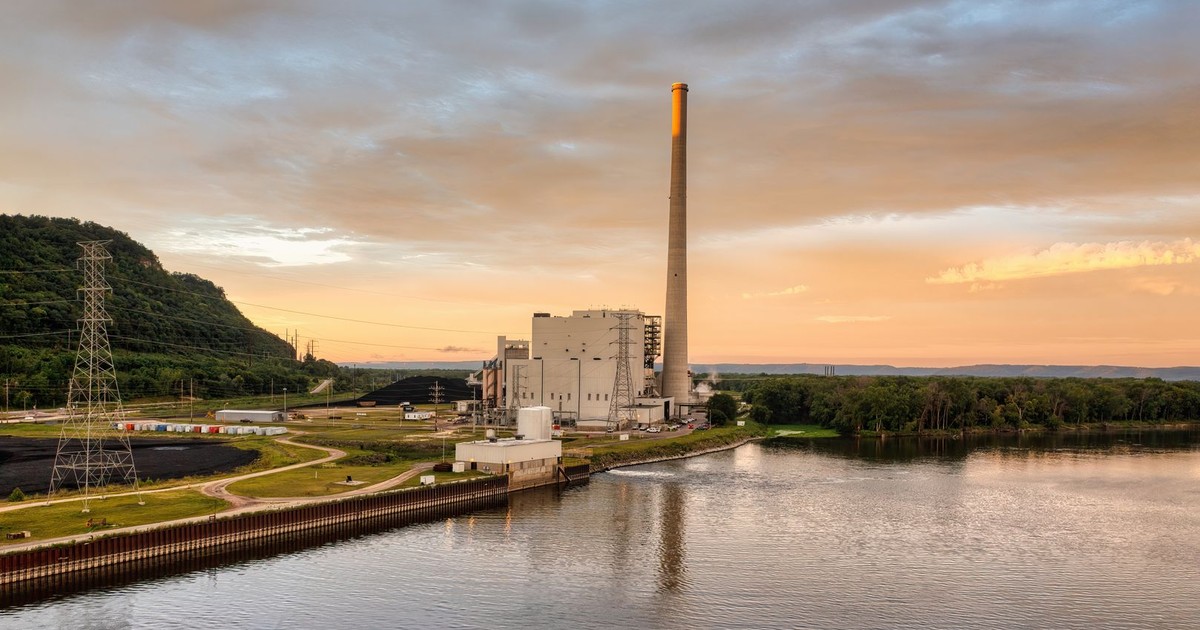
Virginia shows how directly data center growth translates into grid strain and rising bills. According to Virginia’s Joint Legislative Audit and Review Commission (JLARC), the state’s energy demand was essentially flat from 2006 to 2020 because population growth was offset by efficiency improvements. An independent forecast commissioned by JLARC subsequently found that unconstrained demand for power in Virginia would double within the next 10 years, with the data center industry being the main driver.
PJM expects the Dominion zone, which covers Virginia, to experience the largest absolute increase in summer peak demand of any region in the period 2026 through 2030, largely because of data center load growth. The Dominion zone currently serves the largest concentration of data centers in the world. Commercial electricity sales in Virginia rose by nearly 30 million megawatt-hours between 2019 and 2025, one of the fastest growth rates in the country, second only to Texas, with PJM attributing the sharp increase largely to rapid data center expansion. Summer peak load in PJM’s Dominion zone was 23,905 megawatts in 2025, 23% higher than in 2019.
A typical AI-focused hyperscaler consumes as much electricity annually as 100,000 households, according to the IEA. The largest hyperscale facilities now under construction are expected to use 20 times that amount. Virginia has the largest concentration of these facilities on earth.
In November 2025, Virginia’s retail electricity regulator, the State Corporation Commission, approved a new electricity rate class for large-scale customers, starting in January 2027. The new class requires affected customers to pay for at least 85% of contracted distribution and transmission demand and 60% of generation demand. It is an attempt to ensure that the entities driving demand growth pay more directly for the infrastructure required to serve them, rather than having those costs spread uniformly across all residential customers.
The National Demand Surge: How Big Is This?
The Virginia story is the most acute regional example, but the national picture is not materially different in direction, only in degree. Commercial sector electricity consumption is on track to surpass residential demand in 2027 for the first time on record, driven by the rapid expansion of data centers.
A 2024 report from Lawrence Berkeley National Laboratory found that data centers consumed about 4.4% of total U.S. electricity in 2023 and are projected to consume between 6.7% and 12% of total U.S. electricity by 2028. Total data center electricity usage climbed from 58 terawatt-hours in 2014 to 176 terawatt-hours in 2023, and is estimated to more than double or triple by 2028. Between 2017 and 2023, data center power demand more than doubled, largely because of growth in AI servers.
Individual chips are getting more efficient, but the number of chips being deployed is growing faster than efficiency improves. Berkeley Lab’s research confirmed that computational demand is scaling in a way that consistently outpaces hardware gains, leading to continued increases in absolute electricity consumption.
Who Pays for the Infrastructure?
The price of electricity is not just the cost of generating a kilowatt-hour. Utilities are pouring money into transmission, reliability, and grid hardening, and those costs flow through to customers over time through rate cases that affect every customer in a utility’s service territory, not just the data center that required the new substation.
When a hyperscale data center is built on the outskirts of a mid-sized city, the utility doesn’t just flip a switch and start delivering power. New substations have to be constructed. Transmission lines capable of carrying the load have to be run. In some cases, entirely new generation capacity has to be contracted and built. Demand is rising fastest where data centers are clustering, notably in the PJM and ERCOT (Texas) regions, tightening regional power markets and nudging bills higher for all customers in those territories.
Virginia’s new rate class for data centers represents one attempt to address this cost-shifting dynamic. If a large customer is driving the need for new infrastructure, that customer should bear more of the cost rather than having it averaged across residential customers. Whether it will be sufficient is a separate question.
The Reliability Question Nobody Wants to Answer
Three consecutive PJM capacity auctions have now hit their price caps. The reserve margin shortfall has grown from auction to auction. In December 2025, PJM fell short of its reliability requirement for the 2027-28 delivery year by approximately 6.5 gigawatts. The July 2026 auction produced a larger shortfall at 6,831 megawatts.
Less new supply entering the market despite higher prices suggests something structural: permitting timelines, interconnection queues, financing constraints, and transmission bottlenecks are slowing new generation even when the price signal is calling for it. PJM plans to seek FERC approval in September for a special backstop procurement process designed to fill the supply gap in the near term.
What This Means for Your Bill Right Now

The connection runs through capacity markets, rate cases, and transmission charges that most residential customers never see itemized on their bills. But it’s there, and it has been building for years.
State-level variation matters enormously. Ohio saw residential prices rise nearly 20% in the year through April 2026. New Jersey was up nearly 17%. If you live in a state with a major data center cluster and a utility that just filed a multi-billion-dollar rate case for grid modernization, those two pressures are arriving on the same bill at the same time. If you live in North Dakota, where electricity averages 12.35 cents per kilowatt-hour, the current price surge affects you less severely. North Dakota does not have 600 data centers. Virginia does, and Virginia’s residential customers are living with the consequences in real time.
There is no short-term fix in view. New generation capacity takes years to permit, finance, and build. Transmission infrastructure takes even longer. The PJM interconnection queue, where new generation projects wait for grid studies before they can connect, is longer today than it has ever been.
The Bill You’re Holding
Data center construction, driven by the global race to build AI infrastructure, is being treated as an urgent national priority. The grid needed to power that infrastructure is being expanded at the pace that permitting, procurement, and public utility regulation allow. Those two timelines are not compatible, and the mismatch is being paid for, a few cents per kilowatt-hour at a time, by people who simply turned on their air conditioner.
Some states are attempting course corrections. Virginia’s new data center rate class shifts more of the infrastructure cost burden onto the customers creating the demand. PJM is designing new market mechanisms to manage large-load interconnections. FERC is pushing PJM to clarify how hyperscale customers connect to the grid. None of these adjustments will show up on a July 2026 bill. The infrastructure costs already committed will flow through rate cases over the next several years, meaning the trajectory of residential electricity prices is largely set through at least the end of the decade regardless of what gets decided now.
Efficiency improvements in chips and cooling technology are real, and they matter at the margin. But as the Berkeley Lab research found, computational demand is scaling faster than those efficiency gains, and absent a dramatic slowdown in AI infrastructure investment, that dynamic is not changing. The era of flat electricity demand is over. The question is how quickly supply catches up, and who pays for the gap in the meantime. and that answer might be You!
Disclaimer: This information is not intended to be a substitute for professional medical advice, diagnosis, or treatment and is for information only. Always seek the advice of your physician or another qualified health provider with any questions about your medical condition and/or current medication. Do not disregard professional medical advice or delay seeking advice or treatment because of something you have read here.
AI Disclaimer: This article was created with the assistance of AI tools and reviewed by a human editor.