
The video opened with a graphic of Melania Trump’s profile drawn in blood. It ran for two minutes. It named the stores she shops at on Fifth Avenue, the security signals that indicate she’s about to arrive, and the methods a would-be attacker could use to get close to her. Then, at the end, came the line aimed not at Melania but at her 20-year-old son: “This is just the beginning. Barron Trump, wait for us.”
The video surfaced on July 28, 2026, less than five months after a joint American-Israeli military operation killed Supreme Leader Ali Khamenei in Tehran. Iran threatens Trump family regularly, but this was different in tone and specificity: a propaganda film structured as an assassination guide, aimed at a woman and a college student.
The clip spread rapidly across social media, shared prominently by Russian state television RT. Within hours, it had been picked up by news outlets across the world. The Secret Service confirmed it was aware of the material and investigating.
Who Made the Video and Why That Matters
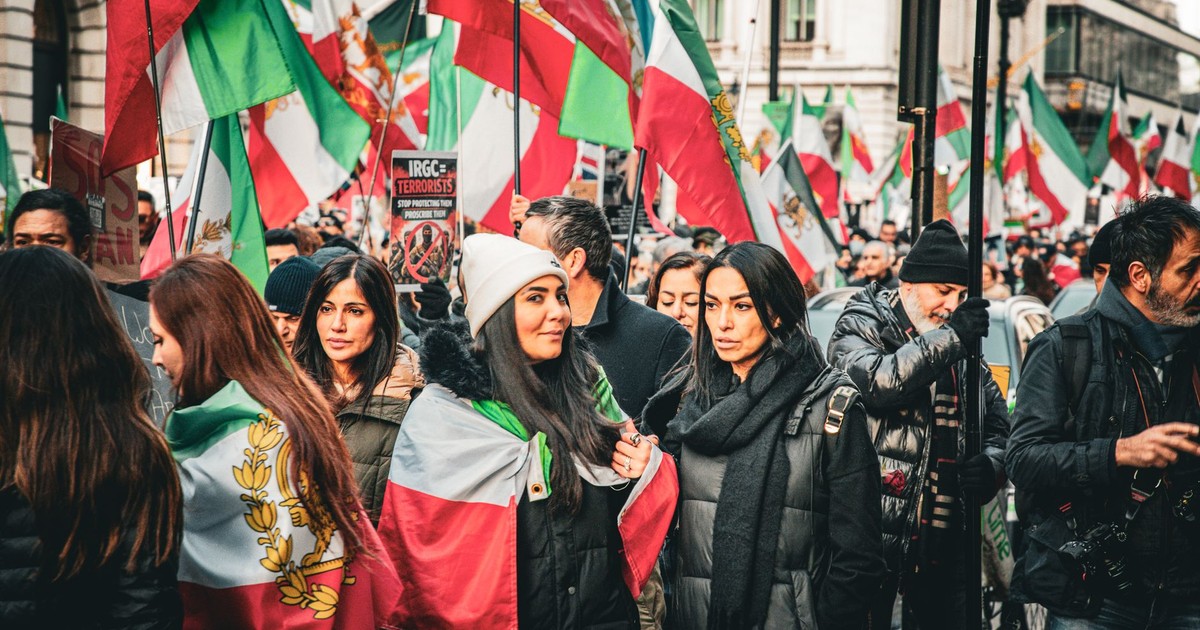
The video was shared on the Telegram account of Tasnim News Agency, which is known for its close ties to Iran’s Revolutionary Guard. Tasnim is widely considered the IRGC’s primary media outlet: it was founded by two IRGC commanders and was sanctioned by the U.S. in 2023 over its ties to the Revolutionary Guard. The IRGC itself is Iran’s most powerful military organization, directly accountable to the supreme leader, and has a long track record of directing assassination operations on foreign soil.
When its affiliated media produces a video titled “Where to Kill Melania?!” and distributes it internationally, it isn’t doing so without institutional awareness.
One analyst specializing in Iranian external operations said the video’s primary purpose appeared to be psychological rather than operational, noting that “Iranian state media inciting against the President’s family and First Lady is of greater cognitive than kinetic value, and likely feeds into Tehran’s posturing and attempts to project strength.” Psychological operations and operational ones are not mutually exclusive. The same video that signals defiance to a domestic Iranian audience also, theoretically, activates anyone willing to act on it.
What the Video Actually Showed
The two-minute film was titled “Where to Kill Melania?!” and used publicly available information, AI-generated imagery, and English subtitles to identify multiple locations the First Lady is known to visit in New York City.
The video claims the Secret Service’s codename for Melania is “Muse.” It identifies what it calls her biggest vulnerability: her love of fashion. “Melania’s obsession with fashion has become her biggest weakness,” the video states, identifying luxury department stores on Fifth Avenue in Manhattan, including Bergdorf Goodman and Saks Fifth Avenue, as locations that “could be suitable for operations by global freedom fighters.” The clip goes on to explain how militants could identify signs that Melania is planning to visit these locations in advance, including public bins being removed from street corners and manhole covers being welded shut.
The footage called on “freedom fighters” to use a nerve agent to poison the First Lady and named three of her personal stylists, who they suggested be bribed to poison her clothing. Much of the underlying information appears to have been sourced from publicly available data. The narrator claimed the material came from “anonymous security networks and satellite images,” though analysts who reviewed the video found little evidence of genuine intelligence penetration. The security procedures it described, such as manhole covers being sealed before a presidential motorcade, are standard Secret Service protocols widely reported in the press.
Towards the end of the video, a narrator threatened the Trumps’ 20-year-old son, who is a student at New York University: “This is just the beginning. Barron Trump, wait for us!”
The Secret Service Response
Newsweek confirmed that Nate Herring, a lead public affairs specialist with the U.S. Secret Service’s Communications and Media Relations office, told the publication the agency is aware of the video and investigates “anything that can be perceived as a threat toward our protectees.” “Out of concern for operational security, we do not discuss matters of protective intelligence,” he added.
That language is standard and deliberate. The Secret Service does not discuss protective intelligence publicly, for obvious operational reasons. Security expert Aran Dharmeratnam, a specialist in protective intelligence who spoke to LBC, said: “Content depicting threats, encouraging violence or providing instructions intended to help terror cells or lone actors carry out attacks or assassination plots must be taken extremely seriously.”
This is not the first time the Secret Service has had to assess Iranian content targeting the Trump family. The agency has been managing elevated Iranian threat assessments against Trump for years, a situation that escalated sharply after the 2020 drone strike that killed IRGC commander Qasem Soleimani in Baghdad.
The Broader Campaign of Threats
The Melania video didn’t appear in isolation. Billboards in Tehran last week demanded the deaths of other Trump family members, including Melania, Don Jr., Ivanka, Eric, Tiffany, and Barron, reading “Blood for blood.” Separately, banners stating “We will kill Trump” appeared in Mashhad around the burial of Iran’s former Supreme Leader.
In July, a billboard depicting portraits of Trump, Melania, and several of the president’s children above coffins draped in American flags was spotted in Tehran’s Palestine Square. Last week, Barron and Melania, along with Ivanka Trump, were featured on a billboard with their eyes shut, with the word “KILLED” written in red across the top.
When Tehran would not accede to U.S. demands to end all nuclear enrichment activity, the United States and Israel attacked Iran on February 28, 2026. Trump stated the war goals were to destroy Iran’s ballistic missile capabilities, eliminate its navy, prevent Iran from ever acquiring a nuclear weapon, and sever its support for proxy forces. Large-scale strikes targeted Iranian military assets and the Islamic Republic’s top leadership, killing Supreme Leader Ayatollah Ali Khamenei. Tehran’s Assembly of Experts appointed Ali Khamenei’s son, Mojtaba Khamenei, to succeed him.
The U.S. was also responsible for the death of Iranian Quds Force leader Qasem Soleimani during Trump’s first term in 2020. “As bad as the enmity between the two countries has been for the last 47 years, it was taken up to a new level after the assassination of Soleimani, and then even more importantly, the assassination of Khamenei,” Trita Parsi of the Quincy Institute told Time magazine.
The revenge imperative inside Iran’s political culture is not rhetorical. It shapes policy. And the Revolutionary Guard, even as it faces significant battlefield losses, has carried out documented assassination operations on foreign soil.
A Pattern of Real Plots, Not Just Propaganda
A 2024 DOJ prosecution laid out in stark detail how far the IRGC was willing to go, even before the current war. Three people were charged in a series of alleged Iran-linked murder plots, with one of them accused of trying to assassinate President-elect Donald Trump, and others targeting an Iranian-American activist and two Jewish Americans living in New York. Farhad Shakeri, Carlisle Rivera, and Jonathan Loadholt were charged with murder-for-hire. Rivera and Loadholt were arrested, while Shakeri, whom the FBI described as an “asset” of Iran’s Islamic Revolutionary Guard Corps, was believed to be in Tehran.
The IRGC tasked Shakeri with surveilling and killing Trump to avenge the death of Qasem Soleimani, the leader of Iran’s elite Quds Force, in a U.S. drone strike in Baghdad in January 2020. In mid-to-late September 2024, Shakeri told the FBI that the IRGC official instructed him to “put aside his other efforts” and “focus on surveilling, and, ultimately, assassinating former President of the United States Donald J. Trump.” When Shakeri told his handler it would cost a lot of money, the IRGC official responded: “We have already spent a lot of money.. so the money’s not an issue.”
That case illustrates why the current threat environment is taken seriously beyond its propaganda value. The IRGC has recruited American-based criminal networks, funded surveillance operations, and pursued plots against U.S. citizens on U.S. soil. The Melania video may be designed primarily for psychological effect, but it was produced by an organization with a documented record of following through.
In July 2026, prosecutors indicted eight men on murder and terrorism conspiracy charges for their roles in a foiled sniper attack plan at the UFC Freedom 250 fight at the White House in June. In the affidavit, prosecutors alleged the suspects aimed to assassinate not only Trump, but also Vice President JD Vance, Israeli Prime Minister Benjamin Netanyahu, and Elon Musk at the event. FBI Director Kash Patel said: “Thanks to the rapid action of the FBI, our partners, and the Department of Justice in a multi-state operation, multiple individuals are now in custody, and allegedly planned attacks were stopped cold.”
Naming the Family Was the Point

Barron Trump is 20 years old. He holds no government position. He didn’t order the strikes on Tehran, sign any orders, or appear in any policy briefing. His inclusion in the video, and on the billboards across Tehran, signals something precise about the nature of the threat: it isn’t aimed at decision-makers. It’s aimed at anyone connected to the man Iran holds responsible for the death of its supreme leader.
Iran threatens Trump family members through official state-aligned media because the messaging serves multiple audiences at once. To an Iranian domestic audience still in mourning, it projects defiance. To the international community, it signals that Tehran remains a capable and motivated adversary despite its military losses. And to any number of lone actors or small cells globally, it serves as a call to action, whether or not Tehran ever intended a specific operation.
The security challenge that produces is genuinely hard to solve in practice. Protecting a sitting president is one thing. Protecting a first lady who lives part-time in New York City, a 20-year-old college student, adult children with business interests, and other family members dispersed across the country is a different calculation entirely. The Secret Service can’t discuss those arrangements publicly. The video’s producers clearly understand that too, which is partly why they made it.
Some of these threats will remain at the level of propaganda. Others, as the Shakeri case showed, have operatives, budgets, and criminal networks behind them. Knowing which is which, before anything happens, is exactly what protective intelligence is for. And right now, the volume of signals coming out of Tehran is higher than it has been at any point in the past four decades.
Disclaimer: This information is not intended to be a substitute for professional medical advice, diagnosis, or treatment and is for information only. Always seek the advice of your physician or another qualified health provider with any questions about your medical condition and/or current medication. Do not disregard professional medical advice or delay seeking advice or treatment because of something you have read here.
AI Disclaimer: This article was created with the assistance of AI tools and reviewed by a human editor.