

The argument that breaks out most reliably in any newsroom, family dinner, or campaign war room when immigration comes up is not really about numbers. It’s about whether the public actually supports removing people who came here without legal permission, or whether that support is softer than it looks when enforcement turns ugly and visible. One side says the American mainstream draws back when it sees enforcement up close. The other says it doesn’t. The polling from the past six months offers a fairly clear answer, and it is not the answer either side finds entirely comfortable.
What makes the data worth reading carefully is not that it shows a majority for or against any given policy. It’s that the majority has held in conditions that, by every conventional expectation, should have eroded it. Fatal shootings of American citizens by federal agents. Nationwide protests in Minneapolis. A congressional uproar. A partial administration retreat. After all of that, the number moved a few points, then came back. That pattern tells you something the headline figure alone does not.
Understanding what it tells you requires going past the top line and into the cross-tabs, into the events on the ground that strained public support the most, and into the places where the polling reveals a genuinely divided public trying to hold two contradictory positions at once.
What the Poll Actually Found
The Harvard CAPS/Harris Poll, conducted on behalf of Harvard University’s Center for American Political Studies, gathered responses from 1,725 registered voters on May 29 and 30, with a margin of error of +/-2.4 points. A solid majority, 56 percent, of the voters polled support deporting all immigrants in the country illegally, including 77 percent of GOP voters and 53 percent of Independents. Democratic support climbed four points from 33 to 37 percent, while Independent support rose from 49 to 53 percent.
That 56 percent figure is notable not because it’s a supermajority, but because of what it represents across party lines. For a policy the opposition had been framing as cruel and unconstitutional, a four-point Democratic uptick is a number that registers very differently in a campaign strategy meeting than it does in a press release.
The Criminal Deportation Number Is Even Higher
Some 80 percent of voters polled support deporting immigrants in the country illegally who have committed crimes, up five points from April, when 75 percent supported that position. The rise crosses every party line: Democratic support went from 63 to 71 percent, Republican support from 89 to 90 percent, and Independent support from 73 to 79 percent.
Those two numbers together sketch a public that draws a firm distinction between targeted criminal enforcement and broader removal operations, but supports both. The gap between 80 and 56 is real: roughly one in four voters supports deporting convicted criminals but not everyone without legal status. The fact that 56 percent supports the broader version too is what makes the data politically consequential.
A Consistent Pattern Over Months
The May figures are not an outlier. The Harvard CAPS/Harris polling has tracked these questions consistently since the beginning of the Trump administration’s second term, and the pattern has been stable enough that individual monthly moves mostly stay within the margin of error.
In November 2025, 54 percent of voters surveyed favored deporting all those in the country illegally, two points lower than the October figure. Support among Democrats fell from 36 to 32 percent and among Independents from 54 to 48 percent, while Republican support rose five points to 81 percent. Even in that dip, a majority held. By February 2026, Harvard/Harris asked respondents whether they favored Trump’s vow to deport “all immigrants who are here illegally,” and that policy received approval from 57 percent of respondents, including 35 percent of Democrat voters and 56 percent of Independents.
By March 2026, 54 percent supported full illegal immigrant deportation – a three-point fall from February and a nine-point decline among Independents, who dropped from 56 to 47 percent in a single month. The March slide coincided with the peak of the national backlash over Minneapolis enforcement operations, which makes it one of the only data points where street-level events appear to have moved the needle measurably.
The January 2026 Turn
The events that strained public support most were not abstract. Operation Metro Surge in Minneapolis, billed by the Department of Homeland Security as the largest immigration enforcement operation ever, resulted in three shootings in the first month of 2026. The killing of Alex Pretti on January 24 by federal officers under U.S. Customs and Border Protection is at least the fourth shooting fatality linked to immigration enforcement since Trump returned to the Oval Office.
Pretti, a 37-year-old intensive care nurse for the Department of Veterans Affairs, had been filming law enforcement agents and directing traffic near a protest. At one point he stood between an agent and a woman the agent had pushed to the ground. He was pepper sprayed, wrestled down by several federal agents, and fatally shot. The killing of Renée Good on January 7 by an ICE agent had preceded his death by more than two weeks, and the two cases together drew the kind of national attention that enforcement operations rarely get.
The 13 shootings from September 2025 to February 2026 showed the varied circumstances and places where ICE and CBP officers opened fire on people while conducting President Donald Trump’s campaign to crack down on immigrants in the U.S. Following the outcry, Trump suggested a “softer touch” might be needed, even as the administration announced 700 federal officers would be pulled from Minnesota while mass deportations would continue. Border czar Tom Homan was sent to oversee the Minnesota effort and subsequently announced a drawdown of 700 agents, with around 2,000 remaining.
That language represented a notable departure from the tone that had defined the administration’s immigration posture for more than a year. But it was a tactical adjustment, not a strategic one. The deportation program continued.
Due Process and the Public’s Divided Mind

The polling reveals an electorate that supports deportation in principle while harboring real reservations about how it gets carried out. Those two things are not contradictory – they describe most people’s actual position on most enforcement issues.
A majority of voters say ICE should not be allowed to conduct raids at schools or daycares (72 percent), on the street without a warrant (68 percent), or at workplaces (56 percent). Those same voters also believe, by a 56 percent majority, that ICE has been taking people randomly off the street – a view held by 76 percent of Democrats, 37 percent of Republicans, and 57 percent of Independents.
Sixty-seven percent of voters say local officials should cooperate with federal immigration authorities on deporting those who have committed crimes. Sixty percent believe Democratic officials have been encouraging resistance to ICE, with 57 percent opposing elected officials who do so. And 80 percent of voters say ICE and CBP should identify themselves during enforcement operations, while 86 percent support body camera requirements for agents.
The picture is less of a public demanding sweeping enforcement than one that wants enforcement to follow rules. They want criminal illegal immigrants removed. They want operations to happen with warrants. A clear majority, across that same polling, still supports the underlying policy of removing people in the country illegally. Holding both of those positions at once is not incoherent – it’s actually the most common place the data puts American voters.
The Partisan Asymmetry Problem
For Democratic strategists, the internal numbers in this polling represent a real challenge. Standard political logic says that a policy with 37 percent Democratic support sits comfortably in opposition territory, not popular enough to force a pivot. But 37 percent of your own voters is not nothing, particularly when Independent support sits at 53 percent.
The party’s elected leadership has largely maintained a posture of opposition to the administration’s deportation program, framing it as lawless, due-process-violating, and racially discriminatory. Fifty-seven percent of voters support Democratic efforts to stop deportations and ensure hearings take place before removal. So there is genuine public appetite for procedural protections – just not for abandoning deportation altogether.
That position is politically difficult to carry. The argument “we support deporting criminals, just not without a hearing” is accurate and defensible, but it doesn’t compress into a slogan the way “mass deportation” does. The Republicans have a three-word frame. The opposition is working with a dependent clause.
Enforcement on the Ground vs. Support in the Polls
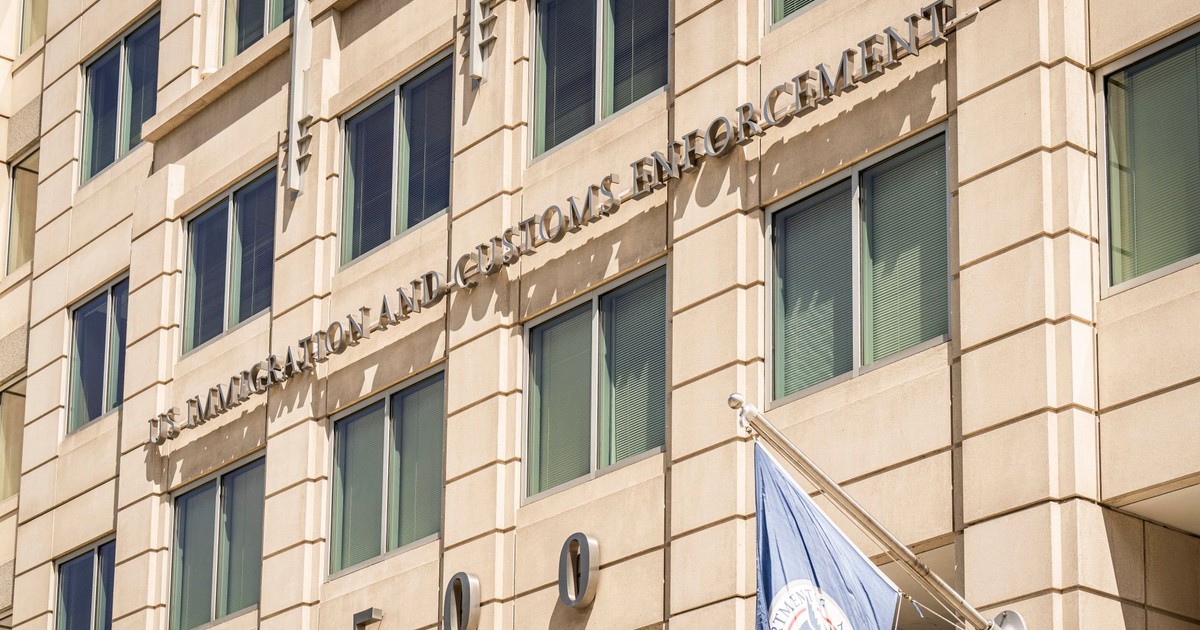
There is a recurring gap in American immigration politics between what people tell pollsters and what they react to when enforcement gets specific and visible. The January 2026 events in Minneapolis illustrated that gap at its sharpest.
A Quinnipiac University poll published January 13, 2026, found that 53 percent of registered voters said the ICE officer was not justified in shooting Renee Good, the 37-year-old who was shot and killed in a standoff with federal law enforcement on January 7. Another 35 percent said the response was justified and 12 percent did not know. That poll was conducted January 8-12, just days after the shooting, and found that 82 percent of registered voters had already seen video of the incident. That level of public exposure to a lethal enforcement incident is unusual. The videos circulated widely and unsettled people across the political spectrum. The March polling dip in deportation support almost certainly captured some of that reaction.
And yet the May numbers, gathered months after the Minneapolis events, after the national protests and the congressional hearings and the bipartisan criticism, show 56 percent support for illegal immigrant deportation of all those without legal status. The floor held. The months of intense coverage shifted Independents a few points in one direction, then back. It did not build the kind of sustained erosion that would ordinarily follow a high-profile law enforcement scandal.
Part of the explanation is the criminal deportation numbers. When 80 percent of voters support one version of the policy and 56 percent support a broader version, the broader version stays buoyant partly because the narrower version is so popular. Someone who isn’t sure about mass deportation may still think the program is basically right if they see it as continuous with the removal of convicted criminals – even when the operational reality is messier than that framing suggests.
Read More: Trump Says He Loves Inflation. Here’s Who’s Actually Paying the Most for It.
What the Numbers Are Actually Telling Us
The easiest misread of this data is to treat it as a mandate. It isn’t. A 56 percent majority for full deportation means that 44 percent of Americans don’t support it – and given the margin of error, the real figure could be closer to half. The number has held, but it hasn’t grown into something that looks like consensus.
The harder misread is to dismiss it because it falls short of supermajority territory. A majority that survives fatal shootings of American citizens, weeks of national protest, and a visible administration retreat is a majority with roots deeper than a news cycle. The March dip showed that events could move it. The return to 56 percent by May showed that the move wasn’t permanent.
What the polling actually describes is an electorate that has settled, for now, on a position that is neither as hawkish as the administration’s rhetoric nor as resistant as the opposition’s. Most Americans want people here illegally removed. Most Americans also want the process to include warrants, identification, and body cameras. Those two things sit in tension with each other when you’re running the largest enforcement operation in U.S. history, and no amount of polling can resolve that tension. It has to be resolved operationally, on the ground, in the gap between what voters tell a pollster on a Thursday and what they see on the news the following week. That gap is where immigration politics actually lives, and the numbers from the past six months suggest neither side has fully closed it.
Disclaimer: This information is not intended to be a substitute for professional medical advice, diagnosis, or treatment and is for information only. Always seek the advice of your physician or another qualified health provider with any questions about your medical condition and/or current medication. Do not disregard professional medical advice or delay seeking advice or treatment because of something you have read here.
AI Disclaimer: This article was created with the assistance of AI tools and reviewed by a human editor.