

Most of the time, a person’s last wishes are exactly what you’d expect: divide the house, sort the savings account, be kind to the dog. History, though, has produced a remarkable number of people who used their final act to do something that nobody saw coming. A philosopher who wanted to keep attending meetings after his own death. A rock star who earmarked cash specifically so her friends could get drunk without her. An emperor who wanted his head shaved and the results distributed like party favors.
Most of the time, a person’s last wishes are exactly what you’d expect: divide the house, sort the savings account, be kind to the dog. History, though, has produced a remarkable number of people who used their final act to do something that nobody saw coming. A philosopher who wanted to keep attending meetings after his own death. A rock star who earmarked cash specifically so her friends could get drunk without her. An emperor who wanted his head shaved and the results distributed like party favors.
These historical last requests reveal the person underneath the legacy. Strip away the statues and the encyclopedia entries, and you find someone who was still, in their final hours, unmistakably themselves. The egotist. The grudge-holder. The true believer. The one who never stopped having a sense of humor about it all. The request they left behind is often the truest self-portrait they ever made.
These fourteen people span centuries and continents, but they share one thing: they refused to let the end be ordinary.
1. Jeremy Bentham: The Man Who Never Really Left the Room

When Bentham died in 1832, he left behind a will with a highly unusual request regarding his remains. As the founder of modern utilitarianism, the philosopher believed it was ethical to do the most good for the most people. His solution to death, then, was characteristically logical: keep going. He donated his body to science, but requested that once researchers had dissected his remains, they mummify his head and preserve his body, dressed in his own clothes and padded out with hay, for display. In this way, he would become an image of himself: an auto-icon.
In the last version of his will, dated May 30, one week before his death, Bentham bequeathed his body to his friend Dr. Thomas Southwood Smith, instructing him and Bentham’s executor to arrange for its dissection to benefit medical science. Bentham’s will also directed that, following the dissection, his skeleton and mummified head be dressed in his clothes and hat, positioned with his chair and staff “in the attitude in which I am sitting when engaged in thought,” and placed within “an appropriate box or case” for viewing.
Bentham suggested that his corpse might then be able to preside over regular meetings of his utilitarian followers. For ten years prior to his death, Bentham purportedly carried in his pocket a pair of glass eyes that were to be embedded into his embalmed head. That part didn’t go as planned. The attempt to mummify his head went badly, leaving the skin on his face discoloured and stretched. The auto-icon is surmounted by a wax head made to his likeness. Bentham’s auto-icon was acquired by University College London in 1850 and was subsequently displayed there. The mummified head was first placed between the icon’s feet, then stored in a nearby box, then finally put in a safe at UCL’s Institute of Archaeology. It has since become the college’s most visited exhibit, which is either a fitting tribute to a man who believed bodies should be useful or an extremely long-running prank on the living.
2. William Shakespeare: The Second-Best Bed
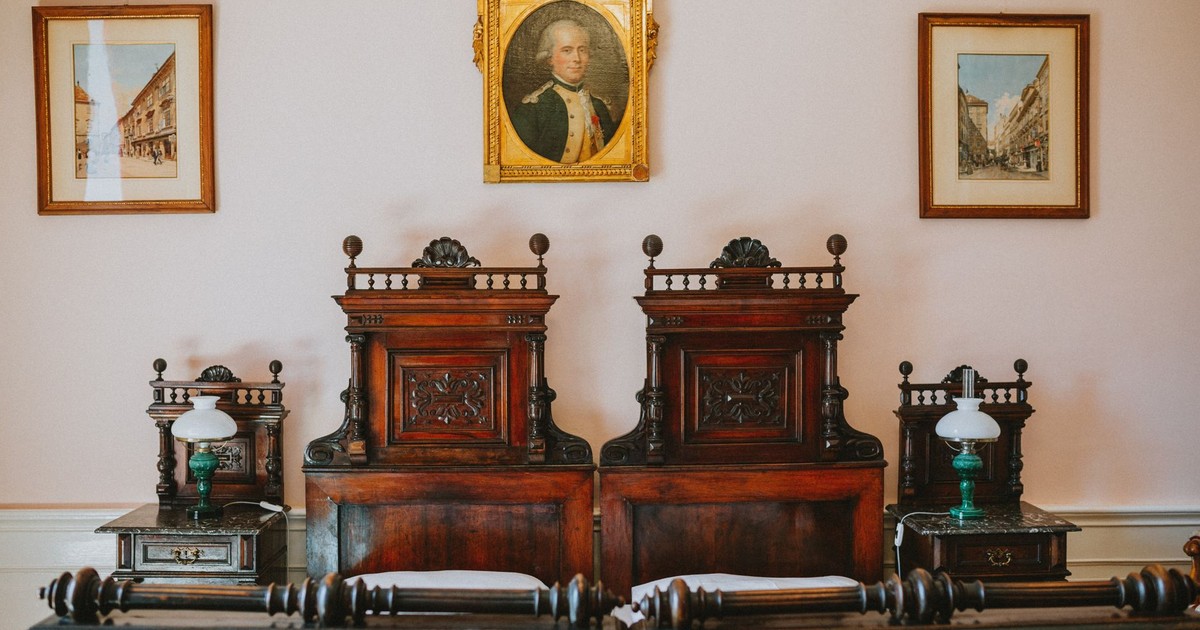
For over four centuries, literary scholars have been arguing about fourteen words buried near the end of a document. William Shakespeare signed his Last Will and Testament on 25 March 1616. His wife Anne Shakespeare (née Hathaway) was mentioned near the end of the document: “Item I gyve unto my wife my second best bed with the furniture.” That single line has generated more academic fury than most wars.
Scholars have often noted that Shakespeare’s only mention of his wife Anne Hathaway reads as an afterthought: an interlineal insertion on the last leaf. In Shakespeare’s time, a bed was an expensive and luxurious item, generally regarded as a valuable heirloom to be passed down the generations rather than given to a surviving spouse. The best bed in the house was typically reserved for guests, kept downstairs where visitors could admire it as a display of wealth. The second-best bed, by contrast, was the one a married couple actually slept in.
A single interlined sentence about a piece of furniture is all she gets. According to Shakespeare Documented, the original three-page will with all three of Shakespeare’s signatures is still held at the UK National Archives.
3. Napoleon Bonaparte: Hair Today, Gone Tomorrow

Napoleon Bonaparte was not a man who dealt loosely with symbolic gestures, and his final instructions were no exception. Upon his death in 1821, his will directed that his head be shaved and his hair be distributed among his friends. Given Napoleon’s considerable list of friends, enemies, and admirers scattered across Europe, this was a logistical undertaking.
Many of Napoleon’s hairs were made into jewelry, which was a common morbid souvenir during the nineteenth century. Hair mourning jewelry (rings, brooches, and lockets containing locks of a deceased loved one) was genuinely fashionable among Victorians and their continental neighbors. Napoleon simply made it official. The gesture also had a practical side: in an era before photographs, a lock of hair was one of the few tangible, physical connections to a person. For Napoleon to divide his among his circle was, in its own strange way, an act of intimacy. It also meant that strands of his hair began appearing at auction houses across the world for the next two hundred years, which is almost certainly not what he had in mind.
4. Gene Roddenberry: Final Frontier, Literally

Roddenberry created the original Star Trek television series and was obsessed with space. He passed away in 1991 and his request for a disposition of his final remains in deep space was fulfilled in 1997. Roddenberry was cremated and a part of his remains was put on a rocket and launched into orbit.
The detail that tends to get glossed over is that the technology to fulfill the request didn’t yet exist when he made it. Celestis, Inc. conducted its first space funeral flight in 1997 with Roddenberry’s ashes and those of 23 participants from all walks of life, including a 4-year-old Japanese boy, a restaurateur from New York, and a couple of former NASA scientists. Gene Roddenberry orbited Earth for six years after his death in 1991 before the mission concluded, making him, by any reasonable measure, the only television writer in history to have had a longer career after his death than most people have during theirs. His wife Majel, who played Christine Chapel in the original Star Trek, died in 2008 and also elected for a space burial with the same company. Roddenberry’s request, arranged through the Houston, Texas-based firm, opened an entirely new industry.
5. Janis Joplin: $2,500 for One Last Party

Known for her heavy drinking and drug use, Janis Joplin died of an overdose on October 4, 1970. Janis made changes to her will just two days before her death. She set aside $2,500 to pay for a posthumous all-night party for 200 guests at her favorite pub in San Anselmo, California, “so my friends can get blasted after I’m gone.”
Adjusted for inflation, that sum comes to roughly $19,000 in today’s money. Joplin carried her nonstop party spirit into her will, and a few weeks after her death, the party was indeed thrown in California. The instruction is almost perfectly Joplin: generous, rowdy, and arranged entirely on her own terms. She also updated the will just 48 hours before she died, which suggests that even in her final days, she was thinking about her people and how she wanted to leave them. The bulk of her estate went to her parents. The party fund was clearly the part she cared about most.
6. Benjamin Franklin: The Diamond Paradox

Benjamin Franklin received an ornate picture frame set with 408 diamonds as a gift from King Louis XVI of France, a token of the French monarch’s appreciation for Franklin’s role in securing the Franco-American alliance during the Revolutionary War. When Franklin died in 1790, he left the frame to his daughter, Sarah Bache. Benjamin Franklin gave “the king of France’s picture, set with four hundred and eight diamonds” to his daughter, Sarah Bache, in his will. He requested, however, that she not make the diamonds into jewelry and thereby contribute to “the expensive, vain, and useless fashion of wearing jewels in this country.”
Sarah ignored him. She had the diamonds reset and wore them anyway. Franklin, who had spent a significant portion of his life in Paris socializing with French royalty and generally having an excellent time, apparently drew the line at his own daughter doing the same. The clause is a perfect little window into the gap between what people preach and what they practice, and also into the stubborn particularity of a man who felt entitled, even from beyond the grave, to tell his daughter what to wear.
7. Fredric Baur: Rest in Pringles

Fredric Baur was a chemist and inventor who worked for Procter & Gamble, and in 1966 he designed something that became one of the most recognizable pieces of packaging in the world: the cylindrical Pringles can. In 1966, Fredric Baur came up with a clever way for Procter & Gamble to stack chips uniformly rather than tossing them in a bag. He was so proud of the achievement that he wanted to go to his grave with it. So when Baur died in 2008, his children buried the 89-year-old’s ashes in one of his iconic cans.
His children reportedly stopped at a grocery store on the way to the funeral home to pick up a classic red original-flavor container. One of his sons later told Time magazine that the other kids debated briefly before honoring the request. Baur had patented the can design and always considered it his crowning achievement, more so, by the end, than his considerable academic work in organic chemistry and food storage. To be buried in your life’s work is one thing. To be buried in a snack tube from the supermarket checkout aisle is another thing entirely, and somehow more honest.
8. Harry Houdini: The Annual Séance

Harry Houdini spent most of his adult life debunking the spiritualist movement, attending séances, exposing fraudulent mediums, and writing at length about the impossibility of communicating with the dead. Then, in what may be the most elaborate piece of irony in the history of American show business, he left a clause in his will requesting exactly that. Famous magician Houdini conducted séances during his life and wanted his wife, Bess, to continue the practice upon his own death. A clause in Houdini’s will requested his wife conduct an annual “session” with the afterlife.
Houdini also left Bess a secret code, ten words from a message the two had used in their old mentalism act, so that she would know if the spirit claiming to be him was genuine. Bess held annual séances for ten years after his death on Halloween 1926. None of them produced the code. After a decade, she announced that if Houdini could have come back, he would have. The séances stopped. Whether Houdini designed the whole arrangement as one final, posthumous proof that the afterlife was empty, or whether he genuinely hoped to beat the odds, is a question nobody has managed to answer.
9. Charles Dickens: No Black, No Mourning, No Fuss

The classic novelist hated how morbid Victorian funerals were, so he requested no mourning at his funeral. Dickens requested no scarves, cloaks, long faces, or black clothing at his service. His funeral was to be small and private, even going so far as telling people not to publicize the time of his burial.
Dickens wrote these instructions in 1869, a full year before his death in 1870, and they were unusually specific. He wanted no more than three plain mourning coaches. He wanted the funeral to cost under ten pounds. He instructed that no announcement be made in the newspapers until after the burial was complete. The Victorian funeral industry was a vast, elaborate, expensive machine, and Dickens, who had documented poverty, inequality, and institutional absurdity with more clarity than almost any writer of his era, wanted no part of its theatrical excesses applied to his own exit. He was buried at Westminster Abbey’s Poets’ Corner, which is not exactly a low-key location, but the ceremony itself was, by the standards of his time, refreshingly plain.
10. Mark Gruenwald: Mixed Into the Ink

Mark Gruenwald, who died in 1996, served as executive editor of Marvel Comics. He was able to request that his ashes be blended with ink used to print a 12-issue mini-series. The series was a reprint of Squadron Supreme, a superhero story Gruenwald had written himself in the 1980s. Marvel honored the request.
The 1997 trade paperback collection of Squadron Supreme was printed with Gruenwald’s ashes literally worked into the ink on the page. Anyone who bought that edition and held it in their hands was, in a very physical sense, holding a piece of a man. Gruenwald had reportedly talked about the idea for years, telling colleagues it was the most fitting end he could imagine. He is now, technically, in libraries. He is on shelves. Some of those copies are probably still in boxes in somebody’s attic. For a man who spent his career building fictional universes, it was a way of becoming permanently embedded in the one he loved most.
11. Eleanor Ritchey: $14 Million for 150 Dogs

Eleanor Ritchey was the heiress to the Quaker State Refining Corporation and, by all accounts, had very specific views about where her money should go. Heiress to the Quaker State Refining Corporation, Eleanor Ritchey left about $14 million to her 150 stray dogs. When the last dog died, the remainder went to Auburn University Research Foundation, with the funds dedicated to research on canine disease.
The dogs lived out the rest of their lives on a farm in Florida, well-funded and well-cared-for. The last surviving dog died in 1984, at which point Auburn University received what remained of the estate. Ritchey has no famous works, no political legacy, no great invention attached to her name. What she has is a story that gets repeated whenever the conversation turns to unusual wills, because it is, in the end, a story about loyalty. She trusted those dogs in a way she apparently didn’t trust the other available options. Given what people tend to do with large inheritances, it’s hard to argue she was wrong.
12. Napoleon’s Additional Instruction: The Posthumous Return

Often overlooked in accounts of Napoleon’s will is a second, more grandiose request buried further in the document. Alongside the hair distribution, he instructed that his son be given detailed accounts of his campaigns and victories, but he also left very specific guidance about where he wanted to be buried. Napoleon died on the island of Saint Helena in 1821 and was initially buried there, but his will stated clearly that he wished to rest “on the banks of the Seine, in the midst of the French people whom I have loved so well.” It took nineteen years, but in 1840, France sent a ship to retrieve his remains. His body was brought back to Paris and eventually interred at Les Invalides, where it remains today under a massive red quartzite sarcophagus. The posthumous return was treated as a national event. Even dead, Napoleon managed to stage a comeback.
13. Frédéric Chopin: Send My Heart Home

Frédéric Chopin died in Paris in October 1849 at the age of 39, most likely from tuberculosis. He had spent much of his adult life living in France, but he never stopped identifying as Polish. Poland had been partitioned off the map entirely by that point, absorbed into Russia, Prussia, and Austria. His final request regarding his body was deeply personal: he asked that his heart be removed after death and returned to Warsaw.
His sister Ludwika fulfilled the request. Chopin’s heart was preserved in a jar of cognac, concealed in her clothing as she crossed the border, and smuggled back into occupied Poland. It was placed inside a pillar of the Holy Cross Church in Warsaw, where it remained through two world wars. During the Second World War, Nazi authorities briefly removed it for safekeeping, returning it to the church after the city’s liberation. In 2014, Polish scientists were finally permitted to examine the sealed urn. They confirmed it was a human heart, almost certainly his, still preserved after 165 years. For Chopin, the heart going home wasn’t symbolic. It was literal.
14. Thomas Edison’s Last Breath: Captured in a Test Tube

Thomas Edison died on October 18, 1931, and his close friend Henry Ford made an unusual request of Edison’s family in the immediate aftermath. Many believe that the eccentric Ford was trying to capture Thomas Edison’s soul as it escaped his body. However, it might be easier to believe the story that eight test tubes were located near Edison’s bed as he died and his son sent one to Henry Ford. Either way, the last breath is on display at The Henry Ford Museum in Detroit.
Whether Ford was motivated by grief, sentiment, spiritual belief, or simple eccentricity is unclear, possibly all four at once. What is certain is that the sealed test tube exists, that it sits in a display case at The Henry Ford museum in Dearborn, Michigan, and that it is labeled as containing Thomas Edison’s final breath. Ford and Edison had been close friends for decades; Ford called Edison the greatest man who ever lived. Keeping a vial of his dying air is either one of the most moving tributes in the history of American friendship, or one of the strangest. Given both men, it may be exactly both.
What These Requests Tell Us

The impulse to control what happens after death is older than recorded history. Pharaohs built pyramids. Romans left detailed instructions about their funeral games. But the historical last requests gathered here share something more specific than control: they’re all, in some form, an extension of the personality that produced them. Bentham, the utilitarian, found a way to remain useful. Napoleon, the imperial distributor of everything, distributed himself. Joplin, who lived loud, went out loud. Chopin, the exile who never stopped aching for home, finally got there.
People spend their whole lives becoming themselves, and then, when they finally have one last chance to say something, they say exactly what you’d expect them to say, just in a format nobody anticipated. That’s either reassuring or unsettling, depending on what you think you’ve been becoming.
These stories circulate not because of the eccentricity. Plenty of people do strange things at the end, and most of those stories disappear with the people involved. What keeps these alive is the recognition, the sense that in each case, the person managed to compress something true about themselves into a single, final gesture. Houdini set up a test he could only fail. Gruenwald found a way to be read forever. Ritchey spent her fortune on the only relationships she trusted completely.
No one on this list asked for a standard service, a tasteful obituary, a polite remembrance. They asked for the thing that was specifically, unmistakably theirs. That’s harder than it sounds. Most people, when confronted with the logistics of their own ending, default to convention, not because they lack an identity, but because naming what actually matters requires a level of honesty that’s easier to defer. These fourteen didn’t defer. Whether the request was strange or moving or both at once, they each went out as themselves.
Disclaimer: This information is not intended to be a substitute for professional medical advice, diagnosis, or treatment and is for information only. Always seek the advice of your physician or another qualified health provider with any questions about your medical condition and/or current medication. Do not disregard professional medical advice or delay seeking advice or treatment because of something you have read here.
AI Disclaimer: This article was created with the assistance of AI tools and reviewed by a human editor.