
The economy was humming along in the mid-2000s. Housing prices seemed to only go in one direction. Banks were lending to anyone who could fog a mirror. And millions of Americans were watching their net worth inflate alongside their property values, quietly assuming the good times were structurally permanent. Then, in the fall of 2008, the floor gave way.
The Great Recession officially lasted from December 2007 to June 2009. It destroyed trillions in household wealth, wiped out millions of jobs, and sent bankruptcy filings surging to levels not seen in decades. The collapse didn’t just wreck balance sheets. It rewired the way ordinary people thought about debt, homeownership, savings, and the reliability of institutions they had trusted without question. In that sense, the Great Recession economic lessons it left behind are arguably its most durable legacy.
Some of those lessons have stuck. Others, honestly, haven’t. With economic uncertainty once again a recurring headline in 2026, the 10 things 2008 taught us about money, markets, and systemic risk deserve a second look, not as historical curiosity, but as a practical playbook.
1. Easy Credit Is a Warning Sign, Not a Gift

The Great Recession was triggered by the collapse of an enormous credit bubble fueled by institutions so eager to lend that they lowered their standards to qualify more borrowers. Banks made money selling loans to Wall Street, and Wall Street made money packaging those loans into asset-backed securities and selling them to investors. In that environment, cheap and available credit felt like prosperity. It was actually a pressure cooker.
In the years leading up to the crisis, it seemed like everyone should own real estate. Because of no-doc loans, aggressive appraisals, and 100 percent financing, many homeowners wound up house rich and cash poor. Then, when the housing bubble burst, they found themselves underwater, in homes worth less than they owed.
When borrowing becomes surprisingly easy, that ease is a product feature for lenders, not a benefit for borrowers. Low lending standards inflate asset prices and pull forward demand, which eventually collapses on the people at the end of the line. If a loan sounds too good to question, that’s exactly when you should start questioning it.
2. An Emergency Fund Isn’t Optional
Most financial advice about emergency funds sounds theoretical until the month the paychecks stop. For millions of Americans, that month arrived between 2007 and 2009. The word “essential” matters here. The emergency fund covers rent, food, utilities, and insurance, not the gym membership or the streaming subscriptions. It is liquid, boring, and available. A retirement account doesn’t qualify. Home equity doesn’t qualify. A number sitting in a high-yield savings account that you never touch does.
The recession also revealed something less discussed: the psychological value of that cushion. Knowing a safety net exists changes behavior in a downturn. People with savings are less likely to panic-sell investments, less likely to take on desperate debt, and less likely to make irreversible decisions under short-term pressure.
3. Your House Is Not a Retirement Plan

For a generation of Americans, the house was the investment. The assumption was simple: buy property, watch it appreciate, sell it in retirement and live on the profit. You can’t count on your home to be worth more than you paid for it when you’re ready to sell.
At the peak of the crisis, roughly one in four mortgaged homeowners were underwater, according to CoreLogic data. Those who had planned their financial futures around the expectation of rising home values suddenly found themselves not just unable to profit, but unable to sell without taking a loss. For people approaching retirement, the timing was devastating.
A home is a place to live. As an investment vehicle, it’s illiquid, expensive to maintain, subject to local market forces, and tied to a single location. A properly diversified retirement portfolio is none of those things. The house you live in is shelter. It should be the last thing in your financial plan, not the first.
4. Debt Is a Liability in a Downturn
The seeds of the financial crisis were planted during years of historically low interest rates and loose lending standards that fueled a housing price bubble. When that bubble burst, many households found themselves overwhelmed by mortgage payments and other debt they could no longer afford. According to U.S. Courts data, after the Great Recession began in December 2007, overall bankruptcy filings accelerated sharply, peaking at nearly 1.6 million cases in 2010.
A household carrying significant fixed monthly obligations has almost no room to maneuver when income drops. Every dollar that goes toward debt service is a dollar that can’t build an emergency fund or stay invested in a recovering market.
Prioritizing paying off high-interest debt while the economy is strong makes sound sense. Entering a recession with minimal debt obligations gives you greater financial flexibility when you might need it most. The window for that kind of aggressive debt paydown tends to be the exact moment it feels least urgent, when things look fine and the economy seems stable.
5. Diversification Actually Works
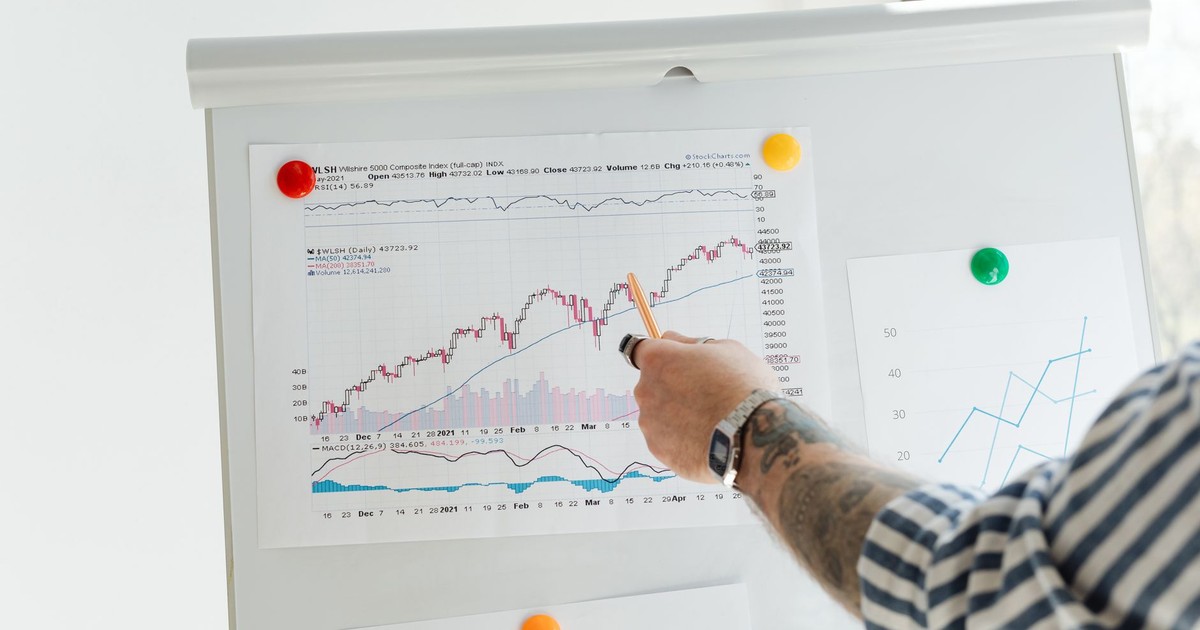
Investors who concentrated their portfolios in real estate or financial stocks suffered catastrophic losses during the Great Recession. Those with properly diversified investments still experienced declines but were better positioned to recover as markets eventually rebounded. The difference between those two outcomes wasn’t investment genius. It was basic allocation across asset classes.
Diversification doesn’t avoid risk, it spreads it. A concentrated portfolio can win spectacularly when the bet is right, and lose everything when it’s wrong. A diversified one gives up some upside in exchange for survivability. In 2008, survivability was the entire game. The investors who stayed solvent were the ones who could afford to wait out the recovery.
The principle applies beyond financial markets, too. Households that had diversified income streams, a salaried job alongside freelance work or rental income, fared measurably better than those who depended entirely on a single employer in a single industry. When that employer cut headcount, the diversified household had somewhere to land.
6. Panic Selling Locks in the Loss

During the Great Recession, countless investors panicked and sold near market bottoms, locking in losses and missing the subsequent recovery. Sell when fear peaks, which also happens to be when prices are lowest, then sit in cash while the recovery happens without you.
According to Federal Reserve History, the S&P 500 fell 57 percent from its October 2007 peak to its trough in March 2009, while U.S. household net worth dropped from approximately $69 trillion to $55 trillion. The investors who held through that collapse, or kept contributing to their portfolios during it, captured the full recovery. The ones who cashed out in late 2008 or early 2009, reasoning that things were going to keep getting worse, often didn’t get back in until prices had already surged past their entry point.
The emotional logic of panic selling is completely understandable, it feels like taking control of a bad situation. The financial result is the opposite. The times that feel most unbearable to stay invested are usually the times when staying invested matters most. Setting up automatic contributions during a downturn removes the decision entirely and bypasses the fear response that makes timing the market feel compelling.
7. Too Big to Fail Means Too Big to Ignore
The 2008 financial crisis required massive bank bailouts to avoid an even deeper economic collapse. In 2010, U.S. lawmakers passed the Dodd-Frank Act, a sweeping overhaul of financial regulation designed to reduce the kind of systemic risk that had just nearly taken down the global economy. Certain financial institutions had grown so interconnected with the broader economy that their failure threatened everyone, including people who had never held a share of their stock or a single dollar of their mortgage-backed securities.
The Dodd-Frank Act reshaped U.S. financial regulation by expanding federal oversight of banks and financial institutions, imposing stricter capital and risk-management standards, and creating systems to monitor systemic risk. It established the Consumer Financial Protection Bureau, introduced new rules for derivatives and securities trading, and set procedures for the orderly resolution of failing financial firms.
The institutions handling your money, banks, mortgage servicers, investment firms, are not simply private entities whose risks are their own business. Their risks become your risks when they’re large enough. Knowing where your money sits, what protections apply to it, and how the institution is regulated is a form of due diligence, not paranoia.
8. Regulation Has Real Consequences When It’s Removed

In 2018, Congress and the Trump administration scaled back many of Dodd-Frank’s provisions, viewing them as too onerous on small and midsize banks. The collapse of Silicon Valley Bank and other regional lenders in 2023 then spurred renewed debate over financial regulation among lawmakers, the private sector, and regulators.
The 2023 regional banking failures weren’t a carbon copy of 2008, but the pattern was familiar: deregulation created gaps, gaps created risk, and risk materialized suddenly enough to rattle markets. Financial regulation tends to feel unnecessary in good times and indispensable in bad ones.
One important precedent is the Glass-Steagall Act, the 1933 law that prohibited the same bank from engaging in both traditional commercial banking and higher-risk trading and investment banking. Its repeal in 1999, through the Gramm-Leach-Bliley Act signed by President Clinton, removed the firewall between depositors’ funds and Wall Street’s riskiest activities. Some economists point to that repeal as a key factor behind the housing bubble and the 2008 financial crisis. The gap between a crisis and its regulatory undoing can span decades. By the time the connection becomes obvious, the damage is already done.
9. Global Economies Are More Connected Than They Appear

While the crisis began in the United States, its effects were deeply global: Europe faced a severe sovereign debt crisis, particularly in Greece, Spain, and Italy. Developing economies saw sharp declines in exports and foreign investments. Commodity prices fell drastically, hurting resource-dependent countries.
In Iceland, the government collapsed and the country’s three largest banks were nationalized. Latvia’s GDP shrank by more than 25 percent in 2008-09, and unemployment reached 22 percent. Spain, Greece, Ireland, Italy, and Portugal suffered sovereign debt crises that required intervention by the EU, the European Central Bank, and the IMF, resulting in painful austerity measures.
A financial shock in one major economy travels fast. A mortgage crisis in American suburbs became a government collapse in Reykjavik. For individual investors and households, this means that “staying domestic” in an investment portfolio doesn’t actually reduce exposure to global risk, it just concentrates it. Geopolitical and international economic news isn’t just background noise. It’s relevant context for understanding what your portfolio is actually exposed to.
10. The Personal Savings Rate Tells the Story Before the Headlines Do

Many Americans improved their savings habits after the crisis, bringing the overall personal savings rate up to 6.8 percent versus a pre-crash rate of 3.4 percent, according to the Federal Reserve Bank of St. Louis. That doubling of the savings rate wasn’t the result of government policy or financial advice going viral. It was the direct behavioral response to watching the floor fall out.
The pre-recession savings rate of 3.4 percent reflected a culture of consumption propped up by easy credit, rising asset values, and a genuine belief that tomorrow would always be more prosperous than today. When the crisis stripped all three of those props away simultaneously, people responded by saving more. The tragedy is that the lesson typically fades as the memory does. By the mid-2010s, savings rates had begun drifting back down.
The specific setup that caused 2008, runaway subprime lending plus opaque derivatives plus undercapitalized banks, is much harder to repeat today because of post-crisis reforms. But that doesn’t mean recessions are over. The COVID-19 recession of early 2020 and the regional bank failures of March 2023 are both reminders that economies can be disrupted by new and unrelated shocks. The savings rate is one of the few personal finance metrics that shows how prepared a household actually is, rather than how financially comfortable it currently feels. Those two things are not the same.
What the Recession Actually Taught Us

The Great Recession economic lessons that have lasted aren’t the abstract ones about systemic risk or monetary policy. They’re the ones that showed up on kitchen tables and in monthly bank statements: the months of mortgage payments that couldn’t be made, the retirement accounts that looked unrecognizable, the job that disappeared without a clear replacement in sight.
The recurring thread across all ten lessons is the difference between financial resilience and financial performance. Resilience is what you have when things go wrong. Performance is what you track when things are going well. The pre-recession years optimized for performance, bigger loans, more leverage, higher returns. The crash demonstrated that the households, institutions, and economies that recovered fastest were the ones built for resilience: diversified, minimally leveraged, with cash on hand and an honest understanding of what their assets were actually worth.
None of that is complicated. Most of it is genuinely boring. Pay down debt when you can. Save a real emergency fund. Don’t bet your retirement on your house. Don’t panic when markets drop. These ideas didn’t need a global financial crisis to be true, but it took one to make them feel urgent. The value of keeping them front of mind now, well before the next crisis declares itself, is exactly the point.
Disclaimer: This information is not intended to be a substitute for professional medical advice, diagnosis, or treatment and is for information only. Always seek the advice of your physician or another qualified health provider with any questions about your medical condition and/or current medication. Do not disregard professional medical advice or delay seeking advice or treatment because of something you have read here.
AI Disclaimer: This article was created with the assistance of AI tools and reviewed by a human editor.