

The hardest season of your life rarely announces itself as one. It tends to arrive wearing the disguise of a string of bad luck, a prayer that gets no answer, a path that closes off just when you thought you finally knew where you were going. And somewhere in the middle of it, you start wondering whether the silence means something, whether the struggle is random, or whether God is testing you with a purpose you can’t yet see.
That question has driven human beings toward and away from faith for as long as anyone has been writing it down. The book of Job is, at its core, that question in narrative form. The 40 years the Israelites spent in the desert was that question stretched across generations. The apostle Paul writing from prison is that question with no easy exit. What the Bible doesn’t do is pretend the question is simple, or that the answer comes quickly, or that the people being tested always felt fine about it.
What it does say, in James 1:2-4, is that “the testing of your faith produces perseverance,” and that if perseverance is allowed to finish its work, you “may be mature and complete, not lacking anything.” That’s not a promise that the test will be easy. It’s a promise about what’s on the other side of it. So what does a test actually look like, from the inside? Here are ten signs that might mean exactly that.
1. Your prayers seem to be going nowhere
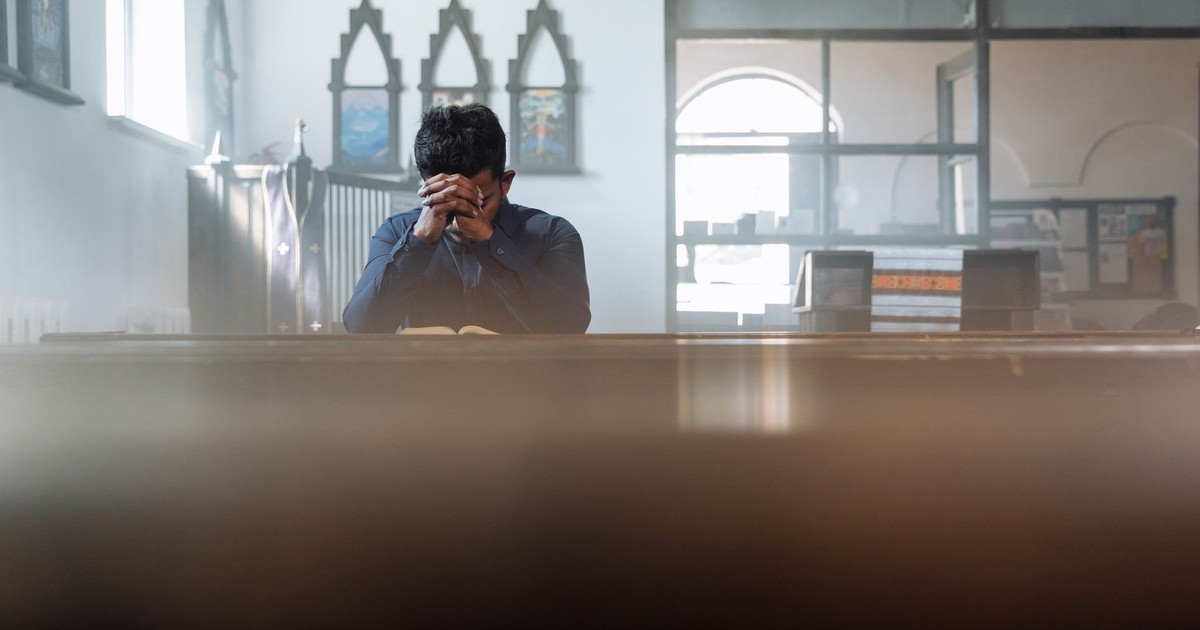
You’re praying consistently, intentionally, and honestly. And nothing changes. The request sits unanswered, the silence stretches, and the gap between what you’re asking and what you’re receiving starts to feel like evidence that either God isn’t listening or you’re doing something wrong.
This pattern has a long biblical precedent. Paul asked God three times to remove what he described as “a thorn in his flesh,” and the answer wasn’t yes. It was good for Paul to want to be free from that thorn, but God didn’t give him that good thing so that Paul would trust in the best thing – God’s grace. The withholding wasn’t punishment or neglect. It was redirection toward something harder to ask for and harder to receive.
When prayer feels one-sided for an extended period, the instinct is often to pray harder or to conclude that faith isn’t working. A third possibility is that the unanswered prayer is itself the test: not of whether you’ll get what you want, but of whether your faith survives without it. Sitting in that uncertainty is one of the most demanding things a believer is ever asked to do.
2. Doors keep closing no matter how hard you push

You’ve done everything right. You prepared, you showed up, you trusted. And still the opportunity fell through, the relationship didn’t work out, the door was locked from the other side. Then it happened again. And again.
Unexplained delays in the fulfillment of promises or the resolution of situations are one of the first indicators that God may be testing you. Abraham waited 25 years from the time he received the promise of a son to the time Isaac was born. That wasn’t a bureaucratic delay. It was a refining process, one that tested whether trust could survive what looked like failure.
The hard part is that a closed door and a wrong path look identical from the outside. Both feel like rejection. According to GotQuestions.org, when God allows for unusual delays, it’s a test – and Abraham’s example shows that those tests are used to refine trust and patience. The question isn’t whether you’ll stop pushing. It’s whether you can stay open while you’re waiting.
3. Everything is happening at once

Not one problem. Not a bad week. A convergence: financial pressure, a relationship fracturing, physical health struggling, and your sense of purpose all wobbling at the same time. The sheer volume of it makes it hard to breathe, let alone think straight.
Experiencing profound loss or intense hardship – what Scripture calls “the trials of suffering” – often signals a testing season. Job’s story illustrates this most dramatically: he lost his children, his wealth, his health, and his reputation in rapid succession. The point of that story is not that God is indifferent to suffering. It’s that the scale of a test doesn’t reflect the scale of God’s absence. Job’s endurance under the weight of it all was the very thing being forged.
When circumstances pile up simultaneously and you find yourself unable to locate a single stable foothold, that compression is often exactly the condition under which the most significant spiritual growth happens. It doesn’t feel like growth. It feels like collapse. Those two things are sometimes the same event.
4. Your integrity is being challenged in ways that would cost you

You know the right thing to do. It would also cost you something real: a friendship, a job, a piece of your reputation, money you don’t have to spare. The easier path is right there, and it wouldn’t even look that bad to most people watching.
Daniel was tested to see if he would conform to Babylonian customs. In the same way, God may test your integrity and obedience to His word in situations where obeying Him might cost you – where temptation entices you to sin, but God reveals what’s in your heart, refines your character, and trains you in righteousness.
The Daniel test is one of the most recognizable in daily life, even if it rarely involves a literal lion’s den. It’s the moment in a meeting where the easy lie would smooth everything over. It’s the financial shortcut that no one would trace back to you. The test isn’t just whether you choose right. It’s whether you’ve built enough of a foundation that the choice doesn’t feel like a sacrifice every single time.
5. You feel spiritually dry and disconnected

Prayer used to feel like something. Worship meant something. Reading Scripture felt alive. Now it all feels flat: rote, performative, like speaking into an empty room. You’re still doing the things you’ve always done, but the sense of presence that used to accompany them has gone.
This experience has its own name in the Christian tradition: “spiritual dryness” or, in its more intense form, what the mystics called “the dark night of the soul.” It’s not the same as losing faith. It’s a season in which the felt experience of God withdraws, even while the relationship itself remains intact. Faith, during these periods, is doing something different from what it does in warmer seasons – it’s being asked to hold without the reward of feeling held.
Whether faith can sustain itself without the emotional warmth of it is one of the more honest questions a testing season forces you to answer. Most people discover that the answer is yes – but only just, and only gradually.
6. You’re being asked to serve others while you’re struggling yourself

You’re not in a position to give. You’re depleted, stressed, running low on everything. And then someone needs something from you – time, energy, money, presence – and you have to decide whether you have anything left to offer.
When you have the opportunity to help others despite being in hardship, it’s a test. Joseph, despite his own hardships, was faithful in serving others – and even while imprisoned, he served his fellow prisoners and interpreted their dreams. The demand to be generous from a place of lack is one that tests whether generosity is a character trait or a fair-weather habit.
This sign tends to show up in small, daily versions: the friend who needs to talk on the day you’re completely overwhelmed, the colleague who needs covering when you’re already stretched. How you respond in those moments, when no one would blame you for saying no, tends to show you something significant about where your faith actually lives.
7. Old patterns and wounds are surfacing

You thought you were past it. The bitterness you worked through, the fear you’d named and moved beyond, the old grievance you’d forgiven. And then it’s right back in front of you, as raw and heavy as ever.
God doesn’t test us because He needs information – He already knows everything about us. Instead, testing shows us what lies within our own hearts. When old wounds resurface during a season of pressure, it often means there’s something still unresolved that a more comfortable season would never have forced into the light. The discomfort isn’t a sign that the previous healing was fake. It’s a sign that the test is going deeper.
Reframing a resurfaced wound as part of a refining process, rather than reading it as evidence of permanent damage, changes what you actually do with it. People who actively bring faith-based meaning-making to old pain – naming it, placing it in a larger story – report significantly less distress than those who sit with it as only a wound. Research consistently finds this connection between religious meaning-making and greater psychological resilience.
8. You’re facing a temptation that feels uniquely targeted at you

It’s not a generic temptation. It’s the specific one that speaks directly to your weakest point, whether that’s pride, control, fear of abandonment, the need for approval, or something more visible. And it’s appearing right now, when you’re already worn down and less equipped to resist it.
In temptation, the enemy entices you to sin, but God reveals what’s in your heart, refines your character, perfects your godliness, and trains you in righteousness. The distinction between temptation as attack and temptation as test is a fine but important one: the former is about destruction, the latter is about revelation. What you do when you’re tired and the resistance is right there in front of you shows you, clearly, exactly what you’re made of.
The goal isn’t to never feel the pull. It’s to notice it for what it is, to recognize the specific shape of it, and to understand that recognizing it is itself a form of spiritual progress.
9. Your faith is being questioned by the people around you
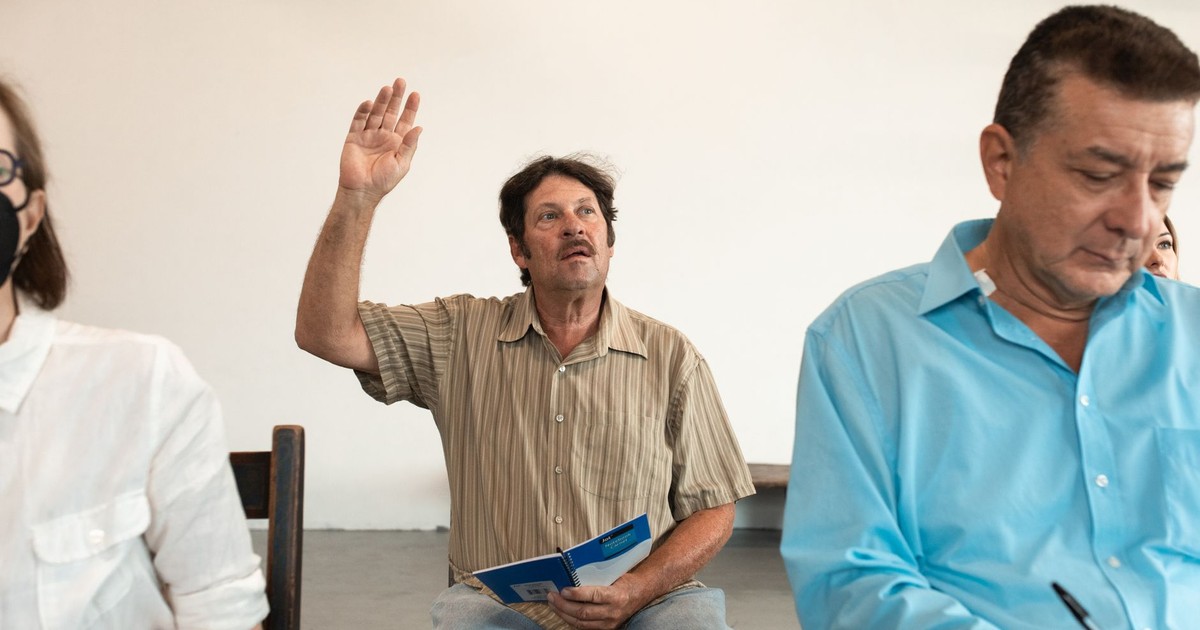
The doubt isn’t only internal. The people in your life – a partner, a parent, a close friend – are pushing back. Maybe they’re asking why you still believe when things are this hard. Maybe they’re actively discouraging the choices your faith is leading you toward. Maybe they’re simply indifferent in a way that makes your conviction feel increasingly isolated.
According to Abilene Christian University, resilience is not just a psychological trait – it is a spiritual necessity for every believer. Throughout Scripture, the Christian life is portrayed as a journey, a race, and often a battle, none of them easy or effortless. They all imply struggle, endurance, and perseverance. The social pressure to abandon what you believe – or to quietly reduce it to something more socially acceptable – is a test that has been present in every era of faith.
A 2025 narrative review published in Race and Social Problems found that negative religious coping – including spiritual conflict and feeling pressured about faith – was linked to increased anxiety, and that the psychological impact of religiosity depends less on doctrinal affiliation and more on the quality of spiritual engagement. Staying grounded in your faith while holding space for the people who doubt it is its own kind of endurance test.
10. You’re being stretched toward a calling that feels too big

You sense a pull toward something: a vocation, a commitment, an act of obedience that feels well beyond what you’re capable of. It doesn’t feel like ambition. It feels like instruction. And the gap between what you’re being called toward and what you currently have the capacity to do is genuinely frightening.
God tests our faith to develop a persistent trust in Him that rarely takes shape outside of hardship. We will never become spiritually mature unless we develop endurance – and we can only develop endurance as we persevere in faith through painful experiences. The calling that exceeds your current capacity isn’t a mistake in the assignment. It’s the point of it. Moses argued with God about his inadequacy for the better part of a chapter. Gideon needed multiple signs before he’d believe the call was real. The feeling of being underqualified for what you’re being asked to do is one of the more reliable signs that the call is from somewhere outside yourself.
A 2025 study on religion and resilience published in Pastoral Psychology found that frequent use of positive religious coping is “correlated with a greater intensity of positive effect” and supports individuals in finding meaning in life. Framing an overwhelming calling as a test of growth rather than evidence of inadequacy is one of the more concrete things that faith-based meaning-making does for the people who practice it.
Read More: Bedtime Prayers: Exploring the Spiritual Power of Talking to God While Lying Down
What to Do With All of This

The ten signs listed here are not a diagnostic checklist. Not every hard season is a divine test, and reducing suffering to a spiritual assignment can sometimes be its own kind of harm – especially when what someone actually needs is practical help or medical care. The biblical tradition has always held both realities at once: God works within human suffering, and human suffering is still real suffering. Demonstrating resilience doesn’t mean a person is unaffected by hardship or indifferent to life’s changes. It is the capacity to endure deep suffering and emerge having learned something from it.
What the concept of God testing you offers, for people of faith, is a way of relating to difficulty that keeps you in the story rather than sidelined by it. That’s not wishful thinking – it’s a shift with real psychological weight behind it. People who bring a faith-based frame to hardship tend to come out of it with more, not less, to say about what they believe. The test didn’t prove them wrong. It proved them more specific.
The part that gets left out of most conversations about testing is this: the test isn’t asking whether you’re strong enough. It’s asking whether you trust the One who designed it. Those are very different questions. The first puts the entire weight on you. The second puts it somewhere else. Most people who’ve come through a genuinely difficult season of faith report that the shift from the first question to the second was the moment things, however slowly, started to change.
AI Disclaimer: This article was created with the assistance of AI tools and reviewed by a human editor.