
If you had to pick up and move somewhere purely for the fun of it, where would you go? Not for the job market, not for the school district, not because your sister lives there. Just for the sheer, uncomplicated experience of enjoying yourself. It turns out that question has a data-driven answer, and the results are both predictable in some places and genuinely surprising in others.
Every year, WalletHub runs the numbers on all 50 states to figure out which ones give residents and visitors the most bang for their entertainment dollar. The 2025 edition compared states across 26 different metrics, grouped into two broad categories: Entertainment & Recreation (worth 80 points of the total score) and Nightlife (worth the remaining 20). The metrics range from the number of restaurants, amusement parks, and movie theaters per capita to beach access, national park acreage, music festivals, casino density, and even the average price of a glass of wine. Each state is scored out of 100.
The gap between the top and bottom of that list is striking. California, sitting at number one, scored 66.89. West Virginia, dead last, scored 19.18. That’s not a small difference in lifestyle. That’s a different world.
The Top 10 Most Fun States
The top 10 most fun states are below, and here’s what actually separates them.
1. California
California is the most fun state in 2025, with an especially large number of restaurants, amusement parks, movie theaters, and fitness centers per capita. For those who enjoy nightlife, the Golden State has a very high number of performing-arts establishments and music festivals per capita, along with the ninth-best access to bars. And even though California is one of the most expensive states for beer, it’s the least expensive for wine, likely due to the abundance produced locally. When it comes to the outdoors, California has the most scenic byways per capita and the sixth-longest ones in the country. It also has the best beach access in the country and the fourth-best weather.
2. Florida
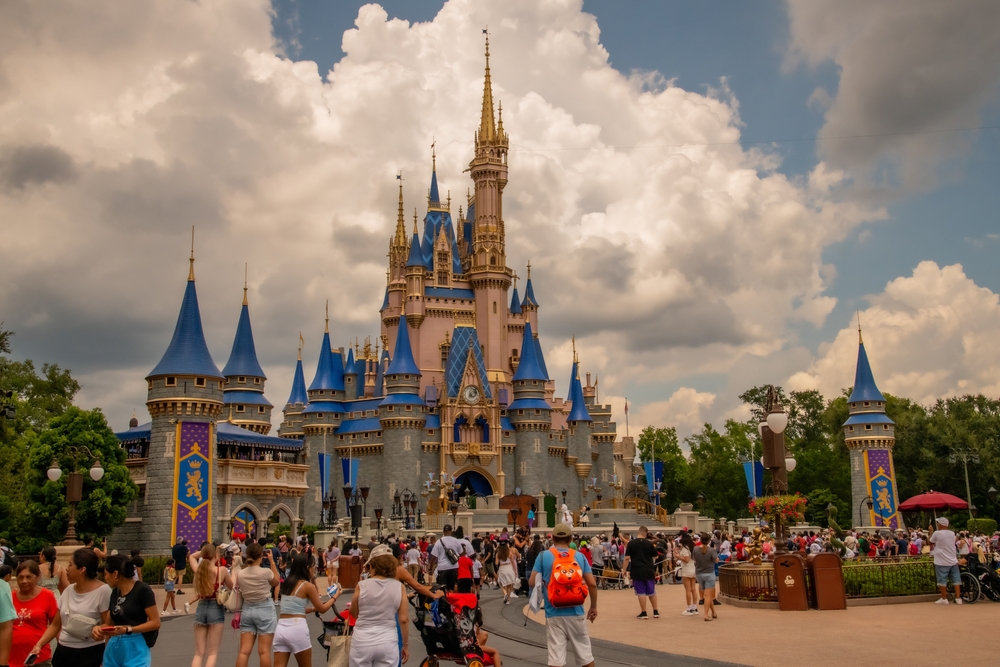
Florida is the second-most fun state in 2025, leading the country when it comes to the number of restaurants, amusement parks, arcades, and music festivals per capita. Even beyond those headline categories, Florida has the fourth-most attractions per capita and the seventh-best variety of arts, entertainment, and recreation establishments. It also has the most marinas per capita and the second-most miles of shoreline. The Florida government spends a lot on parks and recreation, the 17th-most per capita, and the average Floridian spends nearly $2,300 per year on recreation expenses.
3. Nevada
Nevada’s third-place finish is almost entirely built on one category. The Silver State has the most nightlife activities per capita, with high concentrations of music festivals and casinos. Bars in Nevada may stay open 24/7 while offering low prices on beer and wine, with the fifth-lowest average beer price and second-lowest average wine price in the country. But having fun in Nevada isn’t all about the nightlife. The state also spends more money per capita on parks and recreation than all but eight others, and it has the ninth-most acres of national parks.
4. Illinois
Illinois was ranked the fourth most fun state in the nation. The state earned top-five rankings in attractions, nightlife, restaurants, and theaters, coming in third for Entertainment & Recreation and second for Nightlife. Chicago’s pull on those numbers is obvious, and Illinois moved up two spots from last year’s ranking, climbing from sixth to fourth.
5. New York
New York is the 5th most fun state in the U.S. for 2025, ranking high in everything from restaurants and movie theaters to performing arts and amusement parks. The state punches well above its geographic weight, with New York City doing a lot of the heavy lifting on density metrics. Broadway productions, world-class museums, and a restaurant scene that functions as its own ecosystem all factor into why the Empire State consistently places near the top.
6. Colorado
Colorado’s sixth-place finish is driven largely by its outdoor infrastructure. The state is known for skiing, hiking, and year-round mountain recreation, but it also benefits from a younger-than-average population and a thriving craft brewery and live music scene, particularly in Denver and Boulder. Metrics like golf courses, state fairs, beaches, and national parks all factored into the ranking, alongside alcohol prices and music festivals. Colorado does well across nearly all of them.
7. Washington
Washington earned high marks for movie theaters per capita, placing fifth in the country for that category. Beyond theaters, Washington benefits from a diverse geography that lets residents ski in the morning and hike through temperate rainforest in the afternoon. Seattle’s arts scene, live music venues, and restaurant density contribute significantly to its nightlife numbers.
8. Texas
Texas is a state where the fun is geographically concentrated. Austin consistently ranks as one of the liveliest cities in the country for live music, and Houston has both a thriving arts district and a dining scene that reflects one of the most ethnically diverse cities in America. Its sheer size also means a wider variety of outdoor options, from the Gulf Coast to Big Bend National Park.
9. Minnesota
Minnesota might surprise people on this list, but it earns its place. The state has a deep tradition of arts funding, a robust park system, and a genuine outdoor culture built around its 10,000-plus lakes. Minneapolis regularly outperforms expectations on dining-per-capita metrics and, according to WalletHub’s companion cities ranking, tied with Miami, Las Vegas, Orlando, and San Francisco for the most restaurants per capita.
10. Oregon
Oregon ranked 10th in the nation for performing-arts theaters per capita, 13th for movie theaters per capita, and 15th for the variety of arts, entertainment, and recreation establishments. Portland’s reputation for independent music, food culture, and outdoor access from the city’s doorstep rounds out a strong overall score.
The Bottom of the Rankings
The full list runs all 50 states, and the bottom is worth looking at, too. Three states sit in the spotlight at the very bottom.
Rhode Island (48th)
Rhode Island ranked 48th for entertainment and 33rd for nightlife, for an overall score of 23.74. The state placed 50th for movie theaters per capita and 49th for state and local expenditures on parks and recreation per capita. The state dropped dramatically from its 2024 position of 27th overall, which is either a genuine shift in how Rhode Island invests in public recreation infrastructure, or a signal that some of the metrics don’t translate well to small, densely networked states. Critics of the ranking have pointed out that Rhode Island residents can reach skiing, major concert venues, and world-class dining in neighboring states within an hour, none of which counts toward the state’s raw per-capita numbers.
Mississippi (49th)
Mississippi scored 21.05 overall, placing it 49th. The state ranked near the bottom for entertainment and recreation while scoring significantly better for nightlife. Limited access to attractions contributed to the low ranking, and lower per-capita public spending on parks and recreation pulls its scores down across several categories.
West Virginia (50th)
West Virginia ranked 50th with a score of 19.18, reflecting limited variety of arts, entertainment, and recreation establishments, along with low personal expenditures on recreation services per capita. It’s a result that locals and travel writers regularly push back on, pointing to the state’s genuinely stunning outdoor scenery, white-water rafting on the New River, and the Hatfield-McCoy trail system as reasons the raw numbers undersell the experience. In a ranking built on venue density, West Virginia’s sparse population and rural character work against it every time.
What Access to Fun Actually Does to You
Rankings like WalletHub’s aren’t just a novelty exercise. There’s a real reason to care about where a state falls on a list like this, and it has less to do with tourism and more to do with daily life.
A 2024 study published in Frontiers in Public Health found that “fulfilling recreation experiences have the potential to positively impact subjective well-being and mental health,” with researchers identifying a meaningful link between recreational participation and happiness. The mechanism isn’t complicated: people who have regular access to leisure activities tend to be more socially connected, more physically active, and better equipped to cope with stress. Living somewhere with a dense, affordable entertainment infrastructure makes that kind of participation easier to sustain week to week, not just on vacation.
That’s the genuine underlying logic of why a ranking like this matters beyond simple curiosity. Access to entertainment and recreation isn’t just about having somewhere to go on a Friday night. It shapes how often people leave the house, how frequently they encounter other people outside their immediate circle, and how much variety they have in their everyday experience.
Where the Numbers Fall Short
Rankings like this are useful, but only if you know what you’re actually asking them. WalletHub’s list answers a fairly specific question: which states have the most entertainment and nightlife infrastructure per capita, at costs that won’t break the bank? That’s a reasonable thing to measure. It doesn’t answer whether you’ll have a good time, whether you’ll make friends, or whether a place will feel alive to you when you live there day to day.
West Virginia doesn’t have a shortage of fun. It has a shortage of movie theaters and amusement parks per capita. Rhode Island doesn’t lack a food scene. It lacks the tourism investment that would get its data into the right databases. The states at the bottom of this list are not joyless places, they’re just places where the joy doesn’t arrive in a format that a per-capita metric can easily count.
The top states on this list are genuinely excellent places to find entertainment at scale. If you want the most options, the most density, the most chance that something interesting is happening on a Tuesday night, California, Florida, Nevada, and Illinois deliver. But “most fun” is doing a lot of work in that headline.
The Thing About Fun
Fun is not the same as infrastructure. A ranking can tell you how many music venues exist per 100,000 people, but it can’t measure the Tuesday night where a bar band you’d never heard of played the best set you’ve seen in years. It doesn’t count the hike that deposited you somewhere you hadn’t expected to end up, or the regional food festival in a mid-size city that you still bring up years later.
The data tells you where to find the most infrastructure for fun. The top-ranked states deliver on access, variety, and affordability in ways that genuinely matter to quality of life. But the best time you ever had was probably not in the state ranked number one. It was somewhere specific, on a particular day, with people you happened to be with. Rankings can point you toward the right conditions. What you do inside them is still up to you.
AI Disclaimer: This article was created with the assistance of AI tools and reviewed by a human editor.