
The Fox News conspiracy that took the internet by storm in May 2026 didn’t start with a leak, a whistleblower, or a smoking document. It started with a shadow on a man’s neck.
Retired Vice Admiral Robert Harward, a Navy SEAL and former deputy commander of U.S. Central Command, appeared on Fox News’ “America’s Newsroom” on Tuesday, May 19, to share his expertise on the ongoing conflict with Iran. He was there to talk geopolitics – sanctions, strategy, the pressure being applied to Tehran. By all accounts, it was exactly the kind of televised military analysis audiences expect from a man of his background. Then viewers started staring at his collar instead.
A clip from the interview went viral, igniting a wave of conspiracy theories after audiences spotted what many believed resembled the seam of a rubber mask near the 69-year-old’s neck. Within hours, the substance of everything Harward had said was completely gone. The Iran discussion, the strategic analysis, the decades of military experience – none of it stood a chance against a shadow and the internet’s appetite for the bizarre. Welcome to “Maskgate.”
What People Actually Saw
Viewers focused on a section of the live interview in which a hollow dent and raised, discolored skin appeared just above Harward’s shirt collar. In certain frames, the area looked unusual enough that even people who were predisposed toward skepticism stopped and looked twice. Screenshots spread first, then zoomed-in clips, then side-by-side comparison posts.
Once clips hit X, Threads, Reddit, and TikTok, the conspiracy theories exploded. The early posts were blunt. One widely shared message read: “Holy shit why is this man on Fox News wearing a literal CIA mask.” Another noted, almost approvingly, that it was a great mask – convincing enough that you wouldn’t suspect it unless you caught that one telltale gap above the collar.
Some people claimed the interview showed evidence of a government body double. Others argued Harward had been replaced by an actor. A few insisted it was proof of advanced prosthetic technology being used in plain sight. The Deep State theory arrived right on cue, with one user writing that this kind of thing happened “a lot” to make it hard to figure out “what on this Flat Earth is going on.”
Even famous influencers and musicians weighed in publicly. Philadelphia rapper Meek Mill wrote on X, “I need an explanation or ima feel like we under siege with mind control!” Former “The View” co-host Meghan McCain posted “That motherf*er is NOT real!” – though in her case, apparently with tongue firmly in cheek. The clip caught fire across platforms, pushed by liberal and conservative pundits alike, seen by millions of users, and eventually sparked a betting market on Polymarket. The question on the table, placed there in complete seriousness by real people using real money: was the Fox News guest wearing a mask?
Who Is Robert Harward, and Why Was He There?
Harward, a former Navy SEAL once considered for the role of national security adviser during President Trump’s first term, appeared to discuss U.S. policy toward Iran. He is a regular presence on Fox News – a credentialed voice brought in to explain military strategy to a general audience. At the time of the interview, he was employed as executive vice president for international business and strategy at Shield AI, a company focused on bringing AI and autonomy technology to the Department of Defense.
In other words, Harward is not some shadowy figure. He has a public record stretching back decades, a known employer, a known professional history, and dozens of verifiable on-camera appearances. He had appeared on Fox News as recently as April 2026, seemingly from his own office, without any unusual shadows on his neck. None of that mattered once the clip was out. The internet had already decided it was investigating.
As the theory spread, users began digging through old videos of Harward’s television appearances, sharing screenshots from previous Fox News segments, conference appearances, military events, and public speeches, comparing facial structure, skin tone, jaw shape, and voice patterns. One viral thread claimed the “real” Harward had looked noticeably different only days earlier. Another user insisted the person on Fox News sounded “slightly off” and moved differently from previous appearances.
Fox News Explains – and the Internet Pushes Back
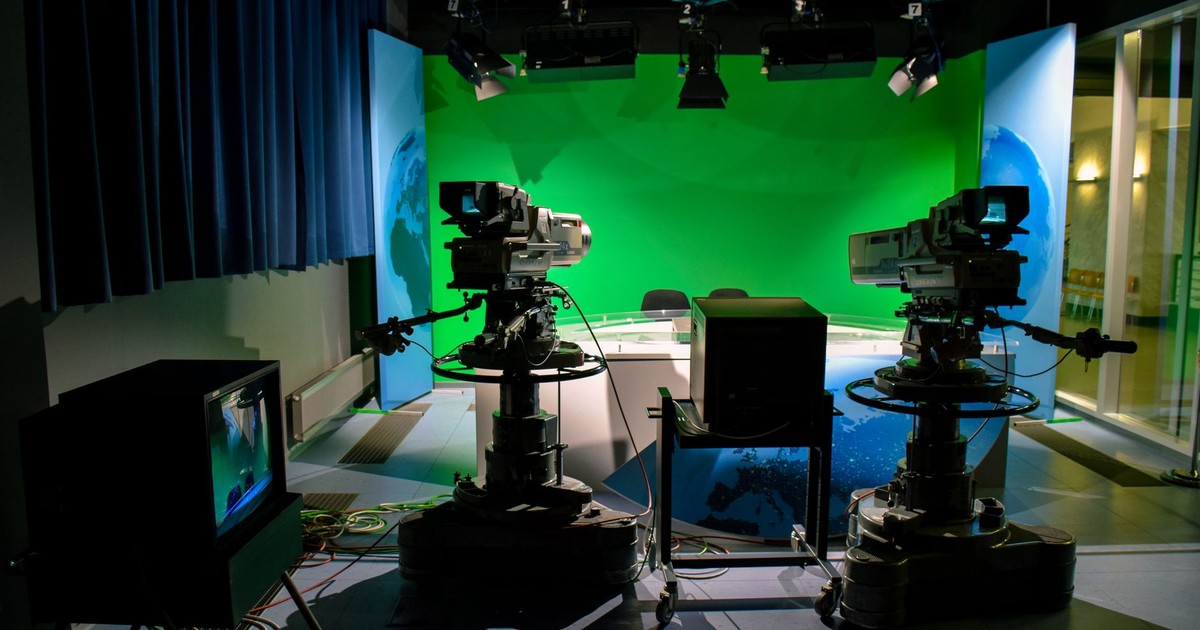
In a statement to media outlets, Fox News dismissed what was alleged as a “mask line” as just a shadow cast by poor lighting conditions. “Vice Admiral Robert Harward appeared on FOX News Channel earlier this week via a remote, mobile camera operated by an outside vendor,” the network said. “During the interview, lighting conditions in the van contrasted with the vice admiral’s jacket, which caused a shadow to appear on his neck.”
That explanation was entirely plausible. A more likely explanation for the odd shadow on Harward’s neck was bad lighting that exacerbated shadows from the collar of his shirt or the microphone clipped to his collar. Prosthetics of the kind some users referenced are typically constructed to cover the wearer’s full neck, the top of their shoulders and back, as well as some of their chest, in order for the prosthetics to successfully blend underneath the wearer’s clothing. The idea that someone could slip a convincing silicone face mask over their head and appear on live national television without any other visual anomaly defies how those products actually work.
JINSA – the Jewish Institute for National Security of America, where Harward serves as a national security expert – weighed in through its Director of Communications, Blake Johnson. “We appreciate that the Vice Admiral Harward’s interview has been a source of some internet levity these past 24 hours,” Johnson wrote, “but to burst the bubble, it was not a ‘mask.'” He noted the May 19 interview was conducted from a mobile studio unit during the 9:00 a.m. ET hour. Harward then conducted a different interview an hour later on Fox Business, using his personal device and without professional lighting, offering a direct visual comparison.
The lighting was markedly different in that second segment, with most of Harward’s neck draped in shadow – further indicating the so-called “mask” appearance was likely a trick of the light. Harward’s voice, inflection, and facial movements in the May 19 footage also matched his other appearances on Fox News, indicating the clips showed the same person and not an actor or impersonator, as some had claimed.
None of this put a dent in the theory for the people who had already committed to it. Conspiracy-minded users immediately questioned why a former senior military official would be appearing from a mobile studio van in the first place. Others insisted lighting alone could not explain the unusual appearance. Some users began posting frame-by-frame breakdowns attempting to prove the neck area physically shifted like a prosthetic.
He Came Back – and the Internet Went Again
Just days after the original clip sent social media into a frenzy, Harward returned to Fox News. Speaking with co-host Trace Gallagher on “The Story,” he discussed President Trump’s ongoing negotiations with Iran and the implications of Secretary of State Marco Rubio’s warning about a “Plan B” if diplomatic approaches failed.
During the second appearance, viewers immediately took to social media. “Mask Man is on FOX NEWS rn,” one user wrote on X, adding: “They never mentioned the mask” – noting that Harward was not asked about the viral conspiracy theory, nor did he mention it himself. Coverage noted that Harward appeared on Fox News without the same visual anomaly, after the lighting issue had reportedly been corrected. The mask, predictably, was now invisible – which conspiracy believers interpreted not as vindication of the lighting explanation, but as evidence that the prosthetic had been adjusted.
As of the following Monday, the Polymarket betting market on whether Harward had worn a mask had resolved in favor of “No.” Harward himself never publicly responded to the controversy.
Why This Kind of Story Spreads So Fast

The Maskgate episode is a clean example of something happening more and more often online, and understanding the pattern helps explain why official explanations so rarely work.
According to a 2025 Pew Research Center survey, Americans’ trust in national news organizations has declined significantly, dropping 11 percentage points in just a few months earlier that year. Overall, only 56% of U.S. adults said they had at least some trust in what national news organizations report – down 20 points since Pew first asked the question in 2016. That decline cuts across party lines and age groups. When people don’t trust the source, they stop treating official explanations as the end of the story. They treat them as part of the story – or part of the cover-up.
A Gallup poll found that only 28% of Americans trust the media overall – the lowest level ever recorded in the poll’s history, amid sharp partisan and generational divides. In that environment, a Fox News spokesperson saying “it was just bad lighting” carries exactly as much weight as the people saying it wasn’t. Less, for a significant portion of the audience.
There’s also the way the content itself travels. Research into how conspiracy theories persist on social media has found that common strategies to combat them – fact-checking, debunking, presenting alternative views – not only fail but can actually push believers to become more resolute. The debunking of Maskgate followed a familiar script: credentialed organizations weighed in, fact-checkers confirmed the footage was unaltered, the network explained the technical setup. Social media enables conspiracy-minded communities to access information that reinforces their beliefs and forge a sense of shared identity – and instead of backing down when faced with contradictory evidence, such groups often deepen their commitment.
The people who found the original clip suspicious weren’t stupid. Even people who did not fully believe the theory admitted the footage looked strange. One user wrote: “I know it’s probably lighting but I also completely understand why everyone is freaking out.” Another posted: “This is the first conspiracy clip in years where I actually understand why people got suspicious.” That ambiguity is exactly the kind of fuel that keeps these things burning.
The Quiet Part About Modern Media
What “Maskgate” actually revealed had very little to do with silicone prosthetics. It had everything to do with how most people now consume news.
The geopolitical conversation Harward came on to have – about Iran, about U.S. strategy, about what pressure on Tehran actually looks like – was genuinely substantive. He is a man who commanded operations in that region. His analysis wasn’t filler. But the clip that millions of people watched wasn’t a clip of his analysis. It was a close-up of his collar, shared with a caption about the CIA. The geopolitical discussion was almost completely erased by the viral spectacle surrounding his appearance.
This is what happens when news is consumed primarily through short clips and social feeds rather than full broadcasts. The part of the interview that is most shareable is not necessarily the part that is most meaningful. A shadow above someone’s shirt collar is shareable. A nuanced assessment of Iranian nuclear negotiating strategy is not. The algorithm doesn’t care which one is more important.
What to Do With All of This
The instinct when something like Maskgate lands in your feed is to either dive in (“Let me look more closely at that footage”) or scroll past with a dismissive eye-roll. Both responses are understandable, and neither one is especially useful.
What’s actually worth sitting with is the structural problem underneath the entertainment. Out-of-context details distort what’s real, and researchers at MIT have found that false news can spread up to 10 times faster than true reporting on social media. When explosive, misinforming posts go viral, their corrections are never as widely viewed or believed. The outrage travels at speed. The correction travels at a slow walk, if it travels at all. By the time Polymarket had resolved the bet and the fact-checkers had published their pieces, Maskgate had already done its work – it had absorbed the attention that might have gone toward the actual geopolitical crisis being discussed.
That’s the thing to hold onto here. Not whether Harward was or wasn’t wearing a mask (he wasn’t), but the fact that millions of people spent days debating a shadow on a neck while a retired military officer’s substantive analysis of U.S.-Iran tensions sat unwatched. This will happen again. The next clip will be different – different visual anomaly, different guest, different network – but the pattern will be identical. Something strange will appear for two seconds on a screen, get clipped and shared and captioned, and the actual content of whatever was being discussed will vanish completely. Being aware of that pattern isn’t the same as being immune to it. But it’s a start.
AI Disclaimer: This article was created with the assistance of AI tools and reviewed by a human editor.