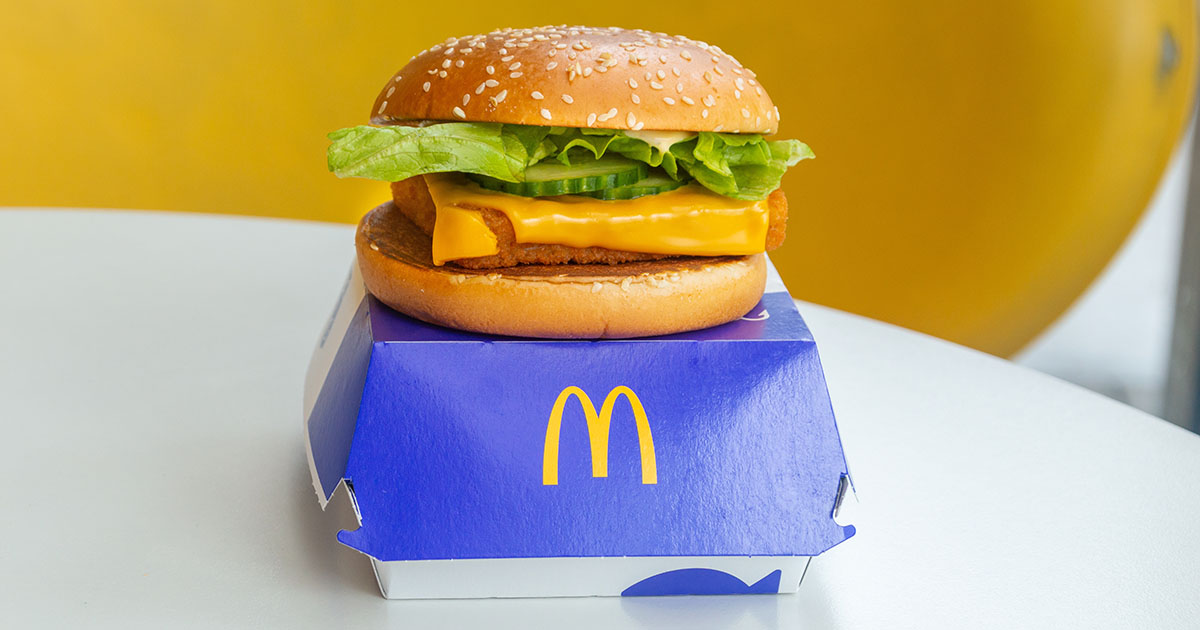

On Good Friday in 1962, a McDonald’s franchisee in Cincinnati sold 350 fish sandwiches in a single day and six of something else entirely. The “something else” was Ray Kroc’s competing idea, a grilled pineapple slice on a bun with a piece of cheese, which he’d called the Hula Burger. Kroc had bet a new suit on it. He lost.
That lopsided contest didn’t just settle a side bet. It decided what hundreds of millions of people would eat on Fridays for the next six decades. The Filet-O-Fish is now consumed at a rate of 300 million a year, with 23 percent of those sales occurring during Lent. For an item that sits at the less flashy end of the McDonald’s menu, between the Big Mac and the Happy Meal, that’s a remarkable number. The story behind it is even more remarkable, because the sandwich didn’t start with a food scientist or a marketing department. It started with a Catholic businessman in Ohio who was nearly broke.
The Filet-O-Fish history begins in a neighborhood most Americans outside Ohio have never heard of, with a problem that had nothing to do with food and everything to do with faith.
The Man Who Needed Fridays to Work
Not long after Lou Groen opened a McDonald’s franchise on the west side of Cincinnati in 1959, he realized that on Fridays during Lent the local Catholic community took their business to a nearby Frisch’s Big Boy for a fish sandwich instead of to McDonald’s for a hamburger. About 87 percent of the population in that area was Catholic. On Fridays, according to Crux Now, Groen only took in about $75 a day. He was working long hours and had twins to feed at home, and $75 was not cutting it.
His son Paul Groen remembered that Groen was “barely doing $300 in daily sales” on Fridays. Seven days a week, the math only worked if six of them actually generated meaningful revenue. One day was being handed to the competition because McDonald’s had nothing on the menu a practicing Catholic could order without breaking church law.
Catholics in many countries were expected to abstain from eating meat, described as the flesh of warm-blooded animals, on Fridays – a practice observed for centuries and regarded as a penance. Although no food was officially suggested as a substitute, fish became a traditional alternative. According to Wikipedia’s entry on the Friday fast, the Teaching of the Twelve Apostles, written in the first century A.D., directed Christians to fast on both Wednesdays and Fridays – and the Friday fast continued for nearly two millennia. It wasn’t until November 1966 that the U.S. bishops’ conference lifted the requirement that Catholics abstain from meat on Fridays outside of Lent and Good Friday. In 1962, when Groen was watching his customers walk past him every week, the no-meat rule applied every single Friday of the year.
Groen was Catholic himself, which matters more than it might seem. He wasn’t studying his customers from the outside. He understood the rule, kept it himself, and knew exactly what kind of food would satisfy someone who’d skipped a hamburger out of genuine religious conviction rather than preference. The sandwich couldn’t be a compromise. It had to be something people actually wanted to eat.
Halibut, Tartar Sauce, and a Very Reluctant Boss
After perfecting the recipe over a number of weeks, Groen traveled to McDonald’s headquarters in Oak Brook, Illinois to pitch the idea to Fred Turner, at the time the head of operations and an eventual CEO of the company, and to Ray Kroc, McDonald’s first franchise agent and the corporation’s founder. It did not go well.
Recalls Groen: “I told Ray about it and he said, ‘You’re always coming up here with a bunch of crap! I don’t want my stores stunk up with the smell of fish.'” Kroc’s instinct was that a burger chain was a burger chain. Fish required different equipment, a different cooking process, and – in his view – would ruin the smell of the restaurants he’d spent years building. As a matter of fact, Kroc had plans for what he called the Hula Burger, a slice of grilled pineapple and cheese on a bun.
Kroc made a side bet with Fred Turner that the Hula Burger would sell better than the Filet-O-Fish, the stakes being a brand-new suit. On the day of the test, Groen’s restaurant sold 350 fish sandwiches and only six Hula Burgers. Kroc purchased Groen a new suit for his prize, and the Filet-O-Fish was there to stay.
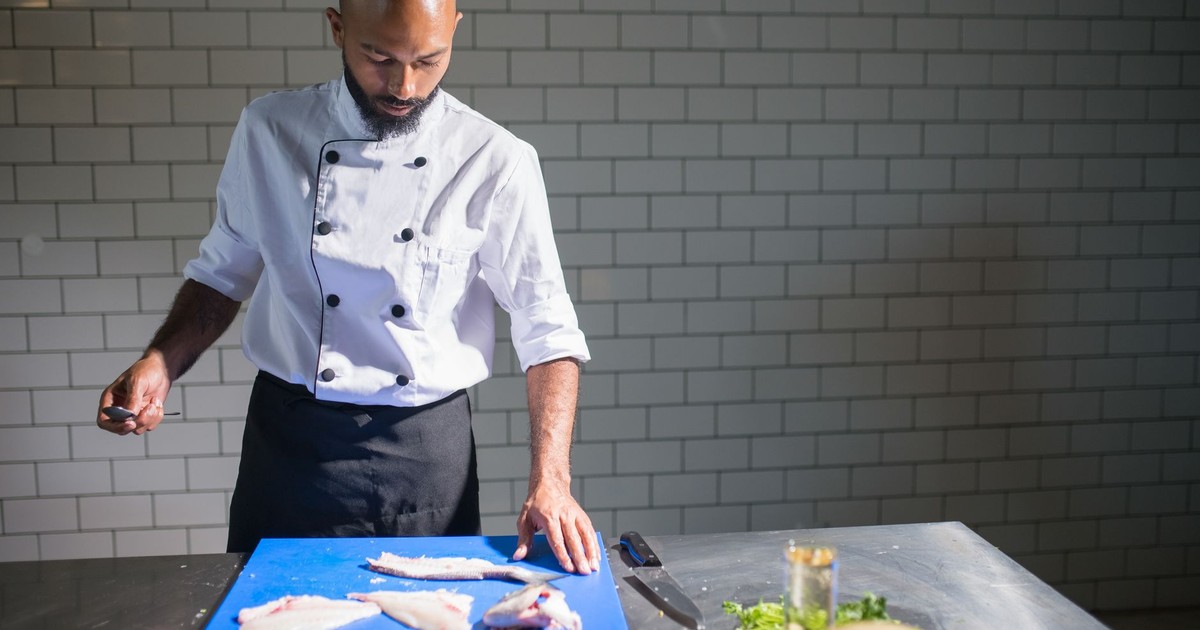
Groen’s original sandwich was a halibut fish sandwich, developed around 1962. His sons Harry and Paul both said the original sandwich was made from halibut and included two pieces of fish, much like the Frisch’s Big Boy sandwich that had been drawing his customers away. The halibut choice wasn’t arbitrary. It was white, mild, and didn’t carry the oily, strong flavor that might reinforce Kroc’s concern about the smell of the restaurants.
Harry Groen recalled, “It sold like hotcakes. Every Friday we had to prepare it ahead of time.” According to Smithsonian Magazine, the sales ledger from 1962 shows the first time Groen’s halibut-based Filet-O-Fish was sold was Tuesday, February 13, 1962, though the whitefish sandwich we see today wasn’t officially put on the menu until 1963. In its first month as a listed menu item, the sandwich sold remarkably well for a chain whose identity was built entirely on beef: 2,324 sandwiches at 35 cents apiece in its first month as a mainstay on the McDonald’s menu.
From Cincinnati to Every Drive-Through in America
By 1965, the Filet-O-Fish, marketed as “the fish that catches people,” became a staple on the McDonald’s menu nationwide, alongside eventual menu greats like the Big Mac and the Egg McMuffin. It was the first addition to McDonald’s original menu.
McDonald’s added its very first new item not because of a trend, not because of a focus group, but because a franchisee in a heavily Catholic Cincinnati neighborhood needed his Fridays to generate revenue. A company now famous for thousands of menu permutations and limited-time offerings owes its entire culture of menu expansion to church law and one man’s financial desperation.
The rising cost of halibut eventually caused McDonald’s to seek a less expensive alternative, and Lou Groen went back to the drawing board and came up with the Filet-O-Fish as it’s known today. While the fish composition of the sandwich has changed over the years to cater to taste preferences and address supply limitations, the core ingredients have remained constant: a fried breaded fish fillet, a steamed bun, tartar sauce, and pasteurized American cheese.
The Groen family didn’t fade from the story after the sandwich launched. Erica Shadoin, Groen’s granddaughter, today owns that same McDonald’s franchise at 5425 West North Bend Road in Cincinnati, where the sandwich was created. She says the original location sells close to 800 Filet-O-Fish sandwiches on Good Friday. The same corner, the same franchise, the same spike on the Catholic calendar that started the whole thing more than 60 years ago.
What’s Actually in It Now
The halibut is long gone. McDonald’s uses MSC-certified wild-caught Alaska Pollock for its Filet-O-Fish sandwich. MSC stands for Marine Stewardship Council, an independent nonprofit that certifies seafood from fisheries that meet rigorous sustainability standards – things like healthy fish stock levels, low environmental impact, and responsible fishery management. According to McDonald’s corporate, in 2013 the company became the first and remains the only national restaurant chain in the U.S. to adopt the MSC blue eco-label, building on a commitment to protect long-term fish supplies and improve the health of surrounding marine ecosystems.
Every part of the Alaska Pollock that is caught is utilized. McDonald’s aims to avoid catching non-targeted fish, a practice called “low bycatch,” and the Alaska Pollock fishery has an annual bycatch rate of under one percent. For a product sold in the hundreds of millions annually, that’s a supply chain story that doesn’t get much attention next to the sandwich’s origin story, but it’s worth knowing. The fish that Lou Groen originally chose because it was mild and white has been replaced by one of the most tightly managed commercial fisheries in the world.
Read More: Why Fast Food Tastes Worse Than It Did in the ’90s
Still the Same Sandwich
Lent still moves the needle. More than 60 years after Groen stood in a Catholic neighborhood watching his sales evaporate every Friday, roughly a quarter of all annual Filet-O-Fish sales still happen during the 40 days of Lent. That’s not marketing. That’s inertia, tradition, and the persistence of a religious practice that predates the United States by more than a thousand years.
Lou Groen died on May 30, 2011, in Cincinnati, at 93. At his peak, he owned 43 McDonald’s restaurants in the Ohio and northern Kentucky region. He became a significant figure in the franchise system, but the thing he’s remembered for is the sandwich he invented to solve a problem that had nothing to do with food trends or brand strategy. He needed his Catholic customers to have something to order on Fridays. He figured out what that was, drove to corporate headquarters, argued with the founder, and won on the day it mattered most.
The Hula Burger, for its part, has become a footnote – mentioned mostly to illustrate how completely Groen’s idea defeated it. A grilled pineapple ring is not a sandwich anyone would drive to a fast-food restaurant to eat. The 350-to-6 result on that Good Friday wasn’t even close. But the competition mattered, because without it, there’s a reasonable argument that the Filet-O-Fish never makes it onto the national menu. Kroc needed to be shown, on a real day with real sales, that fish belonged there.
The sandwich he didn’t want to sell has now outlasted every objection he raised against it. It survived the smell concern, the cooking-process concern, and the identity concern. It survived the switch from halibut to pollock. It survived the decade when McDonald’s added hundreds of new items, and the decade when it started removing them again. The recipe is the same as it’s always been: a steamed bun, American cheese, tartar sauce, and the fish filet patty.
A sandwich born from a single neighborhood’s religious practice is now a global menu fixture, sold in nearly every country McDonald’s operates in, by a company that wasn’t even sure it wanted fish on the menu in the first place. Lou Groen knew his customers because he was one of them. That’s a harder thing to manufacture than any marketing campaign.
AI Disclaimer: This article was created with the assistance of AI tools and reviewed by a human editor.