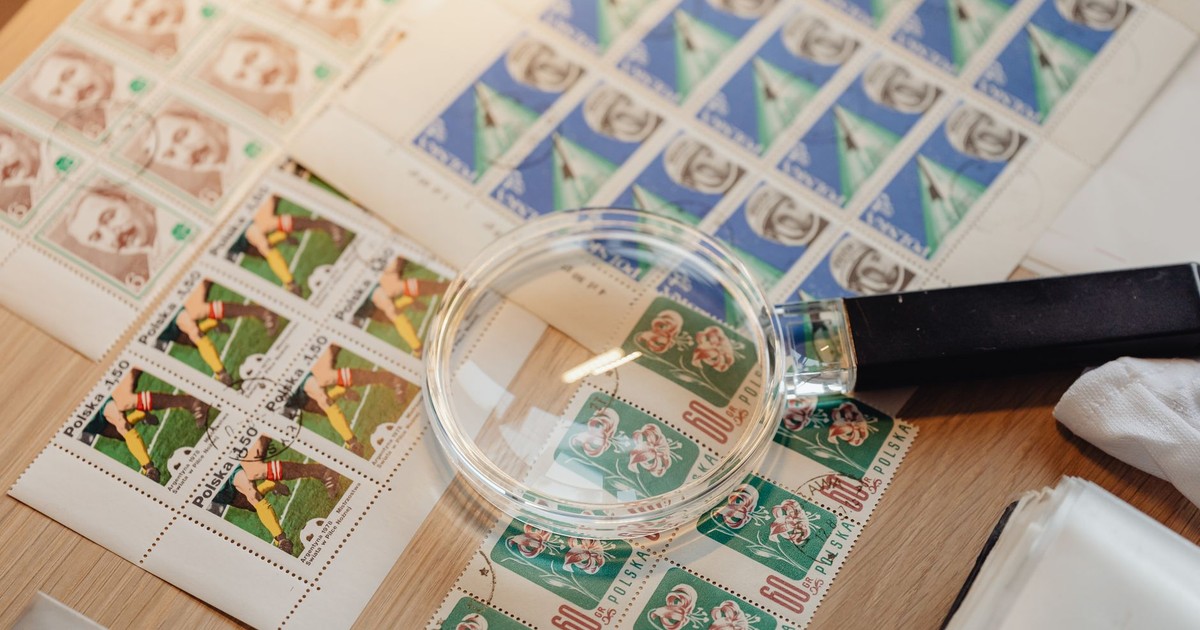

The product listing was called “Patriotic Series American Independence Day Doodle Stickers.” What buyers actually received – and what they then sold to thousands of unsuspecting customers across the United States – were counterfeit U.S. postage stamps, manufactured in China and indistinguishable from the real thing to anyone who didn’t know exactly what to look for.
That product name, buried inside a federal indictment unsealed in April 2026, tells you almost everything about how a fake USPS stamps operation actually works. Not with sophisticated print labs or covert warehouses, but with a deceptive listing on a Chinese e-commerce platform, a media professional with an online storefront, and a man mailing packages from post offices in small-town Alabama. Simple logistics. Enormous scale.
The case of John Patrick Best and Kevin Douglas Padgett sits among the most prominently charged counterfeit postage schemes in recent American law enforcement history. It also did not emerge from nowhere. Federal seizure data shows fake stamp fraud has been draining hundreds of millions of dollars from the U.S. Postal Service, and leaving ordinary consumers holding worthless paper they paid good money for.
The Federal Case: What the Indictment Alleges

On April 21, 2026, a federal grand jury returned an indictment charging John Patrick Best, 55, of Hoschton, Georgia, and Kevin Douglas Padgett, 48, of Phenix City, Alabama, with conspiracy to commit money laundering related to the purchase and distribution of large quantities of counterfeit postage stamps. The announcement was made jointly by DOJ Middle District of Alabama, U.S. Attorney Thomas Govan, the U.S. Postal Inspection Service (USPIS) Houston Division, and the IRS Criminal Investigation Atlanta Field Office.
The indictment further charges Best with conspiracy to commit mail and wire fraud, possession with intent to sell counterfeit postage stamps, concealment money laundering, and spending money laundering. Padgett faces the money laundering conspiracy count. The charges against both men carry a potential maximum sentence of up to 20 years in prison, along with substantial monetary penalties and restitution.
The Mechanics of the Scheme
According to the indictment and other court records, Best and Padgett conspired in January 2024 to purchase counterfeit U.S. postage stamps from suppliers in China and resell them in the United States. The sourcing strategy was designed to obscure the nature of the product: the conspirators purchased items the vendor listed as “Patriotic Series American Independence Day Doodle Stickers” and resold them as genuine U.S. flag Forever stamps.
Each man had a defined role. After receiving the counterfeit stamps, Best allegedly used his position with a media company to advertise and sell them through an online vendor marketplace under a newly created business name. Padgett then allegedly packaged and mailed the counterfeit stamps from multiple locations, including post offices in Smiths Station and Phenix City, Alabama. As part of the alleged scheme, the defendants formed a shipping supply company in Georgia and opened bank accounts in the company’s name.
The Scale and the Money
The indictment puts the proceeds at a minimum of $1.7 million, derived from the sale of approximately 6,483,700 counterfeit stamps, with an additional 544,596 stamps seized before distribution. That is more than seven million fake USPS stamps in total – enough to mail a first-class letter to every household in the state of Georgia, twice over.
The indictment also alleges that Best and Padgett moved the money through a series of financial transactions across multiple bank accounts to conceal its origin. IRS Criminal Investigation Special Agent in Charge Demetrius Hardeman addressed this directly in a statement: “Although individuals may attempt to disguise illicit profits through intricate financial maneuvers, IRS Criminal Investigation special agents excel at unraveling complex money flows and revealing the hidden trail they leave behind.”
Where the Case Stands Now
On June 30, 2026, Padgett pleaded guilty to the money laundering conspiracy charge. His sentencing hearing is scheduled for October. Best made his initial appearance in federal court on July 22, 2026. His case is ongoing, and no conviction has been recorded against him at time of writing. The charges in the indictment are allegations, and Best is presumed innocent unless proven guilty.
A Broader Epidemic: Counterfeit Stamps and USPS Revenue Loss
The Best-Padgett case is significant, but it is not an isolated incident. Federal enforcement data and recent prosecutions paint a picture of a problem that has grown substantially over the past several years, fueled by the ease of overseas manufacturing, the proliferation of online marketplaces, and the difficulty consumers face in distinguishing real stamps from convincing counterfeits.
Postal inspectors have been working to fight back against this surge, seizing $16.2 million in counterfeit stamps since October 2024 alone, and issuing 358 voluntary discontinuance orders to individuals and businesses found using fake postage. Scammers are selling fake stamps on social media marketplaces, e-commerce websites, and other platforms. Fraudsters are also reselling stolen goods at a deep discount and shipping them with counterfeit postage.
In the first quarter of fiscal year 2025, 4.4 million fake stamps were seized by U.S. law enforcement. A June 2026 audit by the USPS Office of Inspector General estimated the revenue loss from counterfeit stamps at over $349 million in fiscal year 2026, with an additional $1.7 billion in revenue considered at risk. That figure represents a structural drain on an institution already under sustained financial pressure. USPIS Inspector in Charge Shameka Jackson put the stakes plainly in the Best-Padgett announcement: “These practices undermine the inherent trust of the USPS brand, and postal inspectors will continue to work with our law enforcement partners and federal prosecutors to disrupt these criminal schemes.”
The China Supply Chain
Chinese suppliers are the common thread running through virtually every major fake USPS stamp prosecution. In the Best-Padgett case, the stamps were sourced directly from China. In a February 2025 seizure at the Chicago International Mail Branch, U.S. Customs and Border Protection stopped eight shipments containing a total of 161,860 fake stamps that violated trademark laws, all arriving from China. Those parcels would have been valued at over $118,000 if real.
The Postal Inspection Service has also conducted joint interdiction operations with Customs and Border Protection at ports of entry in New York and Los Angeles, where numerous freight shipments containing packages affixed with counterfeit postage were refused entry into the U.S. In one such operation, investigators seized $2.5 million in counterfeit stamps coming from China.
The economics driving overseas production are straightforward: manufacturing costs are minimal, the product is small and easily shipped, and demand in the U.S. market – particularly from resellers looking to undercut USPS retail pricing – is reliable. CBP has warned that while the quality of some seized fraudulent stamps has been poor, counterfeiting technology is improving to the point where most consumers may not be able to tell the difference between a fake and an authentic stamp.
The $150 Million Case That Preceded It
Just two weeks before the Best-Padgett indictment broke widely, federal courts handed down a sentence in a separate counterfeit postage case of an entirely different magnitude. A Los Angeles-area woman, Lijuan “Angela” Chen, 53, was sentenced to two years and six months in prison for using counterfeit postage to ship tens of millions of parcels from China. She had pleaded guilty in April 2024 to conspiracy to defraud the United States and use of counterfeit postage, and was ordered to pay more than $158 million in restitution.
From January 2020 to May 2023, Chen and her co-defendant mailed more than 34 million parcels containing counterfeit postage shipping labels, resulting in more than $150 million in lost revenue for the Postal Service. Pursuant to her plea agreement and a court order, Chen forfeited her interest in 12 homes, four certificates of deposit, and six insurance policies. Her co-defendant, Chuanhua “Hugh” Hu, remains a fugitive in China.
The Chen case shows what this type of fraud can produce when it is embedded in a legitimate-looking logistics business serving China-based e-commerce vendors. The Best-Padgett operation, while far smaller in dollar terms, demonstrates that the same basic model – source from China, sell through an online marketplace, route through domestic mailing infrastructure – is being replicated at multiple scales across the country.
How Fake Stamps Enter the Market and Reach Consumers

The Online Marketplace Vector
Counterfeit stamps are being sold on social media, e-commerce sites through third-party vendors, and other websites. The platform diversity matters: it means that a buyer can encounter fake USPS stamps not only on obscure offshore storefronts, but embedded within the third-party seller ecosystems of major domestic e-commerce platforms. Best’s alleged use of an “online vendor marketplace” in the Best-Padgett scheme fits this pattern exactly.
Postal inspectors are working with online shopping platforms to identify sellers of counterfeit postage and seizing website domains connected to the sale of fake stamps. A dedicated Counterfeit Postage Reporting System went live on September 26, 2025, giving consumers a direct channel to flag suspected fraudulent stamp sales.
The Discount as a Warning Sign
Stamps being sold at a substantial discount and/or from a vendor outside of the United States are more than likely counterfeit. USPS does not sell stamps below face value. Legitimate authorized retailers – major warehouse clubs and a small number of approved third-party sellers – may offer very small discounts through formal agreements with USPS, but those arrangements are narrow and documented.
Distinguishing between a USPS Forever Stamp and a fake one has become virtually impossible for the average consumer. Counterfeiters have improved their production quality to the point where visual inspection alone is unreliable. New stamps use ink that glows under UV light. Fake ones typically do not. That UV-reactive phosphor coating is one of the most reliable authentication methods available to consumers without specialized equipment, though few people own a UV lamp for this purpose.
The flag stamp, which features the American flag, is the most frequently counterfeited USPS stamp. The flag Forever stamp is the most widely purchased and recognizable USPS product, which also makes it the easiest counterfeit to sell without raising immediate suspicion.
Where Not to Buy
Consumers should avoid purchasing any postage online except through the official USPS Postage Store, or go directly to a local post office for all postage needs. Be especially vigilant about avoiding false advertisements on social media. If you see postage for sale on Facebook, eBay, or a similar platform – especially in bulk quantities at a significantly discounted price – that listing is almost certainly fraudulent.
Fraudsters are also reselling stolen goods at a deep discount and then shipping them using counterfeit postage, which means that buying from suspicious stamp vendors may connect consumers – even unknowingly – to broader criminal supply chains. The stamp purchase is not an isolated transaction.
The Legal Framework and Enforcement Posture

Federal Law on Counterfeit Postage
Under federal law – Title 18 United States Code Section 501 – it is unlawful for an individual to use, sell, or deposit packages and/or letters affixed with counterfeit postage or stamps in the U.S. Mail. This applies to buyers who knowingly use fake stamps, not just the sellers and manufacturers who produce them. Mail sent with counterfeit stamps may be delayed, returned, or destroyed.
Consumers who unknowingly purchase and use fake stamps are generally not the target of federal prosecution. But the practical consequence – mail that fails to move, packages delayed, legal documents returned undelivered – falls on them regardless of intent.
The Multi-Agency Response
The Best-Padgett indictment brought together the U.S. Attorney’s Office for the Middle District of Alabama, the U.S. Postal Inspection Service, and IRS Criminal Investigation. That combination reflects how prosecutors now approach these cases. The money laundering charges, which apply to both defendants, are significant because they allow federal investigators to follow financial flows rather than relying solely on physical evidence of the counterfeit stamps themselves. The IRS Criminal Investigation division’s involvement signals that financial forensics – tracing transactions through multiple bank accounts – was central to building the case.
The Postal Inspection Service’s Revenue Investigations Program focuses specifically on detecting counterfeit postage labels and stamps, with postal inspectors working alongside USPS Engineering and Technology groups to continuously identify fraudulent postage. The program runs on two tracks: public-facing awareness campaigns and reporting systems on one side, and dock-level logistics review and pre-stream package interdiction on the other.
What This Actually Means for You

The Best-Padgett indictment illustrates, with unusual clarity, how a multi-million-dollar counterfeit stamp operation can run with modest infrastructure: a Chinese supplier, a misleading product listing, an online storefront, and a car full of packages driven to local post offices. The seven million fake USPS stamps at the center of this case did not come from a sophisticated clandestine printing operation. They were ordered from a vendor who labeled them “doodle stickers,” and they moved through the American postal system in plain sight.
The enforcement picture, taken together, points to a problem expanding faster than the prosecutorial response can contain. A June 2026 USPS Office of Inspector General audit estimated over $349 million in counterfeit stamp revenue loss in fiscal year 2026, with $1.7 billion more in revenue considered at risk. Combined with $16.2 million in seized stamps in under a year and a $150 million case sentenced just weeks before a new seven-million-stamp indictment, those numbers do not describe a problem being brought under control. For consumers, there is no sophisticated detection method required. Purchase stamps directly from USPS retail counters, USPS.com, or verified authorized retailers. Treat any online offer of discounted postage – from unfamiliar third-party sellers, social media listings, or offshore vendors – as almost certainly fraudulent. A few dollars saved on a book of stamps is not worth having your mail destroyed, your package delayed, or your money handed directly to a federal defendant. Suspected counterfeit stamps and sellers can be reported through the Counterfeit Postage Reporting System at uspis.gov or by calling the Postal Inspection Service tip line at 877-876-2455.
Disclaimer: This information is not intended to be a substitute for professional medical advice, diagnosis, or treatment and is for information only. Always seek the advice of your physician or another qualified health provider with any questions about your medical condition and/or current medication. Do not disregard professional medical advice or delay seeking advice or treatment because of something you have read here.
AI Disclaimer: This article was created with the assistance of AI tools and reviewed by a human editor.