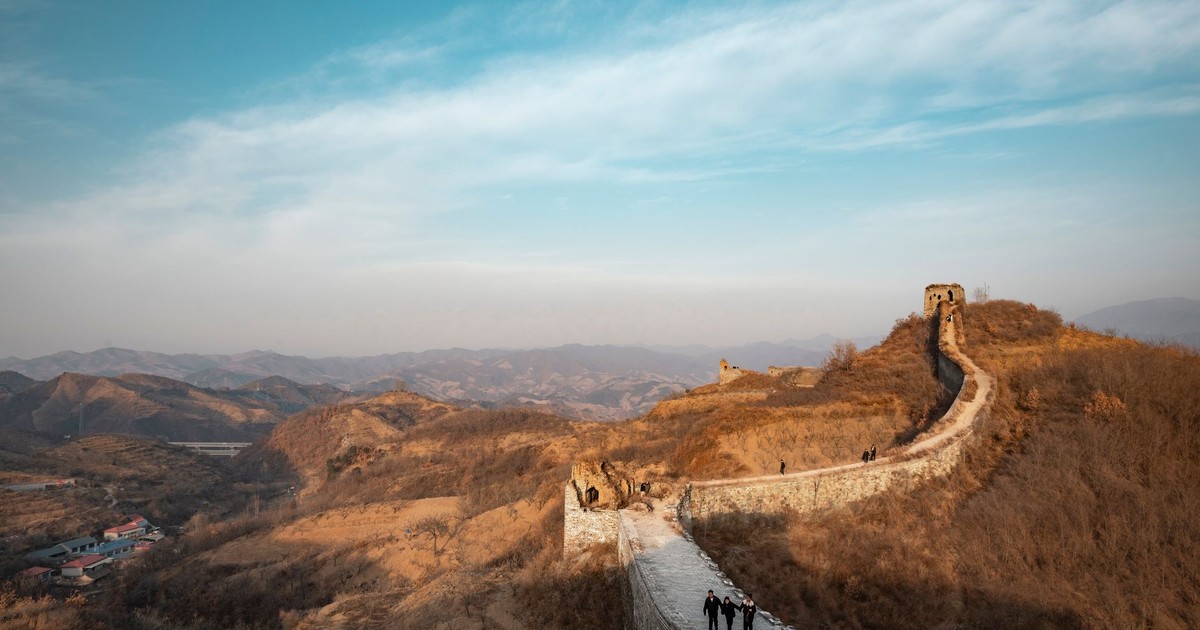

Most people picking a country to move to spend hours researching cost of living, weather, and whether they can get a decent coffee. Very few start with the question that actually determines everything: does this country want you to stay?
The answer splits the world cleanly. Some countries have built entire visa frameworks around pulling in foreign workers, students, and investors. Others have constructed systems so restrictive that a person can live and pay taxes there for two decades and still have no more legal security than a tourist who arrived last month.
The numbers tell you which countries ended up with the most foreign-born residents and which ones, regardless of how many expats pass through, have essentially no pathway to permanence. Both lists contain surprises. To start, let’s take a look at the 5 expat countries with the biggest foreign populations.
1. United States: 51 Million Foreign-Born Residents

The United States hosts roughly 51 million foreign-born residents, a figure larger than the entire population of Spain. That number includes Mexican-born workers who’ve been filing taxes in California for thirty years and Indian software engineers on H-1B visas who arrived last year and are already filling out green card paperwork.
The U.S. draws people for reasons beyond the obvious. It has the world’s largest economy by nominal GDP, a startup culture unlike anywhere else, universities that remain the global benchmark, and established immigrant communities in every major city that soften the landing considerably.
The catch is that the U.S. is simultaneously one of the harder expat countries to achieve legal permanence in. Green card backlogs stretch to decades for nationals of India and China, immigration courts are chronically overwhelmed, and the political climate around border policy has made the whole system feel increasingly fragile. You can live in America for twenty years and still find yourself dependent on employer sponsorship for the right to stay.
2. Germany: A Labor Shortage That Opens Doors
Germany’s foreign-born population reached approximately 16 million by 2024, and the country has spent the past several years actively trying to grow it. The government introduced the Skilled Immigration Act in 2020 and expanded it substantially in 2023 to open pathways for workers in healthcare, engineering, IT, and trades, sectors where the domestic workforce simply can’t fill demand.
For expat countries in Europe, Germany is one of the more accessible. After five years of continuous legal residence, most foreign nationals can apply for permanent settlement. Language remains the biggest practical hurdle. B1 level German is required, but the country funds language courses and provides integration support that many comparable nations don’t bother with.
Berlin has become a particular magnet for younger expats, with a thriving English-speaking professional community, a relatively low cost of living compared to Paris or London, and startup visa pathways that other European capitals don’t offer. Munich and Frankfurt attract the corporate crowd.
3. Saudi Arabia: 13 Million Expats Who Can’t Stay Forever

Saudi Arabia hosts roughly 13 million foreign-born residents, placing it third globally. The zero income tax and high salaries attract engineers, medical professionals, and finance workers in numbers that have made certain expat communities reliably present for generations. South Asians work in construction and domestic labor; Western professionals populate the energy sector.
Almost none of those 13 million people have any realistic path to staying permanently. Saudi Arabia uses a kafala system: a sponsorship arrangement that ties a worker’s legal status directly to a specific employer. Leaving that employer without permission can carry serious legal consequences. Saudi Arabia updated its residency visa framework in January 2024 and introduced several new specialty visa categories for high-demand talent, but for the vast majority of the expat population, their stay has an end date written into its structure.
Saudi Arabia’s number on the global list is enormous, but the nature of that expat population is fundamentally different from that in Germany or France. These aren’t people building lives with roots. They’re overwhelmingly working rotations, sending remittances home, counting down to retirement or a better offer elsewhere.
4. France: Permanence Is Possible, Bureaucracy Is Guaranteed

France counted 7.7 million immigrants (foreign-born residents) in 2024, according to INSEE, a figure that includes both those who remain foreign nationals and the 2.6 million who have since acquired French citizenship. Unlike Saudi Arabia, France actually offers meaningful legal pathways to residency and eventually citizenship. After five years of continuous legal residence, non-EU nationals can apply for a long-term resident permit. After ten years, naturalization becomes possible, provided you speak French, have integrated into French society, and have no serious criminal record.
The country draws expats from its former colonies in North Africa and West Africa, from other EU countries, and increasingly from the UK post-Brexit. British nationals who moved to France before 2020 and had assumed their residency was seamless found themselves discovering French bureaucracy was exactly as involved as advertised.
For those who stay the course, France delivers: universal healthcare access once you’re in the system, EU freedom of movement rights after naturalization, and a quality of life that needs no sales pitch. The bureaucratic friction is real and often maddening. The French administration operates on paper, in French, on its own schedule. But it does eventually work if you’re patient and organized.
5. United Kingdom: Post-Brexit and Still Pulling People In
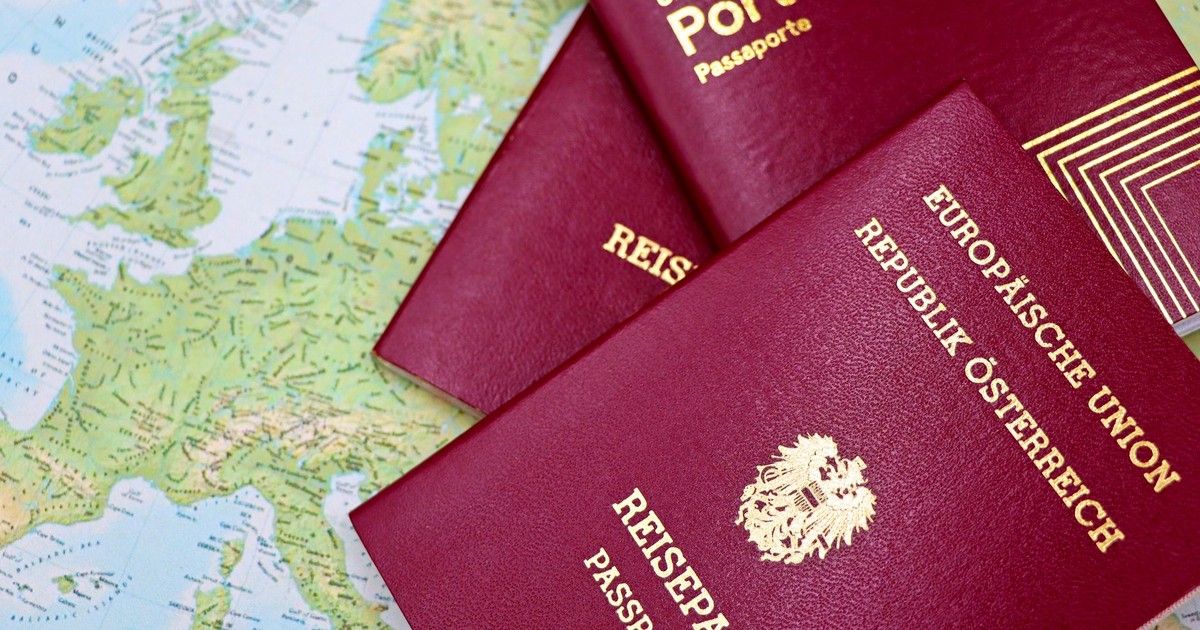
The UK’s foreign-born population reached approximately 13.1 million as of June 2024, per an ONS ad hoc estimate, making it one of the top five expat countries globally, a position it held through the upheaval of Brexit and the pandemic. The UK absorbs tens of thousands of American expats alongside arrivals from across Europe, South Asia, and beyond.
Brexit fundamentally changed who can move to the UK and how. EU freedom of movement ended in January 2021, replaced by a points-based system that treats EU and non-EU applicants equally. The skilled worker visa requires a job offer from an approved employer, a minimum salary threshold (raised to £38,700 for most roles as of 2024), and English proficiency. It’s more restrictive than what EU citizens had before, but it remains competitive compared to many of the world’s top expat destinations. The Global Talent visa, for recognized leaders in academia, arts, and tech, is genuinely one of the more generous pathways of its type anywhere.
Dual citizenship through ancestry is also a factor for many would-be UK residents. British ancestry rules allow some people to bypass the points system entirely if they can prove a grandparent born in the UK. For the right family background, that’s a very different conversation than filling out a standard visa application.
Now, let’s look at the 7 expat countries that make it nearly impossible to stay.
1. Japan: Four Million Residents, Almost No New Citizens

Japan’s foreign resident population reached over 4.12 million as of December 2025, according to the Immigration Services Agency of Japan, making it one of the fastest-growing expat countries in Asia by raw numbers. The political framing around that growth has been deliberately cautious. Japanese policymakers have emphasized managed coexistence rather than anything resembling open doors. The country needs foreign workers badly. It does not particularly want foreign permanence.
The general naturalization requirement involves years of continuous residence, and the process is extraordinarily selective. Despite the growing foreign population, Japan’s naturalization approvals hover around 9,000 per year, drawn overwhelmingly from ethnic Koreans with multi-generational residence. That’s not a bureaucratic quirk. It’s a deliberate policy outcome: the system is designed to produce very few approvals. Dual citizenship remains prohibited, with mandatory renunciation of the applicant’s previous nationality.
Japan is one of the few expat countries where you can arrive, stay legally for a decade, pay taxes, raise a family, and still be asked to leave at the end of a visa cycle with no automatic right of permanent residence. The country is genuinely rewarding to live in for those who adapt to its rhythms. The legal architecture was not built for you to stay.
2. Kuwait: You Can Work Here, You Just Can’t Belong

Kuwait’s ratio tells its own story. Foreigners make up the majority of the country’s population, according to World Population Review. Yet becoming a permanent resident or citizen is so structurally improbable that it’s essentially theoretical for most nationalities.
Kuwait issued a new immigration law, Amiri Decree No. 114 of 2024, in November 2024, taking effect in January 2025. Among its provisions, expatriate workers must now obtain prior consent from their official sponsor or employer before leaving Kuwait, tightening the control that had already defined the kafala system. December 2024 amendments eliminated the marriage pathway for foreign women and ended automatic eligibility for wives of naturalized citizens. Kuwait also revoked over 42,000 citizenships between 2024 and 2025 in a sweeping denaturalization campaign reversing earlier political naturalizations.
The standard citizenship requirements include 20 years of continuous residence for non-Arabs, 15 years for Arab nationals, mandatory Arabic proficiency, and Islamic faith. These are daunting on paper and nearly unachievable in practice. Naturalized citizens cannot vote for 30 years after obtaining citizenship, and apostasy from Islam results in automatic citizenship loss. Kuwait is not simply one of the harder expat countries to stay in permanently. It’s a place where citizenship, once granted, still comes with conditions that never expire.
3. Qatar: 25 Years and Still No Guarantee
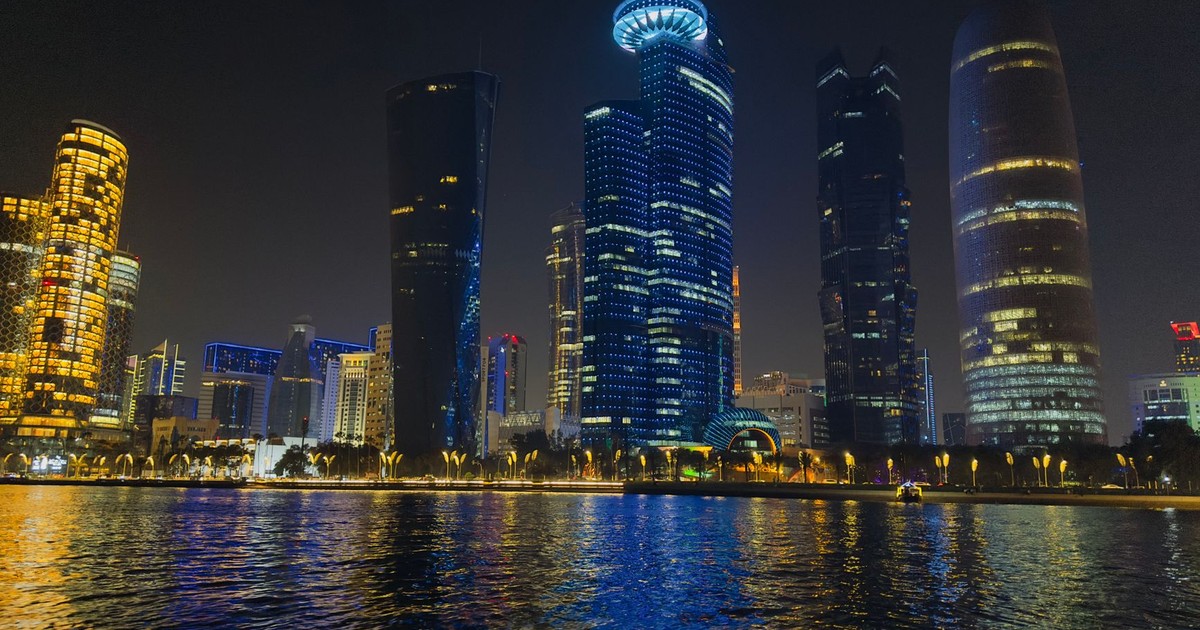
Qatar is one of the wealthiest nations per capita on the planet, and it guards that prosperity through one of the most restrictive immigration frameworks anywhere in the world. Citizenship passes through the father. If an individual’s father is not a Qatari citizen, neither is that individual, regardless of where the person was born or how long they’ve lived there.
Qatar requires expatriates to reside continuously for a minimum of 25 years to be eligible for citizenship. Dual citizenship is not permitted, and applicants must demonstrate knowledge of Arabic. A 25-year residency requirement means someone who arrived at age 30 cannot even apply until they are 55. Most expats have left long before then.
For those who do stay in Qatar long-term, usually in finance, energy, or construction, the lifestyle can be comfortable and the salaries are exceptional. But the legal reality is straightforward: Qatar’s foreign population exists to serve Qatar’s economy. The country has no particular interest in absorbing them into its national identity.
4. Saudi Arabia: Faith, Language, and the Kafala Chain

Saudi Arabia appears twice on this list deliberately: it makes the top five by population but belongs squarely among the hardest expat countries for anyone hoping to put down roots. The kafala system defines the experience. Most foreign workers are tied to a single employer, and while 2021 reforms allowed certain workers to change jobs without employer permission, implementation has been inconsistent and sector-specific.
Saudi Arabia’s Special Talent Residency Visa requires applicants to demonstrate expertise in specific fields including scientific research, healthcare, information technologies, financial services, and renewable energy. It’s a genuine pathway, but it’s narrow and designed for exceptional cases, not the broader expat community. For the nursing assistant from the Philippines or the construction worker from Bangladesh, no such path exists.
Standard naturalization requirements include 20 years for non-Arabs and 15 years for Arab nationals, with mandatory Arabic proficiency and Islamic faith. That last requirement draws the least public discussion and has the most practical impact: Saudi Arabia effectively bars non-Muslims from citizenship, regardless of how long they have lived and worked in the country. Twenty years of perfect compliance don’t change the math if you’re the wrong religion.
5. China: A Vast Country With Essentially No Door
China’s foreign-born population, as a percentage of total population, is one of the lowest of any major country in the world. The government keeps tight control over who can live there. A permanent residency card, colloquially known as a “Chinese green card,” has existed since 2004. In practice, fewer than 15,000 were issued in the entire first decade of the program’s existence, and the numbers have not dramatically improved since.
The 2025 immigration environment in China has grown more restrictive, not less. Background checks have become more thorough, processing times longer, and approvals rarer. For most expats, the reality of life in China is a cycle of renewable work visas tied to specific employers and residency permits that require renewal every year. It is possible to live in China for two decades and have no greater legal security than someone who arrived six months ago.
China is the world’s second-largest economy, a global trade partner with almost every nation on Earth, and yet it maintains an immigration system designed to ensure that participation in that economy never converts into belonging.
6. North Korea: The Country That Doesn’t Let Anyone In, or Out
North Korea barely counts as an expat destination in any conventional sense. Almost no one can enter or leave without special government permission, and tourists are only allowed on guided, monitored tours with movement tightly controlled from arrival. A small community of diplomats and humanitarian aid workers exists in Pyongyang under heavily controlled conditions. The idea of an expat choosing to build a life there, renting an apartment, opening a bank account, sending children to a local school, belongs to a category that simply doesn’t exist.
Attempting to cross the border without authorization carries harsh penalties, including long prison sentences or forced labor. North Korea’s closed status also traps its own citizens: emigration is illegal without state permission, which is almost never granted. The population is effectively locked in, and the few foreign-born individuals present are largely from allied diplomatic missions.
It belongs on this list not as a practical caution but as the logical endpoint of what “hard to stay in” actually means when a state takes the concept to its conclusion.
7. Bhutan: Happiness Index, Closed Borders

Bhutan’s reputation is paradoxical. The country that famously measures Gross National Happiness rather than GDP is also one of the most restrictive expat countries on Earth. Foreign nationals require a government-approved guide and a daily minimum spend to enter as tourists. Independent travel is prohibited. Long-term residency is extraordinarily rare, with no published pathway to citizenship for most nationalities.
Bhutan has chosen, explicitly, to limit tourism and immigration as a matter of national policy. The stated reasoning involves environmental preservation, cultural integrity, and the sustainability of its development model. In 2022, it raised its tourist fee from $65 per day to $200, instantly reducing visitor numbers by more than 50% in the following year. For expats and long-term foreign residents, Bhutan’s system essentially says: you can visit, briefly and expensively, but this place is not for you to keep.
Read More: Ireland Will Pay You $90,000 To Move To A Beautiful Island Home
What the Numbers Actually Show

The top five expat countries by population share one trait that rarely makes it into the brochure: size and opportunity pull people in, but legal permanence is a completely separate question. Germany is among the more accessible. The United States has the numbers but an immigration backlog that can stretch longer than a mortgage. France will eventually say yes if you speak the language and fill out the forms correctly. Saudi Arabia will pay you well and expect you to leave.
The seven countries that make it nearly impossible to stay are operating on a different logic entirely. Some, like Kuwait and Qatar, need foreign labor so badly that expats outnumber citizens, yet they’ve structured their systems to ensure that dependency never becomes belonging. Others, like Japan and China, are protecting something they define as cultural coherence. North Korea and Bhutan are outliers on different ends of the same spectrum, one a pariah state, one a self-styled paradise, both firmly closed to outsiders staying inside.
If you’re seriously thinking about where to build a life abroad, the honest version of the research starts with one question: does this country want you to stay, or does it just want what you bring with it? For most of the world’s major economies, the answer is a careful, deliberate “neither.” The countries that actually want you, the ones building pathways, cutting wait times, translating their visa portals into English, tend to be the ones with labor shortages they can’t fill any other way. That’s not a reason to avoid them. If anything, it’s the most honest welcome you’re likely to get.
Disclaimer: This information is not intended to be a substitute for professional medical advice, diagnosis, or treatment and is for information only. Always seek the advice of your physician or another qualified health provider with any questions about your medical condition and/or current medication. Do not disregard professional medical advice or delay seeking advice or treatment because of something you have read here.
AI Disclaimer: This article was created with the assistance of AI tools and reviewed by a human editor.