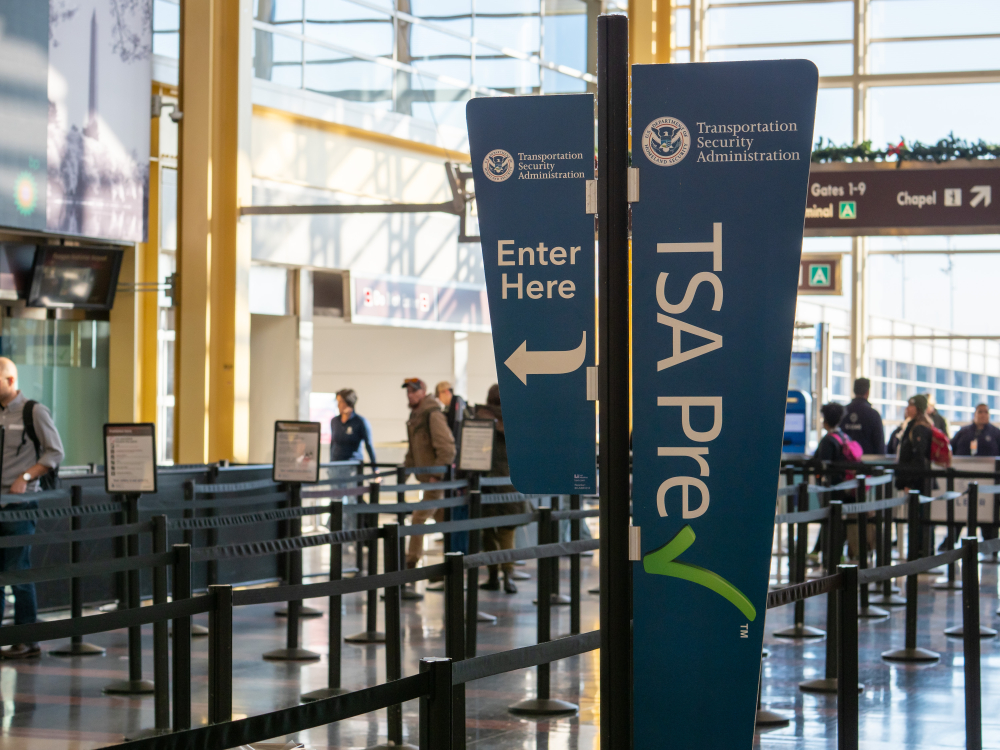

Most of us have stood in the airport security line running a silent checklist in our heads. Did I pack the laptop in the right bag? Did I wear the shoes that take forever to unlace? Is my water bottle still full? The TSA checkpoint is one of those environments where everyone is slightly stressed and slightly hurried, and where the gap between a smooth experience and a catastrophic one can come down to a single sentence.
Threats against TSA officers are, without question, the most serious thing you can say at a checkpoint. The TSA made that crystal clear in a late-2025 post on X: if you threaten, endanger, or harm a Transportation Security Officer during screening, the agency will pursue criminal penalties. Federal law prohibits threatening airport screeners, and a violation can result in civil penalties ranging from a few hundred dollars to more than $14,000 per violation. That’s per violation, meaning a single confrontation could carry multiple counts. Federal law also makes it a crime to “assault” a federal employee, and assault is broadly defined to include threatening to harm an agent and placing that agent in fear of immediate injury, so a passenger who starts screaming at a TSA officer while pounding their fist is already in legally dangerous territory.
The financial exposure climbs fast from there. Assaulting a TSA officer carries serious penalties. And if you think the federal government is the only authority you need to worry about, think again. State criminal laws can also come into play for interference with security personnel, meaning a passenger could face separate state charges for disorderly conduct, obstruction, assault, or making threats, on top of any federal civil or criminal penalties.
But threatening an officer directly is far from the only way to land yourself in serious trouble at the checkpoint. There is a whole category of things people say, some as jokes, some in frustration, some out of sheer ignorance, that can stop a trip cold and generate consequences that follow a traveler long after they’ve made it home. Here is the complete list.
Bomb Jokes, Threats, and Any Related Language
Do not joke about having an explosive device or claim that you have a bomb. The next thing you’ll be doing is having a very serious conversation with a local police officer, and you may not make your flight. That advice comes directly from the TSA. The agency has documented dozens of real incidents where passengers thought this was a harmless thing to say. It was not harmless for any of them.
Joking to a friend that you might have a bomb on you isn’t going to go well, regardless of whether you think it’s funny. The federal government takes such comments seriously, and they can be considered crimes of intimidation and providing false information. If agents have any reason to suspect you aren’t joking, the result can be a total airport evacuation, SWAT teams, and bomb squads, causing delays for every other passenger who did nothing to deserve it.
Anything That Sounds Like a Threat, Even If You Didn’t Mean It That Way
This one catches people off guard. A passenger who slams their hand on the conveyor belt and yells at an officer in frustration may believe they haven’t “threatened” anyone. Courts have disagreed. Courts have determined that non-physical interference, including insults, unintended threats, and belligerent behavior such as slamming your fist on the conveyor belt, can constitute assault if it meets the definition of interference with a TSA officer’s duties or creates fear of harm.
Individuals who commit certain violations of federal security-related regulations, such as interference with security operations, assault, threat, intimidation, or interference with flight crew, physical or sexual assault or threat of physical or sexual assault of any individual on an aircraft, access control violations, providing false or fraudulent documents, or making a bomb threat, are denied expedited screening for a period of time. That loss of TSA PreCheck, by itself, is a significant consequence that many travelers don’t anticipate until it’s too late.
Claiming You Have a Firearm (as a Joke or Casually)
Whether you’re frustrated, dealing with delays, or just trying to be funny, saying you have a firearm or plan to use one is a terrible idea. This kind of threat is taken very seriously and will likely be investigated by law enforcement, the same way a bomb joke would be.
If you actually travel with a firearm, there is a right way to do it that involves none of this drama. Never bring a firearm to a security checkpoint. If you want to travel with a gun, the proper method is to pack it unloaded inside a locked hard-sided case and declare it at your airline counter, so the case can be transported in the cargo hold of the aircraft.
“I Know My Rights” and Other Attempts to Argue Your Way Through
There is a version of the airport argument most frequent flyers have witnessed: a passenger who becomes increasingly heated, demands to speak to a supervisor, and insists on telling officers what they are and aren’t allowed to do. It never ends well for the passenger.
There is no point in arguing with TSA agents, they have the final say. If you’re selected for extra screening, staying calm and cooperating is the best approach. Making a scene will only upset the agents, raise suspicions, and could lead to being kicked out of the airport. The agency does have official complaint channels, they exist precisely so passengers can raise legitimate grievances, but the checkpoint line is not the place to stage that conversation. The TSA says unruly conduct, including verbal outbursts and physical altercations at checkpoints, will not be tolerated, and violators could face steep fines or criminal charges.
“That Airport Let Me Do This Last Time”
Listen to the people running the lane you are actually standing in, not the memory of what happened at a different airport three layovers ago. TSA also advises travelers to empty pockets completely before screening to avoid unnecessary pat-downs and delays. Arguing that another airport let you keep doing things your way rarely speeds anything up, it mostly announces that you would like to be difficult. At a checkpoint, local reality always beats travel lore.
“I Have PreCheck, I Shouldn’t Have to Do This”
PreCheck is not a shield against all additional screening. If you’re weighing whether the program is even worth enrolling in, this breakdown of TSA PreCheck vs. Global Entry covers the differences, costs, and which makes more sense depending on how you travel. TSA states clearly that all travelers will be screened and that no individual is guaranteed expedited screening. The agency uses unpredictable security measures throughout the airport, which means a PreCheck-eligible passenger can still face a different process on any given day. Announcing your PreCheck status as grounds for skipping or shortening a screening procedure is not going to move things along. The duration of disqualification from TSA PreCheck participation is related to the seriousness of a violation, and membership suspension can last up to five years for a first offense or be permanent for egregious incidents or repeat offenses.
“But It’s Only a Little Over the Limit” (About Liquids)
Travelers say this as if confidence can shrink a bottle. TSA’s liquids rule still limits carry-on liquids, aerosols, gels, creams, and pastes to containers of 3.4 ounces or 100 milliliters, packed inside one quart-size bag. A full drink, oversized sunscreen, or giant shampoo is not suddenly acceptable because the passenger sounds offended. The bottle does not care about your tone.
Even if a container is half-full, if its total capacity exceeds 3.4 oz, it cannot go in your carry-on. The size of the container is what matters, not the amount of liquid in it. This is one of the most common mistakes travelers make, and one of the easiest to avoid with five minutes of pre-trip packing attention.
“My ID Is Fine, It’s a Real License”
As of May 7, 2025, state-issued driver’s licenses and IDs that are not REAL ID compliant are no longer accepted as valid forms of identification at airports. Passengers should either travel with an acceptable alternative form of ID, such as a passport, or enroll for a state-issued REAL ID through their state DMV. A standard driver’s license without the REAL ID star marking will not work. Starting February 1, 2026, if you cannot provide the required acceptable form of ID at a TSA checkpoint, you will have the option to pay a $45 fee to use TSA ConfirmID, and TSA will then attempt to verify your identity before you begin the security screening process. Claiming your license is valid when it isn’t compliant won’t change the outcome, it will only slow down the line.
Talking About Weapons, Even Casually or Curiously
Even asking TSA agents about weapons, inquiring about which are allowed on a plane or why you can’t bring your gun, will get you questioned. You can get arrested for joking about bombs while in line. The security checkpoint is simply not the right environment for casual conversation about firearms or prohibited items, regardless of your intent. If you have a legitimate question about what you can and cannot travel with, the TSA’s What Can I Bring tool exists for exactly that purpose, and you can use it before you leave the house.
“I’m Going to Report You / Sue You / Call My Lawyer”
This category overlaps with the general “arguing at the checkpoint” problem, but deserves its own mention because it tends to come up when passengers feel their screening was unfair. Threatening officers with legal consequences in the moment does not change the outcome of the screening, and it can turn a manageable situation into a much more adversarial one. If TSA proposes a civil penalty, the process allows a passenger to pay it or request a hearing before an Administrative Law Judge, at which point a passenger can hire an attorney to represent them. That is the appropriate venue. The checkpoint line is not.
Anything Relating to Explosives, Even “Joking” About Unattended Bags
TSA counts on the traveling public to report unattended bags or packages, individuals in possession of a threatening item, and persons trying to enter restricted areas or similar suspicious activity. “If You See Something, Say Something” is the agency’s guidance, report suspicious activity to local law enforcement. The flip side of that is obvious: pretending to notice something suspicious, making offhand comments about other people’s bags, or joking that an unattended suitcase might be dangerous is going to trigger exactly the response you’d expect.
Read More: What You Can Still Get for Free on an Economy Flight
The Real Cost of Getting This Wrong
The rate of unruly passenger incidents dropped by over 80 percent since record highs in early 2021, but recent increases show there remains more work to do. Unruly passenger incidents can be referred to the FBI when warranted and can result in a felony conviction.
The Federal Aviation Administration has the authority to impose significant financial penalties that extend far beyond the TSA’s own fine structure. The FAA can propose up to $43,658 per violation for unruly passenger cases, one incident can result in multiple fines, and unruly behavior can affect your TSA PreCheck eligibility or land you on an internal no-fly list for an airline.
None of this is aimed at the nervous flyer who misspoke, or the frazzled parent who raised their voice. The enforcement apparatus exists because the FAA launched 512 investigations in 2024, resulting in 402 enforcement actions and $7.5 million in fines issued to disruptive passengers. That is a large number of people who learned, the hard way, that the rules at a security checkpoint are not suggestions. The simplest version of everything above: be boring. Be brief. Answer what’s asked, follow the instructions on the signs, and save the commentary for when you’re on the other side. The officers at the checkpoint are doing a job with very little margin for error. Giving them your cooperation costs nothing. Not giving it can cost quite a lot.
Before You Even Pack the Bag
The best time to avoid every problem on this list is before you leave for the airport. Review the TSA’s What Can I Bring tool, check your ID against the REAL ID requirements, and pack your liquids the night before so you aren’t doing math in a security line with 200 people behind you. Most of the confrontations that end in fines, missed flights, or police involvement start not with malicious intent but with someone who arrived unprepared, ran out of patience, and made a bad decision in a high-pressure moment.
If something goes wrong at the checkpoint, the most valuable thing you can do is stay calm and stay quiet in the productive sense. Answer the officer’s questions directly. If you believe a screening decision was wrong, ask calmly how to file a complaint and follow that process after you’ve cleared the area. The TSA has a formal traveler complaint process, and the courts exist to adjudicate genuine grievances. Neither of those venues requires you to make your case in front of a conveyor belt while your shoes are in a bin.
The checkpoint is one of the most scrutinized environments in American public life, staffed by federal officers with the authority to escalate any situation quickly and the legal backing to make that escalation expensive. The passengers who move through it fastest are the ones who say the least, cooperate the most, and treat the whole experience like the procedural routine it is designed to be. That approach costs nothing and, based on everything outlined here, not taking it can cost an extraordinary amount.
A.I. Disclaimer: This article was created with AI assistance and edited by a human for accuracy and clarity.